
Vouchers and tax credit scholarships are in line with Democratic Party support for social justice and equal opportunity, says Florida state Rep. John Patrick Julien, D-North Miami. And yet, he says, Democratic lawmakers in Florida who support those options risk getting "whipped" by party leaders who don't.
He says he's a perfect example.
He lost the August primary by 13 votes after the party establishment lined up behind his opponent, Rep. Barbara Watson, D-Miami Gardens. Julien, who strongly backs expanded school choice, challenged the outcome, alleging some absentee ballots were obtained fraudulently. But last week a Tallahassee judge dismissed the suit.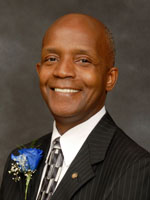
Democratic lawmakers who “care about educating the children, especially the poor children, they would want to support (vouchers and tax credit scholarships),” Julien told redefinED in the podcast interview attached below. “But they would get whipped out of it. … A lot of these folks, I guarantee you, if they try to push back, they’re going to be told, ‘Um, go talk to John Patrick Julien down there in Miami. And ask him how those votes worked out for him.’ “
Julien isn’t leaving quietly. He told Sunshine State News his family didn’t flee a dictatorship in Haiti so he could “be a slave” to Democratic Party leadership. He used similar language with redefinED: “If you want to sit down with me and treat me as a human being, and help me understand why my vote is wrong, I welcome it,” he said. “But what I don’t welcome are people that want to put the chains back around my ankles and my arms, and pull me in the direction that they want.”
Democratic opposition to vouchers and tax credit scholarships, Julien suggested, doesn't mesh with party values. “Democrats say that they want to educate people. Democrats say that they fight for the poor. Democrats say that their entire mantra is to be the voice for the voiceless. Democrats say that they are there for the sole purpose of fighting for the people,” he said. “What better fight is there than to fight to educate a poor child?”
The row in South Florida runs counter to long-term trend lines. Support for school choice among Florida lawmakers has grown over the past decade; in 2010, nearly half of them voted for a major expansion of the tax-credit program. Last spring, though, Democratic support dropped to about a third for a much more modest expansion. In the podcast, Julien offers one possible reason why.
Julien also suggests the Democratic Party should have a “big tent” on school choice. But as long as teachers unions remain a top financial contributor, he said, it’s not going to happen. “If you look at who my primary opposition was in this election cycle,” he said, “it was the teachers union.”
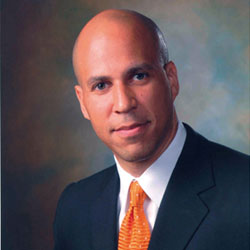 One of the national Democratic Party’s leading lights for expanding school choice, including private school vouchers and tax credit scholarships, will be the featured speaker Saturday at a local Democratic Party event in Tampa, Fla.
Newark Mayor Cory Booker will be the keynote speaker at the Kennedy King Dinner, an annual event sponsored by the Hillsborough County Democratic Party.
“Like the men for whom the event is named - President John Kennedy and Reverend Martin Luther King Jr – he (Booker) has shown great leadership in dealing with tough problems when others saw things as unchangeable,” county party chair Chris Mitchell said in a press release. “Mayor Cory Booker is a leader in our Party, mixing a pragmatic, 'get it done' approach with energy and a unique connection with voters."
Booker is fresh off a powerful speech at the Democratic National Convention that included moving lines about education but did not specifically mention his support for charter schools and vouchers. The press release announcing his speech in Tampa also skips that topic, instead noting Booker has “significantly reduced crime in Newark, championed a $40 million transformation of the City’s parks and playgrounds through a ground-breaking public/private partnership and doubled affordable housing production.”
 In this recent Los Angeles Times piece, education historian Jonathan Zimmerman (pictured here) credits Mitt Romney for offering a more ambitious education agenda than President Obama. The Republican's voucher plan, which would let students use government funding to attend either private schools or public schools in other districts, "would take on the true sacred cow in American education: local control," Zimmerman writes.
But here's the part that really caught our eye: Zimmerman's reference to the progressive roots of school choice. We can't trumpet this theme enough, so here's the relevant excerpt:
Yet the plan does remind us of the radical potential of school vouchers, which are today blithely dismissed by liberals as a right-wing plot to gut public education. But vouchers once drew significant support from the left too, including from such luminaries as Harvard sociologist Christopher Jencks and urban muckraker Jonathan Kozol.
To Jencks, who crafted a 1970 report on the subject for Richard Nixon's White House, vouchers could help equalize American education if public as well as private schools were required to admit a certain fraction of low-income students. And the vouchers would have to be distributed progressively, with the poorest kids getting the biggest tuition assistance.
The Jencks report represented a high-water mark of bipartisanship for vouchers, which have sparked nasty political divisions ever since. Despite court rulings to the contrary, many Democrats insist that public vouchers used in parochial schools violate the separate of church and state. They also claim that vouchers hurt public schools by skimming off the best students, although a long-term voucher experiment in Milwaukee shows little evidence of that.
 Sad but true: The other day, one of Louisiana’s statewide teachers unions tweeted that the Black Alliance for Educational Options, the stand-up school choice group, supports “KKK vouchers.” It subsequently tweeted, “Tell everyone you know.” (Details here.)
Even sadder but true: This wasn’t an isolated event. In recent months, critics of school choice and education reform have time and again made similar statements and claims – trying to tie Florida’s school accountability system to young black men who murder in Miami, for instance, and in Alabama, trying to link charter schools to gays and Muslims.
But this is also sad but true: Reform supporters sometimes go way too far, too.
Late last week, the Sunshine State News published a story about two Haitian-American Democratic lawmakers in South Florida, both strong backers of school choice, who narrowly lost primary races to anti-choice Democrats. The story quoted, at length, an unnamed political consultant who sounded sympathetic to the arguments raised by school choice supporters. He made fair points about the influence of the teachers union in the Democratic Party; about racial tensions that rise with Democrats and school choice; about a double standard with party leaders when Dems accuse other Dems of voter fraud. But then he said this:
“It’s a kind of ethnic cleansing of the Democratic Party,” he said, according to the report, “centered on the interests of the teachers’ unions.”
School choice critics may often be wrong; their arguments may at times be distorted and inconsistent. But to brand their motivations with a term that evokes Rwanda and Bosnia is more than off-key. It’s repulsive. It’s also a distraction and counterproductive.
I’m floored by extreme statements from ed reform critics. In the past couple of months alone, a leading Florida parents group accused state education officials of using the school accountability system to purposely “hurt children”; a left-wing blogger described John E. Coons, a Berkeley law professor and redefinED co-host, as a “John Birch Society type” because of his support for parental school choice; and other critics used fringe blogs and mainstream newspapers alike to shamelessly tar Northwestern University economist David Figlio, a meticulous education researcher who is not only widely respected by fellow researchers on all sides of the school choice debate but is so highly regarded beyond the world of wonkery that he was cited as a prime example of this state’s “brain drain” when he left the University of Florida. I’m further stumped by how such statements are rarely challenged by mainstream media, and by how more thoughtful critics simply shrug and look the other way.
Attacks like these make me want to say, “At long last, have you left no sense of decency?” But then, at less regular intervals, statements like the ethnic cleansing quote come up and knock reformers off the high road. I’m left with a less satisfying response: “Can’t we all just get along?”
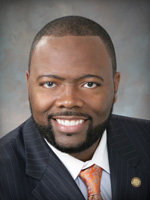 Should Florida’s next education commissioner be committed to the success of all students, no matter what type of educational setting they’re in? Or to public school students first and foremost?
State Rep. Reggie Fullwood, D-Jacksonville, believes it should be the latter. He issued a statement to that effect Friday, following the state Board of Education’s official launch of a search to replace Gerard Robinson, who left at the end of August.
“It is gratifying that the State Board of Education appears to be making it a priority to hire a commissioner who is committed to obtaining the input of parents and education stakeholders as future education reforms are contemplated,” Fullwood’s statement said “However, it is disappointing that the Board, by its actions today, remains anxious to hire yet another advocate for private-schools vouchers or a proponent of private virtual school operators. I believe Floridians expect our next state education commissioner to be committed – first and foremost — to Florida’s public schools and public school students.”
It's not clear what board actions prompted Fullwood's conclusion about voucher advocacy. But Fullwood, who sits on two education committees in the House, recently penned his criticism for school choice in a letter to the Jacksonville newspaper. “In Florida,” he wrote, “we have bet the house on vouchers and charter schools.”
As we noted Friday, the state board elected a new chair Friday – Gary Chartrand, a Jacksonville businessman who was instrumental in bringing the first (and so far only) KIPP charter school to Florida. As we have noted before, the Duval County School District, which encompasses the city of Jacksonville, has had less success with low-income students than any other urban district in Florida.
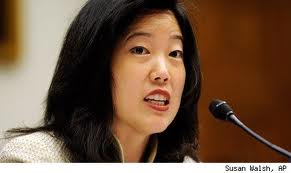 Fresh from Sean Cavanagh at Education Week, after interviewing Michelle Rhee at the DNC:
Rhee was skeptical of Republican challenger Mitt Romney's proposal to allow parents to use federal Title I and special-education money for private school vouchers.
While Rhee backs vouchers for impoverished students in academically struggling schools, she said there were far better strategies for large-scale school improvement than Romney's plan.
Universal voucher plans are not financially feasible, Rhee argued, especially given the state of the economy.
And a large-scale voucher plan like Romney is "only a sliver of what should be happen to fix the system," she said. "Unless you have a comprehensive set of policies, then that in and of itself is not going to have much of any impact.
Doug Tuthill's take on Michelle Rhee and her school choice evolution here. Researcher Matthew Ladner's take here.
 Newark Mayor Cory Booker, a star in the Democratic Party, is already considered a future presidential candidate. But he is also an unflinching supporter of private school vouchers. In a rousing speech at the DNC tonight, he moved delegates with his lines on education: "You should be able to afford health care for your family. You should be able to retire with dignity and respect. And you should be able to give your children the kind of education that allows them to dream even bigger, go even farther and accomplish even more than you could ever imagine."
Booker didn't even hint at vouchers or private schools. The Democrats aren't ready. How long before they are?
While the U.S. Supreme Court's decision in Citizens United v. Federal Election Commission will no doubt continue to reshape the campaign finance landscape, a Wall Street Journal report today is a reminder that teacher unions remain very active players. Using information from both U.S. Labor Department and Federal Election Commission reports, the Journal identified $377 million in total political spending by the nation's two top teacher organizations from 2005 to 2011. That's roughly four times the amount previously reported just from FEC records.
Of note to those of us in Florida, the Journal also reported that the Florida Education Association spent $14.7 million over the same period, ranking it behind only teachers unions in California, New York and four other northern states.
The Florida number brings to mind a Florida Times-Union story published last year on the campaign influence of a separate education organization, the American Federation For Children. That story, which is still actively linked by various progressive blogs, made the legitimate point that AFC, a national organization that supports private school options, has been spending money for candidates who feel the same way. The reporter identified $313,757 in Florida campaign contributions since 2007, and singled out Democrats who, as it turns out, had received roughly three-fourths of that total.
What the story and the blog posts have missed is that the AFC money pales in comparison to what FEA spends to influence the process. This is not intended as a criticism of FEA or its investment in the political process, because its members indeed have a profound interest in education policy. But the story carried with it the implication that the Democrats who support private learning options for low-income students are selling out for campaign money. It said as much through how it reported the response of the Democrats: "They say their vote is about bringing choice to districts with poor public schools, not campaign cash." Pointedly, it did not ask the same question of Democrats who oppose private learning options and receive FEA contributions. That question is more than little relevant, given that unions still forcefully oppose any voucher for any child for any reason.
A South Florida progressive blog recently branded any Democrat who votes to give poor children a private learning option a "sellout to the school voucher lobby." Given the striking difference in the financial stakes between the voucher lobby and the FEA lobby, this accusation assumes such a Democrat not only lacks the moral conviction to help poor school children but the political acumen to sell out to the highest bidder.
 Michelle Rhee and I are members of the same political tribe. We’re progressive Democrats. Throughout most of the 1800s and into the mid-1970s, our tribe supported school choice, including allowing parents to use public funds to help pay for private school tuition. Our group’s position began to change in the late 1960s as urban teachers, who are core tribal members, began to unionize. By the time Jimmy Carter ran for president in 1976, the transition was complete. Progressive Democrats opposed school choice.
In the late 1970s and early 1980s, school districts began using within-district school choice to promote voluntary desegregation, so our tribal position began to gradually evolve. I say gradually because in 1986, I led a floor fight at the annual National Education Association convention, on behalf of then-NEA President Mary Hatwood Futrell, for a resolution endorsing within-district magnet schools. The opposition argued that magnet schools were voucher programs which siphoned off money and the best students from neighborhood schools. The resolution failed.
As the number of unionized teachers working in magnet schools expanded, the NEA eventually embraced magnet schools and other within-district school choice programs, and progressive Democrats followed. Today most progressive Democrats support within-district school choice programs that employ unionized teachers, and they oppose publicly-funded private school choice. But this latter position is evolving. Increasingly, core progressive constituencies, such as African-Americans and Hispanics, are embracing full school choice, as are some progressive leaders.
At Florida Gov. Jeb Bush’s annual education reform conference a few years ago, Michelle Rhee began her morning speech by saying she was hired in Washington D.C. to reverse the flow of students into charter schools. But in her new position as founder and CEO of StudentsFirst, Michelle is slowly becoming more open to school choice. (more…)

