 Charter schools plan: State Rep. Kionne McGhee, D-Miami, says the House proposal to turn over failing schools to charter schools "creates a separate but unequal system” that violates the Florida and U.S. Constitutions. The so-called "schools of hope" bill calls for traditional schools with D or F grades for three years to become charter schools. “These schools have failed these kids long enough,” said Rep. Manuel Diaz Jr., R-Hialeah. “These are kids trapped in generational poverty, and for us to create this illusion it [schools of hope] is a separate system? It’s not.” The House Appropriations Committee passed the bill, which now goes to the full House for a vote. Miami Herald. Politico Florida. redefinED.
Charter facilities funds: The House Appropriations Committee passes a bill that would nearly double the amount of money set aside from local property taxes for charter schools facilities. But a lobbyist for Charter Schools USA, Chris Moya, says the bill may actually reduce the money available for charters because districts can subtract the amount spent on debt service before the rest of the money is divided, and because sharing formula favors charters that enroll low-income students. Moya argues that the Legislature should “stop thinking about funding institutions or districts or even schools, and really think about funding the student.” The bill now moves on to the House vote. redefinED.
Extra reading narrowed: High-level readers at the 300 lowest-performing elementary schools in the state would no longer have to attend the extra hour of required reading under a Florida House bill that has been approved by the appropriations committee. Students who achieve Level 4 or 5 on the state language arts test would have the option of skipping the reading hour. Students who achieve Level 3 or below are required to attend. The bill would also give schools the option of fitting in that hour instead of requiring it to be an extra hour of school. The changes are at odds with the Senate version of the bill. Gradebook.
Class sizes: The House approves a bill that changes the way class sizes are calculated to meet the requirements of a 2002 voter-approved amendment. If approved, schools could use a schoolwide average instead of counting individual classes. A similar bill is moving through the Senate. Associated Press. (more…)
Students would get greater access to online instruction through blended learning opportunities and potentially new providers under a Florida House bill that sailed through a subcommittee Wednesday.
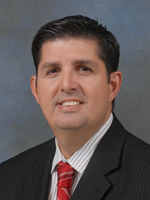
Rep. Manny Diaz Jr.
“This bill is going to be about innovation, access and technology,’’ said Rep. Manny Diaz, Jr., R-Hialeah, a school district assistant principal who introduced the legislation in the Choice & Innovation Subcommittee. “We know that every child doesn’t learn the same.’’
The digital learning bill would create a district “innovation school’’ pilot program that encourages traditional schools to offer students more blended-learning opportunities with a mix of online and classroom instruction.
Districts could use their virtual programs, or courses offered by Florida Virtual School or another online provider. In addition, students could take online courses from another school district.
In return, school districts would be given more freedom in the digital realm in a fashion similar to charters. For instance, class sizes for courses within the innovation schools would be calculated at a schoolwide average instead of class by class.
Florida mandates that district schools limit the number of students allowed in core classes depending on grade level. Violations result in hefty fines, but meeting the law has resulted in students having to wait to take some classes.
The bill would allow districts to offer part-time, online courses to K-12 students in all subjects. Currently, they can only do that for courses that require statewide assessments.
It also would make it easier for online providers to operate in Florida. One provision allows a company without “prior, successful experience” to set up shop. (more…)

