National exposure! As I was covering education angles at the Republican National Convention last week, I got lassoed into a "Daily Show" bit about diversity in the Republican Party. That's me, about 33 second in, being asked if I'm Latino.
Sorry, I said. Half white, half Japanese. But on a fair number of occasions, people have assumed I'm Hispanic. That part got cut. So did this: As I headed up the escalator, correspondent Al Madrigal shouted, "Would you wear a mustache for us?"
 After going 56 years without attending a national political convention, I’m headed to Charlotte for my second convention in a week. For school choice advocates, the Democratic National Convention will be a somewhat hostile environment, unlike last week’s Republican National Convention in Tampa, where all forms of school choice were enthusiastically embraced.
As we’ve discussed previously on redefinED, the political left, including wide swaths of the Democratic Party, was supportive of giving parents - especially low-income and minority parents - access to more diverse schooling options in the 1960s and throughout most of the 1970s. That support began eroding when the National Education Association gave Jimmy Carter its first-ever presidential endorsement in 1976, and was mostly gone by 1980.
President Clinton’s support of charter schools marked the beginning of a renewed interest in school choice within the party, and pro- and anti-school choice forces have been battling ever since. After two decades of struggle, the momentum today is clearly on the side of the pro school choice Democrats, which has caused anti-choice Dems to become more desperate and strident. American Federation of Teachers’ President Randi Weingarten’s recent attack on the new teacher/parent empowerment movie, Won’t Back Down, was so disingenuous and hyperbolic I was embarrassed for her.
Both Weingarten and NEA President Dennis Van Roekel will be participating in a town hall meeting tomorrow sponsored by Democrats for Education Reform. Four years ago, at the Democratic convention in Denver, DFER burst on the scene at a similar event, and, with close ties to the Obama Administration, immediately became a majority power center within the party. I’m anxious to see what issues predominate tomorrow, and how Weingarten and Van Roekel position themselves.
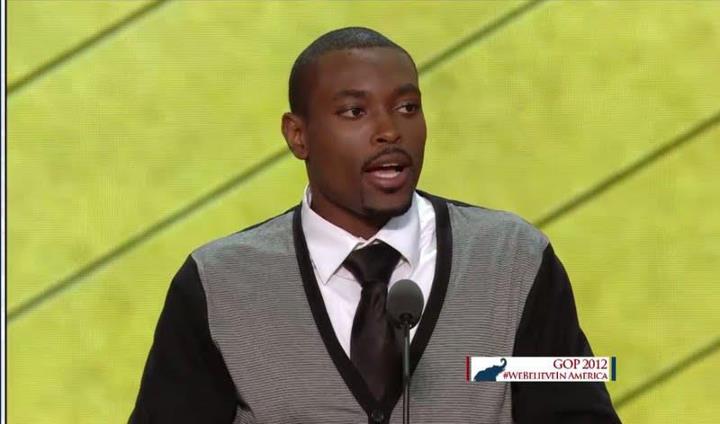 To highlight the power of school choice, Jeb Bush, during his prime time slot at the Republican National Convention, turned the mic over to a former student from Miami. Frantz Placide, 24, calmly but directly told millions of viewers that a private school voucher program in Florida gave him the opportunity to bypass his neighborhood school – “unproductive and failing” - and attend an academically rigorous Catholic school. The voucher “gave me the chance to achieve academic success,” he said. “I took it from there.”
In an interview today with redefinED, Placide offered more details about his educational path – and more testimony about the difference that additional learning options can make for kids. “I just wanted to let everyone know,” he said, “that because I had a choice in my education, I was granted a better life.”
Placide, who grew up in the Little Haiti section of Miami, was zoned to attend an F-rated public high school with low grad rates and lots of distractions. But with an “opportunity scholarship” from the state’s first voucher program, he instead attended Archbishop Curley Note Dame. “It was wonderful,” he said. “You learned so much coming in as a freshman. And when you leave as a senior, you’re ready to take on the world.”
Placide graduated in 2006 and went on to Wagner College in Staten Island, where he graduated in 2010 with a sociology degree. He’s now in the application process to become a state trooper in New Jersey – and on the verge of fulfilling a lifelong dream of serving in law enforcement. (more…)
Republican presidential nominee Mitt Romney emphasized expanded school choice in his acceptance speech tonight, listing it as the second of five steps to turn America around.
"We’ll give our fellow citizens the skills they need for the jobs of today and the careers of tomorrow," Romney said. "When it comes to the school your child will attend, every parent should have a choice and every child should have a chance.”
School choice followed energy independence on the list, and preceded his call for new trade agreements, cutting the deficit and strengthening small businesses.
Romney has called for federal funding for low-income and special education students to follow the student to the schools their parents choose, including private schools. He has also proposed eliminating caps on charter and digital schools. (For more detail and analysis of his proposals, read these redefinED posts here and here, and this guest op-ed by the Fordham Institute's Checker Finn here.)
Romney's speech mentioned education in two other places.
* "I am running for president to help create a better future. A future where everyone who wants a job can find one. Where no senior fears for the security of their retirement. An America where every parent knows that their child will get an education that leads them to a good job and a bright horizon."
* "You might have asked yourself if these last years are really the America we want, the America won for us by the greatest generation. Does the America we want borrow a trillion dollars from China? No. Does it fail to find the jobs that are needed for 23 million people and for half the kids graduating from college? No. Are its schools lagging behind the rest of the developed world? No."
Entire speech here.
Here is a transcript of Jeb Bush's speech at the RNC tonight, according to prepared remarks. (He deviated from the script at the beginning to address this issue.)
Jeb Bush: Welcome to Florida! Bienvenido a Florida!
This election is about the future of this nation. We can shape that future with what we do here, with what we do November 6.
We can restore America's greatness.
That starts with a strong economy, a smart energy policy, lower deficits, and a president who puts America's workers and job-creators first.
But to have a great future - a secure future - a future that is equal to our potential as a nation, we need to do something else.
We must make sure that our children and grandchildren are ready for the world we are shaping today.
It starts in our homes, in our communities, and especially in our schools.
As a candidate and Governor, I visited over 400 schools. I saw children read their first sentences. Solve their first long-division problems. Explore the miracles of chemistry and physics.
That's the essence of education - students getting a chance at a future.
There are many reasons to believe America's future is bright, but also reasons to worry.
Of 34 advanced nations in the world, American students rank 17th in science, 25th in math.
Only one-fourth of high school graduates are ready for their next steps.
China and India produce eight times more engineering students each year than the United States.
There is a moral cost to our failing schools.
We say that every child in America has an equal opportunity. Tell that to a kid in whose classroom learning isn't respected.
Tell that to a parent stuck in a school where there is no leadership. Tell that to a young, talented teacher who just got laid off because she didn't have tenure.
The sad truth is that equality of opportunity doesn't exist in many of our schools. We give some kids a chance, but not all.
That failure is the great moral and economic issue of our time. And it's hurting all of America.
I believe we can meet this challenge. (more…)

Sec. Spellings
As the RNC wound down today, it took a sharp turn back towards partisanship in education reform, with former U.S. Education Secretary Margaret Spellings offering the week’s hardest knock on President Obama’s education record.
Former President George W. Bush reached across the aisle to work with the late U.S. Sen. Ted Kennedy and other Democrats to pass No Child Left Behind, said Spellings, who Bush appointed. And it’s no surprise, she said, that former Florida Gov. Jeb was the most successful education governor in recent times.
“That’s because of leadership,” Spellings said at an education panel sponsored by Bloomberg Link and the 2012 Tampa Bay Host Committee for the RNC. “We have not seen that from President Obama on this topic.”
“If half the minority kids in this country were not getting out of high school on time, we ought to be marching in the streets,” she continued. “If half the school lunches served next week in these schools were tainted, we would be marching in the street. Michelle Obama would write a cookbook.”
Spellings criticized some aspects of Race to the Top, Obama’s signature education program, and panned his administration’s decision to grant No Child flexibility to a number of states.
“The Obama administration has given waivers out like candy,” she said. And the result has been a return to lower standards for poor kids.
Jeb Bush, who was part of the panel discussion, did not criticize Obama. But he also did not praise him as he has in the past, including earlier this week. He directed his fire at teachers unions. (more…)
From the speech by Condoleezza Rice speech at the RNC tonight:
Your greatest ally in controlling your response to your circumstances has been a quality education. But today, today when I can look at your zip code and I can tell whether you’re going to get a good education, can I honestly say it doesn’t matter where you came from, it matters where you’re going? The crisis in K-12 education is a threat to the very fabric of who we are. My mom was a teacher. I respect the profession. We need great teachers, not poor ones and not mediocre ones. We have to have high standards for our kids because self-esteem comes from achievement, not from lax standards and false praise. And we need to give parents greater choice, particularly, particularly poor parents, whose kids, very often minorities, are trapped in failing neighborhood schools. This is the civil rights issue of our day. If we do anything less, we condemn generations to joblessness and hopelessness and life on the government dole. If we do anything less, we will endanger our global imperatives for competitiveness. And if we do anything less, we will tear apart the fabric of who we are and cement the turn toward entitlement and grievance.
Mitt Romney hasn't talked much, if at all, about teacher pay on the campaign trail. But son Josh Romney raised the issue at an RNC event today, saying teacher pay has to rise in order to lure more top college graduates into the profession. Minutes later, George P. Bush, son of former Florida Gov. Jeb Bush, hit on the same subject.
“I think you got to pay ‘em more. I think teachers need better salaries,” Josh Romney said in response to a question from NBC chief White House correspondent Chuck Todd. “I think you got to make it attractive for people who are coming out of college, the best and brightest coming out of colleges, who at this point say well there’s no way I can go into education, I can’t make enough money to feed my family or make a living. So I’m not going to go into education, even though I’d like to.”
When Todd followed up with a point about budget cuts, Josh Romney said this: “I think this is one of those areas where we can’t afford to cut back. Teachers need better salaries. And there’s obviously a lot of politics involved in there. There’s different ways to do it. But as long as it’s going to teachers … I think that’s the important thing.”
Josh Romney’s comments came at an event for young voters hosted by National Journal, The Atlantic and Microsoft. During a different segment of the program with a different moderator, George P. Bush also raised the issue.
“Teacher salaries have barely kept pace with inflation (while) administrative salaries have increased and exceeded that of the private sector,” said Bush, who lives in Fort Worth. “In Texas, what we’re witnessing is a true struggle between teachers unions and administrators over this issue. How is it that no one’s holding administrators accountable and yet we expect teachers to not only raise our kids but deliver superior results in the classroom?”
It’s unclear whether Josh Romney was referring to salary increases across the board or for pay hikes based on performance. His father’s education plan refers generally to rewarding teachers “who contribute most to student learning.” (more…)
At the RNC in Tampa this week, a small but bright constellation is scheduled to line up on education reform. Democrat Michelle Rhee, who famously tangled with teachers unions as schools chief in Washington D.C., will share a spotlight with Jeb Bush, who has praised President Obama’s ed initiatives, and Condoleezza Rice, who co-authored a Council on Foreign Relations ed report with Democrat Joel Klein. The panel will be moderated by Campbell Brown, the former CNN anchor who just got into a Twitter spat with Randi Weingarten. All will come together after a private screening of “Won’t Back Down,” a new movie that shows even Hollywood has embraced parental empowerment in education.
This will be a remarkable little event – a hopeful symbol of a centrist political coalition, in the midst of a red partisan sea, that is poised to take advantage of historic opportunities to re-shape the nation’s schools.
Poised, that is, unless it get chewed up by the fringes.
The Republican Party may be tilting even more right, but on education the centrists still hold sway. Jeb Bush, who supports a federal role for education, and backs national academic standards, remains one of the party’s leading lights on ed reform. His prime-time speech will likely generate more ink about education than anything else that happens at the RNC.
But obviously, there is tension. Rising Tea Party currents want to erode recent federal activism in ed reform – a position that so ironically leaves them pitching tents next to teachers unions. Their passion is well-meaning; their arguments worth considering. But their timing is especially bad: Reform-minded Republicans and Democrats are getting close when it comes to a common vision for public education – a vision that includes a healthy dose of school choice and bottom-up transformation. This rare alignment is mostly intact because the GOP led on education, and enough Democrats bucked their own fringes to shift the GOP’s way.
In a recent op-ed for redefinED, Margaret Spellings, the secretary of education under George W. Bush, didn’t call out Tea Party groups by name, but she didn’t mince words when it comes to the potential consequences of their aims: “This ‘unholy alliance’ between the unions and those who want no role for the federal government in education is propping up the status quo on the backs of our most vulnerable children,” she wrote. “It’s shameful beyond words.”
Mitt Romney and the ed centrists won a quiet victory in Tampa last week. They beat back attempts to restore an old plank in the GOP platform – eliminating the U.S. Department of Education. Tea Party linked groups got almost everything else they wanted. But according to Politico, instead of using the word “eliminate” in the draft language regarding the U.S. DOE, a subcommittee voted to replace it with a call to “support the examination and functions of.”
That’s a breather, but a temporary one. It should give added urgency to those in both parties who want to see constructive change and know more will get done, quicker, if centrists work together and find ways to grow their ranks. It’s important to remember that today, at the start of the storm-delayed RNC, before the spin makes every crack between Romney and Obama on education look like a canyon.
 Just a reminder: redefinED will be at the Republican National Convention in Tampa next week. Our offices are six blocks from away; how could we not be?
We’re planning to cover anything and everything at the RNC, within our reach, that has to do with school choice and ed reform. The official schedule alone suggests we’ll be busy: Jeb Bush, Margaret Spellings, Michelle Rhee ... you get the picture.
So, look for a lot of blogging, probably even more tweeting. If you don’t already, check out our facebook page. On Twitter, follow us @redefinEDonline.

