 On top of the world. Gov. Rick Scott calls the PIRLS results (an international assessment that shows Florida fourth-graders are second only to their peers in Hong Kong in reading) “great news for Florida as our state becomes a hub for global commerce.” Jeb Bush says Florida students are “again busting all the myths.” No more Flori-duh, writes EdFly Blog: “Florida has gone from one of the worst reading states in the nation to one of the top reading nations in the world. And just last month I read a story about Jeb Bush’s education reforms in Reuters, which concluded: 'But a close examination raises questions about the depth and durability of the (education) gains in Florida.' Think we’ll see a follow-up?” More from Florida Today, Associated Press, Bloomberg, Eduwonk, Jay P. Greene’s Blog. (Image from questprblog.com)
FCAT for voucher kids? Gov. Scott seems to suggest that in comments to reporters Tuesday. Here’s the clip (starts at about the 13-minute mark). Coverage from Gradebook, WTSP, Orlando Sentinel, Associated Press, News Service of Florida. The governor will be speaking in Tampa tonight, at the annual donor dinner for Florida’s tax credit scholarship program (which is sponsored by Step Up For Students, which co-hosts this blog).
Race to the Top. Miami-Dade wins this round, reports the Miami Herald.
Conversion. The Broward County school board considers creating a countywide K-12 digital arts magnet in an effort to help a low-performing middle school meet accountability standards, reports the Sun-Sentinel.
Protection. From the Orlando Sentinel: "After listening to nearly six hours of testimony on both sides of the issue, the Orange County School Board added protections for gay, lesbian and transgender students and staff to the district's nondiscrimination policy early Wednesday."
Wait a minute. The Polk County school board and new superintendent John Stewart may delay the opening of six district-run charter schools for at-risk students, reports the Ledger.
School-to-prison pipeline. On the NAACP's agenda in Duval. Florida Times Union.
Two candidates for Florida’s education commissioner are former public schoolteachers who worked their way through the ranks to become education leaders. The third is an attorney with experience in education policy and research, who worked for various government and nonprofit agencies devoted to education reform.
All three met with the Florida Board of Education on Tuesday to answer questions and explain why they are the best choice to oversee Florida’s educational system.
Board members expect to name a new commissioner Wednesday morning. Here are highlights from the interviews and applications:
Charles Hokanson Jr. is a Harvard-trained attorney who served as counsel to the chairman of the U.S. House Committee on Education and the Workforce. He wrote legislation with a focus on special education, early childhood programs and civil rights law, among other areas.
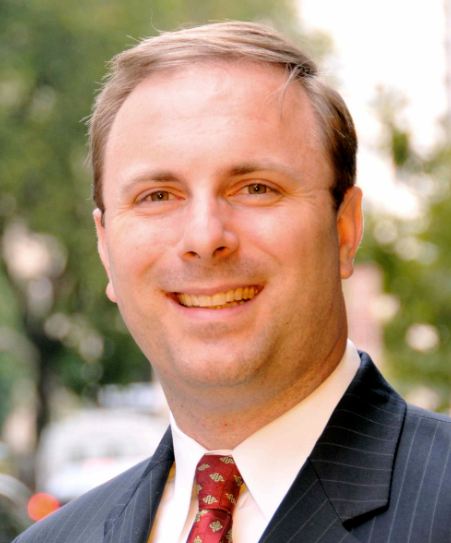
Hokanson
He later served as chief of staff and counsel to the U.S. Department of Education and as deputy assistant secretary for the Office of Elementary and Secondary Education. Hokanson, who heads Hokanson Consulting Group in Arlington, Va., is also a former president of the Alliance for School Choice.
Hokanson told the board that among his first priorities as commissioner would be to hire a strong chief of staff. That way, Hokanson could travel across the state to reach out to stakeholders, including teachers, parents and superintendents.
He said he would also take time to get to know department personnel, discover strengths and weaknesses in the system, and build trust.
“I would be a commissioner who would start walking the halls,’’ Hokanson said.
He downplayed his lack of school leadership experience, saying he comes from a family of educators. “I’m not a teacher, but I love working in education reform because of the ability to change students’ lives,” Hokanson said.
What does he see for the future in classrooms? “We are going to need to continually address online opportunities,’’ Hokanson said, including blended learning.
In his application, Hokanson highlights his background in strategic planning, along with expertise in federal and state law and a suite of education policies. Having been inside the “belly of the beast,’’ Hokanson said he is poised to continue reforms that have made Florida a national leader. (more…)
Financial irregularities. Eighty-five percent of district schools in Palm Beach County show financial irregularities, an audit finds, with some cases involving “thousands of missing dollars, spotty tracking of fundraising cash and outstanding deficits in school funds,” reports the South Florida Sun Sentinel.
 Teacher turnover. The Pasco district knows it must find ways to slow the revolving door in high-needs schools. Tampa Bay Times.
Inconvenient truths. Florida Voices columnist Rick Outzen says it’s an “inconvenient truth” that Florida’s grad rates are so low. (It’s also an inconvenient truth, not mentioned in the column, that they’re among the fastest-rising in the country.)
Construction money. Supporters of traditional public schools say charter school funding is leaving them in a bigger bind, reports the St. Augustine Record. Says Colleen Wood with 50th No More (and Save Duval Schools): “It seems to be the idea that parental choice is the guiding principal (for charter schools) as opposed to (students getting) the best education possible.”
Rubio and tax credit scholarships. Florida offers a model for a federal program proposed by U.S. Sen. Marco Rubio, writes the Choice Words blog. (Step Up For Students, which co-hosts this blog, administers the Florida program.)
Evals. The ones for administrators came out last week, too. StateImpact Florida. But there's a disconnect between the new evals and school grades, writes Naples Daily News columnist Brett Batten.
Early learning funding formula. Gov. Rick Scott says the state won’t change it this year, drawing praise from early learning coalitions, reports Gradebook.
Stuck in the '70s. In an editorial about the three finalists for ed commish, the Tampa Bay Times likens the DOE to "an old pinball machine" and asks: "At what point does the privatization of the public school system go too far? And what will you do move the focus off of vouchers and back to the heart of Florida's future - its traditional public schools?" Orlando Sentinel columnist Beth Kassab says go with Tony Bennett.
More Jeb Bush summit. Checker Finn’s a fan. EdWeek writes up Arne Duncan’s speech. More from Bloomberg, Stateline, the Getting Smart blog.
Sen. Legg
New ed leadership. John Legg, the former state rep and new state senator from Pasco is the new chair of the Senate K-20 Education Policy Committee, reports Gradebook. (The post also includes a listing of all committee members.)
Weeding out low-performing charters. EdWeek. StateImpact Florida.
Per-pupil spending by state. A new federal report shows Florida at No. 42, at $8,863 per student in the 2009-10 school year, reports the Orlando Sentinel School Zone blog.
More on $10,000 degrees. The Daytona Beach News-Journal editorial board likes Gov. Rick Scott's idea. The Sentinel's Beth Kassab does not. More from the Lakeland Ledger.
More on low grad rates. Palm Beach Post.
Voucher accountability. A problem private school in Manatee County should prompt more oversight from the state, editorializes the Bradenton Herald.
Florida mirage? As the Foundation for Excellence in Education summit gets underway today, Reuters takes a look at Florida’s academic progress in the Jeb Bush era and writes “a close examination raises questions about the depth and durability of the gains.”
Grad rates. Florida’s aren’t good, according to a new U.S. DOE report, reports Gradebook.
 $10,000 bachelor’s degrees. Gov. Rick Scott challenges state colleges to come up with innovative ways to bring down costs, reports the Tampa Bay Times. The Times editorial board calls it a “publicity stunt.” Board of Education member Roberto Martinez is also not impressed. More from the Orlando Sentinel, Palm Beach Post, Florida Times-Union, Miami Herald, Tampa Tribune.
Proposed school closings in Brevard and the connection to new charter schools. Florida Today columnist Matt Reed.
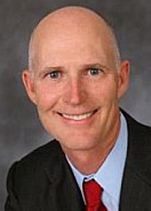 What does Rick Scott want? Orlando Sentinel columnist Beth Kassab on the possibility of Tony Bennett coming to Florida: “Indiana's loss could be Florida's gain. Then again, it will all depend on whether the state board and the governor are looking for somebody to push Florida forward or somebody to soften Scott's image on education reform. There are worrisome signs that Scott is looking for the latter.” Two knocks don’t make a pattern, but this is the second time in a month Scott has been criticized from the reform side.
Joining the chorus. Miami Herald columnist Leonard Pitts says the state Board of Education lowered the bar for minority students when it adopted short-term achievement goals that called for steeper rates of improvement for those students.
Tax credit scholarships and religious schools. The Orlando Sentinel takes a look at a long-established fact - the majority of students receiving tax-credit scholarships attend religious schools – and critics recycle myths about funding and accountability.
State settles with Christian college. From the News Service of Florida: “Settling a federal lawsuit that involved questions about the school's "secular purpose," state education officials will allow students at a Central Florida Christian college to be eligible for a popular grant program.” Complaint here. Settlement here.
Charter school analysis. News outlets continue to highlight UCF Professor Stanley D. Smith’s analysis, which finds that as a group, charter schools in Florida under perform traditional public schools. Smith writes an op-ed for the Tampa Bay Times. The St. Augustine Record uses his findings as a basis for this editorial. (more…)
 Promise of online learning. Pinellas math and statistics teacher Rob Tarrou puts his lessons online, a la Khan Academy, and wins fans around the world, reports the Tampa Bay Times. My favorite graph: “A reporter recently asked students in that statistics class how many had other teachers post educational videos online. No one raised a hand. Next, students were asked how many wished their other teachers would post videos online. Nearly all raised their hands.” See a “Tarrou’s Chalk Talk” video here.
Valerie Strauss on Tony Bennett coming to Florida: Column here.
Rick Scott’s ed plan falls short. Especially on charter schools, editorializes the Tampa Bay Times.
Republican hubris and Amendment 8: In its roundup of election winners and losers, the Tampa Bay Times suggests Amendment 8 had a lot to do with vouchers – and that it fits into the narrative about GOP overreach.
Contracting complaints. At the Division of Blind Services, which falls under the Florida Department of Education, reports the Tampa Bay Times.
Rick Scott at the BOE. Not much to report beyond board chair Gary Chartrand’s brief dig at No Child Left Behind. redefinED here. Gradebook here. Orlando Sentinel here. AP here. Sun-Sentinel here.
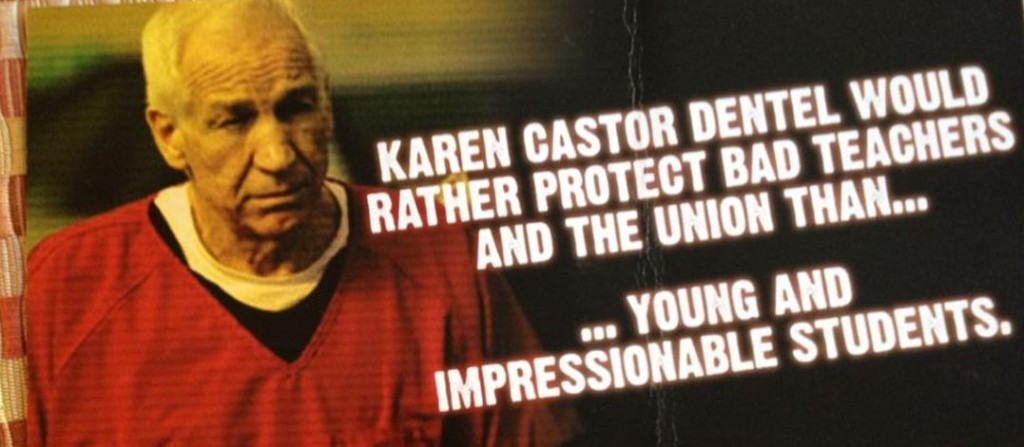 More on that ad. The campaign ad that seeks to tie a Democratic state House candidate with Jerry Sandusky is the kicker to this piece by Tampa Bay Times columnist Daniel Ruth. AP picks up the story.
Think tank doesn’t like Amendment 8. Add Education Sector to the list of those who don’t like Amendment 8 and say it’s about vouchers – but could benefit from more homework. This post on the Ed Sector blog, the Quick and the Ed, is written as if Florida doesn’t already have private-school vouchers.
StudentsFirst endorsement. Michelle Rhee’s group likes Aaron Bean, the Florida Times Union reports, in a northeast Florida race for state senate.
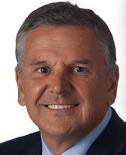 The decade-old No Child Left Behind Act is the epitome of top-down ed reform, and in some ways it parallels Florida’s test-heavy accountability system for public schools. So it was noteworthy today when one of Florida’s top education leaders referred to it in less than glowing terms.
Florida Board of Education Chairman Gary Chartrand said when it comes to closing achievement gaps between white and minority students, No Child Left Behind has been a “colossal failure.”
Chartrand shared the sentiment during a workshop in Boca Raton where Gov. Rick Scott made a rare appearance. Chartrand did not go into detail, and we could not reach him for comment later. But he made the point during a brief discussion about the state’s race-based achievement goals.
Last month, the board unveiled a strategic plan that sets different achievement goals for students based, in part, on race and ethnicity. The plan sparked accusations of racism in Florida and beyond even though the goals included steeper rates of improvement for minority students.
Scott called for the board to revise the plan, saying it “must clearly and sincerely acknowledge that all students are capable of performing at grade level regardless of their race or background.”
“How are we going to close the achievement gap?’’ Chartrand asked the governor Monday. “We need to do things differently.’’ Maybe Florida students need longer school days, or maybe districts need to assign the best principals and the best teachers to the worst schools, he continued. Perhaps a change in culture, with more discipline and parental involvement would make a difference.
Scott, who attended the workshop to explain his education agenda, didn’t offer any specific suggestions. “We should have the same expectations for every child,’’ he said.
Scott also offered little detail about his new plans, which include the possibility of district-run charter schools.
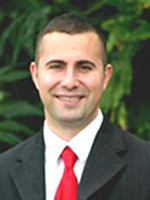
Rep. Soto
School choice Democrat has edge in senate race. State Rep. Darren Soto, D-Orlando, who supports vouchers and tax credit scholarships, appears poised to capture a state senate seat, reports the Sunshine State News.
DOE ends contract. From the Associated Press: “Florida is terminating a $20 million contract to build a website intended to help students, parents and teachers master new academic standards.”
Rick Scott ed plan called “timid.” The Daily Caller quotes Joy Pullman, managing editor of School Reform News: “Gov. Scott has released a comparatively tame education agenda, which reflects the vitriolic backlash he’s faced from the education establishment, and possibly a bit of “reform exhaustion” in a state that has made continual, serious education changes across the past 15 years.”
More no on Amendment 8. Hernando Today publishes a Florida Voices op-ed that says Amendment 8 is bad and really about vouchers.
Fate of double-F charter. The Board of Education will decide next week if the Sweetwater Branch Academic Elementary School in Gainesville can stay open, the Gainesville Sun reports.

