 Teacher of the year: Joy Prescott, a 4th-grade math teacher at Pemayetv Emahakv Charter School in Glades County, is named Florida teacher of the year. She wins $20,000 and will be the state's Christa McAuliffe Ambassador for Education for the next year. The other finalists were Kyle Dencker, a computer science teacher at Timber Creek High School in Orange County; Samantha Neff, a math coach at Idyllwilde Elementary School in Seminole County; Patrick Farley, a 3rd- and 4th-grade gifted teacher at Crystal Lake Elementary School in Martin County; and Molly Winters Diallo, a social science teacher at Alonzo and Tracy Mourning Senior High School in Miami-Dade County. Each wins $15,000. Orlando Sentinel. Florida Department of Education.
School security: Only 35 of the 140 applicants for armed guardians jobs in Broward County schools pass the first screening test. The district says it needs to hire at least 80. Fort Lauderdale City Manager Lee Feldman says based on his experience with his city’s police department, only about five of those 35 candidates will survive further screenings. He says most candidates fail the psychological tests. Sun-Sentinel. Only 24 of the eventual 107 school safety assistants will be in Duval County classrooms when students return to schools Aug. 13 because of hiring and training delays, say district officials. Florida Times-Union. WJXT. Insuring each security guard the Brevard County School District will cost only $150 a year, says Mark Langdorf, director of risk management for the district. District officials say they need 28 guards, so the insurance premium will be $4,200. Florida Today. The Leon County School District's patchwork of protection for schools will test the state law demand that every school have an armed officer every day. Tallahassee Democrat. Lawrence Leon, the former chief of the Palm Beach County School District's police department, will keep his $137,732 salary even though his job now is patrolling Jupiter Farms Elementary School. Palm Beach Post. The city of North Miami Beach is partnering with the Miami-Dade County School District to place a resource officer in all schools located in the city. The agreement adds officers at the two elementary schools; the middle and high schools were already covered. WTVJ. Several of the 13 Manatee County charter schools still do not have a plan for school security. Bradenton Herald. (more…)
The lawsuit challenging Florida's tax credit scholarship program hinges on a "complex" set of legal issues, a Leon County circuit court judge said Monday after hearing arguments in the case.
Judge George Reynolds grilled lawyers on both sides over whether the groups behind the lawsuit have standing to challenge the program — an issue that has snared challenges to similar programs in other states.
Reynolds repeatedly questioned how the statewide teachers union and other groups could show the tax credits harmed public schools, since the program isn't funded using money earmarked for public education. He had questions for both sides, and noted late in the hearing that he's grappling with a range of legal "complications."
Lawyers for the state and for scholarship parents argued that the tax credits available to companies that contribute to scholarship organizations (including Step Up For Students, which co-hosts this blog and employs the author of this post) are similar to the tax deductions offered for other charitable donations. The government can't lay claim to money that never winds up in the state treasury.
Claiming the money that funds scholarships would otherwise have gone to fund public schools requires "speculation heaped on top of speculation," Blaine Winship argued for the state attorney general's office. The union's logic, he added, could be used against other efforts to encourage charitable giving.
Ron Meyer, a lawyer for the teachers union, countered that the scholarship program is not supported through "garden variety" tax exemptions. Rather, the tax credits support donations for specific purpose: subsidizing private school tuition for low-income students, which the union argues violates the state constitution.
That led to a key exchange, in which Reynolds challenged Meyer.
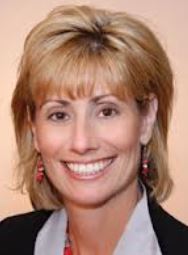
FEA Vice President Joanne McCall
Florida Education Association Vice President Joanne McCall has an obvious motive to discredit the nonprofit that administers a scholarship program she is suing, but her recent claims about its spending practices are nonsensical. Since they also track a growing teacher union narrative suggesting misappropriation in the tax credit scholarship programfor low-income students, they’re worth addressing.
First, the new claim. Asked to respond to a full-page advertisement in the Tallahassee Democrat from a diverse coalition of faith, community and education leaders that urged FEA to drop its lawsuit, McCall told SaintPetersblog: “About 3 percent of that scholarship money is being used to do this media campaign, and I’m not sure that taxpayers want their money used for that.”
The money for the scholarship, now in its 13th year and serving nearly 69,000 underprivileged students, is raised and distributed almost entirely by Step Up For Students, the nonprofit that also co-hosts this blog. So the implication is that Step Up is robbing from scholarship students to support a newspaper advertisement or media campaign that, by her math, would cost $10.7 million this year.
Since my own paycheck is from Step Up, I, too, have an obvious motive to try to discredit. But SaintPetersblog editor Peter Schorsch beat me to it. The claim was so preposterous that he apparently gave McCall the opportunity to edit her own quote. She declined, sparking Schorsch to call her “reckless” and “desperate.”
Unfortunately, it’s also becoming par for the course.
To set the record straight, the advertisement was financed by a group called HCREO, or Hispanic Council for Reform and Education Options. The ad was placed by a top-drawer communications consultant, Sachs Media Group, that is being paid by the Alliance for School Choice, a national education advocacy group that is fighting the lawsuit. In other words, neither the ad nor the Sachs contract is being financed by Step Up.
The 3 percent, though, is not a number McCall pulled from thin air. Under Florida law, state-approved scholarship organizations that operate for three full years with clean audits are then allowed to keep up to 3 percent of the tax-credited scholarship contributions in subsequent years to pay for administrative expenses. Given that the scholarship program this year is $357.8 million, that administrative allowance is now $10.7 million.
The FEA has likened that allowance to a management fee or even a profit. At its announcement of the lawsuit in August, FEA attorney Ron Meyer went so far as to call the program “a moneymaker for scholarship funding organizations.”
If Meyer’s assertion were true, Florida would have nonprofits lined up to get a piece of the action. (more…)
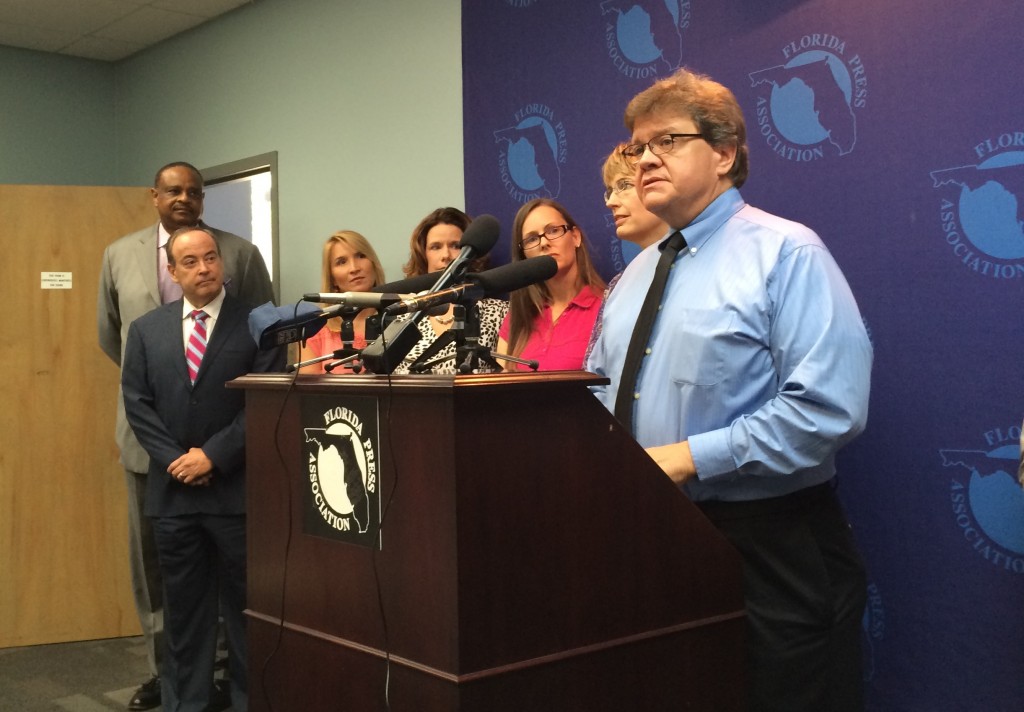
John Kurnick explains why several parents of special needs children are intervening in a lawsuit over parental choice legislation.
The parents of six special needs students announced Thursday that they are intervening to defend a new Florida parental choice program from a lawsuit by the statewide teachers union.
At a press conference in Tallahassee, the parents said the state's new Personal Learning Scholarship Accounts would help them get services for children with conditions like autism and cerebral palsy.
The program was created by wide-ranging school choice legislation signed last month by Gov. Rick Scott. The union is challenging the law in court. The accounts would allow parents to use state funds to pay for a mix of therapies and education-related services.
John Kurnick, of Tampa, said parents are often forced to "triage" educational and therapeutic services for children like his twelve-year-old son, who has been diagnosed with autism and other disorders.
He and his wife, Mary, have chosen to educate their son at home because he struggles in a traditional classroom. The accounts, they said, would help him get more services recommended by his therapists, and help him reach his potential.
"The funds provided for (by the scholarship accounts) will do untold good. We're convinced of this," Kurnick said. "It will give families access to many key treatments and specialty items that are necessary to help that dream become a reality."
The union sued to stop the new law earlier this month, the same week applications opened for the scholarship accounts. So far, parents have started nearly 1,800 applications.
The lawsuit contends the law violates the "single-subject" rule in the state constitution. In addition to creating the scholarship account program, the final version of SB 850 contained provisions that expanded collegiate high schools, created an "early warning system" for struggling middle school students, and placed new regulations for scholarship funding organizations like Step Up for Students, which co-hosts this blog.
The union focused most of its ire on portions of the bill that expanded eligibility for tax credit scholarships. Ron Meyer, the FEA's attorney, has said the special needs scholarship accounts could be a "collateral casualty" of the case. If the lawsuit succeeds, it could invalidate the entire law.
Throughout the spring legislative session, the union helped rally opposition to both the tax credit and scholarship account programs, as well as an effort to combine them into a single bill. (more…)
Ron Meyer is the longtime attorney for the Florida Education Association who has succeeded in getting Florida’s original school voucher program and an independent charter school authorizing panel thrown out in the courts. So when he threatens to sue two other voucher programs if the state moves forward with an even larger plan to provide stipends to any public school student who switches to private school, his warning begs an obvious question. Why hasn’t he sued already? The other two programs have existed for a decade.
Welcome to the constitutional cloud through which most ambitious states are now flying as they try to square a 21st century education with what in most cases are largely 19th century constitutional scripts.
Meyer is a smart and experienced attorney who is earning his pay when he says, as he did Sunday to Leslie Postal of the Orlando Sentinel, that: "If we go back to court now – and I think we would go back to court if there were this voucher-for-everybody concept – these other programs would be impacted."
So let’s put aside the bravado and look through his constitutional lens. Like many states, Florida has a provision for a “uniform” system of public schools. A variation first appeared in 1868, as a call for a “uniform system of Common Schools” aimed at establishing the ambition that all schools would possess similar resources. But in 2006, the Florida Supreme Court threw out former Gov. Jeb Bush’s Opportunity Scholarship Program because “it diverts public dollars into separate private systems parallel to and in competition with the free public schools.” (more…)

