 I’m kind of glad the ruckus over the parent trigger is over for now. I continue to believe that despite how mercurial it was, there are far more issues that can unite parents, the press and policymakers, if only we can wall off the static and talk.
Perhaps this is one: I think most of us can agree that poor and minority students are getting shortchanged when it comes to getting the best teachers in traditional public schools. I think most of us can agree this is fundamentally unfair to students and teachers alike.
No matter how you define teacher quality – and let’s leave teacher evaluations out of this for now because, sheesh, that is a mess – poor and minority students get less of what is ideal and more of what isn’t. There are far more rookie teachers in high poverty schools, far more teachers who needed multiple attempts to pass certification exams, far fewer board certified. In many urban districts, the teacher transfer pipeline is one-way from inner city to leafy burbs. Given what we know about great teachers – that they are the biggest in-school variable in student achievement, that they can and do change lives – this is unconscionable.
The latest evidence is from a Stanford University study published last month. It’s based on data from the Miami-Dade School District. And it finds that even within schools, lower-performing students are more likely to be taught by the less-than-ideal teachers.
I wish issues like this got more media attention, especially in Florida. As far as I can tell, the only major news outlets that wrote about the Stanford study were Education Week and BET. I know reporters are under more stress than ever, and the timing – near the end of the Florida legislative session – couldn’t have been worse. But this isn’t a fleeting issue. (more…)
Common Core: There is general acceptance among teachers, teachers unions and politicians in Florida that Common Core is a good thing, but questions remain about testing and funding, the Associated Press reports.
Next big step. President Obama can build on Common Core by creating another Race to the Top competition, inviting teachers to create top-notch, MOOC-like courses that can be viewed by students anywhere, write David Colburn and Brian Dassler in this op-ed for the Tampa Bay Times.
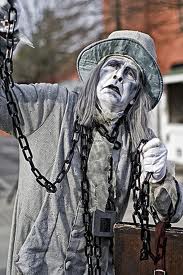 Ed reform Christmas Carol. Have we forgotten the Ghost of Education Past? From EdFly Blog: “For some, this brings nostalgia for the days when teachers and schools set their own standards. Forgotten is that while this system worked well for the children of affluent parents who lived near the best schools, it failed a growing number of kids not born into such fortunate circumstances.”
Private school security. The Palm Beach Post looks at the response from private schools in the wake of Newtown. The Post also looked at how charter schools in Palm Beach County responded.
Rookies. A year in the life of a first-year teacher. Second in a series. Fort Myers News Press.
Transfers. A Collier County teacher fights an involuntary transfer. Naples Daily News.
More school grades. The grading formula is in flux. School Zone.
Is the FCAT required or not? StateImpact Florida.

Shirley Ford
The mom on stage described how she and other low-income parents rode a bus through the darkness - six hours, L.A. to Sacramento, kids still in pajamas - to plead their case to power. In the halls of the legislature, people opposed to the idea of a parent trigger accused them of being ignorant, of not understanding how schools work or how laws are made. Some called them a “lynch mob.”
Then, Shirley Ford said, there was this sad reality:
“I would have thought that the PTA would have been beside me,” Ford said. But it wasn’t. “I’m not PTA bashing when I say this,” she continued. “To see that the PTAs were on the opposite side of what we were fighting for was another level of awareness of how the system is.”
Ford is a member of Parent Revolution, the left-leaning group that is advocating for parent trigger laws around the country. She spoke last week at the Jeb Bush education summit, sharing the stage with former California state Sen. Gloria Romero and moderator Campbell Brown. Her remarks, plain spoken and passionate and sometimes interrupted by tears, touched on a point that is vital and obvious and yet too often obscured.
Parents are not a monolith.
The divides are as apparent as the different dynamics that play out in schools on either side of town. In the affluent suburbs, a lot is going right. There is stability in the teaching corps. The vast majority of kids don’t have issues with basic literacy. The high schools are stocked with Advanced Placement classes. And there, behind it all, are legions of savvy, wonderfully dogged, politically connected parents who know how to mobilize when their schools are shortchanged.
The view is starker from the other side of the tracks. A parent in a low-income neighborhood is more likely to see far more teacher turnover in her school – along with far more rookies, subs and dancing lemons. She’ll see far more students labeled disabled and far fewer AP offerings. Issues like these plague many high-poverty schools, yet they don’t get much attention from school boards or news media or, frankly, from established parent groups like the PTA. (more…)
A recent report from Harvard researchers offers more compelling reasons why expanded learning options are so needed for struggling students. Based on data from four urban school districts, the Strategic Data Project at Harvard's Center for Education Policy Research found lower-performing students are placed with brand-new teachers far more often than their higher-performing peers.
Given high turnover in high poverty schools, and the reluctance of school boards to address it, you’d expect more of these match-ups there. But the researchers found them across all schools. And given what we know about the effectiveness of rookie teachers, the tragic impact is obvious: “The systematic placement of novice teachers with lower-performing students can be expected to compound these students’ academic difficulties and exacerbate achievements,” the researchers wrote. They termed it a “double whammy.”
That’s putting it mildly. There is no justification for saddling students with the greatest need with teachers who are often the least effective. It’s a clear case of public schools perpetuating a vicious cycle that they can, within their power, do much to help mitigate.
The practice isn’t good for teachers either. The researchers ask, “Is it the best strategy to develop and retain highly effective teachers by placing them in challenging situations when they are at a critical stage in their development as teachers?”
The report suggests potential remedies, including paying teachers more to work in tough schools. Maybe, someday, school districts will get around to doing that in a meaningful way. In the meantime, how can anyone deny parents the chance to find better odds in an alternative setting?
Everybody loves the underdog except when it comes to education reform. More than a week after the Florida Senate rejected the parent trigger bill, the story line is now David v. Goliath, with David (played by established parent groups like the Florida PTA and Fund Education Now) squeaking out a victory over Goliath (starring Jeb Bush, Michelle Rhee, and the Republican-dominated Legislature.)
The truth is, titans clashed while David was en route to his second job.
The underdogs who are lost in this narrative are low-income and working-class parents. They have virtually no one in their corner as they deal with conditions in their schools that would spark outrage – and quick remedies – if they happened in more affluent schools.
To take teacher quality and equity as an example: High-poverty schools have the highest teacher turnover rates, the most rookie teachers, the most out-of-field teachers, the most teachers who failed certification exams, the fewest board certified, etc. We all know how destructive that is, year after year, kid after kid, generation after generation. And yet, it’s just kind of accepted. (more…)

