Editor’s note: This post originally ran yesterday on VOXXI, the fourth in a series of back-and-forth op-eds between Dr. Rosa Castro Feinberg and Julio Fuentes, president & CEO of the Hispanic Council for Reform and Educational Options and a member of the board of directors for Step Up For Students. Step Up administers Florida’s tax credit scholarship program and co-hosts this blog.

Dr.. Feinberg actually tries to draw a parallel between private schools that accept tax credit scholarship students and cancer-causing cigarettes.
When her son Valentin was in sixth grade, Janet Ruiz decided enough was enough. Because of language barriers, Valentin, who is from Nicaragua, wasn’t doing well in public school. In fact, he was failing. He was also being bullied mercilessly because he didn’t speak English well enough. At one point, Ms. Ruiz kept him home for two weeks, but no one from the school even called.
So Ms. Ruiz got a tax credit scholarship that allowed Valentin to go to a different school, a dynamic little private school called La Progresiva Presbyterian in Miami. Now he’s in ninth grade and he reads and speaks English perfectly. In a school that prides itself on tough grading, he’s making straight A’s.
La Progresiva, his mom says, “is where he began to learn.”
It’s true that tax credit scholarships for low-income children, what the critics call “vouchers,” are not a panacea and don’t work for every child. It’s true there are fair questions to ask about them. But all too often, critics of parental choice seem eager to overlook thousands of stories like this one and instead perpetuate myths and make sensational claims.
In the process, they insult parents like Ms. Ruiz who are desperately looking for help, and an army of motivated educators, like those at La Progresiva, who are willing to roll up their sleeves and be part of the solution.
In Dr. Rosa Castro Feinberg’s latest essay in VOXXI, she rehashes many of the arguments from her first essay and then makes an absurd comparison, trying to draw a parallel between private schools and cigarettes.
The number of smokers dropped dramatically, she notes, once cigarette packs started carrying warning labels. “Consumer satisfaction is not enough. What you don’t know can hurt you,” she writes. “And there’s a lot we don’t know about the effects of Florida law on ELLs and others in vouchers schools.”
Comparing private schools to cancer-causing cigarettes? I thought I had heard it all.
There are more than 36,000 educators in Florida private schools, and the vast majority of them are like the vast majority of public school teachers. They’re working as hard as they can, often in tough circumstances, and for not enough money, to make our world a better place. As a private school principal in Broward wrote recently in the South Florida Sun Sentinel, “Like public school teachers, we’re not about profits and privatization. And with them, we share a common goal: to help our students become successful in school and in life.”
Those educators deserve respect and fair consideration. So do the parents of the kids they’re educating. (more…)
Editor's note: This post originally ran as an op-ed Sunday on VOXXI, in response to an op-ed by Dr. Rosa Castro Feinberg. Julio Fuentes is president and CEO of the Hispanic Council for Reform and Educational Options and a member of the board of directors for Step Up For Students, the nonprofit that administers Florida’s tax credit scholarship program and co-hosts this blog.
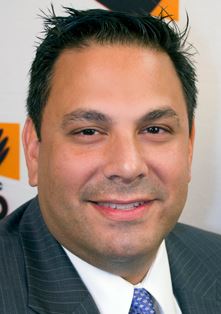
Julio Fuentes
In Florida schools, there is no doubt that English language learners, many of them Spanish speakers, are the most vulnerable and most struggling of our students.
To offer but one sad fact, only 11 percent of ELL (English Language Learners) students last year passed the 10th grade FCAT in reading, the test they must pass in order to graduate from high school. Let me repeat that so the gravity of the number sinks in: 11 percent. That’s compared to 54 percent of students overall, 41 percent of low-income students and 21 percent of students with disabilities. To be sure, standardized test scores should often be taken with a grain of salt. But it’s clear they wave a bigger red flag with ELL students than with any other group. And there is no doubt we must move with greater urgency to do all we can to ensure a brighter future for those students.
Given that backdrop, I must respond to Dr. Rosa Castro Feinberg’s April 24 op-ed, “Students learning ESOL with vouchers might be getting shortchanged.” I have the utmost regard for Dr. Feinberg. I appreciate the expertise she brings to the subject of ELL and ESOL students. And I do think there are some issues involving those students and tax credit scholarships (aka “vouchers”) that are worthy of fair-minded debate. But in this case, I must respectfully say that Dr. Feinberg’s concerns are misplaced, and that she is unfairly tarnishing a tool that can help ELL students.
At the end of the day, what tax credit scholarships do is simply give parents more options. Why in the world would we limit options for students who need help wherever they can get it? Dr. Feinberg listed a slew of things that public schools are required to provide ELL students, including extra funding and extra training for teachers. Many of those policies are well-intentioned and helpful. But the statistics show they’re not helpful enough.
This year, 35 percent of the nearly 60,000 low-income students using tax credit scholarships are Hispanic. Many were not satisfied with public schools, and so they used the scholarships to find something that works better for their children. If the ELL families among them felt their needs were being met in public schools, they wouldn’t have left. There are endless reasons for their frustration, but I have no doubt that the cultural barriers they sometimes face in public schools are among them.
Sometimes Spanish-speaking parents can’t communicate well with the staffs at public schools. At some public schools, there is no one who can help the family because no one at the school speaks their language. I don’t mean this as a knock on public schools, which are too often burdened with the impossible task of being all things to all children. But it’s a fact. It’s also a fact that many private schools serving Spanish students go to great lengths to ensure that even their written communications are in Spanish. I wish I could say the same about public schools, but unfortunately I know more than a few examples where that is not the case.
Perhaps unintentionally, Dr. Feinberg made a case for school choice and parental empowerment in her own op-ed. She suggested to parents, “Visit the school’s ESOL or bilingual classes. Do you think the children are learning English? If the school doesn’t offer these classes, think twice about changing schools.”
We couldn’t agree more. But it’s not in the best interest of ELL students for the parents to limit their visits to public schools. Why not explore all options? (more…)

