GLEN ST. MARY, Fla. – Baker County is in a piney corner of North Florida that hugs the Georgia line near the Okefenokee Swamp. It’s part of metro Jacksonville, but on the country side, not the coastal side, still more small town than sprawl. Its biggest town, Macclenny, boasts 7,304 people. One of its top employers is a Walmart distribution center.
Places like Baker County aren’t often associated with school choice and innovation, but it’s not because those things aren’t happening there. They are. In fact, in the mega-state with the most diverse and dynamic education system in America, it’s Baker County that’s home to one of the biggest and most intriguing hybrid homeschools.
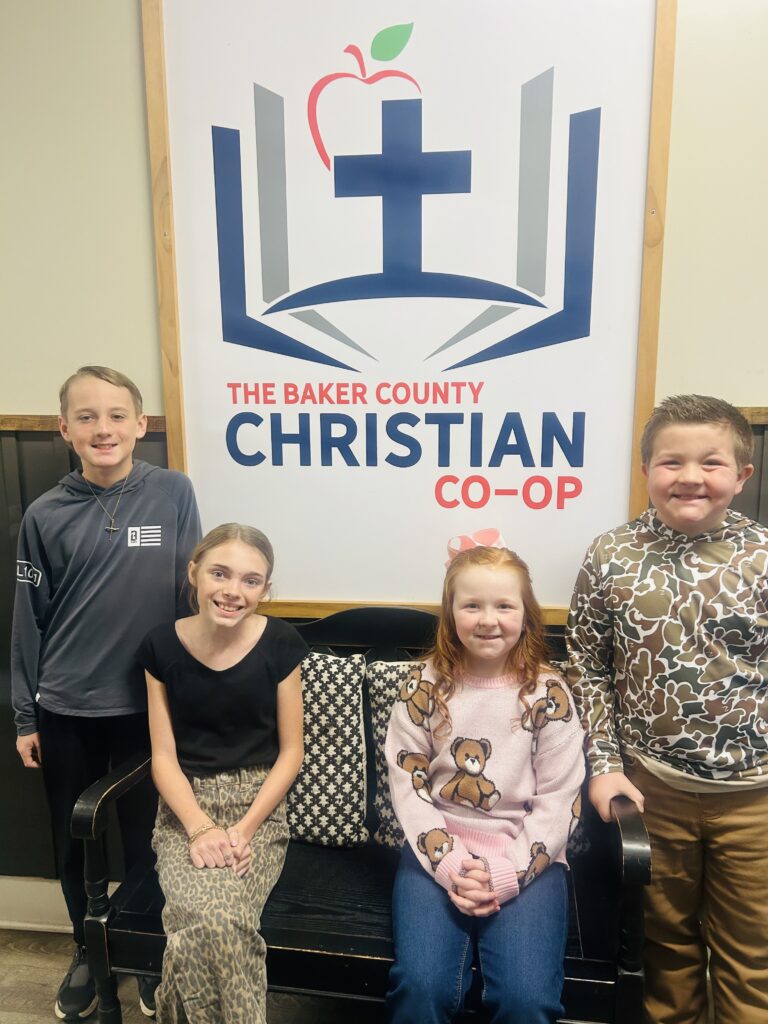
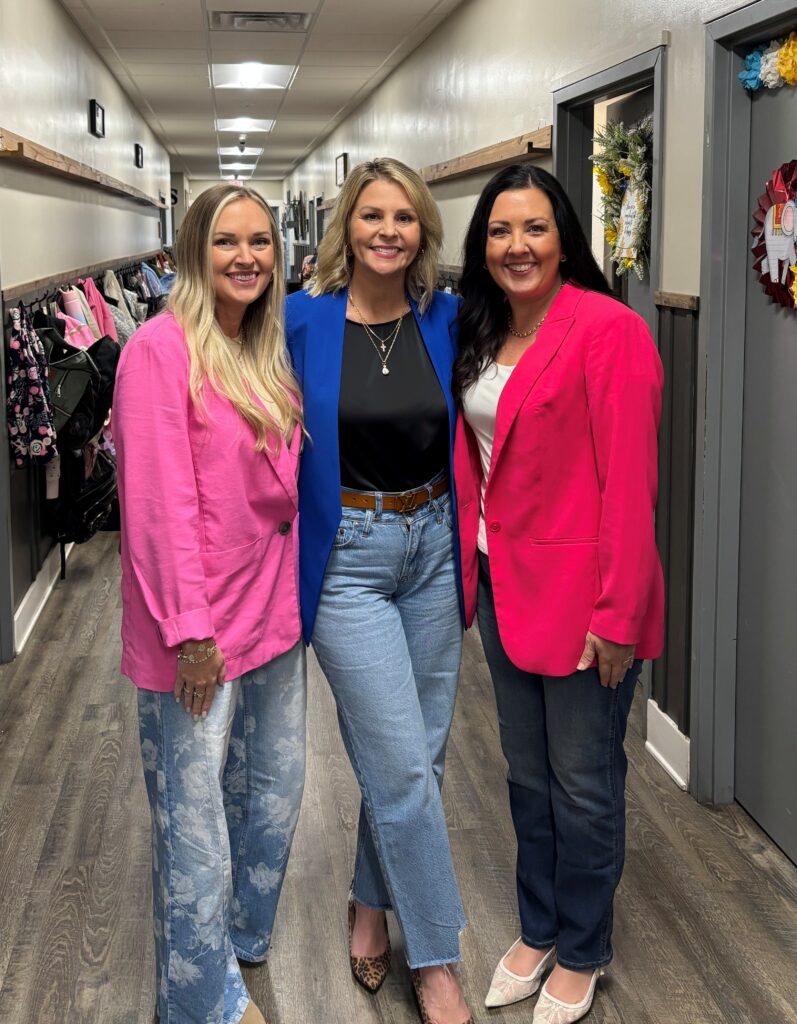
Nine years ago, three former public school teachers, Tara Rhoden, Katie Wilford, and Amy Blankenship, said goodbye to nearly 40 years of collective experience in the local public schools and went all in on the Baker County Christian Co-op.
Their four-day-a-week creation started with 45 students in grades K through six – and no plans to grow beyond grade eight.
But now BCCC has nearly 300 in grades K-11 – and 600 more on a waitlist.
That’s not a typo. SIX HUNDRED MORE ON A WAITLIST.
In a school district with 4,000 students.
“I joke that it’s the Disney World of education,” Katie said. “Everybody is happy. They want to be here.”
“There weren’t really choices in Baker County,” Amy said. “But we provided a choice.”
BCCC is another example of what’s possible when education choice is the new normal, as it is in Florida.
Its existence shoots down multiple myths.
School choice isn’t good for teachers? BCCC’s co-founders are among hundreds of former public school teachers in Florida who’ve created their own schools. Meanwhile, 16 of the co-op’s 17 teachers previously worked for public schools. (The one exception is Tara’s daughter, a product of local public schools, who started her teaching career at BCCC.)
School choice can’t work in rural areas? Baker County is one of Florida’s 30 rural counties; it has a grand total of 30,000 residents. Yet nearly every student at BCCC uses a flexible, state-supported choice scholarship, better known as an education savings account. It’s not hard to find other cutting-edge, choice-fueled learning options all over rural Florida.
Education innovation is a city thing? BCCC sets its pricing at $1,000 less than the value of the ESA, so parents can use their funds for other state-approved educational uses. “Incentive to hunt for value” is what ESA designers were aiming for when they were fine-tuning the concept two decades ago, and here it is happening in a county with more interstate rest stops (2) than Starbucks (1).
At BCCC, each co-founder had good reasons for wanting options for her own children.
Amy’s daughter had a tough time socially in elementary school, so Amy considered homeschooling her. But she worried that might leave her daughter in a situation where she wasn’t getting enough social interaction.
Katie’s daughter was in a faith-based preschool, and Katie appreciated how faith and academics were intertwined in a way they could not be in a public school.
Tara’s son, meanwhile, had health complications that made a full-time school difficult.
Tara and Katie, who were also curriculum coaches in the public schools, had thought about starting their own school. Years ago, Tara visited the school in Atlanta founded by legendary educator Ron Clark. That kept the dream alive, even if she never acted on it until co-founding the co-op.
“He just made learning fun,” Tara said. “I wanted to be that teacher.”
When the trio finally decided to go for it, they needed 30 students right off the bat to make the finances work. After the co-op’s first parent night, 31 students signed up.
For the most part, BCCC’s curriculum is aligned with the state’s academic standards. Even though those standards were designed for public schools, it’s not hard to find private school educators who value them.
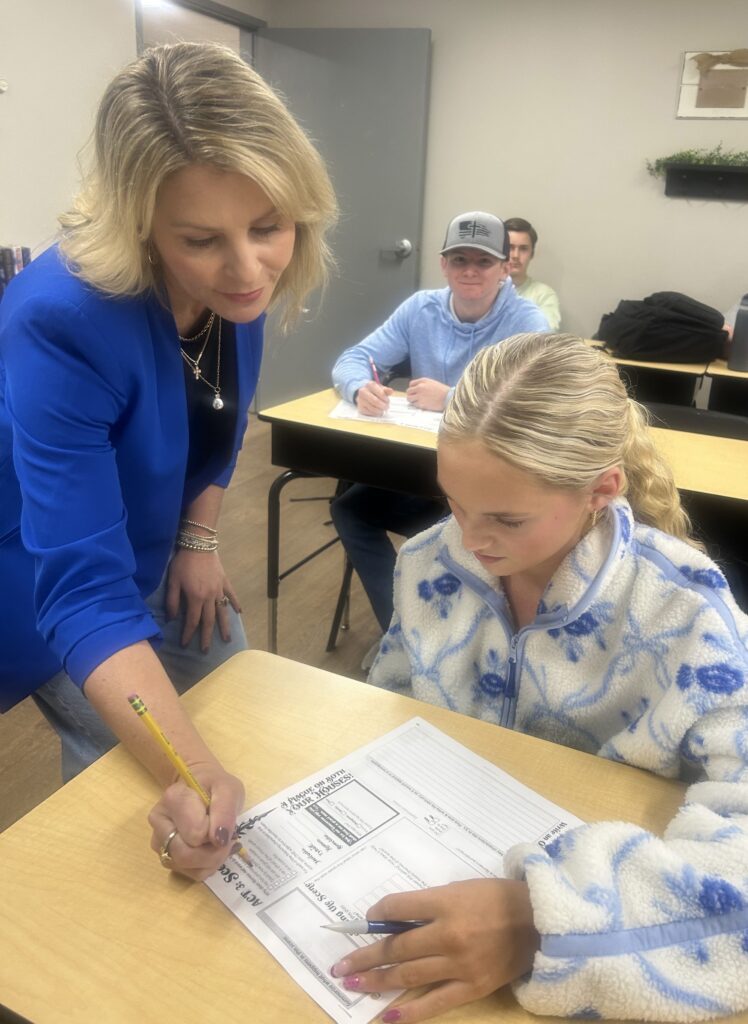
At BCCC, students in kindergarten through fifth grade study the core academic subjects and the Bible every day.
Students in sixth through 12th grade follow the same regimen, but with electives like health, home economics, and agriculture in the mix, too.
About half of BCCC’s high school students (the co-op will be fully K-12 next year) also take dual enrollment classes through a nearby state college.
“We’re going to give you what you need to be successful,” Amy said. “For those four days, it’s jam packed. We push these students.”
It’s what happens beyond academics, though, that makes the founders especially grateful they followed their hearts.
When Amy’s daughter was sick, for example, Katie’s daughter and her friends made a video for her, a compilation of 10 other students wishing her well and offering her prayers. No one asked these girls to do that; they just knew it would help their friend.
“This is why we did what we did,” Amy said.
“We’re not fighting the school system. We’re fighting the world,” Katie said. “We take faith very seriously.”
BCCC has always been four days a week. The founders decided from the start that they would not offer classes on Fridays because “it’s such a good family day,” Katie said.
BCCC has additional flexibility because it’s a co-op, not a private school. Attendance is not mandatory.
The founders said they never thought much about school choice before starting the co-op. With few options beyond public schools in Baker County, the idea seemed irrelevant.
That changed in 2023. That’s when the Florida Legislature and Gov. Ron DeSantis made every student in Florida eligible for choice scholarships and created the Personalized Education Program scholarship, which gave families of general-population students more flexibility with the funds.
Suddenly, more families could access what BCCC offers.
Jennifer Franks’s family was among them.
Jennifer enrolled her daughter, Jencee, 8, and son, Cutler, 10, after they attended the neighborhood school for several years. Her kids had good experiences and great teachers, she said. But BCCC offered features her family considered vital: smaller classes, a Christian education, and that family day on Fridays.
Academically, she said, her children are accelerating. And meanwhile, her family gets more time together.
Jennifer is a hair stylist. Her husband is an electrician. Both adjusted their work schedules to have Fridays off and long weekends with the kids. BCCC’s schedule syncs with that perfectly.
“That was a big selling point for us,” she said. “You just don’t get that time back. Your kids are only little once.”
BCCC isn’t sure how to accommodate all the families who want in. But there are plans for another building that can hold additional students. If all goes well, it’ll be in place by the start of school in 2027.
Meanwhile, word has gotten around about BCCC’s success.
Educators in other rural counties have reached out to learn how they can start their own operations. BCCC’s founders say there’s no reason they can’t.
With choice, Katie said, “all communities can come together and create something like this, to do what’s best for all children.”
Jason Bedrick and I co-authored a new study for the Heritage Foundation last week in which we test an assertion made by Texas choice opponents: choice will destroy rural education. Opponents bandy this assertion as if it were a self-evident fact, but can the assertion withstand scrutiny?
Sadly, we noted that Texas public schools seemed to be doing a rather remarkable job of damaging student learning in the absence of choice. The National Assessment of Educational Progress contains data on rural achievement starting in 2007. It’s not pretty in rural Texas:
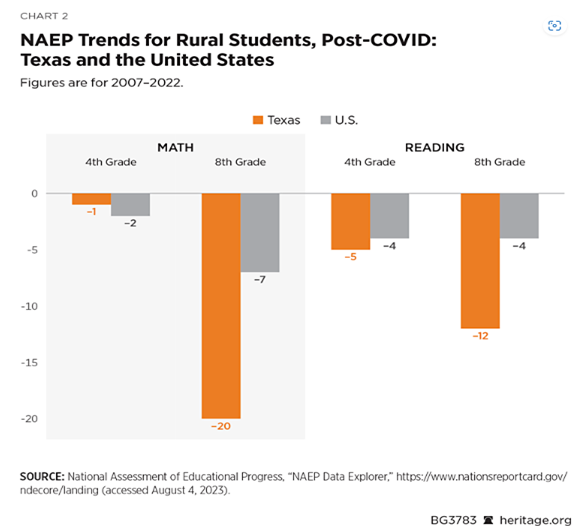
On these exams 10 points roughly equals a grade level worth of progress. Unfortunately, this means that Texas eighth graders demonstrated a command of mathematics in 2022 roughly equivalent to what we would have expected out of a group of Texas sixth graders in 2005. COVID-19 does not account for all of this decline. Between 2007 and 2019, eighth grade students saw approximately a grade level decline in math achievement, and the state suffered another grade level drop between 2019 and 2022.
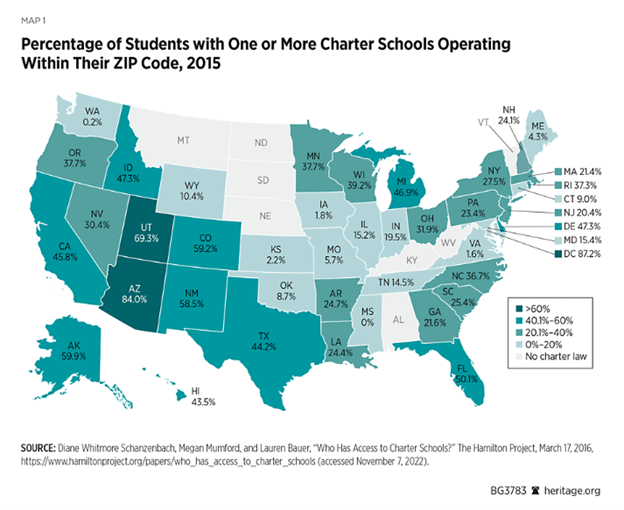
To make the case for choice in rural communities more concrete and less theoretical, we compared academic trends in rural Texas with academic trends in rural Arizona. Arizona has the nation’s largest and most geographically inclusive charter sector (see map above), a very active system of district open enrollment in which nearly all districts participate, tax credit scholarships, ESAs, state funded microschools, homeschooling, and digital learning options.
All of these options reach into rural Arizona communities. Has Arizona rural education suffered “destruction?” No. All Arizona school districts that were educating students in 1993 (the year before the advent of choice) are still educating students in 2023. Moreover, unlike Texas, the academic trends for rural Arizona students have been positive:
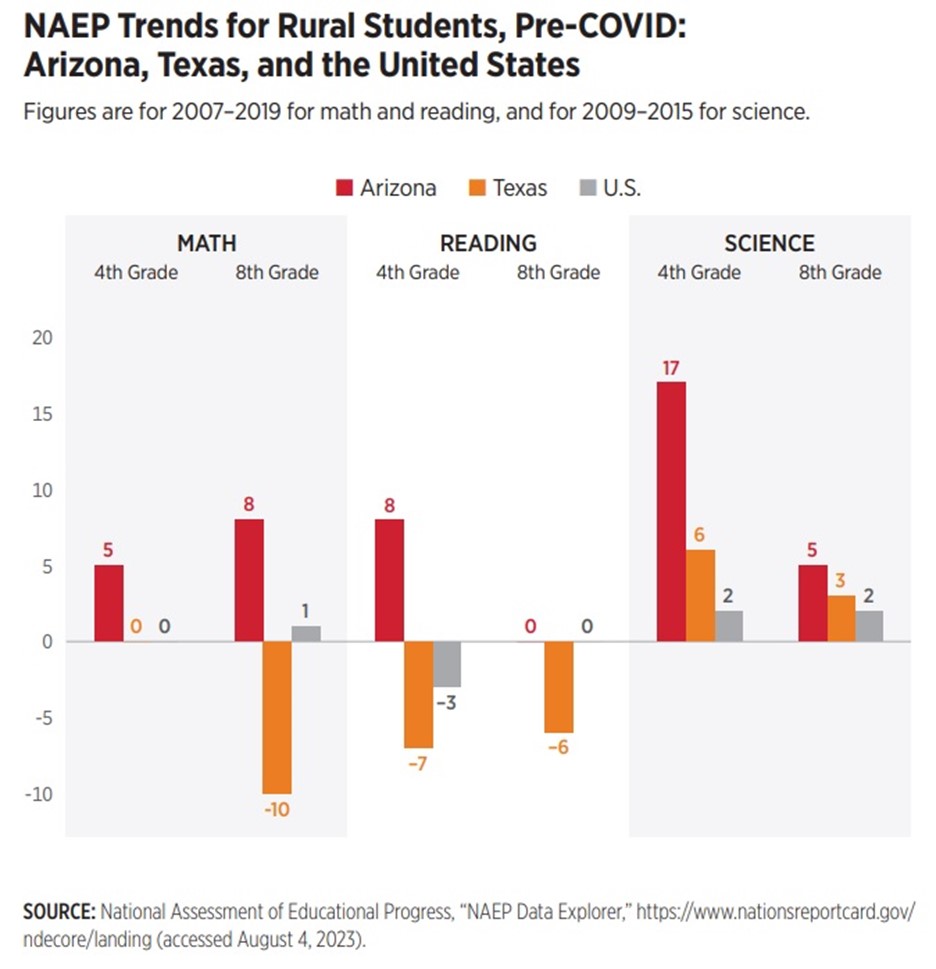
Arizona rural school districts didn’t get the apocalyptic destruction memo. They not only still exist, but their outcomes also improved over time. The Stanford Educational Opportunity project provides a separate source of data showing a similar trend. Stanford scholars linked state testing data in grades 3-8 to enable comparisons across jurisdictions for the 2008-2018 period. Academic growth represents the best measure of school quality, and the project provides growth data for rural school districts (while averaging in charter scores with those of the district in which they reside).
This is my “friendly neighborhood school choice mad scientist makes an excel chart” presentation of that data for rural districts in Arizona and Texas:
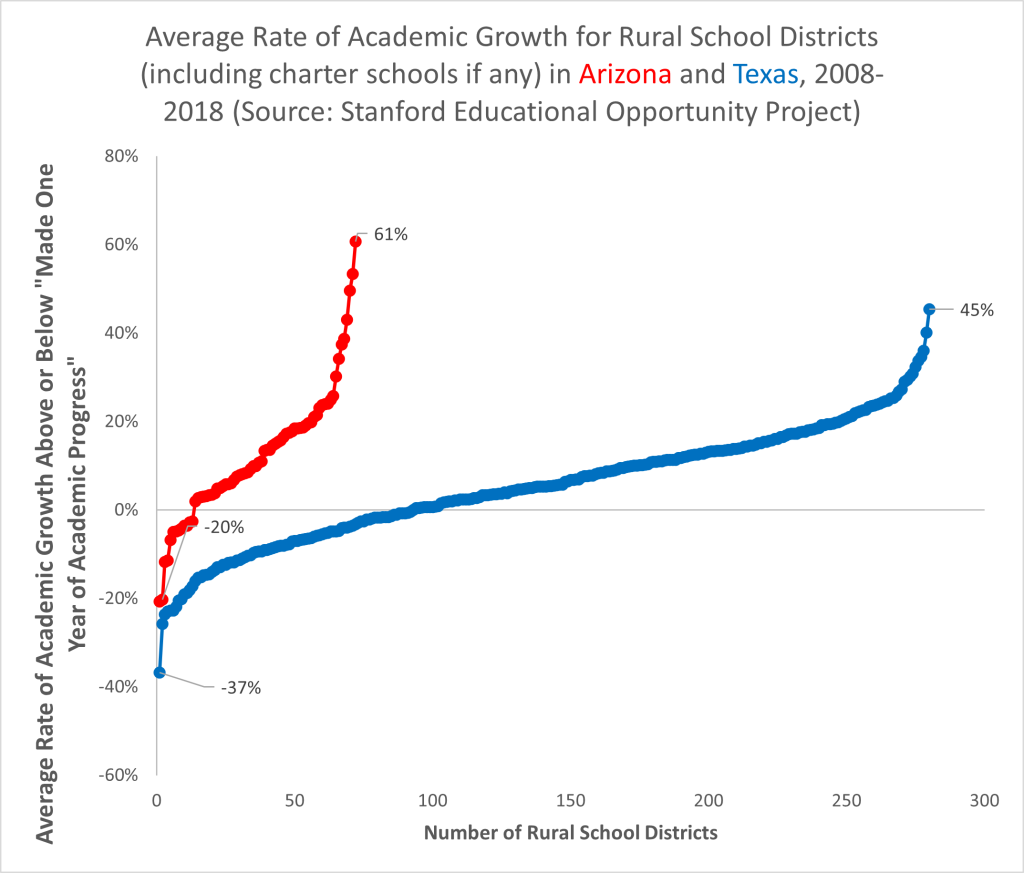
And this is the much-improved version of the same data from the data-wizards at Heritage:
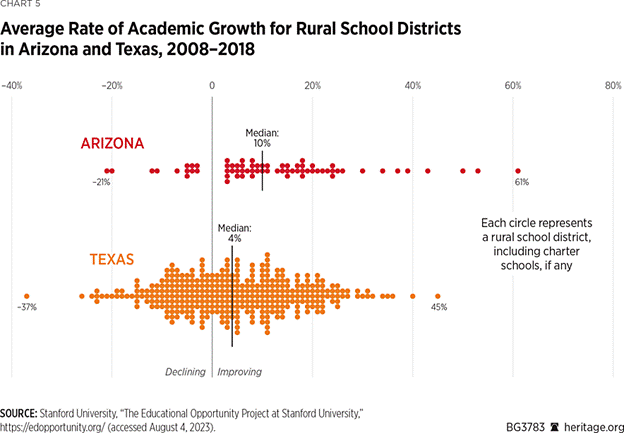
The choice-induced death of rural education appears to have been greatly exaggerated. Choice will be rapidly growing in rural areas of many states in the aftermath of the 2023 legislative sessions. Texas families and teachers deserve these freedoms as well. Arizona lawmakers have empowered teachers to create their own schools and families to sort between schools to find the best fits. Rural teachers and students benefit from variety just like everyone else. Rural Texans have nothing to lose and much to gain from choice.
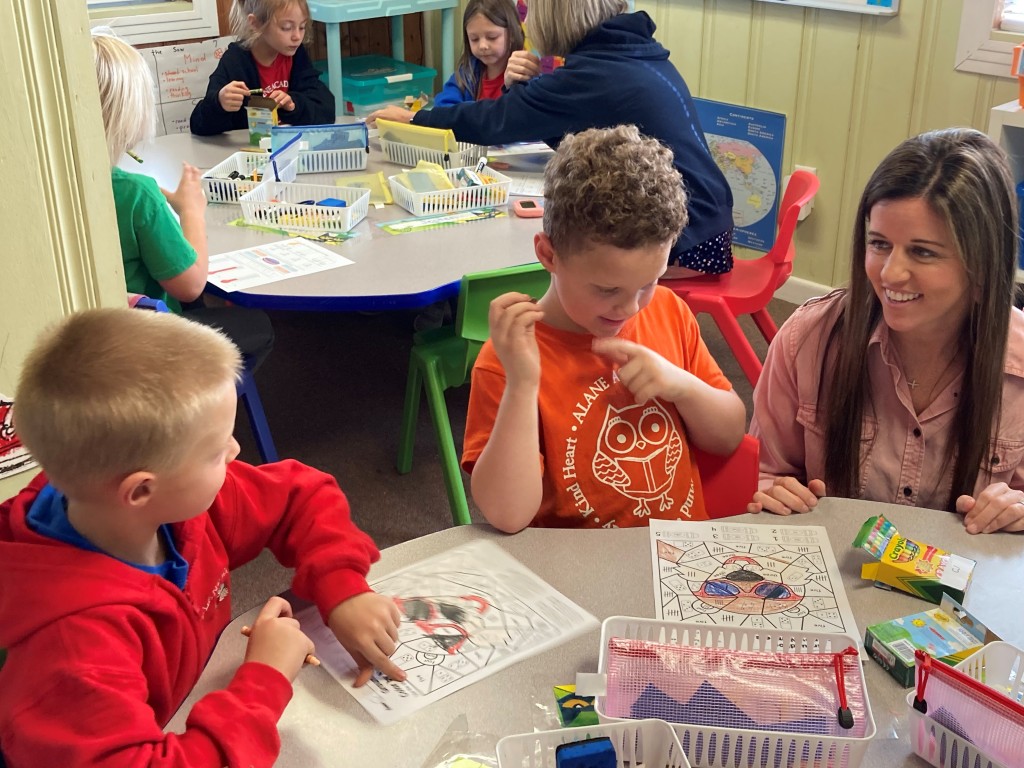
Julie Taylor launched Alane Academy in rural Wauchula, Fla., with a team of driven educators who align with her philosophy that excellent character and leadership are equally as important as academics.
Editor’s note: This article, which discusses a Step Up For Students brief authored by Ron Matus and Deva Hankerson, appeared Tuesday on ocpathink.org.
In this year’s Oklahoma elections, school-choice opponents repeatedly claimed that allowing education funding to follow students to any provider would destroy rural schools and produce no benefit for most rural students.
Voters ultimately rejected those claims and overwhelmingly supported school-choice candidates. The strongest support for school-choice candidates often came from rural counties.
Now a new study from Florida shows that school-choice programs have benefited rural students in that state without harm to local public schools.
“It’s a myth repeated so often and for so long it’s come to be accepted as fact: School choice won’t work in rural areas. But just like so many other myths about school choice—that it destroys traditional public schools, that it doesn’t lead to better academic outcomes, that it lacks accountability—the myth about school choice not working in rural areas doesn’t stand up to scrutiny,” wrote Ron Matus and Dava Hankerson, both officials with Step Up for Students.
In their report, “Rerouting … the Myths of Rural Education Choice,” Matus and Hankerson reviewed data on school choice participation in Florida’s rural counties. The report defined a rural county as any county having less than 100 people per square mile. Thirty counties in Florida met that definition while in Oklahoma 68 counties fall into that category, according to publicly available data.
Matus and Hankerson found that the number of state-supported private school choice scholarships grew in Florida’s 30 rural counties from 1,706 income-based choice scholarships in the 2011-12 school year to 6,992 in 2021-22. Statewide, more than 70 percent of families are eligible for Florida’s income-based scholarships and the average annual family income for students on scholarship is $37,731.
The report found the share of rural students enrolled in private schools also surged, rising from 6,450 rural students in 2011 to 10,965 in 2021, an increase of 70%.
To continue reading, click here.

