Editor’s note: This video spotlights another rural private school that caters to school choice students and is changing lives and communities for the better. To learn more about how choice is helping rural areas, check out our new paper, “Rerouting the Myths of Rural Education Choice.”
When you think of school choice, you probably don’t think of places like Bristol, Florida.
But you should!
Bristol is a one-stoplight town in bear country. It has 996 people. And it’s home to a beloved, home-grown private school called the Gold Star Private Academy.
Every student at Gold Star uses a state-funded school choice scholarship. And as you’ll see in this 4-minute video, their once-desperate parents couldn’t be happier.
School choice is changing lives – and sometimes saving them – wherever it exists. In Florida, that includes little towns like Bristol, and Wauchula, and Williston, and Clewiston …
And yet, in states like Texas and Oklahoma, school choice opponents have managed to scare otherwise level-headed people into believing that choice can’t work in rural areas and/or will “kill” their rural public schools.
Gold Star Private Academy is the antidote to that fearmongering.
Enjoy the video.
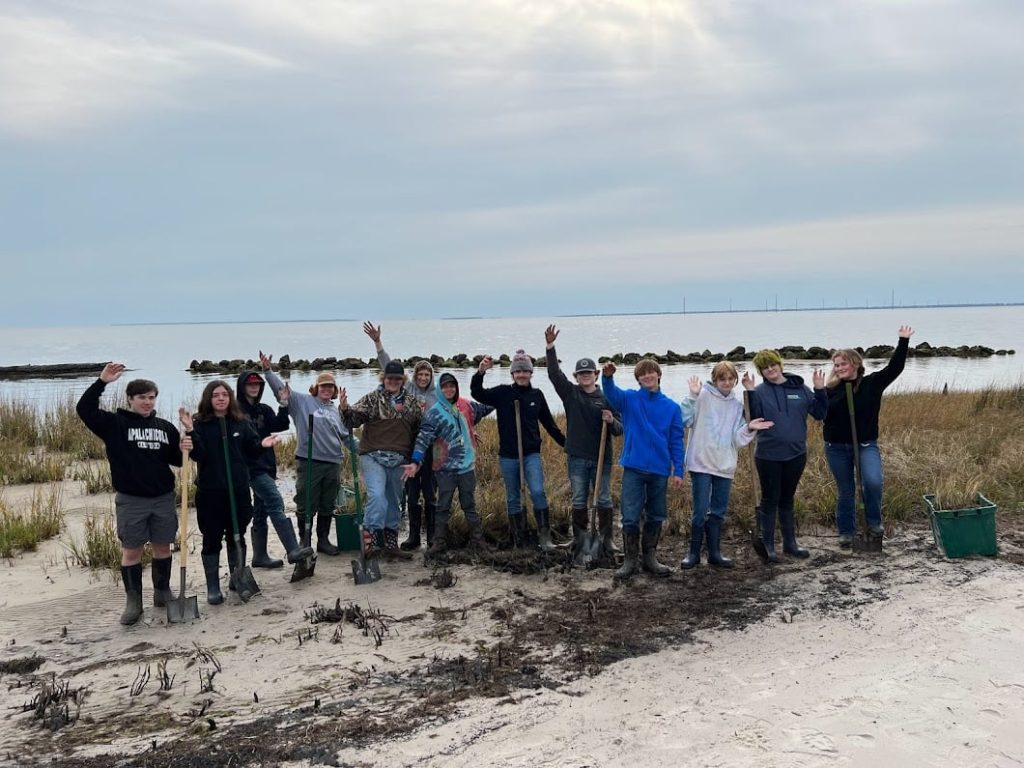
Students at ED Corps High School in rural Eastpoint, Fla., spend a third of their time outdoors on projects such as planting marsh grass to stabilize shorelines. The school’s freedom and flexibility offers students who struggled in their prior schools the opportunity to try things that might work better.
Editor’s note: This distinctive high school in the Florida Panhandle is another compelling example of how education choice manifests in rural areas, contrary to myths perpetuated by choice opponents in other states. To rebut that misinformation, reimaginED published a new white paper last week called “Rerouting the Myths of Rural Education Choice.” You can check it out here.
EASTPOINT, Fla. – They call it the Forgotten Coast because even though Florida is overflowing with 22 million people, this bend where the South meets the sea is not yet overrun.
Eastpoint, population 2,614, is the heart of the Forgotten Coast. Until a few years ago, its waterfront was lined with tin-roofed shacks, with workers in white rubber boots processing every bit of briny goodness that could be culled from Apalachicola Bay. Those seafood houses aren’t humming like they used to; for the bay’s world-famous oyster fishery, these are especially tough times. But even now, Eastpoint gets up before the rest of us, to head to work while the stars are still out.
That resilience is getting a boost nowadays from an unlikely source: An unassuming little school.
ED Corps High School serves kids who were not a good fit for traditional schools. It emphasizes life skills and job skills and industry certifications. And its students spend a third of their time outdoors, often working on conservation projects that mesh with the community fabric – like planting marsh grass to stabilize shorelines, or planting oysters so that someday, people can get back to tonging them up.
“The last thing you want is a job you’re not excited about,” said Joe Taylor, executive director of Franklin’s Promise Coalition, a community non-profit that counts ED Corps as a critical part of its portfolio. “This is where they grew up. They want to be in the woods or on the water.”
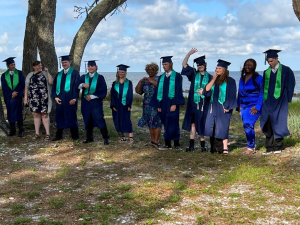
ED Corps’ dedicated faculty and staff assist each student to develop a path to graduation with customized class schedules that leverage each individual’s learning style.
The goal isn’t just a diploma and a job, Taylor said. It’s breaking the cycle of generational poverty that is also part of this landscape.
“We believe in a long-term relationship,” he said. “We’re going to keep going until we land that plane.”
ED Corps is a school of choice. It serves 16 students, with 7 more on a waiting list. Fourteen of the 16 use state-funded school choice scholarships for lower- and middle-income families.
It’s important to point that out because in many states that don’t have expansive choice programs, choice opponents claim choice won’t work in rural areas, or, if it does, will destroy public schools.
ED Corps is more evidence that neither claim is true. The local superintendent attended the school’s first graduation ceremony two years ago. And the district, which oversees a single K-12 school, calls ED Corps when it has kids it thinks might better find success there.
“They recognize what we can do, and they realize their limitations,” said Elinor Mount-Simmons, ED Corps’ administrator.
Before she joined ED Corps, Mount-Simmons had been a public school teacher for 36 years. For most of that time, she wasn’t a fan of school choice; for seven of those years, she led the local teachers union.
But her views evolved as the evidence rolled in. At the district, Mount-Simmons spearheaded creation of a micro-school that served 40 high school students, 85% of them boys. The size and structure allowed the school to give its students more personalized attention.
Mount-Simmons was also able to use her creativity as an educator to shape programming. The school had a horticulture program, its own newspaper, and its own band – a band so good, in fact, that it was invited to play during high school lunch at the district’s main school.
Despite its successes, the micro-school was closed due to budget cuts. But the experience left an impression.
“I see the benefits of choice now,” said Mount-Simmons, who also sits on the board of directors of the county’s sole charter school. “My 40 kids had a blast and thrived under the small-school setting. I saw them blossom.”
Franklin’s Promise Coalition started ED Corps High School after seeing gaps in its conservation corps program.
It started the corps in 2015 to expose young adults to conservation work and get them the skills they needed to land good local jobs. The program took off, except for one problem: Too many corps members had never earned their high school diplomas. So while they were acquiring marketable skills and the industry certifications to prove it, they weren’t getting hired.
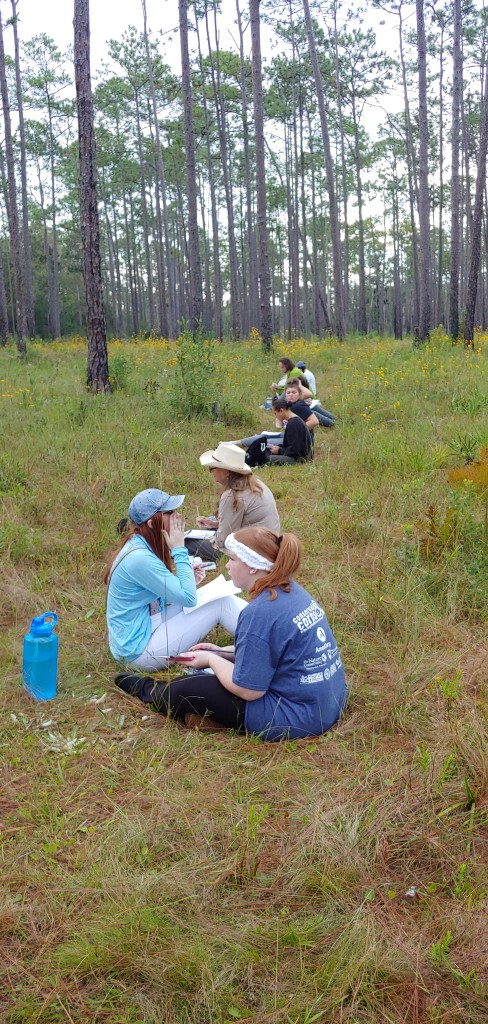
ED Corps High School’s innovative environment features a blended curriculum focused on project-based learning, flexible virtual assignments, and one-on-one mentoring sessions.
“We could not move forward without solving this issue,” Taylor said. “We knew if we wanted to have an impact, we had to aim a little younger.”
ED Corps students are typically from families of modest means. One parent is a seafood worker. One’s a car mechanic. One’s a nurse at the nearby state prison. Many face more than their fair share of challenges. One family was recently threatened with eviction because their plumbing wasn’t connected. Another is homeless, but off the streets for now thanks to friends and family.
Those challenges are part of the reason many ED Corps students struggled in their prior schools, Mount-Simmons said. They also got lost in the bigger-school environment. Didn’t have curriculum that was as hands-on as they needed. And didn’t have the flexibility to try things that might work better.
Even little things can be a difference maker. At ED Corps, students can listen to music with their headphones if they want, as long as they get their work done. There’s a “chill room” if, for whatever reason, their day goes south and they just need to step away for a few minutes.
Lori Mills said ED Corps has been good for her son Ryan. The 10th grader is glad to be outside a lot, and he’s learning things that matter to him, she said. For example, representatives from a local bank recently visited to talk about financial literacy.
“Ryan comes home and tells me all about this – and he never talks,” said Mills, who manages a community food pantry. “He was telling me about checking accounts and savings accounts and writing checks. He loved the bank.”
ED Corps senior Emily Mosley, 18, previously attended high school in a neighboring county. Challenges with anxiety made her feel overwhelmed by all the people and distractions. She and her family tried homeschooling, but she said she wasn’t self-disciplined enough. Things got so bad, she considered dropping out.
“My parents wouldn’t have let me, but I wanted to,” Emily said.
At ED Corps, Emily said she’s inspired by the conservation work, which is often done in conjunction with the conservation corps. Now she wants to be a park ranger.
Emily said she was particularly proud when her class raised oysters as part of an aquaculture project, then served them to the public at the local seafood festival. They were a hit.
“Apalachicola Bay is the oyster capital,” she said. “I feel honored to be part of something so important.”
“I’m glad ED Corps gave me a chance.”
Mount-Simmons said the freedom and flexibility that allowed ED Corps to respond to community needs can inspire other learning models, including in rural areas.
“Kids are not cookie cutter,” she said. “They come in all shapes.”
Schools should too.
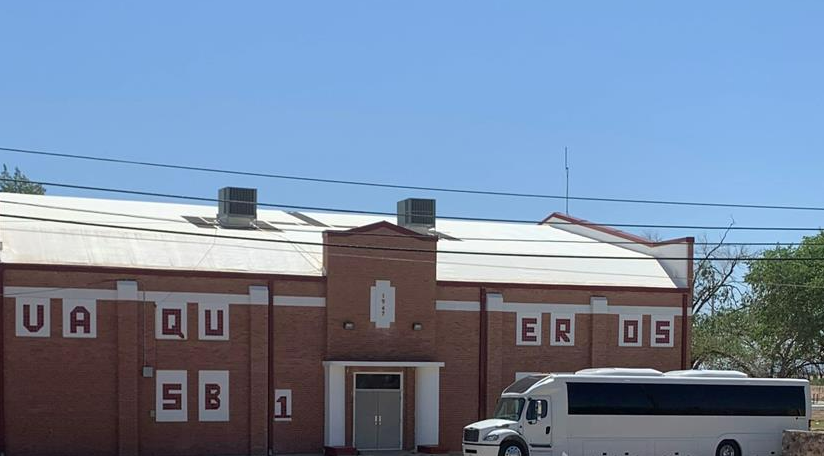
Sierra Blanca Independent School District is a small and rural district east of El Paso, Texas, with a single school that serves grades K-12. According to the U.S. Department of Education's National Center for Education Statistics, Texas has more than 2,000 campuses classified as being in rural areas.
Editor’s note: This commentary from Texas agriculture commissioner Sid Miller appeared Thursday on marshallnewsmssenger.com. You can read an exhaustive brief on the subject of rural school choice in Florida from Step Up For Students’ Ron Matus and Dava Hankerson here.
School choice is a human rights issue, no matter where you live. But not all schools are the same.
Rural public schools tend to outperform their urban counterparts for a variety of reasons. The consequence is that politicians often assume that rural voters have less interest in school choice than urban voters.
During the 2022 Texas Republican Primary, the platform plank most enthusiastically and overwhelmingly supported by rural voters was school choice. In that election, Texas Republicans from urban, suburban, and rural parts of the state all voted on Proposition 9 which reads, “Texas parents and guardians should have the right to select schools, whether public or private, for their children, and the funding should follow the student.”
To the shock of the Austin political class, nine out of 10 primary voters supported this proposition, and virtually every county in the state overwhelmingly supported it. Three-quarters of the counties that voted in favor by 95% or higher have populations under 20,000. Of the 67 most supportive counties, 58 have populations under 100,000.
Rural Texans overwhelmingly want education freedom and school choice! In fact, there was no statistical difference in rural and urban votes for this proposition.
To continue reading, click here.
Editor’s note: The Step Up For Students team of Ron Matus, director, policy and public affairs, and Dava Hankerson, director, enterprise data and research, provides an overview in this post of their recent brief demonstrating that education choice is growing in rural Florida. You can view the full brief here.
The Democratic candidate for governor of Oklahoma this year made it a hallmark of her campaign to claim private school choice would devastate rural public schools and the communities they serve. She called choice a “rural school killer.”
The candidate lost. But the myth lives on, not only in Oklahoma but in other states with vast stretches of rural heartland and little to no school choice.
To combat it, we turn to a state that actually has a lot of choice in rural areas: Florida.
Our new brief, “Rerouting the Myths of Rural Education Choice,” highlights five key facts about choice in rural Florida. To put faces on the facts, we also produced a short video spotlighting a rural school founded by a former public school district Teacher of the Year.
Florida is well positioned for myth busting here. It’s been a national leader in expanding education choice for two decades, and its rural communities have benefited.
Florida has highly regarded charter schools from the Forgotten Coast in the Panhandle to the edge of the Everglades. It has high-quality private schools from the Apalachicola National Forest to the heart of Florida cattle country. And in scores of small towns like Chipley and Williston and LaBelle, it has resourceful parents using state-funded education savings accounts (ESAs) to customize learning for their children.
At the same time – and this is critical – the expansion of private school choice and ESAs has not put much of a dent in rural public school districts.
More than 70% of Florida families are eligible for income-based choice scholarships. Yet over the past 10 years, the share of rural students enrolled in private schools rose a mere 2.4 percentage points.
So, on the one hand, education choice is helping thousands of rural families access life-changing options for their kids. On the other, the overwhelming majority of rural families continue to choose district schools.
Policymakers should proceed accordingly.
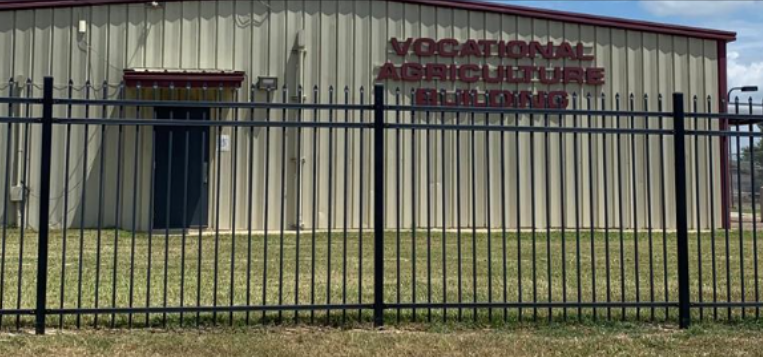
Jim Hogg/Conroe Independent School District is a rural district located in the ranching community of Hebbronville, Texas, near the Rio Grande. According to the U.S. Department of Education's National Center for Education Statistics, Texas has more than 2,000 campuses classified as being in rural areas.
Editor’s note: This commentary appeared last week on lubbockonline.com.
Is school choice bad for rural school districts? Joy Hofmeister certainly thinks so, going so far as to call vouchers and related programs “rural district killer[s].”
In case you aren’t familiar with Ms. Hofmeister, she’s the Oklahoma Superintendent of Public Education and was recently the Democratic candidate for governor. Election night didn’t go well for her: Incumbent Gov. Kevin Stitt, who supports school choice, cruised to a 55.5-41.8 victory. Ms. Hofmeister won only three counties, two of which contain Oklahoma City and Tulsa. Mr. Stitt won 63.2 percent of the vote outside these counties.
Evidently, rural parents are just fine with school choice. They don’t appreciate the efforts of Ms. Hofmeister and her ilk to restrict the educational options of Oklahoma’s children.
Texas politicians, take note: parents aren’t fooled by the false narrative on school choice anymore. School choice doesn’t hurt rural districts. If anything, it strengthens them by giving families additional options. Public education dollars should fund students, not systems. It’s time to make school choice a reality here in Texas.
School choice refers to a group of programs that give parents direct control over their children’s education funding. One example is vouchers: state-provided funds can be used for tuition at a school of the family’s choice.
A better example—one just implemented to great success in Arizona—is education savings accounts. Families can use state funds on a host of approved educational expenses, including homeschooling co-ops, “learning pods,” supplemental materials and activities, and mental health resources. It’s a transformative approach to education that puts students’ needs first.
To continue reading, click here.
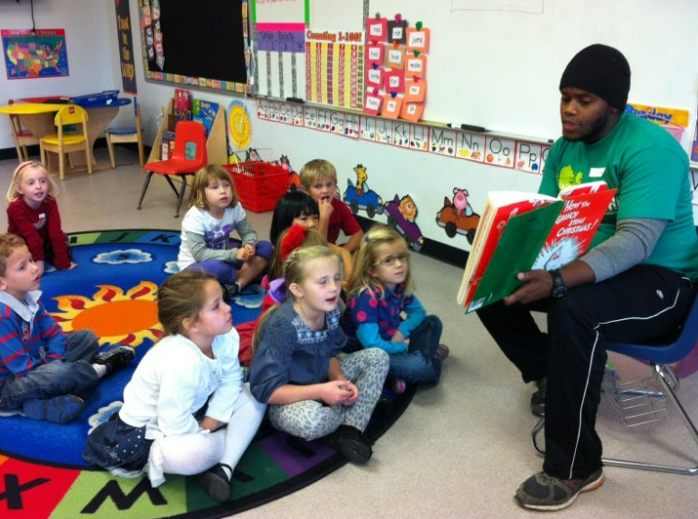
Central Texas Christian School in Temple, Texas, one of about 900 accredited private schools in the state serving about 250,000 students, is an accredited member of the Association of Christian Schools International. The only interdenominational private school in the county, its mission is to educate students by inspiring a Godly character and integrity in life’s pursuits.
Editor’s note: This article appeared last week on texastribuneorg.
As a Texas school superintendent, Adrain Johnson is no stranger to the struggles small, rural public schools face, from trying to recruit teachers, especially after more than two years of navigating school during a global pandemic, to a general lack of resources. And now, after the school shooting in Uvalde, there’s a renewed conversation about campus security.
With so many problems to solve, Johnson, who oversees the Hearne Independent School District northwest of College Station, doesn’t understand why state lawmakers’ to-do lists heading into next year’s legislative session seem to focus more on school choice over something like school safety.
“There always seems to be a school choice debate every legislative year, and I’m not afraid of that. I think that debating is good. That’s part of democracy,” Johnson said.
But he also wonders why public schools always take a back seat to the pursuit of policies that could diminish them.
“Why not make it imperative to support the local school district?” he said.
Instead, from where he stands, the talk in Austin is already focused on school choice, the broad term applied to a host of taxpayer-funded alternatives to sending a child to the local public school.
To continue reading, click here.

