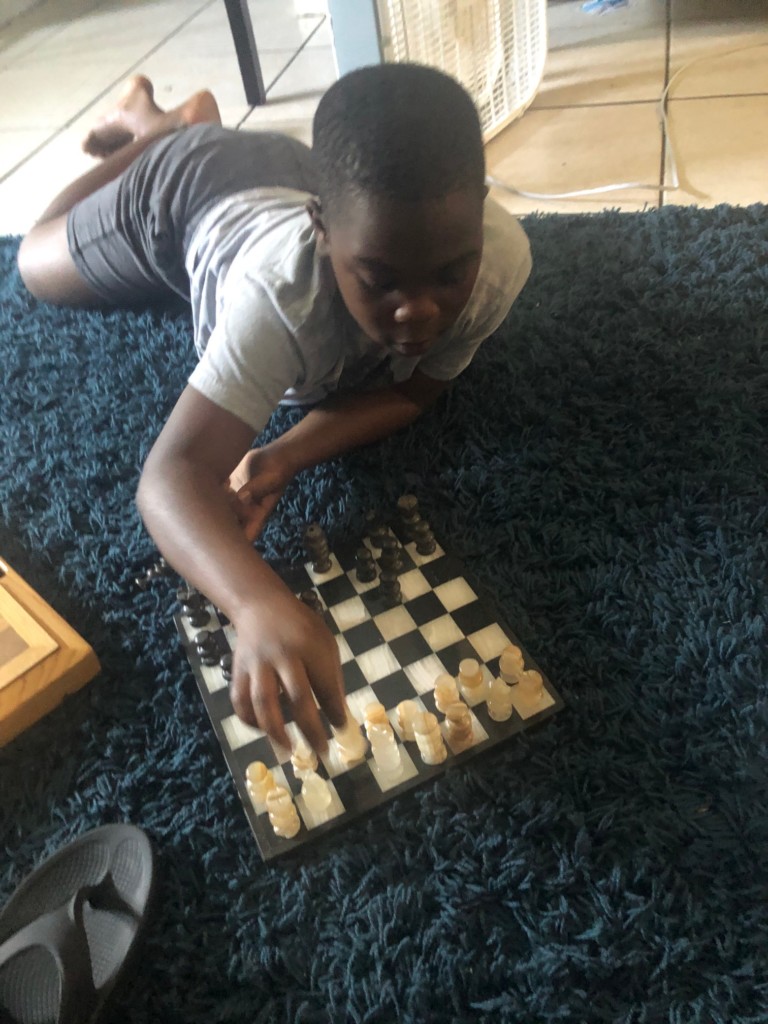
Joshua Edwards, who has benefited from the education choice options his parents have exercised over the years, wants to start a chess club at his school.
This commentary is an exclusive to redefinED from William Mattox, director of the Marshall Center for Educational Options at the James Madison Institute.
TALLAHASSEE – Harold and Talethia Edwards have a house full of precocious children. And to hear them describe their offspring is a veritable delight.
There’s the musical son who plays five instruments. The studious daughter who skipped a grade and now tries to hide her age from her International Baccalaureate classmates. The flower child who makes up songs as she paints. The athletic kid who wants to start a chess club at his classical school. The spicy little sis who gets restless if she feels chained to a desk. The witty drama queen who wants to wear “sparkly clothes” instead of school uniforms.
And then there’s the preteen son who scored 159 on an IQ test and someday hopes to find the solution to one of the six problems no mathematician has yet been able to solve. A scholar at Florida State University’s famous “mag lab” is interested in helping mentor this boy’s academic development.
Haniah Edwards excels in both academics and the arts.
Which is one of the reasons Talethia supports converting school choice vouchers (which the Edwards have used at a conventional private school) into flexible education savings account scholarships that parents can use to fund a wide array of “unbundled” educational opportunities, including one-on-one mentoring arrangements.
Talethia believes expanding the flexibility of school choice scholarships would make them more useful to many families, including the growing number of African American families now embracing innovative micro education options.
Thankfully, a proposal before the Florida Senate would do just that – convert school choice vouchers into flexible ESA scholarships. But the House companion stops short of going this far, partly out of concern that a major overnight change could spur too much disruption in current schooling patterns.
Is there room for a grand compromise? You bet.
Florida leaders ought to consider differentiating scholarship amounts for those using traditional tuition vouchers and those using flexible ESAs. The precedent for such differentiation is found in Florida’s current treatment of online education, where the state’s per-pupil allotment for full-time online students ($5,230) is less than that for students attending traditional brick-and-mortar schools ($7,786).
The rationale for differentiation is that Florida taxpayers ought to be able to reap the savings of more cost-efficient (online or unbundled) ways of learning. And while this rationale raises some very legitimate concerns about the equitable treatment of all students, the current question before the Florida Legislature is not whether differentiated funding is ideal. The current question is whether differentiated funding would enable more families to benefit from non-traditional learning opportunities without spurring a mass exodus from conventional brick-and-mortar schools.
Differentiated funding would have that very positive effect.
It would give greater flexibility to scholarship-eligible families (like the Edwards) who need learning options not on the current menu. At the same time, it would give scholarship recipients happy with their current school no economic incentive to switch from vouchers to ESAs.
That’s a win-win.
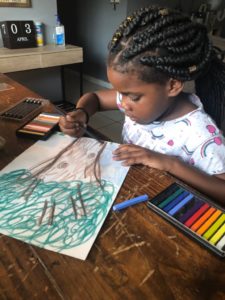
The youngest Edwards child loves to draw.
Moreover, if Florida legislators were to differentiate scholarship funding, they would be able to more easily expand eligibility for (lower-cost) ESAs to many middle-income families currently denied any per-pupil scholarship assistance. (And aiding middle-income families currently left out in the cold is arguably a greater equity concern than equalizing scholarship amounts for current recipients.)
Indeed, many middle-income families have turned to DIY education options like pod learning and hybrid schooling during the pandemic. And many would happily continue these highly effective educational practices if flexible (and less costly) ESA scholarships were available for their use.
When Florida’s House and Senate leaders go to resolve differences in their two approaches, let’s all hope they adopt a compromise that gives greater learning flexibility to more Florida families without significantly disrupting current voucher usage.
Doing this would greatly benefit many Florida families. And it just might help a precocious Edwards child someday find the solution to one of those six math problems no one has been able to solve.
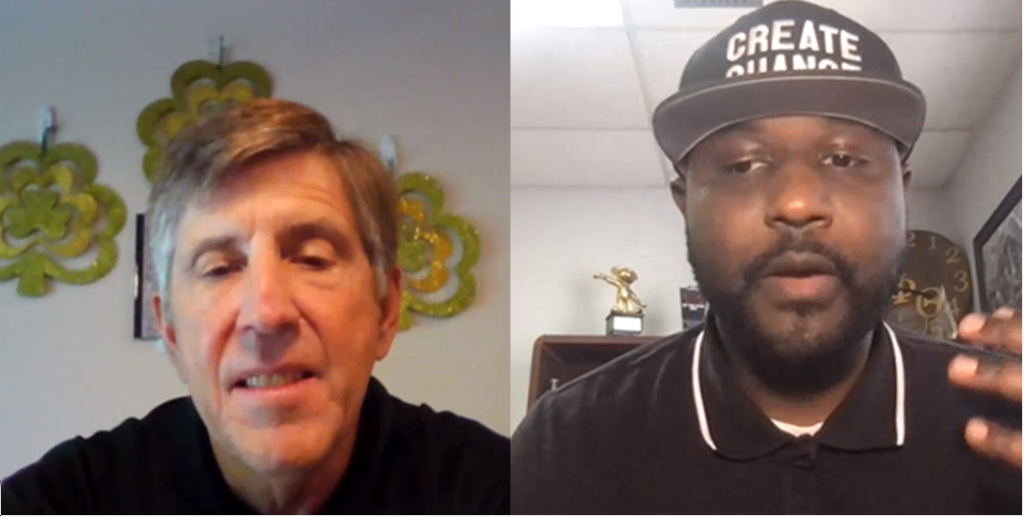 On this episode, Tuthill speaks with president and CEO of the Central Florida Urban League about the work the organization is doing to empower the Black community through what Gilzean refers to as the three E’s – education, employment and entrepreneurship.
Gilzean, a former Pinellas County School Board member, has witnessed the devastating impacts of generational poverty. Both he and Tuthill believe giving parents flexibility and control over their education funding is critical to breaking that cycle.
The two discuss the Urban League’s plan to facilitate small learning pods known as micro-schools for the families it serves in the central Florida community and the potential for Senate Bill 48 to expand small learning environments to more families who presently can’t afford to leverage them, as well as the bill’s potential to drive creative, economic and entrepreneurial opportunity in the Black community.
"The bill does a lot of great things, but specifically for low-income Black folks, I think it will improve educational outcomes, the opportunity to employ individuals, and get people in the mindset of ‘I can do this, too; let me create a pod,’ so they can generate their own resources for the community."
EPISODE DETAILS:
· Gilzean’s background as a school board member and advocacy coordinator for Step Up For Students
· How the Urban League collaborated with Orange County Schools to facilitate the Reading Scholarship, an education savings account for public school students struggling with reading
· The Urban League’s plan to create micro-schools and school models to better serve students in juvenile detention
· How micro-schools can drive community development and be an economic engine to counteract generational poverty
LINKS MENTIONED
Micro-schools could be answer for low-income Black students
 On this episode, Tuthill speaks with the co-owner of SchoolHouse, an organization serving several hundred students in eight states by creating flexible learning communities known as micro-pods for four to eight students.
Tuthill and Connor discuss how SchoolHouse connects members of the community with a shared interest in a smaller learning environment to each other, allowing families to customize their learning pod from the ground up. The two also discuss how micro-schools empower teachers as well as students, and how education savings accounts of the type proposed in Florida’s Senate Bill 48 could help more families access smaller, more customized educational options.
"What excites me about ESAs is that it's really what parents already do, and the government is responding to that. I don’t know a single parent ... who doesn’t pick from different vendors for different things ... (parents) have choice in their lives, and it's giving them the money to really fund that, which is exciting."
EPISODE DETAILS:
· Connor’s background as an educator and education law attorney
· The creation of SchoolHouse, how it works, and how the pandemic accelerated the micro-school learning trend
· Opportunities for teachers to thrive in the customized learning environment of micro-schools
· Creating greater equity for serving families without financial means through ESAs
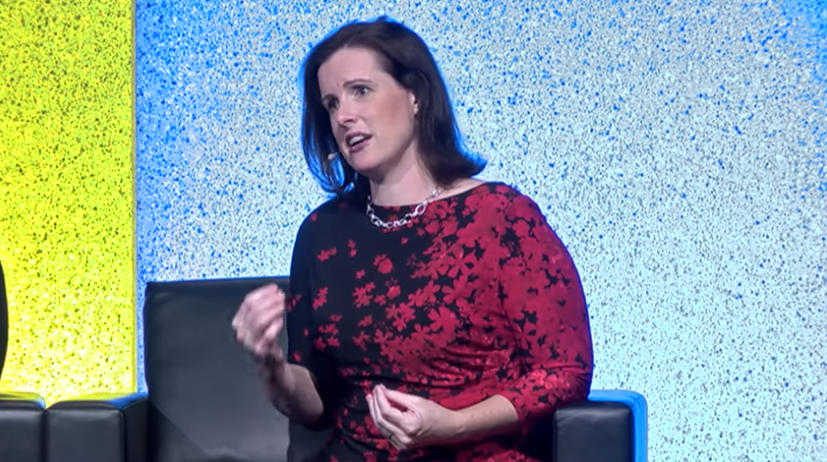
Katie Swingle of Winter Haven frequently champions the rights of parents to make educational decisions for their children.
Editor’s note: This piece from Katie Swingle, an active school choice parent and advocate in Polk County, appeared in the Lakeland Ledger in response to a column published in the Ledger in February.
As a mother whose children benefit from Florida education scholarships, I was offended by the recent "Your Turn" column by the Rev. Ray Johnson ("‘Scholarship’ program threatens education," Feb. 17).
He’s alarmed that under education choice, parents, not educators, evaluate their children’s educational progress. Apparently, he doesn’t trust parents to know what’s best for their own children. Perhaps he should meet some of the hundreds of thousands of scholarship families over the years who moved mountains trying to find the best learning environment for their children.
I’m one of them.
He uses scare tactics to misrepresent how education savings accounts work, likening them to “gift cards.” My son Gregory, who is on the autism spectrum, receives the Gardiner Scholarship for special-needs students. That program, which has been around since 2014, operates as an ESA, similar to how Senate Bill 48 would transform the Florida Tax Credit and Family Empowerment scholarships for lower-income students.
We do not receive a debit card. Funds are deposited into an account. Purchases must be made from a list of pre-approved items and services. If something is not on a list, parents must submit a pre-authorization request that is reviewed by a committee and approved before the money can be spent. I know this to be a rigorous process.
To continue reading, click here.
 On this episode, redefinED senior writer Lisa Buie speaks with Stephanie Conner, a mother of four from the tiny town of LaBelle, Florida. The former teacher and her husband, Joel, an adult education teacher, use the Gardiner Scholarship for their son, Eli and daughter, Madeline.
Their younger children, Meizie and Gideon, joined the family through adoption and use the Family Empowerment Scholarship to attend a nearby private school.
Conner discusses her children’s unique needs and how pre-approved therapy equipment made possible by Gardiner’s flexible spending accounts helped maximize her two older children’s ability to learn. She also describes how an arrangement with the school that her younger children attend allow her to mix and match services for Eli and Madeline, providing a truly customized learning plan for each.
“The main blessing of the Gardiner is being able to use it for whatever we think they need and not have other people tell us what they think we should do, being able to control and do what is best for our children … Flexibility has been the key to making it successful for us.”
EPISODE DETAILS:
· How the Conners’ homeschool journey began
· An overview of the Conner children’s unique educational needs
· How education choice allows the family to use “unbundled” services from a local private school
· What a typical school day looks like for the Conners
· How the Conners are using their education savings accounts to help Eli and Madeline get the most from their education, even in a rural area
· What Stephanie Conner would change about the Family Empowerment Scholarship
· Her thoughts on Senate Bill 48 and the flexibility it would offer
Editor’s note: To read more about how the Conners are exercising education choice, click here. To read a recent op-ed Stephanie Conner wrote on education choice that was published in the Naples Daily News, click here.
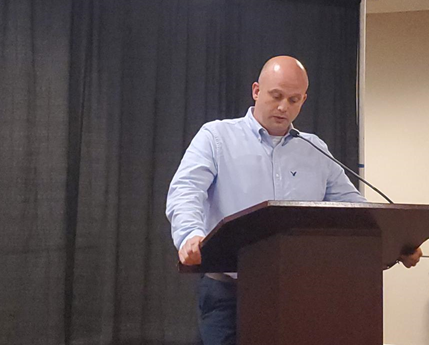 Among parent and educator advocates speaking Thursday before the Senate Appropriations Committee in favor of legislation that would streamline scholarship programs for Florida’s schoolchildren was Jerold Maynard. The firefighter and father of two spoke in favor of SB 48, which would eliminate the requirement that students applying for a Family Empowerment Scholarship or a McKay Scholarship must have attended a public school during the previous year.
Here are Maynard’s remarks:
Hello, I’m Jerold Maynard. I'm from Apopka and live with my wife and daughters in Senator Bracy’s district.
My wife, Jessica, and I are firm believers that every child deserves a champion, an adult who will never give up on them, and that is why I am here today.
We have made great sacrifices, including taking second jobs, to send our daughters to Trinity Christian, a school we felt was best for them.
But the pandemic created financial difficulties that made it impossible for us to afford the tuition.
Our daughters were heartbroken when we had to withdraw them from a school family they loved so much.
I'm not sure if any of you are parents, but I can tell you that predictability is a stabilizing force for children, and in a time when depression rates for our youth are at an all-time high, commitment to this is critical.
Ironically, now that the girls are in public school, they meet the prior-year requirement for the Family Empowerment Scholarship. But no family should have to pull their kids out of a school that works for them.
I’m glad Senator Diaz’s bill eliminates the prior-year public rule. Please pass this bill so future parents do not have to go through the struggles my family experienced trying to give our daughters the best education we could afford.
Thank you.
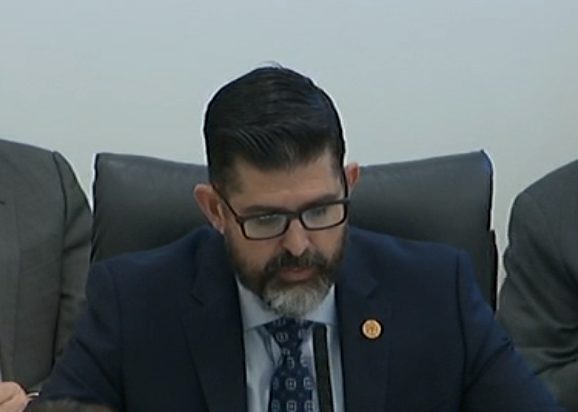
Sen. Manny Diaz Jr., R-Hialeah, lays out the parameters of SB 48 for his colleagues at today’s Senate Appropriations Committee meeting.
A bill that would simplify Florida’s education choice programs by merging five scholarships into two and add a flexible spending option is headed to a vote on the Senate floor after clearing the Senate Appropriations Committee today.
By a vote of 11 to 8 along party lines, with Sen. Aaron Beane absent, members approved SB48, which would transfer students receiving the Florida Tax Credit Scholarship Program to the Family Empowerment Scholarship and sunset the 20-year-old FTC.
“Parents are the best advocates for their children, and now more than ever, parents are seeking freedom from a one-size-fits-all system to look for resources and tools to uniquely tailor learning for their child’s individual needs,” said the bill’s sponsor, Sen. Manny Diaz Jr, R-Hialeah. Diaz added that the legislation will offer more options to more families by using money already dedicated for education.
The bill is among the top priorities of Senate President Wilton Simpson, R-Trilby, who praised Diaz for shepherding the legislation.
“School choice is here to stay,” Simpson said. “In recent months, the ongoing pandemic has even further highlighted the important responsibility of every parent to choose the best learning environment for their child, and with well over 100,000 students currently utilizing the variety of scholarship programs we have available, I’m glad we are streamlining eligibility and funding so that parents have a better idea of their full range of options.”
The bill also would merge the McKay Scholarship Program for students with disabilities and the Gardiner Scholarship Program, creating a new program for students with unique abilities called the McKay-Gardiner Scholarship Program. That program would allow families in all state scholarship programs to have flexible spending accounts, also known as education savings accounts, or ESAs. Currently, only students enrolled in the Gardiner program have such flexibility.
The accounts allow families to spend their money on pre-approved services and equipment in addition to private school tuition. Approved expenditures include electronic devices, curriculum, part-time tutoring programs, educational supplies, equipment, and therapies that insurance programs do not cover. The bill would expand eligible services for McKay-Gardiner students to include music, art, and theater programs, as well as summer education programs.
The scholarship programs are also available to homeschool students and those enrolled in eligible private schools. In addition, victims of bullying at district schools who transfer to private schools as part of the Hope Scholarship Program would also be served by the Family Empowerment Scholarship Program and receive the same spending flexibility.
Under the bill, donors would still be allowed to contribute to the tax-credit program through a newly created state trust fund. However, donations would go to serve K-12 education generally in the state, rather than pay for scholarships. Both the FTC and the FES are income based and serve students whose families meet financial eligibility rules.
The bill does not materially change the eligibility criteria for any of the scholarship programs and reduces the currently allowable statutory growth in some of the programs.
During the nearly two-hour debate, numerous individuals spoke in favor of the bill, including families who have benefited from school choice scholarships and others whose children have been denied scholarships because of a requirement that students applying for Family Empowerment Scholarships and McKay Scholarships must have attended a public school during the previous year.
SB 48 would eliminate that requirement.
“We have made great sacrifices, including taking second jobs, to send our daughters to Trinity Christian, a school we felt was best for them,” said Jerold Maynard, a firefighter from Apopka whose finances were hard hit by the coronavirus pandemic.
When the family applied for income-based scholarships, they were rejected because of the prior-public rule. Maynard said his daughters were heartbroken when they had to withdraw and attend a district school. He supports the bill because he wants to spare other parents from going through the same struggle his family endured.
“Ironically, now that the girls are in public school, they meet the prior-year requirement for the Family Empowerment Scholarship,” Maynard said. “But no family should have to pull their kids out of a school that works for them.”
Rasheda Alexander of Pensacola, whose two daughters receive scholarships to attend private school, said the program allows her children to enjoy a learning environment where “they don’t get lost in the mix.” Choking with emotion, she described how her older daughter was bullied at her prior district school because of a learning disability.
“I’m glad that Sen. Diaz’s bill would give parents even more options on how to spend their children’s education dollars,” she said. “This scholarship has truly been a blessing to our family. Without it, it would not be possible for me to put my children in the learning environment that is best for them.”
Support was not limited to parents. Mike Juhas, superintendent of Catholic schools for the Diocese of Pensacola/Tallahassee, recounted how the scholarship program came to the aid of a student with a heart defect by allowing her to afford tuition even as she and her mother lived paycheck to paycheck. Now a high school senior and honor student, the girl has been accepted to three colleges.
“I have seen firsthand how these scholarships change students’ lives,” he said.
Critics of the bill questioned how, with parents controlling the money, the program would ensure accountability.
Diaz responded that guardrails created eight years ago for the Gardiner Scholarship Program would apply to all educational spending accounts. An online purchasing platform includes only pre-approved items. If parents submit receipts for items not approved in the system, they run the risk of paying for the item or services on their own if approval is denied.
“This is not new to us,” Diaz said.
SB 48 was approved earlier this month by the Senate Education Committee and cleared the Senate Appropriations Subcommittee on Education two weeks later.
For more information about what the bill includes, click here.)
A companion bill is expected in the House.
The bill has received endorsements from several groups including the Central Florida Urban League. The Libre Initiative – Florida and Americans For Prosperity are sponsoring a joint campaign to promote the bill.

Derrick Standifer’s two children, ages 6 and 4, have benefited from the education choices he makes for them.
Editor’s note: This commentary from Derrick Standifer, a full-time single father of two and a Ph.D. student at Florida A&M University, appeared this morning in the Tallahassee Democrat.
I am a single father of two children, ages 6 and 4, who are exceptionally gifted. Traditional public schools simply don’t have the infrastructure to accommodate them, which is why I am grateful Florida provides learning options for families like mine.
It was so frustrating sending my daughter to kindergarten in public school. At 5, she could read on a third-grade level, was multiplying two-digit numbers and playing chess. The school’s kindergarten curriculum was to teach the children the letter sounds and how to count. My daughter was not being served.
But thanks to a school choice scholarship, she is afforded the opportunity to attend a private school that provides her with a curriculum that challenges her.
I wanted to share this because of a myth being perpetuated by people who are trying to stop SB 48, a bill that would give Florida families more choice and flexibility. Most recently floated by the Florida League of Women Voters, it suggests parents don’t know if their children are learning, can’t tell whether one school is better than another, and will be duped by “hucksters who promise miracles with computers systems and magical thinking.”
This is blasphemous. Increasing the educational options for parents allows them to place their children in the best environment that best meet their academic needs. And parents do know what’s best.
To continue reading, click here.
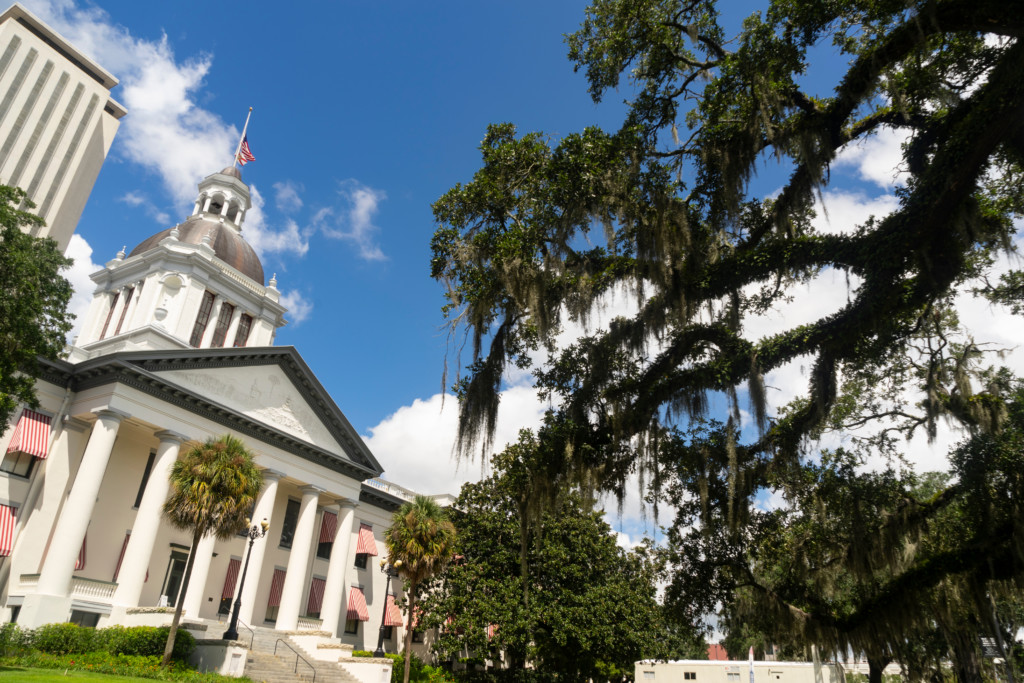 The 175-year-old Florida Legislature, which turns 176 on May 26, reconvenes today for its annual 60-day legislative session. The largest global pandemic since 1918 has played havoc with the state’s budget, so money, as usual, will be the dominant issue.
About 85,000 school district students were no-shows this year. The state held school districts harmless and paid them to educate these missing students, but whether taxpayers can afford continuing to do so will be a contentious issue. If the bulk of these students do not return this fall and state government stops funding nonattending students, school districts will be scrambling to reorganize their staffing models, building utilization plans, and budgets.
The federal government is sending billions in education funding to the states via a succession of Covid-19 stimulus bills, but these are one-time payments that should not be used for ongoing expenses, such as employee salaries and benefits. House Speaker Chris Sprowls recently sent a letter to district superintendents warning them against spending non-reoccurring funds on reoccurring expenses.
If the federal government passes another stimulus bill, state government and school districts may find themselves with millions of federal dollars that cannot be spent on pressing needs because the federal money is non-reoccurring. How best to manage this mix of one-time payments with ongoing financial needs will be another contentious issue for legislators to resolve.
The primary education choice bill this session is Senate Bill 48, sponsored by Sen. Manny Diaz Jr., and a priority of Senate President Wilton Simpson. This bill consolidates five education choice programs into two, provides families with greater spending flexibility by turning all the scholarships into Education Savings Accounts (ESAs), stabilizes the programs’ funding, creates growth caps to control expenses, and cleans up a plethora of technical issues that were making the programs overly cumbersome for families and schools.
You can read more about SB 48 here.
Senate staff spent six months working on various aspects of this bill, and it shows. Some of the more nuanced technical solutions are elegant despite the complex legislative language in which they are embedded.
That SB 48 is a Senate bill is unusual. Traditionally, innovative education choice legislation originates in the Florida House and then must navigate its way through the Senate. For the Senate to step up and propose a landmark education choice bill is a pleasant surprise. Once the House’s improvements are included, this will be a historic bill with significant implications for the education choice movement nationally.
The other important education choice bill this session makes dual enrollment programs more accessible to non-school district students. (See here and here.) Legislative changes a few years ago made dual enrollment far less accessible for private school students. Consequently, private school student participation in dual enrollment has been declining. This bill will hopefully fix that problem.
The House has made career planning and workforce development a top priority this session. The pandemic has driven unemployment rates to historic highs and forced millions of people to change jobs and careers. Aligning Florida’s education and training programs with current and future job openings is a critical need the Legislature will be addressing this session. Kudos to the House for taking the lead on this, and to the House staff for working endless hours crafting this legislation.
The House is also promoting legislation that will deliver developmentally appropriate books to the homes of young readers. This program, in concert with the existing Reading ESA for struggling elementary school readers, should help improve many students’ reading skills and, hopefully, inspire a love of life-long reading.
We have all been impacted by this devastating pandemic, but Floridians are resilient, optimistic, and forward looking. We are already on the road to recovery – a recovery I am confident will be accelerated by the decisions our Florida Legislature and governor make over the next 60 days.
 There are many important policy improvements in Florida Senate Bill 48, the innovative education choice legislation sponsored by Sen. Manny Diaz Jr. that is receiving so much national attention. But my favorite enhancement is the creation of education savings accounts (ESAs) for lower-income families.
This year, Florida is providing scholarships to about 140,000 lower-income families via the Florida Tax Credit (FTC) and Family Empowerment Scholarship (FES) programs. Currently, these scholarships can only be used to pay private school tuition and fees, or transportation costs to attend an out-of-district public school. The scholarship amount cannot exceed the annual cost of tuition and fees at a student’s chosen private school. If a student is eligible for a $7,000 scholarship but the tuition and fees at her private school are $6,000, then that student’s scholarship will be only $6,000.
This year, 17% of our FTC/FES scholarship recipients received scholarships that were, on average, $641 less than a full scholarship. That means 23,800 students, who researchers say are the state’s lowest-income and lowest-performing students when they receive a scholarship, did not get $15,255,800 in scholarship funds they were financially eligible to receive.
If the Florida Legislature and Gov. Ron DeSantis agree to turn these scholarships into ESAs, then every scholarship student will receive the full scholarship amount, and any funds not spent on tuition and fees may be spent on additional education services and products such as tutoring, books, summer school, and software.
Some private and charter schools already are planning to create afterschool tutoring and summer enrichment programs to serve families with excess ESA funds. Families also may use ESA funds to purchase services from their neighborhood district schools and certified teachers who create their own afterschool and summer programs. More small business development, especially in lower-income urban communities, is a benefit of the enhanced spending flexibility families have via ESAs.
An important feature of ESAs is that unspent funds roll over so parents may spend them in future years. Some elementary and middle school families, for instance, probably will roll over unused ESA funds to help pay for high school expenses, which are often unaffordable for scholarship families.
Sen. Diaz’s bill is a long way from becoming law. But Florida’s legislative leaders, in collaboration with our governors over the last 25 years, have made steady progress toward providing our state’s most disadvantaged students with more effective and efficient learning options.
I am confident that the education choice bills that become law this summer will continue this trend.

