Charter schools. Excel Leadership Academy in West Palm Beach makes its case to stay open before an administrative law judge, reports Extra Credit. The Daytona Beach News Journal looks at a struggling charter in Flagler.
 Virtual schools. The Palm Beach Post looks at the potential financial hit to Florida Virtual School from recent legislative changes. Education Week offers a short write-up on Florida's online expansion.
School rankings. Take some with a grain of salt, some with a truckload, writes Matt Di Carlo at the Shanker Blog. Three Marion high schools are among the best in U.S. News & World Report, reports the Ocala Star Banner.
School closures. Dozens rally against proposed closures in Brevard. Florida Today.
School spending. Increased funding from the Legislature still may not be enough to get Marion out of a hole, reports the Ocala Star Banner. The school board in financially troubled Manatee takes a closer-than-usual look at contracts and spending, reports the Bradenton Herald.
Teacher evals. The Quick & The Ed offers a legal analysis of the recently filed lawsuit. (more…)
Virtual schools. Lawmakers open online learning to more providers, including private interests, reports the Miami Herald. StateImpact Florida and the Florida Center for Investigative Reporting obtain internal emails and a recording of a K12 Inc. company meeting that they say shed light on questionable company practices involving teachers who are not properly certified.
Struggling schools. The Broward school district will overhaul five struggling schools by closing some and revamping others, reports the South Florida Sun Sentinel. Principals are key to turning around five struggling Pinellas schools, reports the Tampa Bay Times.
Tutors. The Tampa Bay Times looks at the last-minute legislative scrap over whether to continue state-mandated tutoring for low-income kids.
Private schools. Voters in Palmetto Bay will get to vote on whether a local Montessori can expand. Miami Herald.
Rick Scott. Teacher pay raise tour comes to an end, reports the Tampa Bay Times. Will it get him any votes? asks the Palm Beach Post. (more…)
 My recent post about the importance of including parental choice in our definition of public education accountability drew a thoughtful response from Melissa Webber, the parent of a special needs child.
She writes, “I’m not sure I agree with the writer’s explanation of accountability. While I support parental choice and have in the past taken advantage of the McKay Scholarship, I think choice is a separate issue not to be confused with accountability unless parent empowerment actually affects positive change of a program to bring it up to regulation standards. One of the private schools I visited had no certified teacher, made no attempt to comply with sunshine standards and they weren’t bound to provide services spelled out in Blake’s IEP. Basically, it served as a disorganized daycare for middle school ESE kids. It was an easy choice for me to opt for another public school program. However, my choice to do so did not make the school more accountable. There should be much more oversight to insure at least minimal standards are met so the children of less informed parents do not suffer in the name of choice.”
The public good is best served when public education operates with maximum effectiveness and efficiency. Highly effective and efficient schools are best possible through a combination of regulations and consumer choice. Regulations provide the floor below which no school should operate, but regulations alone can’t produce excellence. Excellence requires consumer choice.
Ron Matus’ recent story about one of Florida’s top charter schools included this quote from the school’s founder and principal, Yalcin Akin: “If they like us, they come to our school. If they don’t like us, they don’t come. We have to have a high level of customer service and a high level of performance – or we will not survive.”
This necessity to meet parents’ needs or go out of business is part of accountability, and helps fuel the drive for excellence. Last year, Akin’s school had a waiting list of about 1,500 students.
Now consider Melrose Elementary in St. Petersburg. Only one student chose to attend Melrose’s magnet program this year. All the other Melrose students were assigned there by the school board and, if they don’t show up, their parents can be sent to jail.
Melrose is more highly regulated than Akin’s charter school, but it is not more accountable. As long as students are forced by law to attend Melrose, it won’t go out of business, regardless of its effectiveness. (more…)
 Don’t back up, don’t back down. “Compromise” may be a watchword for 2013, but it wouldn’t be a good thing for education reform, writes Jeanne Allen, founder and president of The Center for Education Reform, in the Huffington Post. She points to Florida as a state that hasn’t compromised on accountability and school choice – and, as a result, has seen rising student achievement.
Acknowledging progress. Pointing to the recent PIRLS results as a “crucial mark of excellence,” the Miami Herald editorial board says Florida schools are making gains but need more money.
Tony Bennett. His views on Common Core and teacher evaluations. Gradebook.
More on charter school closing. School Zone weighs in on the one in Flagler that shut down during the holiday break.
Say no to Robin Hood. Some Seminole County parents don’t like the idea of using family incomes as a factor in drawing new school boundary lines. “The school board needs to stop playing Robin Hood,” one said. School Zone.
Inappropriate. The Hernando school district’s CFO posts pornographic images and makes critical comments about the superintendent online during work hours, reports the Tampa Bay Times.
After Newtown. School district officials in Palm Beach County say metal detectors aren't the answer, reports the Palm Beach Post. Armed officers and deputies will be at every Hillsborough elementary school when students return Monday, the Tampa Tribune reports. School resource officers will be in every Alachua elementary, beginning today, reports the Gainesville Sun. Beefed up security in Marion, too, reports the Ocala Star Banner.
Count newly-elected Florida Rep. Manny Diaz, Jr. among a number of state lawmakers who are public school district employees. But Diaz, an assistant principal in the Miami-Dade public school district, isn’t just a cheerleader for traditional public schools.
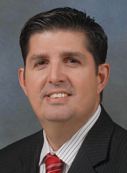
Rep. Diaz
He’s also a huge – and very vocal - advocate for school choice.
“We have an evolving student body – different than what it was five years ago,’’ Diaz, a Republican who represents his hometown of Hialeah, said during a recent telephone interview with redefinED. “I do believe we have to look at all the options.’’
Diaz has been appointed to the House Education Committee, as well as the K-12 and Choice & Innovation subcommittees. Among his goals there: to help guide fellow lawmakers and education leaders toward reform that is “student-centered and parent-centered.’’
To that end, Diaz said he fully supports district programs, such as magnet schools; high-quality charter schools; and other nontraditional options, such as tax credit scholarships.
“I think the competition makes our educational choices better,’’ he said. And better can only be defined by results. “I’m big on the accountability side,’’ Diaz said. “It’s a matter of having the political courage to move forward, to take measures already in the law.’’
If a district school isn’t helping students succeed academically, bring in interventions, he said. If a charter school isn’t operating ethically, shut it down.
Diaz also responded to recent news reports in which Gov. Rick Scott called for private schools that accept tax credit scholarships to give those students the same tests as their public school peers. (more…)

Tony Bennett
Tony Bennett on testing voucher students. From Gradebook: “I do believe we have a responsibility, be it at a public school or whatever, when we are spending taxpayer dollars - and I go back to what I believe we should do, set expectations, set standards and hold people accountable - that we should be able to prove that schools perform for the money they are given.” Full Q&A in Tampa Bay Times here.
More Tony Bennett. Lakeland Ledger: “Let's just hope he brings to the position a more inclusive management style than that of his predecessors."
“Life is combat.” From the Palm Beach Post’s Jac Versteeg: “Good morning, children, and welcome to your first day of first grade at Eddie Eagle Charter School. We will be piloting the new NRA curriculum the Florida Legislature has mandated for all public schools. My name is Mr. LaPierre.” Putting deputies in elementary schools makes more sense that arming teachers, editorializes the Northwest Florida Daily News.
Ed funding. The Gainesville Sun’s Ron Cunningham references the Legislatures “slash-and-burn approach to funding education” in his year-ahead column. The Ocala Star-Banner’s editorial board says the state’s “cheap route on education” is to blame for the Marion school district’s failure to meet class-size requirements. The Sun makes the same case for noncompliance in Alachua County.
On the right track. Broward Community College President J. David Armstrong notes how much academic progress Florida has made in the past decade. South Florida Sun Sentinel.
Career academies. Students in Palm Beach County’s career academies will get a chance to shadow professionals at their jobs, thanks to a partnership with the business community, reports the Palm Beach Post.
Rocky year in the rearview. A glance at the past year in Florida education from the Tallahassee Democrat. Some superintendents want a break from new mandates in 2013, the Democrat also reports.
School grades don’t show much. Editorializes the Palm Beach Post.
Vouchers and accountability. Gov. Rick Scott’s call for “voucher” students to take the same standardized tests as public school students is long overdue, editorializes the Tampa Bay Times: “Voucher proponents can't have it both ways,” it concludes. “They can't claim they are a good bargain for taxpayers but then be unwilling to prove it.”
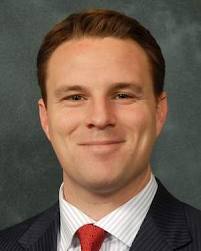
Weatherford
“Yes we are!” House Speaker Will Weatherford gives Tony Bennett a thumbs up on Twitter after a critical Tampa Bay Times column says the selection shows the state is doubling down on Jeb Bush ed reforms. Gradebook. A look at Bennett’s re-election upset in Indiana. Tampa Bay Times.
Home-schooled or truant? A Flagler County dad faces a criminal charge after not following requirements for home-schooling, reports the Daytona Beach News Herald.
Sex abuse lawsuits. Involving a former middle school teacher. Miami Herald.
Florida Board of Education openings. Two coming up, notes Gradebook.
When Florida and Mississippi schools were peas in a pod. Jackson Clarion-Ledger.

Welner
Tax credit scholarships in Chronicle of Philanthropy. (subscription required) The story leads with Step Up For Students and quotes “neovoucher” expert Kevin Welner: “He also argues that most states don't really know if they are saving money, since few have closely tracked how many students receiving scholarships would have gone to private schools without them.” Welner has raised this argument before, and it’s not the case in Florida, as redefinED has noted.
Charter school facilities funding. A state task force deadlocks on recommendations, reports the St. Augustine Record.
Charter school pay raises. Charter schools in Lake Wales look for ways to compensate their teachers, reports the News Chief.
F charter schools. Two in Escambia offer updates to the school board, reports the Pensacola News Journal.
Amendment 8 in the Washington Post. The amendment and its impact on vouchers is referenced, incorrectly, in a story on quality control issues with the D.C. voucher program. Here again is the real story.

Colburn
David Colburn is a respected former University of Florida provost and progressive academic who should have done more homework before he blithely characterized those who support private school options as salesmen and hucksters. His recent commentary in the state’s largest newspaper, the Tampa Bay Times, rather pointedly ignored important evidence in his own backyard.
Dr. Colburn is good thinker on education issues, but somehow managed to treat all school vouchers as though they are inherently unaccountable. “There is something basically wrong when public funds are earmarked for these private schools,” he wrote, “and the state fails to insist on accountability measures for student achievement outcomes.”
That assumption is demonstrably false, and he need look no farther than his own state. The state’s first voucher program, which was declared unconstitutional in 2006, required students to take the state test. The current pre-K voucher that served 145,551 4-year-olds last year requires pre- and post-academic evaluations that are used to rate providers.
Lincoln Tamayo, who runs the highly successful Academy Prep Centers of Tampa and St. Petersburg that serve underprivileged middle school students, was also quick to note in a letter to the editor that the Florida Tax Credit Scholarship serving 49,000 low-income students has required nationally norm-referenced tests since 2006. The test scores for Tamayo’s students, who are treated to an intensive six-day-a-week, 11-months-a-year program, reveal both year-to-year academic gains and 8th grade reading and math scores in the 70th and 76th percentile range.
There is ample room for principled debate over whether the current testing approach for these private options is sufficient to assure that students are making academic progress. For example, there are certainly challenges in trying to compare the test results of low-income students in private schools with their low-income colleagues remaining in public schools, in part because the scholarship students tend to be much poorer.
But Dr. Colburn instead seemed content to assert that vouchers “court disaster,” as though every one of these programs is flying blind. His lack of intellectual rigor was, needless to say, disappointing.
 Editor's note: blog stars is an occasional roundup of good reads from other ed blogs.
The EdFly Blog: Frivolous litigation earns dunce cap
As for Florida dumbing down education, as is alleged in the lawsuit, the state ranks first in the country in the percent of 2011 graduates who took an AP exam, sixth in the percent of graduates passing at least one AP exam, and fourth in improving the passing percentage since 2001.
An in-depth analysis by ProPublica last year praised Florida as being a leader in giving low-income students the same access to AP classes as affluent kids.
And while the state’s NAEP scores took a dip in 2011, it ranks second nationally in gains on the national assessments dating back to the 1990s.
In fact, by any measure, the state’s education system is light years ahead of the system that was in operation when Mills helped run Tallahassee. And the biggest beneficiaries have been the students who were routinely ignored back then. Full post here.
Sara Mead's Policy Notebook: This is why our current education debate is toxic
Richard Rothstein's American Prospect investigation into the details of Joel Klein's childhood (no, I'm not kidding here) is really not worth reading, but it unfortunately exemplifies two of the most toxic aspects of the current education reform conversation (fwiw it also contains some interesting information about the history of post-war public housing in NYC):
Personality over policy: The point of Rothstein's very long article seems to be that Joel Klein's education policy views are invalid because his childhood was less poor than it has sometimes been represented as being. At a surface level, this is idiotic. Whether Klein grew up in abject poverty or simply in circumstances much more humble than the financial and political status to which he has risen has absolutely nothing to do with whether the education policies he proposes work. Nor did Klein or anyone else ever claim himself as the sole data point for the power good teachers and schools can have on kids' lives. There's, um, actual research on this. (more…)

