 Louisiana: State education officials set accountability rules for private schools participating in the state's new voucher program (Reuters). More from the New Orleans Times Picayune. The state deems a troubled private school ineligible to receive vouchers (Alexandria Town Talk). Meanwhile, a law firm representing a state teachers union sends letters to participating private schools, threatening them with litigation unless they opt out of the program until a lawsuit is settled (New Orleans Times Picayune).
Wisconsin: A Milwaukee charter school gets help from a national fund co-run by tennis legend Andre Agassi (Milwaukee Journal Sentinel)
Michigan: Speaking at the American Federation for Teachers convention, Vice President Joe Biden takes aim at vouchers and says teachers are under "full blown attack" from Republicans. (MLive.com)
Indiana: The state's year-old voucher program is becoming more diverse as it grows (Indianapolis Star). The mayor of Indianapolis tussles with parents over the future of a low-performing charter school (Indianapolis Star).
Florida: The school board in Pinellas County votes to allow an F-rated charter school to remain open after students and teachers plea for more time. (Tampa Bay Times)
Illinois: Charter school leaders in Chicago fear budget cuts because of uncertainty over the district's contract with teachers. (Chicago Tribune) (more…)
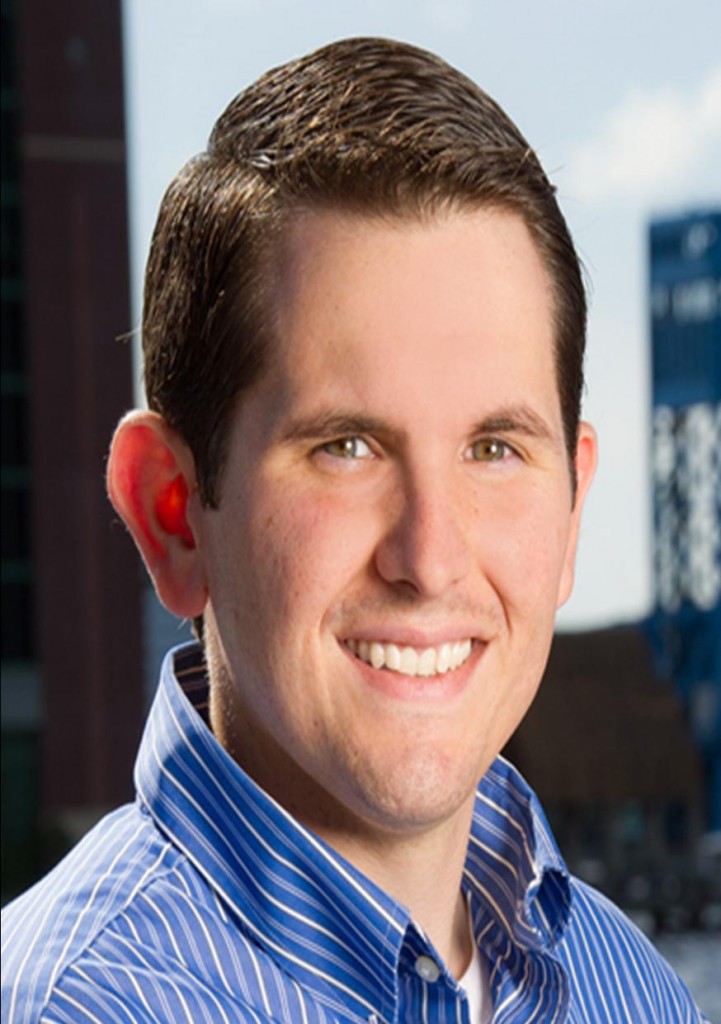 It’s rare to find strong school choice advocates on local school boards. But in Florida, another such advocate has emerged as a viable candidate in one of the state’s biggest school districts.
Jason Fischer, 29, is one of six candidates running for the District 7 seat in Duval County, which is the county that corresponds with the city of Jacksonville. As we’ve noted before, Duval has been particularly unfriendly territory when it comes to charter schools, vouchers and tax credit scholarships. So it’s worth noting that not only is Fischer openly supportive of expanded school choice, including private options, but he’s no ordinary contender by other measures. Last month, Gov. Jeb Bush endorsed him. And yesterday, with less than three weeks to go before the Aug. 14 primary, three speaker-designates for the Florida House of Representatives did the same.
Like Glen Gilzean, a school board member and candidate in Pinellas County, Fla. who we’ve also written about (and who also snagged an endorsement from Bush), Fischer defies the caricature of the school choice supporter who wants to tear down traditional public schools. His platform is by no means limited to school choice; it includes, among other things, more focus on teacher quality and performance pay. But Fischer doesn’t shy from the potential benefits that come when more learning options are available to more kids.
“If the government has a good functioning school in an area, and people want to send their kids there, that’s fine,” Fischer told redefinED in a phone interview this week. “My goal isn’t to undercut public education. It’s to make sure parents have the widest opportunities available.”
“I think the choices will improve the quality of education of their child primarily,” he continued. “But secondarily, it will force the public school education system to improve its service level … so everyone benefits.”
Duval has struggled even more than most Florida urban districts to improve test scores for low-income students, and the School Board and one of the county’s key education advocacy groups have resisted more learning options for these students. But Fischer suggests that expanded choice can be part of the solution. (more…)
 Florida charter schools were more likely than traditional public schools to earn A and F grades under this year’s tougher new standards and tests, state data shows.
Some 48.7 percent of elementary, middle and “combination” charter schools earned A grades, compared to 42.7 percent of traditional public schools, according to Florida Department of Education data.
Meanwhile, 19 charters were stung with F’s (6.1 percent), compared to 28 traditional public schools (1.2 percent).
It appears traditional public schools were harder hit by the higher bar than charters.
Last year, 15 elementary, middle and combination charters were awarded F’s, compared to 17 traditional public schools - a comparison oft-noted by school boards and other critics. At the same time, according to last year's data, traditional public schools earned A grades at a slightly higher rate than charters, 58 percent to 57 percent.
To see the most recent charter school grades data, check out this this spreadsheet.
Editor’s note: Today, we introduce a new feature (even if we’re not sure the name will last) - an occasional compilation of bite-sized nuggets about school choice and education reform that are worth noting but may not be worth a post by themselves.
More anti-Muslim bigotry in school choice debates
It’s nearly impossible to go a month without hearing another example of anti-Muslim bigotry in a school choice debate.
The latest example: Louisiana state Rep. Valarie Hodges, who now says she wishes she had not voted for Gov. Bobby Jindal’s voucher bill because she fears it will promote Islam. “There are a thousand Muslim schools that have sprung up recently,” she said. “I do not support using public funds for teaching Islam anywhere here in Louisiana.”
The lawmaker’s comments echo Muslim bashing in school choice debates in Kansas, Alabama, Tennessee and other places in the past few months alone. Sadly, religious bigotry has long been a part of the school choice narrative. To repeat what we wrote in April:
The courts have ruled that vouchers and tax credit scholarships are constitutional. We live in a religiously diverse society and this pluralism is a source of pride and strength. We can’t pick and choose which religions are acceptable and unacceptable for school choice. And we should not tarnish whole groups of people because of the horrible actions of a few individuals. In the end, expanded school choice will serve the public good. It will increase the likelihood that more kids, whatever their religion, become the productive citizens we all want them to be.
Jeb Bush endorses pro-choice school board candidate
Jeb Bush doesn’t endorse local candidates often. But last week, he decided to back a Tampa Bay-area school board member who openly supports expanded school choice, including vouchers and tax credit scholarships.
Glen Gilzean, 30, is running against four other candidates to keep the Pinellas County School Board seat that Gov. Rick Scott appointed him to in January. The district in play includes much of the city of St. Petersburg and has more black voters than any other.
I don’t know how much Bush’s endorsement will help Gilzean. He's a black Republican in a district that leans Democratic (even if school board races in Florida are officially nonpartisan). But I do know this: Black students in Pinellas struggle more than black students in every major urban school district in Florida, and frustrated black residents are increasingly open to school choice alternatives. (more…)
 New Hampshire: The state legislature overrides Gov. John Lynch's veto of a tax credit scholarship bill. (Manchester Union-Leader)
North Carolina: School choice leaders throw in the towel on a legislative proposal for tax credit scholarships. (Associated Press) A judge rules that a virtual charter school cannot open, siding with the state board of education, which had refused to consider the proposed school's application. (Raleigh News & Observer)
New Jersey: Gov. Chris Christie says it's unlikely that a school voucher bill will move in the state legislature this year. (NJ Spotlight)
Florida: Faced with declining enrollment and increased competition from school choice, the Broward County School Board wants to open its own charter schools. (South Florida Sun Sentinel) Meanwhile, the state Charter School Appeal Commission sides with four of five charter school applications rejected by the Palm Beach County School Board. (Palm Beach Post)
Pennsylvania: A well-funded political action committee and the Philadelphia Archdiocese are pushing hard to expand the state's tax credit scholarship program. (Philadelphia Inquirer)
Texas: The state's main charter school group filed suit against the state, charging it with short-changing charters on facilities funding and arbitrarily capping the number of charters that can open. (Houston Chronicle) (more…)

