 Washington: Supporters of a charter school ballot initiative raise $5 million in six weeks, including another $2 million from Bill Gates (Associated Press).
California: A judge rules that parents who won a parent trigger battle can open a charter school next fall (Los Angeles Times).
Florida: A new initiative to put more students into STEM fields taps students in traditional, magnet and charter schools (redefinED). A long-troubled Imagine charter school continues to test the patience of the school board in Pinellas County (Tampa Bay Times). In Palm Beach County, thousands of parents and students show up for a school choice showcase that includes magnet and charter schoools (Palm Beach Post).
Pennsylvania: Republican lawmakers postpone discussion on a proposed statewide authorizer for charter schools (Pittsburgh Post Gazette). The U.S. Department of Education questions how state education officials revised rules to gauge whether charter school met academic standards (Philadelphia Inquirer). A bill to toughen oversight of charter schools dies in the state House (Associated Press).
Georgia: State senate candidates are divided over charter schools and a charter school ballot initiative (Douglas County Sentinel).
New Jersey: Charter schools tied to the highly regarded KIPP network are gearing up to expand (NJSpotlight.com).
Louisiana: An effort to recall lawmakers who supported the state's new voucher program fizzles (Associated Press). (more…)
 It's concerning enough that Florida education reporters are overlooking basic facts about Amendment 8 - the "religious freedom amendment" - and in many cases simply repeating what the teachers unions and school boards say about it (that it's really about vouchers voucher vouchers vouchers ... ). But an Orlando Sentinel reporter took it a step further yesterday, incorporating opposition talking points into a story as if they were true.
This is what the post on the Sentinel's SchoolZone blog said: "The Orange County School Board added their name to the roster of school boards officially opposing Amendment 8, which could lead to the revival of public vouchers to religious and private schools."
As we've respectfully noted, there are debate-worthy reasons why people supporting Amendment 8 want to remove the "no aid" provision in the Florida Constitution. But because of the legal history here, private school choice isn't seriously one of them.
The Sentinel post also mentioned a "recent analysis" by the relatively obscure Florida Center for Fiscal and Economic Policy, which was the topic of a separate blog post earlier in the day (and which followed a full story in the Sentinel that morning that, like so many others in recent weeks, did not ask "the other side" if vouchers were really an issue and offered no evidence that it was.) The analysis claims Amendment 8 "would have a huge negative impact on public education" and "would open the way for universal private school vouchers in Florida."
The center - which once issued a report suggesting Education Week's Quality Counts report wasn't about education quality - has direct ties to the Florida Education Association and Florida School Boards Association, but those ties weren't noted in either blog post.
Its claims are way off the mark, but don't take our word for it. Please, take a closer look.
 There are times when it’s appropriate for a journalist to boil down a story into a he-said, she-said. And there are times when it’s just lackluster reporting.
As Jon East has noted in this blog post and this op-ed, Florida’s Amendment 8 – the “religious freedom amendment” – is not about private school vouchers. It’s clear if you look at the legal history for private education options in Florida. It’s clear if you look to see who is and isn’t bankrolling the campaign.
And yet, one news story after another has allowed the Florida Education Association, the Florida School Boards Association and other school choice critics to posit that it is about vouchers – and to let those assertions go unchallenged. Often it’s in terms so deep into an alternate reality, they beg for a little scrutiny. According to the Gainesville Sun, for example, an Alachua County School Board member described Amendment 8 as “the very death of public schools.”
With six weeks left before the vote, statements like these are surfacing in major newspapers nearly every day. Here are a few examples, along with how the story captures the legislative intent of the amendment, the constitutional underpinnings of school vouchers, the lack of a campaign or financial support by school voucher advocates, the factual history of private options in a state that now provides them to more than 200,000 students, or just some form of a statement from those with an opposing view:
From the South Florida Sun Sentinel (Aug. 21):
“Amendment 8 would remove the long-standing restriction in the Florida Constitution that prohibits the expenditure of public funds to support religious programs," the resolution (from the Broward County School Board) reads. "Passage of Amendment 8 could result in state funds being awarded to non-public schools, instead of allocated to support public and charter schools.”
The resolution stops short of saying whether those would be good or bad outcomes, but it was obvious where board members stood.
"We have a limited amount of resources, and you would continue to strain the resources for public and charter schools," board member Robin Bartleman said.
Response from other side: None
Supporting evidence: None
***
From the Daytona Beach News Journal (Sept. 15):
The title and wording of the amendment were the subject of a lawsuit in which Ormond Beach school principal Susan Persis and Palm Coast rabbi Merrill Shapiro were plaintiffs.
They and other representatives of school-related organizations and clergy tried to get the amendment thrown off the ballot, but a judge allowed it to go before voters after Florida Attorney General Pam Bondi rewrote the proposal.
Persis said she fears passage of Amendment 8 would divert money from public schools to religious ones. "This would further reduce funding for public education," said Persis, who's principal of Pine Trail Elementary. "Any further reduction will be devastating to our schools." (more…)
 Editor's note: This op-ed appeared in today's Tampa Bay Times.
Few public issues are as absorbing as the balance between religion and government, so a ballot initiative that aims to change the boundary is worthy of rigorous debate. Instead, Florida's Amendment 8 is being treated to a proxy campaign on school vouchers.
A new radio ad by the Florida Education Association: "Amendment 8 allows the government to give our tax dollars to any group claiming to be a religious organization, so any religious group or sect can use our money to fund their own religious schools."
FEA president Andy Ford: "This is designed to open the state treasury to voucher schools."
Alachua School Board member Eileen Roy: "It's the very death of public schools. That's not overstating it, in my opinion."
These are provocative arguments, to be sure, but they are basically irrelevant. The amendment was placed on the ballot by two legislators — Sen. Thad Altman, R-Viera, and Rep. Scott Plakon, R-Longwood — who have said repeatedly they want to protect religiously based social services. Their interest was piqued by a lawsuit, Council for Secular Humanism vs. McNeil, that challenges a prison ministries program, and by the fact that the New York-based council has called it "a springboard to mounting other challenges."
In turn, the pro-Amendment 8 campaign is being led by a coalition of community-service providers and religious leaders who have raised less than $100,000 to date. They believe that if the secular humanists will sue over prison ministries, they might one day challenge the Catholic Charities or Catholic hospitals or the YMCA. After all, the current constitutional language is explicit: "No revenue of the state or any political subdivision or agency thereof shall ever be taken from the public treasury directly or indirectly in aid of any church, sect, or religious denomination or in aid of any sectarian institution."
Now it is certainly true that voucher advocates have previously pushed to alter the no-aid clause. But it is just as clear that they played no role in getting this amendment on the ballot and, most telling, have raised not a penny for the campaign. Their reasons are pragmatic, not philosophical: Federal and state court decisions in recent years have rendered the no-aid clause all but moot as it relates to school choice. Read full editorial here.
Like other school choice programs where supply is overwhelmed by demand, the school district in Pinellas County, Fla. offers an option that causes plenty of joy and heartache. Some kids win the “fundamental school” lottery. Some kids lose. Some go on to the high-performing fundamentals, where they’re surrounded by peers with super-engaged parents. Others go to neighborhood schools that struggle mightily.
Are their outcomes different? Matthew Chingos, a respected researcher at the Brookings Institution, is aiming to find out.
Last week, the district agreed to give Chingos the data he requested so he could examine the impact of fundamental schools on math and reading scores. Once he gets the data, he expects to issue findings within a year, according to his research application.
His study is worth watching because it involves a school choice option offered by a school district, not by private schools or charter schools.
The fundamental schools in Pinellas stress parental involvement and student accountability. Students who fall short on academic, behavioral and dress code requirements can be reassigned to neighborhood schools. Ditto if their parents fail to meet requirements, including attending monthly meetings.
The 104,000-student Pinellas district created its first fundamental school in 1976, but expanded them rapidly in recent years. It now has more than 7,000 students in 10 full-fledged fundamental schools and two “school-within-a-school” fundamental high schools.
The schools boast some of the district’s highest test scores and lowest disciplinary rates. They also cause a fair amount of angst. (more…)
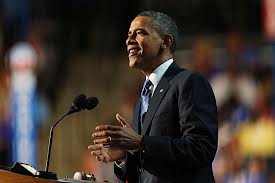 DNC: President Obama suggests Mitt Romney would gut education spending, but avoids mention of Race to the Top (redefinEd). (Image from Minnesota.publicradio.org) Panel discussions sponsored by Democrats for Education Reform highlight the battle within the party over education policy (redefinED). Teachers union leaders promise to campaign hard for Obama, despite difference over teacher evaluations, charter schools and other policies. (Education Week)
Florida: The new chair of the state Board of Education helped bring the KIPP charter school network to Florida (redefinED).
North Carolina: The state board of education authorizes the opening of 25 more charter schools next year. (Associated Press)
California: The Los Angeles school district, which has more charter schools than any district in the country, is scheduled to discuss a moratorium on new ones. (Los Angeles Times)
Indiana: Republican gubernatorial candidate Mike Pence unveils an education agenda that includes expanding vouchers, but it's light on details. (Associated Press)
Pennsylvania: Cyber charter school are growing rapidly in the state, creating tensions with traditional school districts. (Pittsburgh Post-Gazette)
Tennessee: The state education commissioner blasts a privately-owned online school for its test results, calling them "demonstrably poor." (TheLeafChronicle.com)
New Mexico: The state's first virtual charter school begins classes. (Santa Fe New Mexican)
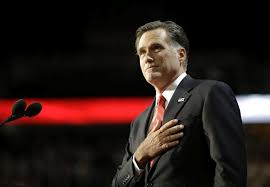 Choice at the RNC: Mitt Romney drops a line about school choice in his big speech, while Jeb Bush and Condoleezza Rice say more (redefinED). A former voucher student from Florida joins Jeb Bush on stage, saying in an interview later, "Because I had choice in my education, I was granted a better life (redefinED). (Image from minnesota.publicradio.org)
Louisiana: A statewide teachers union accuses the Black Alliance for Educational Options and other school choice groups of supporting a pro-KKK educational curriculum. (Choice Media)
Washington: The political landscape around charter schools has changed as voters get ready to vote on a charter measure for the fourth time. (Seattle Times)
Florida: A powerful lawmaker and school choice supporter is puzzled by charter schools that want to set up in one of the school districts in his legislative district. (St. Augustine Record)
Ohio: Hundreds of special needs students are benefiting from a voucher program. (Cincinnati.com) (more…)
Editor's note: This is the second installment of "A Choice Conversation," an ongoing dialogue between Doug Tuthill, president of Step Up for Students and a redefinED host, and John Wilson, a former NEA leader who writes the Unleashed blog at Education Week.
 Doug Tuthill: John, in our last exchange you called “for a new contracting arrangement for providers to serve the unique educational needs of targeted student populations and innovation.”
Floridians have heeded your advice and are expanding options for educators and families through innovative public-private partnerships. For example, the Okaloosa school district contracted with Embry-Riddle Aeronautical University to run Florida’s best aeronautics high school institutes. The Florida Virtual School contracts with Connections Academy to operate its K-5 program, and last year the Duval County school district contracted with local churches to implement programs for suspended students. The Pinellas County teachers union has a corporate subsidiary that contracts with its school board to tutor students; career academies throughout Florida contract for services from a plethora of businesses and trade associations; and the state’s charter schools, Voluntary Pre-K program, McKay Scholarships and tax credit scholarships are all implemented through public-private partnerships, as are many magnet schools.
Managing all these public-private partnerships is challenging, and you’ve suggested using the “institution of public schools” as the oversight entity. I’m curious what you mean by the term “institution of public schools.” I’m also interested in your criteria for distinguishing between acceptable and unacceptable public-private contracts.
John Wilson: Doug, I guess you could say I am a traditionalist when it comes to describing the institution of public schools, but I am an innovator when it comes to expanding the providers of customized education for targeted students and innovation.
I see the district board of education as the "traffic cop" for assuring that all providers, whether charters, private, or public-private, operate within a contract signed by the board of education and the provider. The "traffic cop" should assure that providers meet their fiduciary responsibility, improve student achievement, and adhere to the relevant laws and regulations as well as the contract that was signed with the board of education. I think the community needs to know these arrangements are cost-efficient and effective with their tax dollars and that their children are receiving a high-quality education. Let me add that I am not so naive as to know that we will need to build, and in some cases rebuild, trust and a shared vision with all parties that provide education opportunities. (more…)
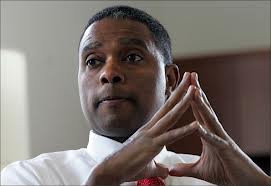 Florida education commissioner Gerard Robinson has made what appears to be an anguishing personal decision to return to his family in Virginia, because his wife, a law professor, has been unable to find a comparable position in Florida. And yet the announcement Tuesday was greeted with a level of vitriol that can only speak to the state’s nasty educational divide.
An anti-testing group released a statement deriding Robinson’s “so-called accomplishments” as tied to a testing system that “has been completely discredited.” A Democratic lawmaker called the departure “a clear indicator … that recent destructive education reform measures … are harmful to the morale and productivity of students and teachers.” A Florida School Boards Association leader accused Robinson of “doing the bidding” of the state Board of Education, as though she doesn’t expect the same of her own superintendent. Predictably, the Washington Post’s Valerie Strauss offered a conspiracy theory – that Robinson was being offered as a “scapegoat” to divert attention from the FCAT. A Democratic congresswoman who should know better actually called for a federal review of the FCAT.
You get the picture.
Now, it is certainly true that the Department of Education had issues with the FCAT writing test and bungled the initial release of school grades this year. And it is also true that much – maybe too much – rides on the performance of students on state testing. But nothing in Robinson’s 13 months on the job warrants such public venom, and you don’t have to defend him to recognize his convenience as a punching bag. So let’s call this another temperature check in the fever over educational accountability. (more…)
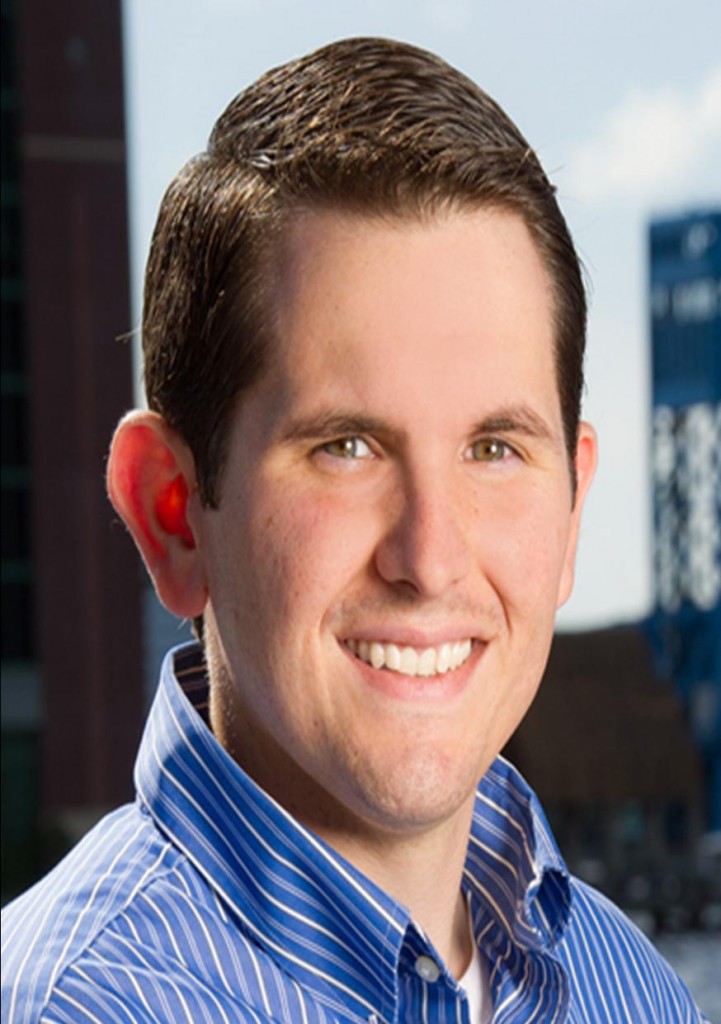 It’s rare to find strong school choice advocates on local school boards. But in Florida, another such advocate has emerged as a viable candidate in one of the state’s biggest school districts.
Jason Fischer, 29, is one of six candidates running for the District 7 seat in Duval County, which is the county that corresponds with the city of Jacksonville. As we’ve noted before, Duval has been particularly unfriendly territory when it comes to charter schools, vouchers and tax credit scholarships. So it’s worth noting that not only is Fischer openly supportive of expanded school choice, including private options, but he’s no ordinary contender by other measures. Last month, Gov. Jeb Bush endorsed him. And yesterday, with less than three weeks to go before the Aug. 14 primary, three speaker-designates for the Florida House of Representatives did the same.
Like Glen Gilzean, a school board member and candidate in Pinellas County, Fla. who we’ve also written about (and who also snagged an endorsement from Bush), Fischer defies the caricature of the school choice supporter who wants to tear down traditional public schools. His platform is by no means limited to school choice; it includes, among other things, more focus on teacher quality and performance pay. But Fischer doesn’t shy from the potential benefits that come when more learning options are available to more kids.
“If the government has a good functioning school in an area, and people want to send their kids there, that’s fine,” Fischer told redefinED in a phone interview this week. “My goal isn’t to undercut public education. It’s to make sure parents have the widest opportunities available.”
“I think the choices will improve the quality of education of their child primarily,” he continued. “But secondarily, it will force the public school education system to improve its service level … so everyone benefits.”
Duval has struggled even more than most Florida urban districts to improve test scores for low-income students, and the School Board and one of the county’s key education advocacy groups have resisted more learning options for these students. But Fischer suggests that expanded choice can be part of the solution. (more…)

