During the 2013 Texas legislative session, I made my way to Houston to visit one of the grand old men of Texas K-12 reform, the late/great Charles Miller. Miller had long been a pillar of the Houston business community and had been deeply engaged in both K-12 and higher education policy. Mr. Miller and I met for lunch at a Tex-Mex restaurant, whereupon I described a litany of woes for school choice supporters in the 2013 session.
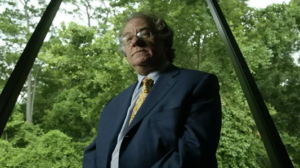
Mr. Miller listened, and then patiently explained to me how school district interests “manage” the Texas legislature. His tale revealed that the series of funding lawsuits carried out over many decades were in his view part of a larger and largely successful strategy to stymie and reverse reform of the K-12 system. Mr. Miller had a K-12 agenda outside of choice, and I when I asked him if he was pursuing it in the 2013 session, he responded “Certainly not.” Mr. Miller explained patiently, “This is a lawsuit year.”


At that point I remember looking down at my half-eaten plate of enchiladas and thinking to myself, “This session is going to end badly.” Every Texas legislative session before 2013 had ended badly for private school choice, and every session since, including the 2023 regular and special sessions. In 2024, however, the tables may have finally turned.
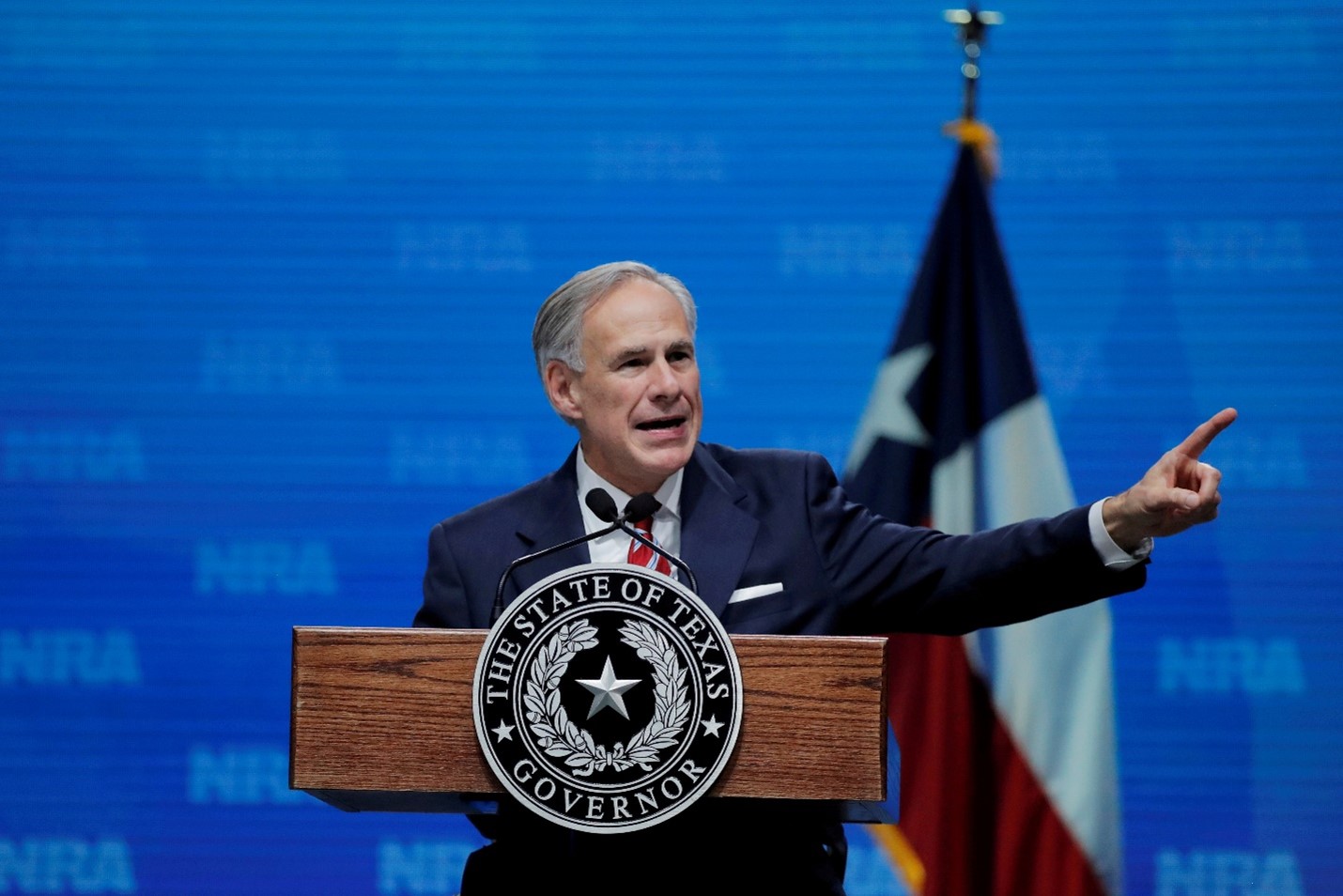
The Texas Supreme Court ended the funding lawsuit kabuki theatre a few years ago. Texas Gov. Greg Abbott campaigned hard in favor of Republican primary candidates willing to enact their party's platform position on school choice and scored unprecedented victories over incumbent choice opponents.
With a bit more good news from the runoffs, the Texas House’s days of being “managed” by the Muleshoe Machiavellis in the Texas school district industrial lobbying complex might just come to an end in 2025. Stay tuned to this channel for further developments.
The story: After two court victories in the 1990s, Wisconsin, the national birthplace of modern-era school choice, now faces a court challenge that, if successful, could send more than 60,000 students back to the state’s district schools.
This time, a brewery owner, former congressional candidate and super PAC founder is funding a case that argues the state’s four scholarship programs and independent charter schools, which are authorized by organizations other than school districts, are a “cancer” with a funding method that has put school districts into “a death spiral.” The case, brought on behalf of eight Wisconsin residents, is going straight to the state Supreme Court.
School choice supporters say the lawsuit is an attempt to capitalize on this year’s Wisconsin Supreme Court election, which gave liberals a 4-3 majority for the first time in 15 years. The high court has not announced whether it will hear the case.
Flashback: In 1990, Wisconsin launched the nation’s first K-12 school choice program, empowering low-income parents to remove their children from failing Milwaukee schools and enroll them in the city’s private schools. The scholarship allowed up to 1,000 students to attend a non-sectarian private school of their families’ choice.
The ink on the bill was barely dry before it ended up in a legal challenge that made it to the Wisconsin Supreme Court. Opponents argued that the legislation was a special interest program and that lawmakers approved it improperly. An appeals court struck down the program, but state supreme court upheld it in a 4-3 ruling, saying in the majority opinion that the program’s limited scope “is not an abandonment of the public school system.”
The programs survived a second court challenge in 1998 when the state supreme court ruled that the state’s expansion to let religious schools participate did not violate the federal Establishment Clause. The U.S. Supreme Court declined to hear the appeal.
State of play: Today, four school choice programs serve Wisconsin families, including three for lower-income families and one for students with special needs. The state also Wisconsin Institute for Law & Liberty (WILL), a public interest law firm, recently filed a brief outlining why it thinks the court should decline the request to consider the case. The state also offers independent charter schools as another option.
The organization has also filed a motion to represent 22 families as intervenors if the high court agrees to hear the case. WILL attorney Cory Brewer sat down with NextSteps to share some details. Responses have been edited for clarity and brevity.
Q. The state supreme court has already upheld Wisconsin’s school choice programs twice in the 1990s. Why is this happening now?
A. We think this petition is politically motivated based on the recent shift in the makeup of the court. A primary backer of the case is Kirk Bangstad, who owns the Minocqua Brewing Company and runs the Minocqua Brewing Super PAC. The Super PAC has a history of supporting liberal candidates and has been telegraphing aspects of this case for weeks on Facebook. The state’s educational establishment is lining up to attack choice and charter schools with this case. The state teachers union has expressed support for the case. One of the petitioners is Julie Underwood, the former dean of the School of Education at the University of Wisconsin—Madison.
Q. So, what is the new argument the petitioners are making about the programs’ constitutionality?
A. The lawsuit brings three claims as to why each of those four programs is illegal. Those claims are:
The fourth claim they raise in the lawsuit challenges “revenue limits” which impose a cap on how much money each school district is allowed to generate per pupil from all sources (this is a way to control property tax expenses, and revenue limits have been in place since the 1990s).
Q. What allows the petitioners to take this directly to the state Supreme and bypass lower courts?
A. The Wisconsin Constitution provides the Wisconsin Supreme Court with so-called original jurisdiction. This gives the court the power to hear cases that have not first been heard by the lower courts. Sometimes, a quick and definitive answer to a legal question serves the public interest. The court has historically been fairly sparse on original actions over the years, and cases requiring complex and intensive factual development are not appropriate for original action. Normally, when deciding whether to accept a case as an original action, the court errs on the side of caution.
Q. Does the Supreme Court usually agree to hear direct petitions?
A. A Marquette professor studied this issue a few years ago. According to him, from the 2003-04 term through the 2020-21 term, there were 103 original action petitions denied and 15 granted, seven of which were in the 2019-20 term. Each year, the court hears about 50 to 60 cases total, so original actions do not constitute a significant part of its workload.
Q. How are the public schools actually doing in Wisconsin? The plaintiffs say in their petition that the scholarship programs have put school districts in a “death spiral” and say that for every scholarship student funded, the district lose the equivalent of funding for five students. What is your response?
A. We don’t believe petitioners’ claims are rational or factually accurate. Public schools continue to receive additional funding every year, and frankly school choice is very popular with the voters of Wisconsin. Also, school districts in Wisconsin are funded through a combination of state and local aid, and the local aid means that public schools get substantially more than the voucher in most every case. Inflation-adjusted spending is far higher today than when school choice began in 1990.
Q. If these petitioners prevail and the programs are shut down, what would that mean for school choice families in Wisconsin? Also, how would it impact district schools that must absorb many of these students?
A. The stakes could not be higher. Over 60,000 students could see their education options go away if the relief sought by the petitioners were to be granted. We believe this would have a massive negative impact, including on public schools. Not only do public schools benefit from the competition, but we do not believe they have the capacity to absorb all the displaced students. As for practical implications, school choice enrollment (Milwaukee Parental Choice Program, Racine Parental Choice Program, Wisconsin Parental Choice Program and the Special Needs Scholarship Program) is 54,949 for the 2023-24 school year. Independent charters enroll another 10,802 students. Demographically, school choice is disproportionately used by students from minority backgrounds. According to data from the state report card, approximately 32% of participating students are African American, 28% are Hispanic, 32% are white, and the remainder are something else.
Add South Carolina to the list of states whose education choice scholarship programs are facing court challenges.
The state teachers’ union, along with the state NAACP and six parents, has asked the state Supreme Court to overturn South Carolina’s new private school law, which the state General Assembly approved six months ago. S.39 established an education trust fund that grants $6,000 to children from families with household income levels at or below 200% of the federal poverty line. Qualified families can use the money to pay for qualified education expenses, including private school tuition, public school services, tutoring or curriculum.
Plaintiffs argue the program violates the state Constitution’s prohibition against the direct funding of private and religious schools. They also say the program violates the constitutional requirement that the state provide “a system of free public schools open to all children,” allocates public funds without a sufficient public purpose; and impermissibly expands the constitutionally defined authority of the state superintendent of education, whose Department of Education will administer the program.
Supporters of the newly enacted program, including the Palmetto Promise Institute, say it is “clearly constitutional,” just like existing state programs that give funds to students attending private higher education institutions and pre-kindergarten programs.
“All students from pre-kindergarten through college, particularly those of low and moderate income, deserve the right enjoy private education options where public options may not fit their needs,” the think tank posted on X, formerly known as Twitter.
State Education Superintendent Ellen Weaver supported school choice during her 2022 campaign and is named as a defendant. She promised to “fight tooth and nail” to give children access to an education that best fits their needs.
“Opponents of expanding opportunity couldn’t win at the ballot box, lost in the legislature and now are asking the courts to overrule the will of the people,” she said in a statement. “It’s not surprising, but it’s disappointing.”
Echoes of Alaska: The plaintiffs’ main argument is like one being made about an Alaska program that is facing a court challenge. Plaintiffs in that state say an allotment program, which functions like an education savings account, violates Alaska’s constitutional ban on programs that directly benefit private institutions. Attorneys for the Institute for Justice, which is representing three Alaska parents and defending the program, argue that the funds directly benefit only the families, who can choose from among a wide variety of options. However, a broad interpretation that bars the program based on the possibility of families spending money at private institutions puts the state Constitution “on a collision course” with the U.S. Constitution.
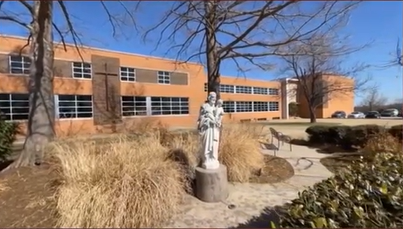
The proposed Oklahoma Catholic charter virtual school is named for St. Isidore of Seville, the patron saint of the internet.
The story: Oklahoma’s top lawyer, who already warned state officials about the constitutionality of a faith-based charter school, has now jumped into the legal fray.
Attorney General Gentner Drummond sued on Friday to block the establishment of St. Isidore of Seville Catholic Virtual Charter School. This marks the second challenge to the proposed K-12 school set to open in 2024.
Going on defense: The news drew a swift response from the National Alliance for Public Charter Schools, which released a statement in support of Drummond’s efforts to “defend public charter schools.”
“We support preserving the original intent and legal status of public charter schools to protect the constitutional rights of the students and teachers who choose these unique public schools. Charter schools are public schools and are state actors for the purposes of protecting students’ federal constitutional rights,” the statement said. The group added that it “vehemently” opposes the Oklahoma board’s approval of the school and pledged to work with partners and advocates to “ensure that all students who wish to attend a high-quality, public school continue to have that option.”
Yes, but: Catholic leaders seeking to open St. Isidore say that it’s needed to reach students in rural areas that lack in-person Catholic schools. Most of the state’s Catholic schools are concentrated in large metro areas. They also want to help traditional Catholic schools by providing access to courses that the traditional school can’t offer.
Why it matters: Charter schools are publicly funded but privately managed and have historically been classified as public schools. That makes them subject to federal requirements to be non-sectarian and comply with anti-discrimination policies. If St. Isidore is allowed to open, it would be the nation’s first religious charter school. It would also throw the doors wide open to efforts in other states to allow religious schools to directly receive taxpayer money.
“Make no mistake, if the Catholic Church were permitted to have a public virtual charter school, a reckoning will follow in which this state will be faced with the unprecedented quandary of processing requests to directly fund all petitioning sectarian groups,” the lawsuit states.
Allegiances fraying: Besides stirring controversy among state GOP leaders, the issue has divided the charter school movement. Great Hearts Academies, a network of 40 classical charter schools in Texas and Arizona, took a position opposite the national alliance in a related case. Great Hearts argued that government funding does not make charter schools state actors. It urged the U.S. Supreme Court to settle the question. The high court declined.
“By design and definition, charter schools are run by independent entities that provide an alternative to government-run education. That independence frees charter schools from bureaucratic and governmental constraints and allows them to offer innovative curricula and environments that government-run schools do not. If charter schools are deemed state actors, that innovation will be stifled,” Great Hearts’ brief said.
Other faith leaders taking notice: Former U.S. Rep. Peter Deutsch, a Florida Democrat who founded a network of secular Hebrew charter schools in 2007, also has been eyeing Oklahoma as fertile ground for a faith-based charter school after the board’s decision.

Portrait of smiling little girl working with plasticine in art and craft class of development school
Editor’s note: This commentary from Amanda Kieffer, communications director for the Cardinal Institute for West Virginia Policy, appeared on projectforeverfree.org.
It’s been a tempestuous couple of years for education reform, but the clouds have broken over 2021, and the silver linings have rarely shown as bright.
Following two years of the Red for Ed movement and two years of COVID mandates and lockdowns that have hobbled the education of a generation of children, fed-up families are finally demanding better educational choices. And lawmakers are listening.
This year alone, 18 states have either expanded existing education choice programs or added new ones. We’re living in the “Year of Educational Choice.” But as the sun rises on a new world, the educational establishment is fighting to keep the old system alive.
In West Virginia, for example, Mountain State Justice (MSJ), a left-leaning public interest law firm, has filed an intent to sue against the state’s brand new Hope Scholarship — the nation’s broadest and most inclusive education savings account.
The program gives families 100% of the state-based portion of education tax dollars, estimated at $4,600 per child per year, to use on whatever kind of education they please.
Students who want to stay enrolled in their traditional public schools and students who wish to leave full-time enrollment in the traditional public school system can use the scholarship funds to pursue a more individualized education. Families can use the Hope Scholarship for tuition, curriculum, educational materials, special needs therapies, tutoring, and more.
In short, the scholarship gives families some choice as to what education they’d like to pursue and allows them to take their tax dollars where they will. The scholarship may not cover the entire cost of tuition, but it will lessen the financial burden for families.
That doesn’t sit well with MSJ. Their suit contests the scholarship on anti-discrimination grounds, stating that it “excludes anti-discrimination protections otherwise protected under state laws.” They also allege that the new program takes money from public schools without making up for the money in the school budget.
To continue reading, click here.

