Tennessee: Gov. Bill Haslam proposes a voucher that's limited to low-income students in low-performing schools, with additional state funding for those schools to boot (KnoxNews). More from timesfreepress.com and Nashville Public Radio. Haslam reiterates that his proposal won't affect funding for public schools (Nooga.com). Both supporters and opponents find details to criticize (KnoxNews). Haslam's administration is also backing a bill that would cap enrollment at a virtual charter school run by K12 Inc, reports timesfreepress.com.
Florida: At a National School Choice Week event, new Florida Education Commissioner Tony Bennett gives some school districts credit for expanding public options such as magnet schools and career academies (redefinED).
Louisiana: The teachers union in New Orleans asks for the names of teachers in the city's charter schools in the hopes of organizing them (The Lens).
Arkansas: Former Florida Gov. Jeb Bush makes an appearance during National School Choice Week, urging lawmakers to expand charter schools and other choice options and calling education reform both the civil rights and economic issue of our time (Associated Press). More from the Arkansas Press-Gazette.
Virginia: Democratic lawmakers kill a charter school bill and snub their party's national platform in the process (Watchdog.org). More from the Associated Press. A bill to allow home-schoolers to play sports in public schools - a so-called "Tebow" bill - passes the House but must still clear the Senate (Associated Press).
Georgia: The state charter schools commission holds its first meeting since being revived by passage of a constitutional amendment (Atlanta Journal Constitution). More than 1,000 charter school supporters gather to celebrate the amendment's passage (Atlanta Journal Constitution).
South Carolina: State Superintendent of Education Mick Zais says at a National School Choice Week event that he supports a legislative proposal for tax credit scholarships (SCNow.com).
North Carolina: An expansion of charter schools brings debate about quality (Durham Herald Sun).
Mississippi: A bill backed by Gov. Phil Bryant to create a tax credit scholarship program clears the Senate education committee (Associated Press).
Texas: A charter school chief executive testifies in a trial about education funding that low state spending is hurting charters too (San Antonio Express News). The Amarillo school district joins others in supporting an anti-voucher resolution (NewsChannel 10). Gov. Rick Perry backs expansion of charter schools and a proposal for tax credit scholarships (Dallas Morning News). (more…)
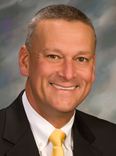
Editor’s note: As we reported last night, Florida Education Commissioner Tony Bennett made newsworthy comments yesterday when he spoke at an all-boys magnet school in Tampa. He suggested school choice wasn't a matter of public vs. private, and credited Florida school districts – Hillsborough’s in particular - for expanding magnets, career academies and other quality choice options. Here are his full remarks, edited slightly for length and clarity.
Bennett
The overview I want to give you about Florida’s choice framework is one that is, in my opinion, a true blueprint for our country. And I want to take you on this little journey. So just bear with me for a moment.
For many years, we said choice was about competition in education. And competition will raise all tides, right? The rising tide of competition will raise all the boats. And I can tell you, Florida has kind of changed that discussion. Again, being from Indiana, being from a state that tried and worked very hard to champion very similar policies, while competition in the educational system is good, the issue of choice here in Florida personifies the importance you put on what I believe to be the most important social justice issue in education. And by that, I want to do a little scenario.
If my wife and I didn’t have grown children, and in December when I was appointed, we would have gotten in our car, we would have driven to Tallahassee, and we would have driven around the community of Tallahassee, and we would have found the school that works best for the Bennett children. And the reason we could do that is frankly we could afford to. We could afford to live anywhere we wanted, send our kids to the school that we thought best fit their needs ...
And my point in this is, Florida is leading the discussion that all parents, regardless of the color of their skin or regardless of how much money they have, should have the same choice as Tony Bennett or MaryEllen (Elia, the Hillsborough superintendent). And that is a very different discussion in choice. And it is a discussion that I see is transcending what I believe can be really the first round of choice. And the first round of choice was frankly privates and charters against the public schools. Virtual schools against the traditional bricks-and-mortar buildings.
And I think MaryEllen in Hillsborough is an example of how we have taken that discussion in a completely different direction. Because this school (Franklin Middle Magnet and its Boys Preparatory Academy) provides a choice for children. This district provides a culture and a climate where choice is accepted and encouraged, and the opportunity that all children should have the same choices that Tony or MaryEllen have. They live that way.
So we’re now talking about choice – not just private schools and charter schools and virtual schools – we’re talking about public school choice. We’re talking about creative leaders like MaryEllen, like the team here, creating educational opportunities for children within the district. And really going to what we all heard was the purpose of choice to begin with, to provide incubation for innovation for our public schools. So I am very encouraged. (more…)
Vouchers and testing. A new report from the Fordham Institute finds that mandated testing - and even public reporting of test results - isn't that big a concern for private schools worried about government regs tied to vouchers and tax credit scholarships. Coverage from redefinED, Choice Words, the Cato Institute's Andrew J. Coulson and Gradebook. AEI's Michael McShane says Florida's tax credit scholarship program (which, altogether now, is administered by Step Up For Students, which co-hosts this blog) finds the "sweet spot" with its testing and financial reporting requirements: "These regulations don’t sound too crazy to me; they seem to strike a good balance of accountability for safety, fiscal responsibility, and academic performance without being overly dictatorial in how schools must demonstrate any of those."
 Shooting rockets. Senate President Don Gaetz tells the Associated Press that Florida needs to slow down on ed reforms until it rights the new teacher evaluation system and other changes in the works: "We need to quit shooting rockets into the air. We need to give schools and school districts, teachers and parents time to institutionalize the reforms that have already been made. We need about a two-year cooling off period."
Ford Falcons. Schools need competition. EdFly Blog.
School choice. Education Commissioner Tony Bennett says at a National School Choice Week event in Tampa that some Florida districts deserve credit for expanding public school options such as magnets and career academies, reports redefinED. More from Tampa Tribune.
Charter schools. The National Alliance for Public Charter Schools ranks Florida fifth for its charter laws. SchoolZone. Gradebook. South Florida Sun Sentinel. StateImpact Florida. The Pinellas school district postpones a decision on whether to close a long-struggling Imagine school in St. Petersburg, reports the Tampa Bay Times and Tampa Tribune. The Volusia district's decision to shut down a struggling charter in Deland is headed to appeals court, reports the Daytona Beach News Journal. (more…)
Florida’s new education commissioner is known for his zealous support of charter schools and vouchers and other learning options that some critics see as anti-public school.
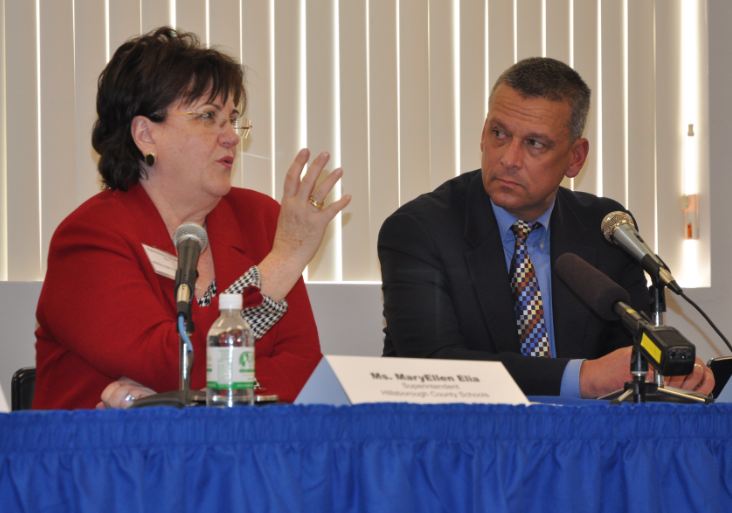
Florida Education Commissioner Tony Bennett and Hillsborough Superintendent MaryEllen Elia were among the panelists at a National School Choice Week event in Tampa. (Photo by Lisa A. Davis/Step Up For Students)
But on Tuesday afternoon, Tony Bennett sat next to Hillsborough County Public Schools Superintendent MaryEllen Elia inside a Tampa magnet school for boys, and praised the growth of choice in district schools across the state.
Florida is transcending the first round of conversations on choice that pit private and charter schools against public schools and virtual schools against “brick and mortar’’ ones, Bennett said during an event marking National School Choice Week. The new conversation, he suggested, isn’t either-or; it’s whatever works to ensure all kids have access to quality choices.
“So we’re now talking about choice – not just private schools and charter schools and virtual schools – we’re talking about public school choice,” he told an audience of about 100 people gathered at the Boys Preparatory Academy. “We’re talking about creative leaders like MaryEllen, like the team here, creating educational opportunities for children within the district - and really going to what we all heard was the purpose of choice to begin with, to provide incubation for innovation for our public schools.”
Tuesday’s event was sponsored by the Florida Alliance for Choices in Education, a coalition that includes a wide swath of school choice groups. Bennett and Elia sat on a panel with representatives from home-schooling, virtual education, magnet schools, career academies, Florida tax credit scholarships and McKay scholarships.
Most were parents who had lived and breathed school choice, starting with their own children. As they shared stories of searching for schools that practiced their faith or fit their child’s academic needs, they offered numbers that shed light on the choice movement’s impact. (more…)
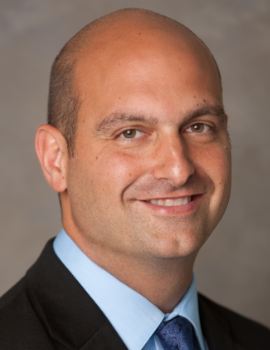
Vitti
To appreciate the significance of what Nikolai Vitti is saying about parental choice, one must first read his resume. He’s a 36-year-old with a Harvard education doctorate who served as chief academic officer to nationally recognized Miami-Dade school superintendent Alberto Carvalho before being chosen in the fall to run the Duval County school district, the 22nd largest in the nation.
So Vitti is, by anyone’s definition, a comer on the national public education scene.
And he says this: “I support choice because I think parents need options, especially those that do not have the financial means to go to a private school.”
And this: “I just don’t believe that anyone should tell a parent where they should send their child to school. I’m vehemently opposed to limiting options, especially to parents whose children are in lower performing schools or parents who don’t have the financial means to have the same flexibility that a parent would have of means. And that’s historically what’s happened with our public education system.”
These statements, in an enlightening podcast posted to this blog on Monday, are all the more impressive given that the school district he now commands has an uneasy history with private school choice. The pressure on him to continue to wage high-profile war is certainly great. But Vitti comes from a place, and perhaps a generation, where choice is not a dirty word. He openly praises charter operators such as KIPP, even borrowing from some of their practices while in Miami, and asserts that competition is making school districts up their game. In one of his first meetings on the new job, he recommended, and the school board approved, 12 new charter schools.
Vitti, then, is owed more than a pat on the back. He is also trying to break through the political divide to encourage open-minded debate on how to make choice actually work. Toward that end, he brings legitimate concerns to the table and needs to be heard. (more…)
 Florida: Former Indiana education leader Tony Bennett is one of three finalists for the education commissioner job in Florida, with the state Board of Education scheduled to make a decision Wednesday (redefinED). U.S. Sen. Marco Rubio, R-Fla., says in a major speech that expanding school choice is a key to revitalizing the middle class and proposes a federal tax credit scholarship (redefinED). Former Republican Gov. Charlie Crist tells the Tampa Tribune he was wrong to support an expansion of vouchers (redefinED), then, in a move many expected as he positions himself for another run at governor, signs paperwork to change his party registration to Democrat (Tampa Bay Times). (Image from healthystate.org)
Louisiana: U.S. Education Secretary Arne Duncan reiterates his opposition to private school vouchers during a visit to New Orleans (Fox 8 New Orleans). A district judge's ruling on the statewide voucher program also threatens an initiative to provide students more choice by course (New Orleans Times Picayune).
Texas: School districts gear up to fight lawmakers on vouchers (Dallas Morning News). Education commissioner Michael Williams urges charter schools to better inform lawmakers about their work (Dallas Morning News).
Arkansas: A crowded education agenda for lawmakers next year is likely to include school choice proposals, including tax credit scholarships and expansion of charter schools (Arkansas Business Online).
Washington: A new parents group forms to fight the formation of charter schools in the wake of the state's recently passed charter school ballot initiative (Seattle Times.)
North Carolina: The state board of education postpones a vote on rules that would make it tougher for virtual charter schools to open (Associated Press).
California: An appeals court overturns a ruling that potentially gave charter school operators in Los Angeles access to more classroom space (Los Angeles Times).
Connecticut: The Hartford school system gets $5 million from the Gates Foundation to strengthen its relationship with two charter school networks (Hartford Courant). The foundation distributed $25 million to seven cities nationwide (Washington Post).
Indiana: Seven more charter schools are coming to Indianapolis, more than half as many as Mayor Greg Ballard approved in his first five years (Indianapolis Business Journal).
Tennessee: High-performing district schools and charter schools in Nashville offer an opportunity for educators to learn what works, what doesn't (The Tennessean).
New York: Black pastors in Buffalo support the conversion of low-performing schools into charter schools (Buffalo News).
Frank
When people hear the term “school choice,” they usually don't think about it in a traditional public school setting, said Joy Frank, general counsel for the Florida Association of District School Superintendents. But public school districts offer students a growing array of choice programs, too, from online classes to career academies to International Baccalaureate programs.
“We have embraced choice,” Frank told members of the Florida House Choice & Innovation Subcommittee during its first meeting this week.
Frank’s comments are another sign of evolving perceptions regarding parental school choice. She and others who are grounded in the traditional public school camp may not embrace publicly funded private options such as vouchers and tax credit scholarships. But it wasn’t long ago that even public options such as IB and magnet schools were considered controversial. Implicit in her remarks is an acknowledgement that giving parents more choice for their children is a worthy goal.
Frank went on to tout public school choice programs across the state, including Polk County’s Central Florida Aerospace Academy, which has a high school at the Lakeland Regional Airport. She also lauded the phenomenal growth of school choice in Miami-Dade County, which opened its first magnet school in 1973 and now offers some 340 choice programs serving 43,000 students. (Coincidentally or not, the Miami-Dade school district also has among the highest rates of students enrolled in charter schools and private schools via tax credit scholarships.)
Traditional school leaders in Florida are increasingly making similar statements. (more…)
Like other school choice programs where supply is overwhelmed by demand, the school district in Pinellas County, Fla. offers an option that causes plenty of joy and heartache. Some kids win the “fundamental school” lottery. Some kids lose. Some go on to the high-performing fundamentals, where they’re surrounded by peers with super-engaged parents. Others go to neighborhood schools that struggle mightily.
Are their outcomes different? Matthew Chingos, a respected researcher at the Brookings Institution, is aiming to find out.
Last week, the district agreed to give Chingos the data he requested so he could examine the impact of fundamental schools on math and reading scores. Once he gets the data, he expects to issue findings within a year, according to his research application.
His study is worth watching because it involves a school choice option offered by a school district, not by private schools or charter schools.
The fundamental schools in Pinellas stress parental involvement and student accountability. Students who fall short on academic, behavioral and dress code requirements can be reassigned to neighborhood schools. Ditto if their parents fail to meet requirements, including attending monthly meetings.
The 104,000-student Pinellas district created its first fundamental school in 1976, but expanded them rapidly in recent years. It now has more than 7,000 students in 10 full-fledged fundamental schools and two “school-within-a-school” fundamental high schools.
The schools boast some of the district’s highest test scores and lowest disciplinary rates. They also cause a fair amount of angst. (more…)

