
Scott Kent posits that school choice and integration don’t have to be mutually exclusive goals.
One of the prevailing criticisms of charter schools and other education choice programs is that they contribute to the re-segregation of public schools, evoking the malevolent days of “separate but equal.” An Associated Press analysis in December asserted that “charters are vastly over-represented among schools where minorities study in the most extreme racial isolation.”
In Minnesota, a lawsuit winding its way through the court system accuses the state of enabling racial segregation in the Twin Cities metro area in part by allowing charter schools.
The issue arose in a recent forum for Pinellas County (Florida) School Board candidates. The moderator asked candidates whether they support racially and economically integrated schools, “considering research that school choice deepens segregation,” the Tampa Bay Times reported.
That last point is arguable. Corey DeAngelis of the libertarian Cato Institute has reported that none of the eight “rigorous empirical” studies he found on the subject indicated that vouchers increased racial segregation (in fact, seven of them showed that such programs improve racial integration).
Even accepting the premise, it’s worth noting that it results not from government-enforced segregation, which the landmark 1954 Supreme Court case Brown v. Board of Education of Topeka struck down as being unconstitutional, but rather from parental choice. Those choices are made by families black and white, many of whom give higher priority to educational factors other than a school’s racial balance.
For example, with regard to the Minnesota lawsuit, Friendship Academy of Fine Arts is a K-6 charter school in Minneapolis that serves a student population that’s 96 percent African-American and 85 percent low-income. In 2016 it was named a National Blue Ribbon School, one of only five schools in the state to receive that honor.
Why should government prohibit parents from exercising that choice, forcing them to attend an assigned school that may not meet their needs or standards? There’s no justification for cases like that of Edmund Lee, the Missouri third-grader whom a state law prevented from returning to his charter school simply because he’s black.
Keeping families in their neighborhood schools is unlikely to rectify the situation anyway. The de jure segregation of Jim Crow has been replaced by de facto segregation that is the result of deeply rooted socio-economic conditions. Affluent families – often white -- have more options available to them; they can afford to move to nice neighborhoods with good public schools. Poor families – often black -- have a much more difficult time escaping low-income areas with schools that can’t adequately fulfill their demands.
Integration can be a worthy end, for educational and social reasons. Data from the National Assessment for Educational Progress indicates that students in diverse schools have superior academic outcomes than their peers of similar backgrounds who attend high-poverty schools.
However, there are ways to achieve that other than by government mandate, that preserve parental choice and expand opportunities for all.
For instance, more school districts are using weighted admissions systems in their school choice programs that prioritize students based on their family incomes, rather than race.
Others are addressing the challenge from a different vantage point, by breaking away from routine thinking.
Writing in The Providence Journal last week, Jeremy Chiappetta, the executive director and founder of Blackstone Valley Prep Academy, a network of charter schools in Rhode Island, suggested changing the way we define neighborhood schools.
Blackstone Prep draws students from four different areas -- two higher-income communities and two lower-income ones -- which has resulted in a diverse student population. If the school served just any one of the communities, it would be segregated.
He also cites Citizens of the World Charter School Mar Vista in Los Angeles, which targets three different zip codes encompassing seven square miles, whereas the typical school zone in the area is one square mile.
Chiappetta writes:
“The reality is, charter schools that draw students from more diverse populations will have more diversity because they are redefining what it means to be a neighborhood school. Redefining neighborhoods is one of the proven ways to integrate and champion diversity in schools.”
Blackstone Prep and Citizens of the World are members of the Diverse Charter Schools Coalition, which promotes diversity through recruitment, admissions policies, and school design.
A home address should not determine the quality of a child’s education. Nor should the quest for a numerical ideal come at the expense of empowering families to secure the best educational environment for their kids. However, choice and integration also don’t have to be mutually exclusive goals.
Editor's note: Blog stars is our occasional roundup of compelling, provocative or just downright good stuff from other ed blogs (although sometimes we throw in op-eds from newspapers and magazines, too). Enjoy.
Geoffrey Canada: Death to Education Reform
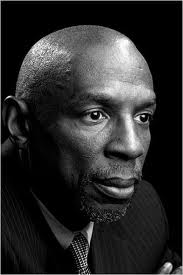
Canada
To know me is to know that no one feels more strongly than I do about the importance of transforming our current absurd, destructive educational system.
But the way education reform advocates are going about it is wrong. The problem is that you’re never going to get people motivated to be awesome teachers if they’re part of a giant bureaucracy. The only way you’re going to get people to be motivated to be awesome teachers is, yes, if you give them enough money, but also if they are part of a STRUCTURE and a CULTURE that breathes this kind of achievement and rewards it–rewards it not only financially, but also through an environment that encourages it every day. Why do small startups kick the ass of giant technology companies every day? It’s because, yes, these startups have payoffs, but anyone who knows them will tell you that what really makes them tick is the fact that they are small, tight-knit, and everyone is extremely focused. Information loops close really fast. It’s also what made Harlem Children’s Zone a success. It’s what makes neoliberal attempts to “reform” schools centrally via spreadsheet fail.
The only way you’re going to get good schools, in other words, is if you have a system where the people who have the biggest stake in the education, also have a very direct say in how things are run.
To put it another way, you need radical decentralization and a radical shift to power to parents and children in how schools are run. This can be accomplished through vouchers or through other means. (I actually have my misgivings about vouchers, for a bunch of complex reasons, but I’ve come to believe decentralization really is the key.) You could have a 100% public system if it was also structured so as to enable choice and competition. But the crucial thing is to let a thousand flowers bloom. Full post here. (Image from the thebestschools.org)
Andrew J. Coulson: Uh ... the 'Quality Controlled' Schools Are Worse
Sunday’s Washington Post ran a story titled “Quality controls lacking for D.C. schools accepting federal vouchers.” These are the particular failings chosen for the story’s lede:
schools that are unaccredited or are in unconventional settings, such as a family-run K-12 school operating out of a storefront, a Nation of Islam school based in a converted Deanwood residence, and a school built around the philosophy of a Bulgarian psychotherapist.
It is remarkable that more serious transgressions were omitted. Why not mention the schools in which current and former staff brawl in the parking lot, or students start vicious fights at sporting events? Why not discuss the schools spending nearly $30,000 per pupil annually and yet graduating barely half of their students on time?
The reason the WaPo didn’t mention them is that they are not voucher schools. (more…)

