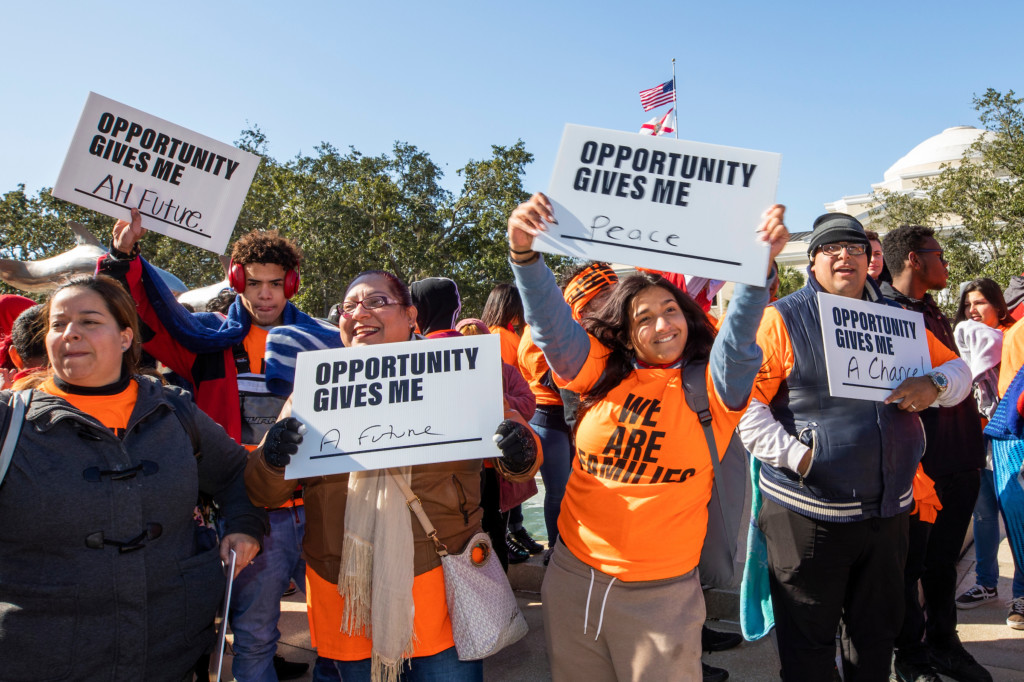
Students, teachers and parents from across the state descended upon the Florida Capitol in January 2020 to petition for education choice and Gardiner Scholarship expansion. Photo: COLIN HACKLEY
Editor’s note: This analysis from Marty Leuken, director of the Fiscal Research and Education Center at EdChoice, and Michael Castro, a research assistant at EdChoice, shows that Florida’s Gardiner Scholarship flies in the face of claims that vouchers are harmful to public school systems. It appears in the Spring 2022 issue of Education Next.
Critics of education choice claim that introducing and expanding choice programs will lead to a massive exodus of students that will dismantle public-school systems by “defunding” them.
For instance, one critic claims that vouchers “could dramatically destabilize public-school systems and communities.” Legislators in states such as Indiana, Ohio, and West Virginia claimed that school-choice bills introduced in their states would destroy public schools.
Such overwrought claims are hard to square with our work and many other analyses of education-choice programs, including a recent study that showed students participating in choice programs, including programs that have been around for multiple decades, represent just 2% of all publicly funded students in the states that operate these programs.
As part of the publication The ABCs of School Choice, we report participation rates, or “take-up rates,” by program for each school year.
This is how we calculate that figure:
Take-up rate = Number of students participating in the program over the number of students eligible for the program.
Trends matter too, though. Existing research doesn’t tell us about how programs might evolve or the extent to which participation increases or decreases over time. The rate in the third year that a program operates is probably going to be different than the rate in the same program’s twenty-third year. Take-up rates over time is what we are interested in understanding.
We decided to look at programs that were introduced in 2010 or later and that were in operation for at least five years. Our sample includes 27 private-education-choice programs in 19 states. These programs consist of four education savings accounts programs, 13 voucher programs, and 10 tax-credit scholarship programs.
Thirteen of these programs exclusively serve students with special needs. All programs in the sample are statewide except one: Wisconsin’s Racine Parental Choice, which is open to students who reside in the Racine Unified School District.
To continue reading, click here.
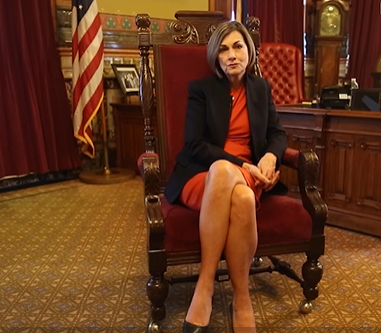
Iowa Gov. Kim Reynolds says she will continue to work to build support for school choice as the annual legislative session moves into its final weeks: “I’m going to continue to be optimistic right until the end.”
Editor’s note: This article appeared March 30 on desmoinesregister.com
The Iowa Senate has passed one of Gov. Kim Reynolds' key education priorities — a bill to give families taxpayer-funded scholarships to pay for private school expenses — in a move that puts pressure on the House to act.
Reynolds, a Republican, has made the issue one of her top legislative priorities for the year. It's also proven one of the most controversial proposals in the Legislature. Democrats are universally opposed and say the measure will harm public schools. Meanwhile, Republicans are divided, particularly in the House, with some of their members expressing similar concerns.
The Senate passed the measure, Senate File 2369, on a 31-18 vote. Every Republican voted in favor except Sen. Annette Sweeney, R-Alden, who joined every Democrat in voting no.
"There is no one size fits all when it comes to student success," said Sen. Amy Sinclair, R-Allerton, the bill's floor manager. "And only parents — only parents — should be the ones to have the opportunity to determine their child’s educational future."
To continue reading, click here.
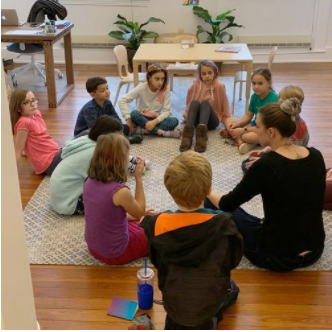
Acton Academy of Washington, D.C., is a Montessori preschool and student-centered elementary and middle school and one of 72 private schools serving close to 15,000 students in the District of Columbia.
Sixty-six percent of voters support reauthorization of one of the founding programs of the school choice movement according to a new poll released by a Maryland-based custom research firm.
Beck Research reports that when respondents were asked Feb. 23-27 via wireless or landline phones or text-to-web, “Based on what you know, would you say that you favor or oppose the D.C. Opportunity Scholarship Program,” only 22% said they opposed the program, while 12% were undecided.
When asked the broader question, “Generally speaking, would you favor or oppose school vouchers that allow lower-income families to send their child to any school they deem best?” 65% of respondents said they supported vouchers and 31% said they were opposed.
Tommy Schultz, CEO of the American Federation for Children, said the organization was not surprised at the poll results.
“Despite what detractors may suggest, there is strong bipartisan support for school choice and the Opportunity Scholarship Program in D.C. and Congress should listen and support this program with increased funding to meet demand and a permanent authorization,” Schultz said.
The DC Opportunity Scholarship Program, launched with bipartisan support in 2003, allows lower-income families to receive funding for their children to attend a participating District of Columbia private school. The only federally funded voucher program in the country, the program was enacted by Congress as part of a three-sector approach to improve educational outcomes in the District of Columbia.
According to the DC Opportunity Scholarship-Serving Our Children website, which provides information about the scholarship, nearly 40,000 District of Columbia children have applied for the Opportunity Scholarship since 2004-05 and more than 10,000 students have been awarded.
Currently, 95% of participating children are African American and Hispanic from families with an average annual income of less than $27,000.

Eastwood Christian School, one of 417 private schools in Alabama serving just over 80,000 students, places its educational emphasis on the “trivium” – grammar, logic, and rhetoric – taught from a Biblical worldview.
Editor’s note: This article appeared this morning in the daily newsletter of the Energy Institute of Alabama.
Sen. Dan Roberts, R-Mountain Brook, led legislation passed yesterday by the Alabama State Senate amending the Alabama Accountability Act of 2013 to increase the income tax credit claimed by an Alabama taxpayer.
“Since the Accountability Act was passed into law in 2013, it has been a resounding success raising over $176 million from the private sector to provide for educational opportunities that students otherwise could not afford,” said Roberts. “However, private sector funding of Scholarship Granting Organizations (SGOs) has ebbed and flowed over the years for various reasons, including changes in the federal tax code.
“One of the most important elements of this bill is that it allows SGOs to have financial consistency in their budgeting and planning. This means that once a child is accepted into a participating school, the parents will have the peace of mind now in knowing that their child’s scholarship will be there to support them for years to come.
“The Alabama Accountability Act creates life-changing situations for students and their families, enabling an opportunity for school choice and enhancing the quality of life and learning for so many Alabamians. More than 97 percent of students who receive these scholarships renew them annually. That statistic alone is a true testament to the meaningful benefits this program offers to our school children,” Roberts continued.
To continue reading, click here.
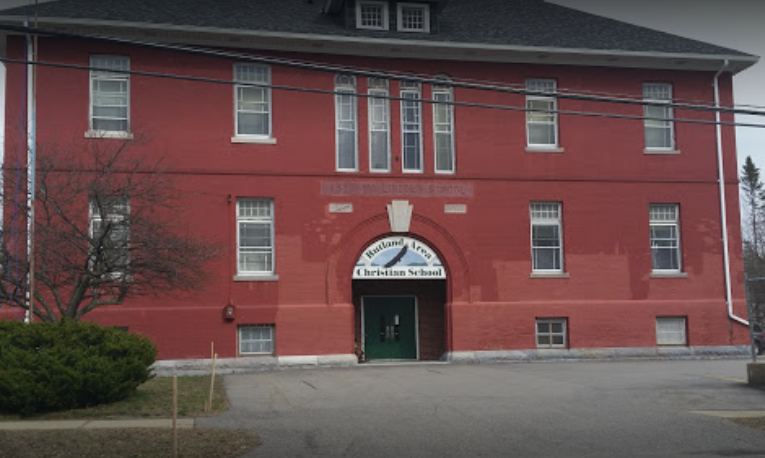
Rutland Area Christian School in Rutland, Vermont, one of 126 private schools in the state, is an independent, interdenominational Christian school guided by principles and values revealed in the Bible.
Editor’s note: This commentary from John McClaughry, vice president of the Ethan Allen Institute and former vice chair of the Vermont Senate Education Committee, appeared Tuesday in Vermont’s Bennington Banner.
This year and the ensuing biennium are likely to be landmark years for the future of parental choice in education in Vermont.
In June 2020, the U.S. Supreme Court ruled in Espinoza v. Montana that if a state offers education tax credits, it must offer them to students choosing sectarian schools as well as public schools. The court said that excluding sectarian schools burdened the plaintiffs’ right to the free exercise of their religion.
That ruling triggered at least three similar cases by Vermont plaintiffs seeking to use state tax dollars to benefit their children in independent and sectarian schools.
The Valente case argues that parents in tuition towns should be able to have their school districts pay their children’s tuition directly to a religious school. Last month, parents filed another suit (Williams) to require Barstow Unified Union District to pay tuition for two children attending the same Roman Catholic school.
Another case from Glover argues that if any student is allowed to take school district tuition funding to a sectarian school, then all students, not just tuition town students, should also enjoy that “common benefit”. Meanwhile, a very similar case (Carson v. Makin) has made its way from Maine to the U.S. Supreme Court, which held oral argument in December.
But the government school lobby is urging the Legislature to put a stop to what could be a costly hemorrhage of students – and money – out of public schools. The four defenders of government schooling are the Vermont School Boards Association, Vermont Superintendents Association, Vermont Principals Association, and the Vermont-NEA teachers’ union.
Their Feb. 23 joint letter to the Senate Education Committee sets out their argument that expanding parental choice brings “a morass of complicated legal and logistical questions.” Their central message comes through loud and clear: Forget funding of children. Fund only public schools.
To continue reading, click here.
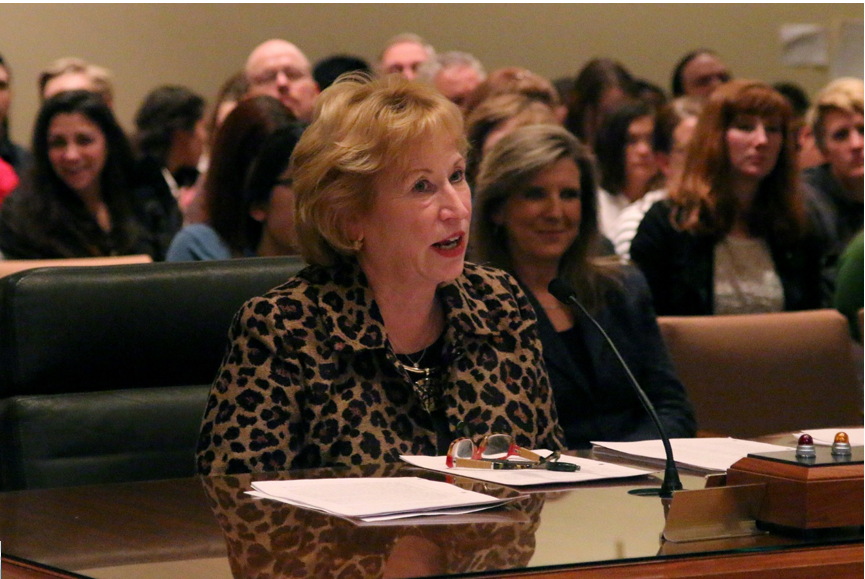
“It’s not trickery,” said Sen. Lou Ann Linehan of Legislative Bill 364. Linehan has made opportunity scholarship bills her personal priority.
Editor’s note: This article appeared Tuesday on Nebraska’s 3newsnow.com. You can listen to a podcast of Step Up For Students president Doug Tuthill interviewing Nebraska Sen. Lou Ann Linehan here.
An issue thought to be dead for the 2022 session — providing state tax credits for donations to private school scholarships — has found a rare path to resurrection.
A so-called “Opportunity Scholarship” proposal from State Sen. Lou Ann Linehan of Elkhorn, which was blocked by a filibuster after it was introduced last year, failed again to advance in early January because of another filibuster from critics who called it a roundabout way to provide public funds to private schools.
Once a bill fails to overcome a filibuster, it is typically considered dead for the year.
But a week after Legislative Bill 364 stalled, Gordon Sen. Tom Brewer introduced his own Opportunity Scholarship proposal, LB 1237. There is no prohibition on a second bill, on virtually the same subject, being debated in the same legislative session. So, lawmakers may debate the idea for the third time in two years.
LB 1237, the new bill, was amended into another measure last week and voted out of the Legislature’s Revenue Committee on a 6-0 vote. The committee made LB 730, which now includes the Opportunity Scholarship proposal, a committee priority bill, which gives it a better chance of being debated.
To continue reading, click here.
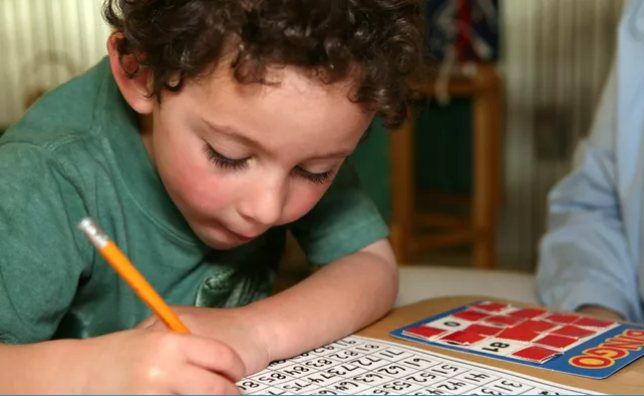
Bright Horizons at the Atrium, one of 385 private schools in Chicago that serve 71,843 students, features a mathematics curriculum focused on counting, sorting, pattern recognition and problem solving.
Editor's note: This article appeared Tuesday on illinoispolicy.org.
Manuel Rodriguez’ advertising business lost income during the pandemic, so his family had to cut back. They refused to give up their children’s private education, and it cost them a car.
“In 2020, unfortunately, we didn’t receive Invest In Kids scholarships for either of our children. It affected us a lot because there wasn’t a lot of work, either. We had to reduce our expenses, and even still we fought hard to keep both our kids in private school. We had to sell a car in order to stay afloat financially,” Rodriguez said.
Along with the Rodriguez children, 7,600 low-income students in Illinois rely on Invest in Kids tax credit scholarships to maintain that stability in their education. Whether for personal values, educations that better fit their learning needs, safety or financial reasons, over four times that number want help to attend a qualified, non-public school.
Over 32,000 are on the Empower Illinois waitlist alone.
“The scholarships help us a lot because I am self-employed, and I don’t always have a fixed income. On my own, it would be very difficult to afford the tuition and fees at our local private school. The scholarship has helped me to keep my kids in a good school,” Rodriguez said.
Empower Illinois reported the average annual household income of participants is $38,000, and 49% of participating students are Black or Hispanic.
For the Rodriguez family, the switch to private school came out of fear for their son’s safety at their local public school.
To continue reading, click here.

District of Columbia Public Schools operates 117 schools, serving more than 51,000 students.
Editor’s note: This commentary from Jonathan Butcher, Will Skillman fellow in education policy at The Heritage Foundation and a reimaginED guest blogger, appeared Wednesday in the Washington Times.
A wide performance gap between white students and black students has persisted in D.C. public schools for generations. Lawmakers can help close this gap today, and at the same time, erase any remaining vestiges of a problem created by their brethren decades ago.
The gap should also be called an “opportunity” gap, not just a performance gap, and federal officials must be part of the solution in the District.
The nation’s capital is one of many urban areas for which federal bureaucrats drew “red lines” on maps in the early 20th century, denoting less-desirable places to live. The federal Home Owners Loan Corporation and Federal Housing Administration based these decisions on poverty levels and, yes, racial makeup.
(This was during President Franklin Roosevelt’s New Deal, an era when racial segregation still plagued American life.) Real estate developers, bankers and HOLC would not build in redlined areas or lend to families who moved there.
Americans have resoundingly rejected segregation both legally and culturally since then, and America is not systemically racist today. But the effects of redlining still affect families’ education opportunities.
At the FHA, it was more than an article of faith; it was a policy that neighborhoods would be undesirable destinations for homebuyers if their schools drew students from disadvantaged backgrounds, a concept that contained more than a hint of racial prejudice. The FHA’s underwriting manual from 1938 explicitly stated that if students from low-income homes are concentrated in certain schools, “the neighborhood under consideration will prove far less stable and desirable.”
Jude Schwalbach’s report for The Heritage Foundation explains that the similarity between the FHA’s map from the 1930s that ranked District neighborhoods and the boundaries of failing public schools is unmistakable — and sad.
To continue reading, click here.
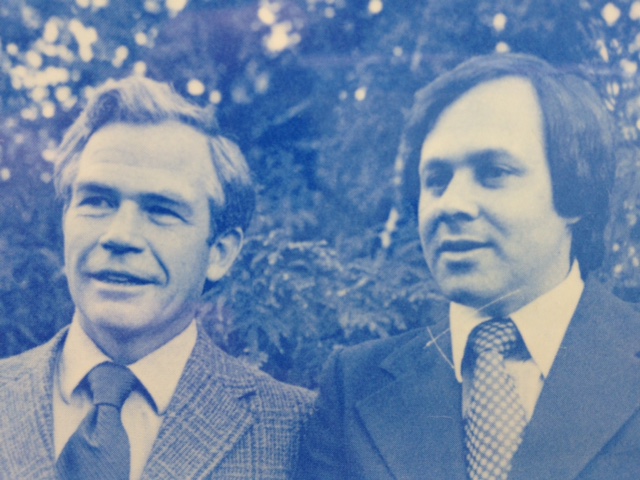
Berkeley Law professors Jack Coons, left, and Stephen Sugarman, circa 1978.
Stephen Dwight Sugarman died the day after Christmas, interrupting almost 60 years of our friendship and collaboration on this planet. His unique character, personality, and family life I will save for another occasion. Here, I will briefly remember his impact on school choice, law school – and myself.
We met in his senior year at Northwestern, academic year 1963-64. I’d like to imagine that I helped lure him to the law school in downtown Chicago. Northwestern had developed a then unique program in law and social services. In any case, he came, and both he and the program prospered.
So did I, as both Steve and classmate Bill Clune, long a Wisconsin professor, spent too much of their second and third years assembling the picture of public school finance systems that led eventually to our persuading the California Supreme Court to hold its state system unconstitutional (Serrano v. Priest, 1971, 1977).
By that time, both Steve and I were on the U.C. Berkeley law faculty where we remained (I in semi-retirement) until his recent higher calling.
Gradually, through the late sixties, we had come to realize that “public” school is anything but what that name implies. The Institute for Governmental Studies published our model for state systems of subsidized parental choice in book form – “Family Choice in Education: A Model for State Voucher Systems.”
In a dozen joint essays thereafter, Steve and I kept trying to explain the catastrophic civil and social effects of a state’s conscription of the un-monied family. In 1978, we put our full message in the volume, “Education by Choice: The Case for Family Control.”
In that year, at the encouragement of Democratic Congressman Leo Ryan, we prepared an amendment to the California Constitution aiming for a popular vote. It was focused upon liberating families of lower incomes.
That year, Leo was murdered in Guiana.
Steve and I – in spite of our political naivete – decided to try it alone. We had expected help from Milton Friedman; instead, the great marketeer inspired a competing, unregulated form that ensured that neither proposition could succeed.
Steve and I tried several times in the early eighties and later and managed to assemble a sufficient coalition of right and center. In his later days, Steve was happy to see the positive relevance of these early failures to most of the “choice” movements of the last few years.
Finally, for the moment: Even in his latter difficult and suffering years, Steve never wavered from his professional role in the academy. He was a much-beloved teacher and a prominent figure in the reform of law of torts, with his own widely praised casebook and many an article striving to make our laws treat the ordinary consumer with fairness and dignity.
Steve finished the fall semester, teaching his last class, a few days before he died. In a very un-Sugarmanic finale, he passed before he could grade his students’ exams. My guess: At higher levels, it had been decided that he deserved a break.
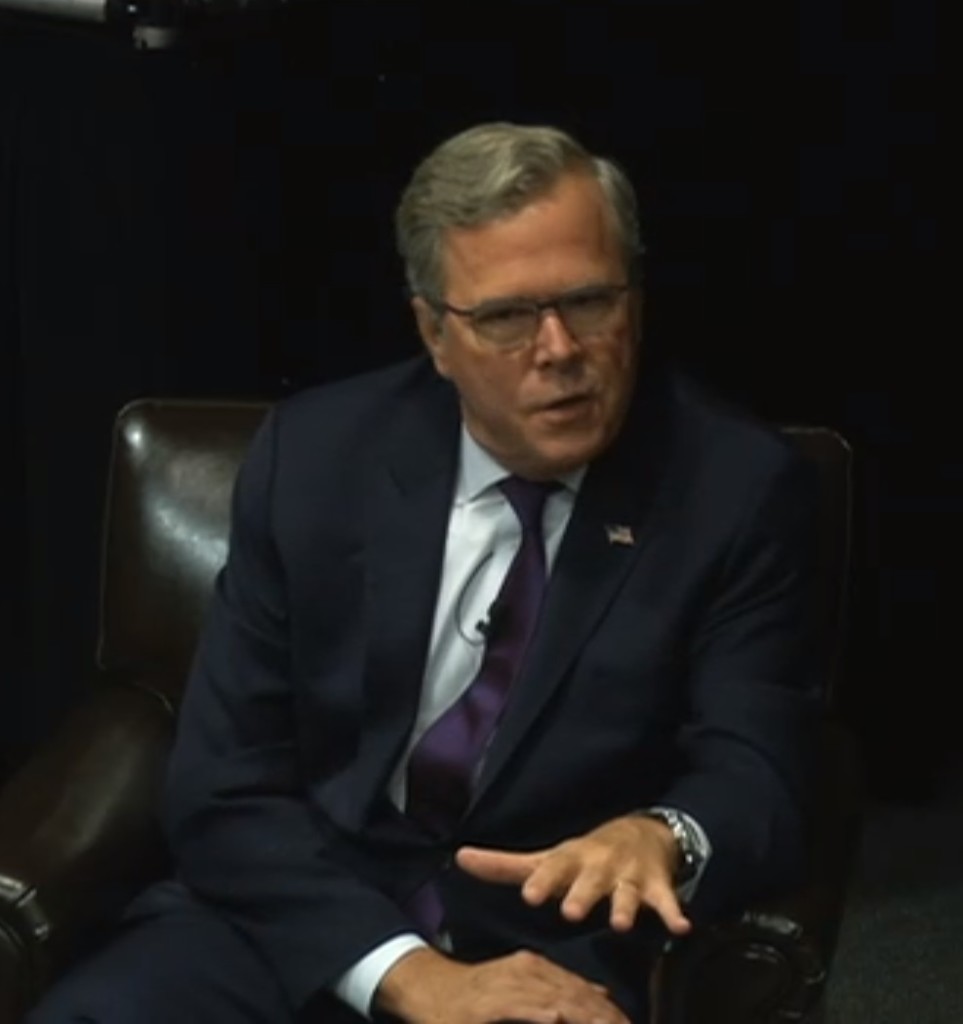
Former Florida Gov. Jeb Bush speaking with Florida House members during a rare visit to the Capitol in 2017.
On this episode, Tuthill and Bush look back at the 20-year history of the Florida Tax Credit Scholarship program and the education revolution that was launched with Bush’s A+ Plan, signed into law in June 1999 with the goal of toughening standards for teachers, students and schools.
The most controversial provision of Bush’s plan allowed students in failing public schools to obtain vouchers that would pay tuition and fees at participating private schools, including nonsectarian and religious institutions, which set off a firestorm of controversy.
Fast forwarding to 2022, when education choice has become normalized in Florida, Tuthill and Bush discuss their shared belief that the future of education choice lies in expansion of choice options for families, namely creation and availability of education savings accounts.
"We're transitioning, and the future [will look] very different from where we are today. Where we are today is dramatically different from 20 years ago. These transitions are not easy ... We can always do better, but we are way better off than we were 20 years ago."
EPISODE DETAILS:

