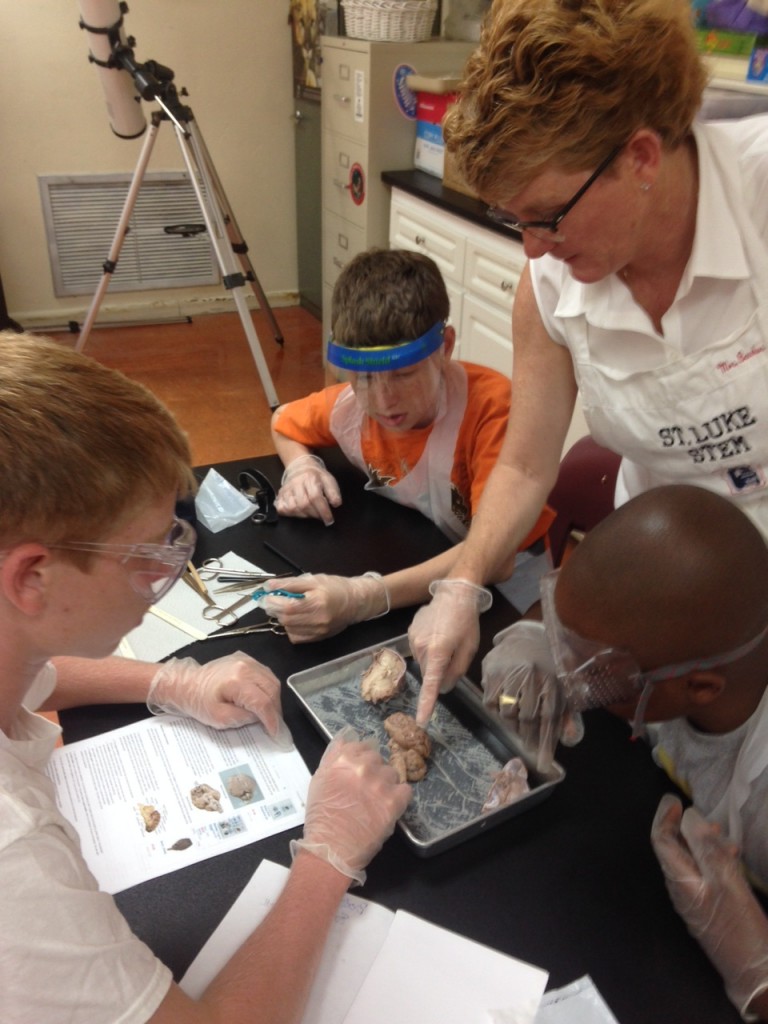
At St. Luke's science camp, teacher Diann Bacchus talks sheep brain with (from top, clockwise) Tyler Dempsey, 12, Widmaier Maurice, 13, and James Pabisz, 13. The Notre Dame Center for STEM Education helped St. Luke kick off the 2-week camp last year.
On a summer morning when some middle schoolers were sleeping in or headed to the beach, 12-year-old Ariana Rendona and two dozen other students were in a classroom at St. Luke Catholic School, using X-acto knives to slice up sheep brain. Behind goggles and lab coats, they took turns differentiating grey matter from white matter and cerebrum from cerebellum.
“Disgusting but fun,” Ariana said.
For she and other students at St. Luke, a PreK-8 school that serves a heavily Hispanic population in Palm Springs, Fla., science immersion has suddenly become a thing. Over the past 18 months, St. Luke has done what many schools, public and private, either can’t or won't: make STEM a priority.
It added 20 minutes to the school day just for STEM, hired a STEM coordinator, invested in STEM-oriented professional development for the entire teaching staff and instituted a two-week STEM summer camp for students like Ariana. Much of this has been done in partnership with the new Center for STEM Education at Notre Dame, an outfit that has quickly and quietly launched several projects aimed at bolstering science instruction in Catholic schools and beyond.
The result: Engaged students. Happy parents. Another potential selling point for a private school in an increasingly competitive school choice market. And who knows? Maybe, just maybe, a template and inspiration for other schools.
About three-fourths of the 170 students at St. Luke are minorities, and nearly 70 of them use the state’s tax credit scholarship program for low-income students. (The program is administered by non-profits like Step Up For Students, which co-hosts this blog.) For them, more exposure to high-quality STEM instruction is especially important, said Sue Sandelier, St. Luke’s principal, and Diann Bacchus, its science coordinator.
“Money is a struggle for many of the families here” but solid grounding in STEM can lead to high-paying careers for their children, said Bacchus, a longtime educator in both public and private schools. “I see it as their way out.”
St. Luke’s aims are notable for all kinds of reasons. (more…)
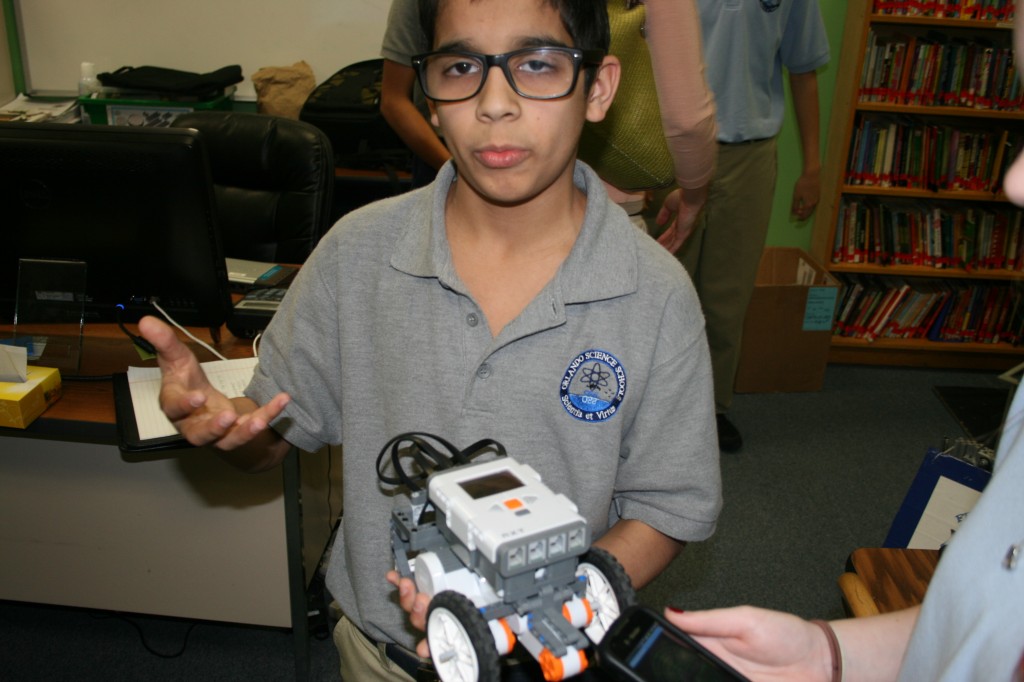
Kristopher Pappas, a sixth-grader at Orlando Science School, looks like a lot of 11-year-olds, like he could have a Kindle and a Razor and put a little brother in a headlock. But Kristopher says he wants to be a quantum mechanic, and with a blow dryer and ping pong ball, he proves he’s not an idle dreamer. He turns on the blow dryer and settles the ball atop the little rumble of air stream, where, instead of whooshing away, it shimmies and floats a few inches above the barrel. The trick is cool, but it’s Kristopher’s explanation that fries synapses. “You got to give Bernoulli credit,” he begins.
Bernoulli?
As a whole, Florida students don’t do well in science. The solid gains they’ve made over the past 15 years in reading and math haven’t been matched in biology, chemistry and physics. But schools of choice like the one in Orlando are giving hope to science diehards.
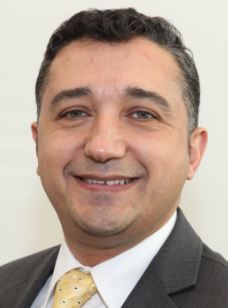
Akin
Orlando Science School is a charter school, tucked away in a nothing-fancy commercial park, next to a city bus maintenance shop. Founder and principal Yalcin Akin has a Ph.D in materials engineering and did research at Florida State University’s world-renowned magnet lab. His school opened in 2008 with 109 sixth- and seventh- graders. Now it has 730 kids in K-11 and serious buzz as the science school in Orange County, the 10th biggest school district in the nation. Only 26 schools in Florida can boast that 80 percent of their eighth graders passed the state science test last year (the test is given in fifth and eighth grades). At least two thirds were magnets or charters. Orlando Science School was one of them.
The kids are “constantly challenged, which is what you want,” said parent Kathi Martin. One of Martin’s daughters is in ninth grade; the other is in seventh. Mom wasn’t excited about the neighborhood school; the science magnets were too far away; the private schools didn’t feel like home. During a visit to Orlando Science School, she said, something clicked.
It’s “a school where it’s cool to be a nerd,” she said.
In 2006, the Orange County School Board denied the charter’s application. The state approved it on appeal.
Last year, 1,500 kids were on the waiting list. Last month, Orlando Mayor Buddy Dyer paid a visit.
“This is about word of mouth,” said Tamara Cox, the mother of eighth-grader Akylah Cox. “The parents recognize the value of what’s going on at OSS. That’s why there is such a need and such a calling for it.”
For every bad story about charter schools in Florida, several good ones go untold. (more…)

