
Second-graders Rosalia Garduno and Iritsali Lopez, both 8, are thrilled to learn they can give Carly the horse a hug. The girls spent the afternoon participating in a therapy program to help learn more about horses – and themselves.
Sixteen second-grade girls rode the school bus with the windows open, pigtails and ponytails whipping in the wind. For many, it was their first trip outside the city.
“It smells like grass,’’ said one girl. “It smells like McDonald’s,’’ said another.
“No,’’ said teacher Matilda Bediako-Ortiz, holding her nose, “it smells like something else.”
The girls were on a journey to see horses, part of the curriculum offered at their single-gender charter school, Just For Girls Academy in Bradenton, Fla.
The horses help teach compassion, consideration, courage - all part of the school’s emphasis on character development.
Many of the girls come from single-parent families, where moms juggle jobs and classes. Some were bullied at their old school, so they feel safer at the academy with only 89 students. Others just seem to learn better without boys.
“We have a culture of caring here,’’ said Principal Jennifer Rosenboom.
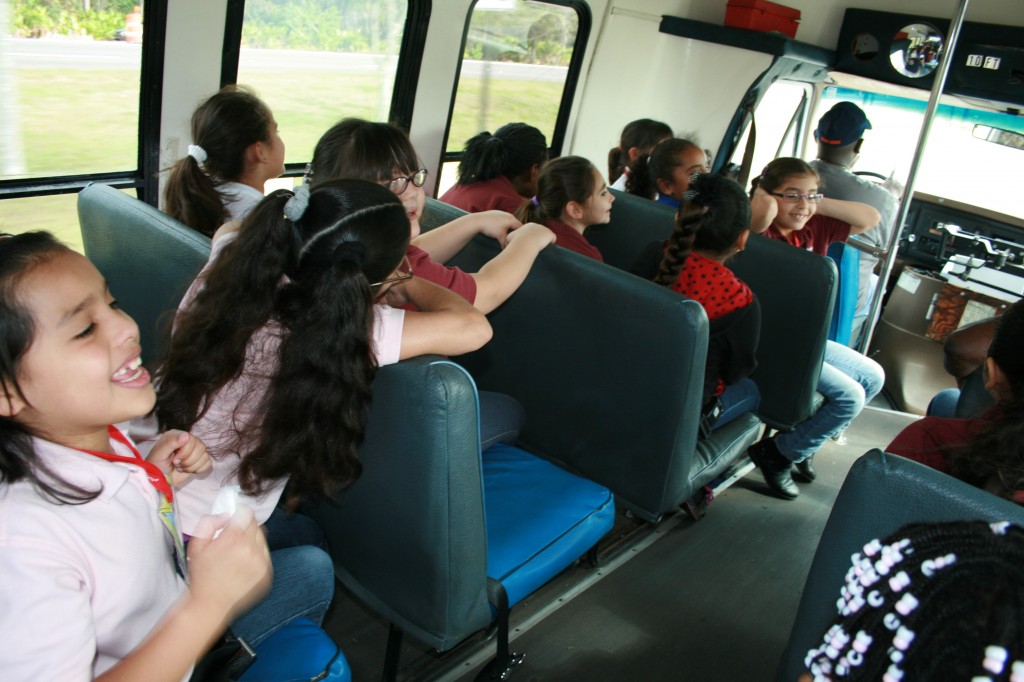
Sixteen students from Just For Girls Academy take a bus trip recently to the country to take part in a horse therapy program that uses the animals to help teach life lessons, such as building trust and reading body language. The girls also learn to have fun.
The ability to cater to a particular learning style or need is what’s fueling the growth of charter schools in Florida and beyond. Across the country, there are now more than 6,000 charter schools, including 529 that opened in August. In Florida, more than 200,000 students are enrolled in 574 charter schools across 44 school districts.
The schools are funded with public tax dollars based on enrollment, like traditional public schools, and sometimes supplemented with private donations. They have their own school boards. They can hire and fire teachers. They set their own hours.
But what really makes the schools attractive for many parents and students is the freedom to design unique curriculum and programs, says Eric Paisner, the vice president of knowledge and partnerships at the National Alliance for Public Charter Schools. (more…)

