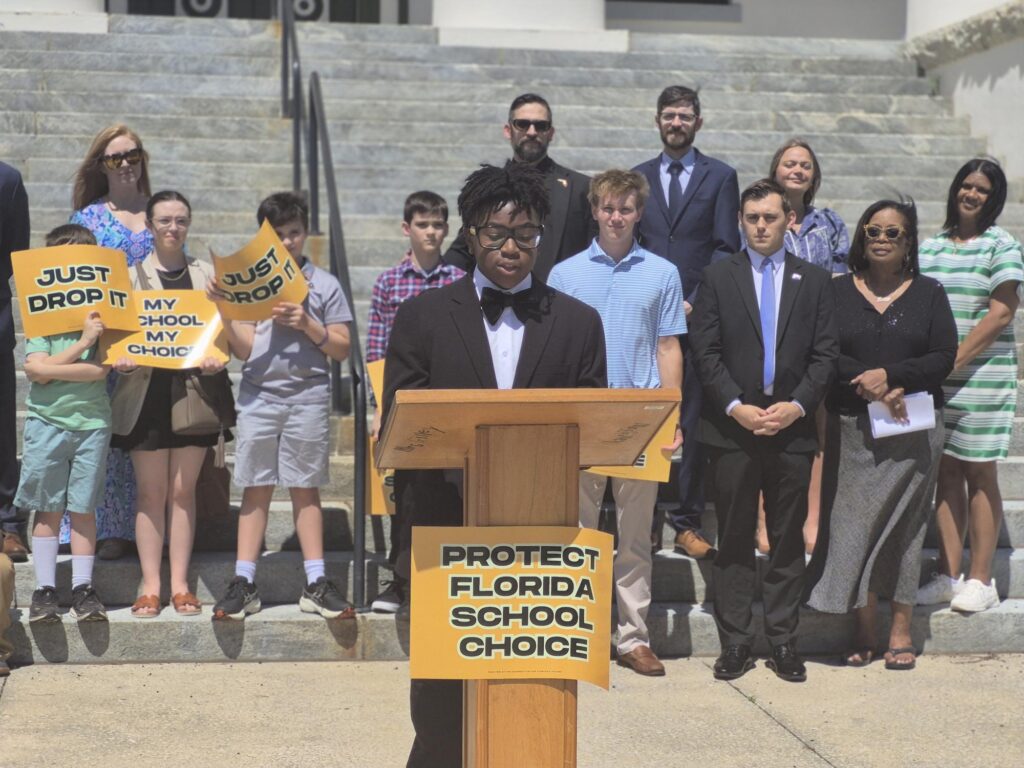
Nine days after the state teachers union sued to strip Florida families of the right to choose their children’s education, the pushback began when supporters of state K-12 scholarships and charter schools gathered in Tallahassee on the steps of Old State Capitol to protest.
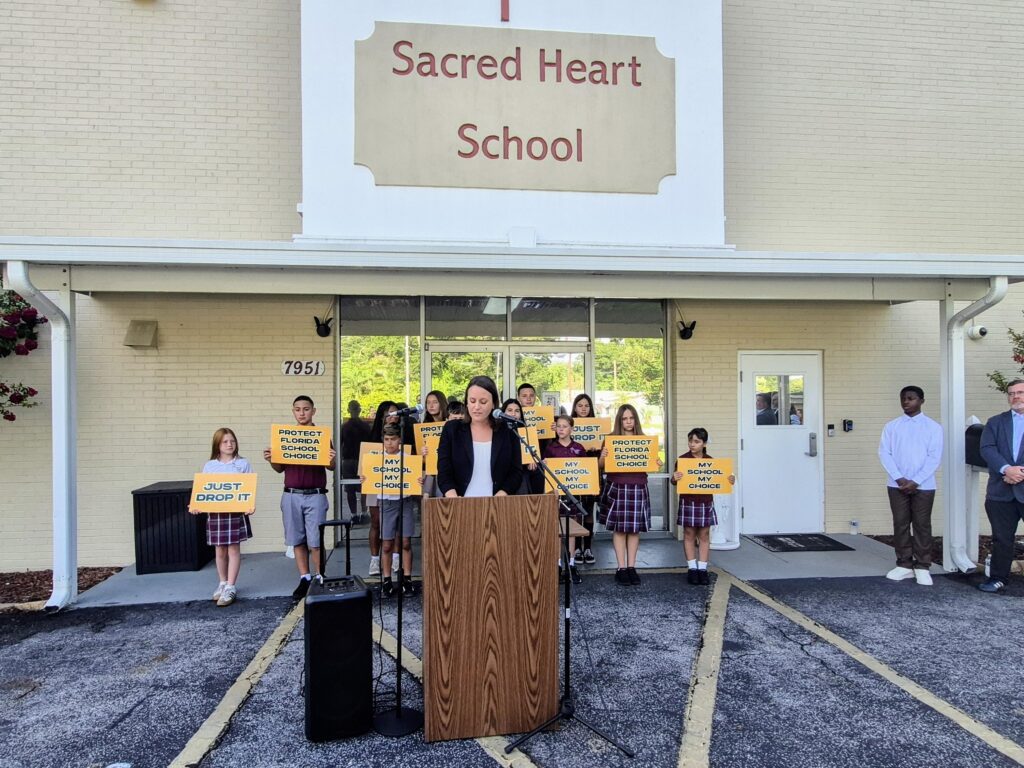
Two weeks later, choice supporters stood outside Sacred Heart Catholic School in the Tampa Bay area holding signs with the slogans, “My Child, My Choice” and “Just Drop It.”
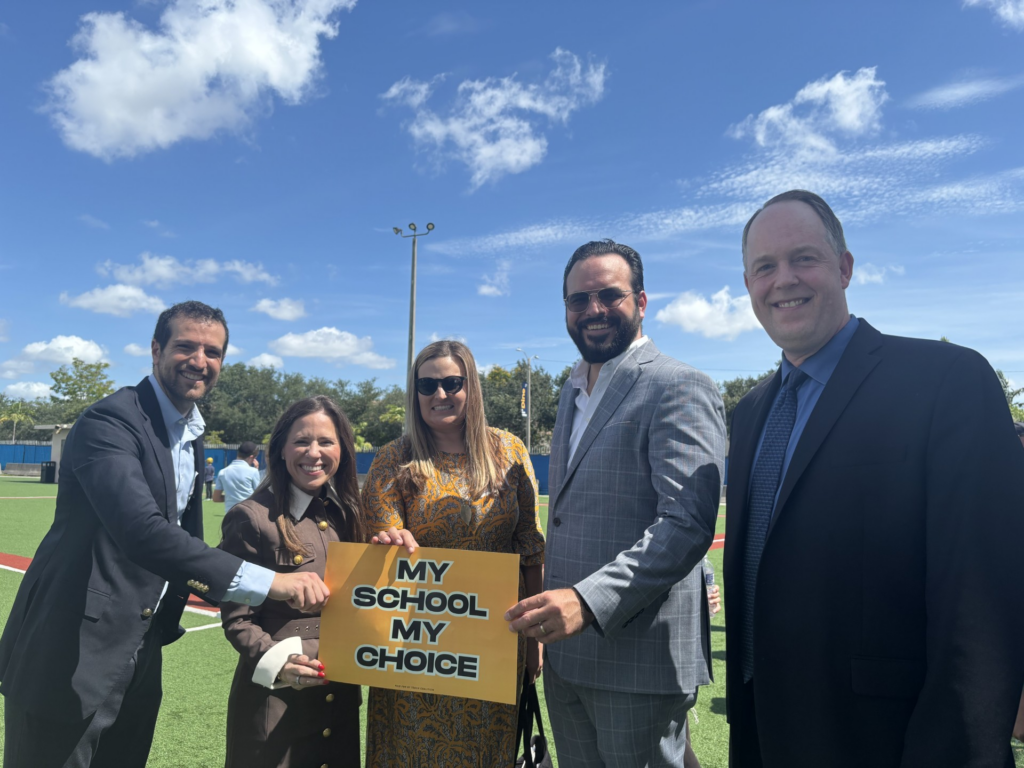
This week, the protests got louder. Students, parents, charter, and private school leaders stood outside Lubavitch Educational Center, the state’s largest Jewish day school, on Thursday and pledged to defend the decades-old policies and programs that have empowered families to choose the best educational fit for their children from a rapidly growing number of options.
“It’s not easy to pay private school tuition,” said Ailyn Weisleder, whose three sons are thriving at a Jewish day school. “But universal school choice has made that possible for our family. It gave us, and thousands of other families across Florida, the ability to choose the education that fits our children, not just the school assigned to us by a ZIP code.”
Audrey Maman Bensoussan said her family can’t afford to give her four children a Jewish education without the scholarships. She said the school feels like “a second home” to her children.

“If this lawsuit succeeds, it will not hurt politicians or special interests. It will hurt families like mine. It will hurt children like mine. It will take opportunities away from parents who simply want the freedom to choose the school that best meets their children's needs.”
Yonah Schwartz, 11, said at the news conference that if the lawsuit succeeds, then he won’t be able to afford to transfer to a school that better suits his learning needs.
“Not every kid learns the same way,” he said. “For me, changing schools means getting the chance to learn in a place that’s a better fit for me.”
The lawsuit, filed May 5, asks a judge to eliminate the state’s education choice scholarship programs based on the Florida Constitution, which says the state “shall make adequate provision for a uniform, efficient, safe, secure, and high-quality system of free public schools.” The lawsuit also seeks to end state funding of charter schools.
Faith leaders, charter school and private school leaders, as well as former Florida Gov. Jeb Bush’s Foundation for Florida’s Future, have supported the news conferences. Step Up For Students, the nation’s largest education choice scholarship funding organization, led the Tampa Bay area event. Teach Florida, a nonprofit school choice advocacy organization for Jewish education, organized and led the Miami event.
“The lawsuit brought by the Florida Education Association threatens everything these programs have made possible,” said Melissa Glaser, Teach Florida’s executive director. “This is about protecting families, protecting opportunity, and protecting a parent’s fundamental right to choose the best educational path for their child.”
She said more than $130 million annually in state scholarship funding helps ensure that Jewish children throughout Florida receive “the education they deserve — in schools that reflect their values and strengthen our communities.”
Their comments echo those made at the previous news conferences, where families described how scholarships had changed their lives. A charter school leader also spoke about how tuition-free charter schools ( which, like district schools, are public) have benefited students, including many from low-income households. Faith leaders also described how their schools uplift communities and welcome students with special needs.
Jim Rigg, superintendent of schools for the Archdiocese of Miami, said the lawsuit could damage “a thriving educational ecosystem in South Florida that attracts people from all over the world.” That includes the 37,000 students who attend Catholic schools in the diocese’s three counties. He said each school is accredited, gives standardized tests, complies with applicable state requirements, and employs highly qualified and certified teachers.
“But at its heart, the issue is not about institutions. It’s about children and families. Everyone wins with meaningful school choice, ultimately making our state the ideal place to raise and educate a child.”
ORLANDO, Fla. — As public education has evolved from a one-size-fits-all system to one where families are empowered to choose the environment that best fits their child, everyone has been a winner: Students, parents, educators, entrepreneurs, and even public school districts.
That was the message of John F. Kirtley, founder and chairman of Step Up For Students, to the roughly 1,000 people who attended the non-profit’s Navigating New Horizons conference this week.
In a closing speech that at the end brought the audience to its feet, Kirtley began by describing the state of education before the 1990s. Everyone paid taxes, and students were assigned to schools by their ZIP codes.
“It was, it could be said, a definition that emphasized ‘uniformity,’” he said, referencing but not naming the state teachers union’s recent lawsuit to eliminate Florida’s robust education choice programs, including all scholarship programs and charter schools.
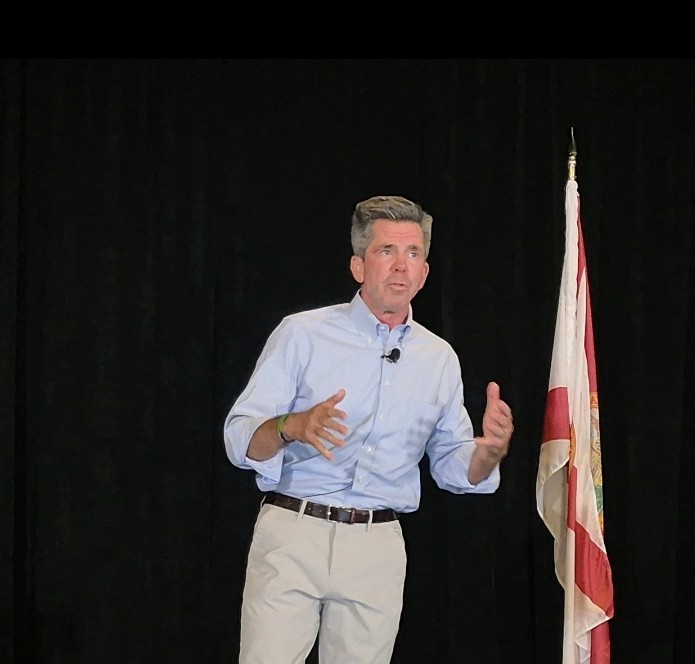
Kirtley said he didn’t realize it at the time, but since overall graduation rates in Florida were, until the mid-1990’s, around 60% overall and less than 40% for black males, it’s likely that many of his friends on the football team who crossed the stage did not get real diplomas. They likely received certificates of completion. The second group probably included a classmate who regularly got in trouble for dozing during early morning courses and was uninspired by classic literature. Yet he could take apart an entire car and rebuild it by himself, when Kirtley couldn’t change his car’s oil.
“But there was no specialized program for him…No, uniformity didn’t serve him well.”
Today, Kirtley said, his classmate could sleep in, take core classes online in his pajamas, then head over to the district automotive technology program in the afternoon, where he would be the star student.
“When he graduated, he’d be hired by the local Mercedes dealer and make over $100,000 two years out of school,” Kirtley said. “So, yeah, he’d be better off.”
Not only are students better off, but so are educators who can start their own schools, including microschools, and even school districts, including many that now offer specialized magnet schools and individual courses to education choice scholarship students who attend school part time.
“I close by saying don’t fear the New Definition. Embrace it. Thrive in it. You can thrive in it whether you are a microschool, an à la carte provider, or one of nation’s largest school districts,” he said. “And when you thrive in the New Definition, all students will thrive along with you. And shouldn’t that really be the ultimate goal?”
His remarks echoed the message given the day before by Gretchen Schoenhaar, Step Up’s chief executive officer, who gave the conference’s opening speech.
“Families today seek learning environments that reflect their children's unique strengths, needs and goals,” Schoenhaar said. “What's really inspiring is how this demand has sparked innovation across the education landscape.”
Schoenhaar said she hoped the two-day event would offer attendees a chance to be “inspired by the conversations you have, encouraged by the stories you hear, and energized by the collective passion in this room.”
Schoenhaar said Florida is home to the nation's largest parent-directed education marketplace today, with more than half of all K-12 students participating in some form of education choice, including many district schools, private schools, charter schools, homeschools, online schooling, or some combination of those.
“The spirit of innovation and possibility is exactly what this conference is all about,” she said.
The event, whose theme is Facing the Future Together, featured nearly 100 session speakers and 100 exhibitors displaying everything from a la carte learning to transportation options, tutoring, and curriculum.
Organizers said this year’s goal was to provide educators with information and resources based on best practices that also reflect the bigger picture. That included information about the rise of microschools and how to use AI efficiently and responsibly.
“Over the next two days, we hope you'll be inspired by new ideas, meaningful connections and innovative strategies that will help shape the future of education,” Paula Nelson, Step Up’s vice president of school and provider services, told the audience during her welcome.
Breakout session topics included school safety, a la carte education, navigating AI, the future of public education, the benefits of applying for the Yass Prize, how public schools are offering individual courses to scholarship students and how to create and sustain microschools. Four sessions on the upcoming federal Education Freedom Tax Credit program drew standing-room-only crowds.
The federal program, which launches in January 2027, allows individual donors to divert up to $1,700 of federal tax liability to support scholarships for students in public and private schools. The federal government is expected to announce rules that cover program specifics soon. Florida Gov. Ron DeSantis is among the governors who have opted their states into the program.
At the end of the conference, Schoenhaar broke some news: The conference will return June 14 and 15 of 2027.
Editor's note: This post is shared by our sister organization, Step Up, Step Further Scholarship Fund, a new federal scholarship program launching in 2027 to support students in public and private schools.
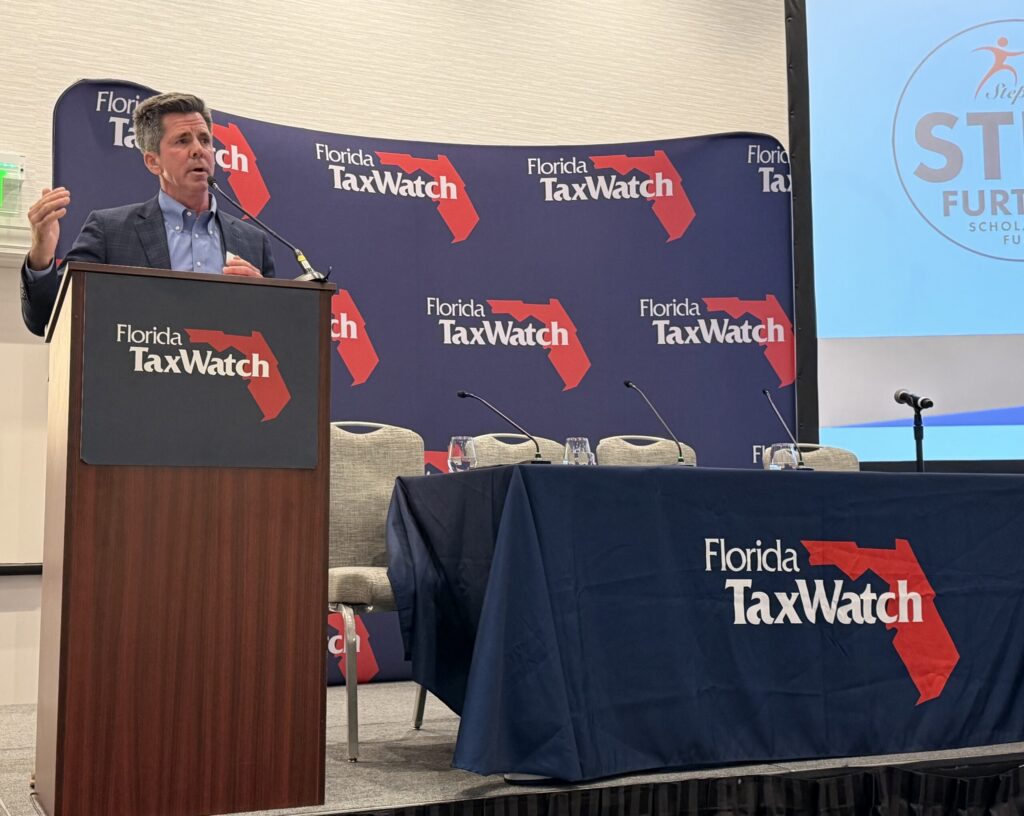
At Florida TaxWatch’s policy forum, Step Up For Students Founder and Chairman John Kirtley shared how the new federal Education Freedom Tax Credit will help expand opportunity for K-12 low income district school students. “The income levels that the federal law allows are, in my opinion, pretty generous,” Kirtley said. “They’re 300% of the area’s median income, which in Florida will be anywhere up to probably $250,000. However, a scholarship organization can set its own income limits.”
The new tax credit will continue to allow Step Up, Step Further, sister organization of Step Up For Students, to focus on serving the lowest-income students in Florida.
Kirtley went on to illustrate how Florida school districts have seen a dramatic increase in graduation rates since 1981, when the graduation rate hovered under 50%. He noted that a statewide push for greater accountability in schools and grading them has resulted in a graduation rate of over 90%.
“That’s an incredible improvement, and we should all be very proud of that. A great example of how the districts have responded is very close to home for me. My high school, Fort Lauderdale High School, when schools were first graded back in 1999, my high school was an ‘F.’ And it was an ‘F’ for several years,” Kirtley said.
Read the full article at Florida Politics > https://floridapolitics.com/archives/791109-john-kirtley-makes-case-for-choice-encouraging-use-of-education-savings-accounts/
TRINITY, Fla. – Noah Allen was in middle school when he began to teach himself Latin. College-level Latin. He did that for two years.
He also taught himself Japanese. And Korean.
“It’s his superpower,” Noah’s mom, Josie, said. “He loves to learn.”
Noah, 16, is inherently curious. Theater, art, and music are a few areas that pique his interest. Also, the periodic table of the elements.
When he was 8, he wanted to be a nuclear physicist and work with a cyclotron. Later, he thought of a career in linguistics.
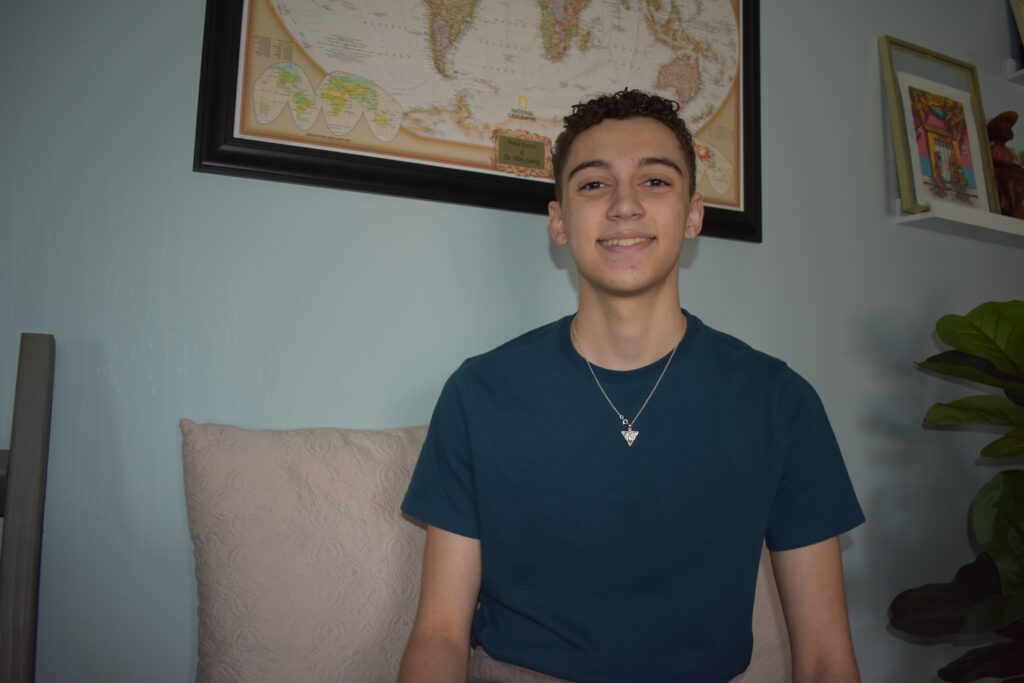
Now, as he completes the final semester of high school, Noah wants to study global law.
In Italy.
At Bocconi University in Milan.
To gain admission, he needs at least a 1340 on his SAT, which he has, and a 4.0 GPA, which he also has.
Noah is interested in law. He likes to help others. He has a passion for connecting with people from other cultures. He sees a career in global law as the perfect blend of those interests. He could work for an international organization or practice immigration law.
“I think he has a really bright future,” Josie said. “Noah is going to do amazing things.”
***
Noah, who was diagnosed with attention deficit hyperactivity disorder, receives the Family Empowerment Scholarship for Students with Unique Abilities. Step Up For Students, which manages the scholarship program, said that 140,147 students received the scholarship during 2025-26. The average scholarship is worth about $10,000.
He is home educated and learns online through the Florida Virtual School. He also uses the funds from the scholarship to cover the cost of his tutoring, SAT prep classes, and exam fees, and his registration for the Melanated Homeschool Cooperative, which provides field trips, program days for middle and high school students, a graduation ceremony and banquet, and a prom.
The scholarship also pays for his dual enrollment to Pasco-Hernando State College, where he has completed college-level courses in math, psychology, government, and humanities.
“I have been really grateful for the opportunities that the scholarship has given me,” Noah said, adding that having the SAT prep classes and exams paid for was beneficial since he took the test three times to achieve his high score.
“The scholarship helps fund his academic health and his social health,” Josie said, “which, I guess, is his mental health.”
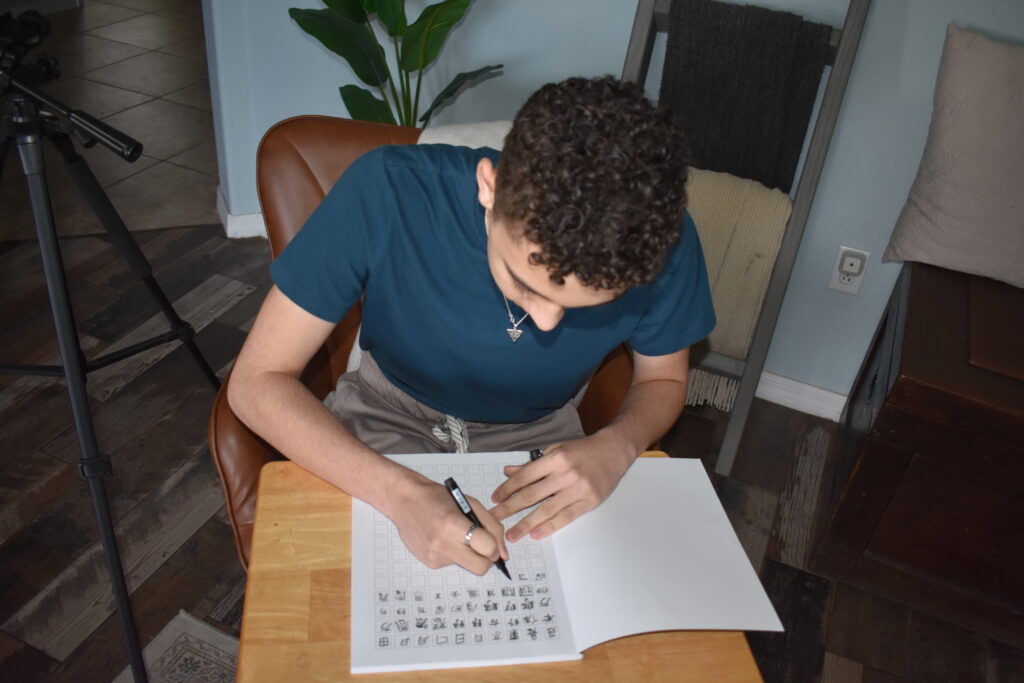
Josie, who has a degree in early childhood education, and her husband, Aaron, who owns a construction company, realized their son was academically gifted at an early age. He was reading by age 4.
“I thought, he’s going to go to school, and all the other kids are going to be learning their alphabet, and he's already reading. He's going to be bored,” Josie said. “We're going to have to figure something else out. We’re going to have to do something different with him.”
Learning at home allowed Noah to move at his own pace, accelerated in most cases, and make accommodations for his ADHD. He could schedule his schoolwork around his therapies and the family's active travel schedule.
Josie is a travel tour guide who writes a travel blog, Traveling in Spanglish.
The family, who lives north of St. Petersburg in Trinity, frequent Europe, especially Italy, where Josie and Aaron met.
Noah has traveled to Mexico, England, Scotland, Ireland, France, Spain, Canada, St. Martin, and Haiti. He has done schoolwork on trains traveling between European cities and logged into an SAT prep course at 10 p.m. local time from Venice, Italy.
His time abroad fueled his passion to learn other languages and cultures, and the customs of the people he met during his journeys.
He said he couldn’t have done that if he attended a traditional school.
“I wouldn't have been able to have those experiences,” he said, “and I might be in a completely different spot than I am now.”
***
Noah has acted in plays and musicals at the Center Stage Youth Theater near his home and the Stageworks Theater in Tampa. He recently appeared in “Hadestown.” He was Eugene in “Grease” and Wally Webb in “Our Town.” He’s also appeared in “Les Misérables.”
“I really like doing theater,” he said. “I like singing, and dancing, and acting.”
For his 16th birthday, Josie treated Noah to a weekend in New York City, where they visited the Museum of Modern Art.
“We had a blast,” he said. “I do love a good art museum.”
He can gaze for hours upon Claude Monet's “Water Lilies” or Vincent van Gogh's “Starry Night.”
“I love impressionist paintings,” Noah said. “They're really beautiful. I just like capturing the vibe of something, or the feeling of something. Not necessarily what it looks like, but how it feels to you.”
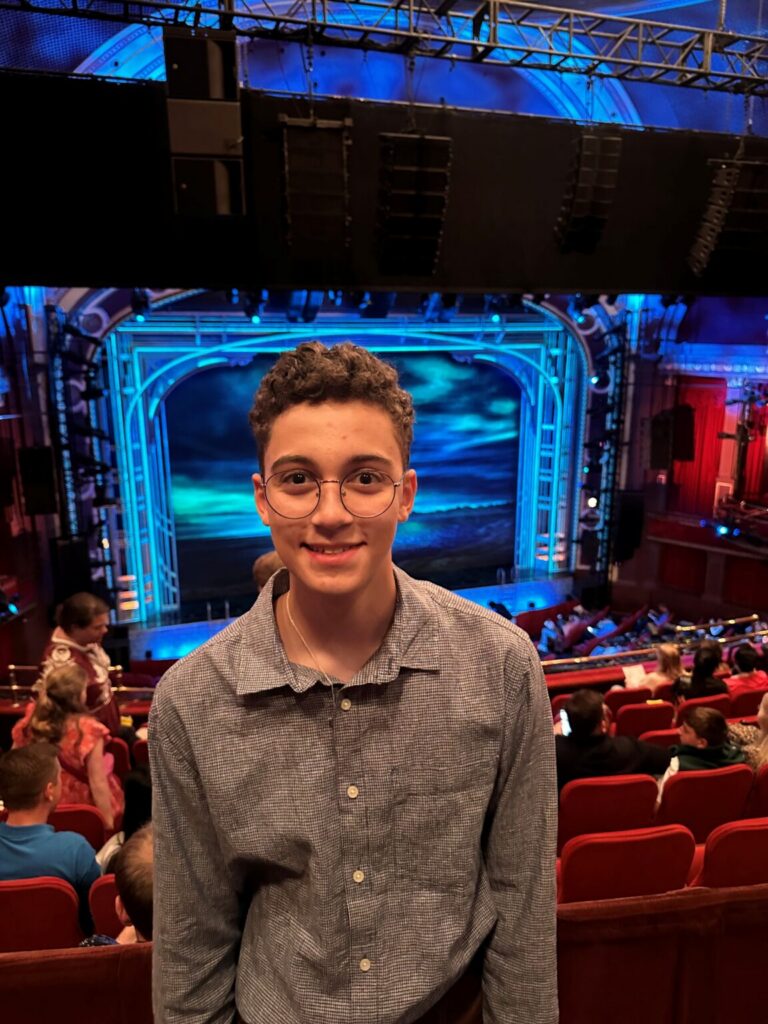
For Noah, to be immersed in a painting is the only way to see art.
That’s similar to the reasons why he wants to attend Bocconi University in Milan. He can also begin studying law as a freshman, and the tuition of $15,000 per semester is almost laughable compared to the cost of a college education in the United States. (Tuition for international students at the University of Bologna in Italy, another school that has Noah’s interest, is $2,000 a year.)
Those two are certainly perks, but global law will require Noah to interact with clients from around the world. He’ll need to learn their customs, their methods of communication, and the idiosyncrasies familiar to their culture.
Attending classes with students from Europe will give him a head start.
“I want the experience of studying abroad,” he said. “It's really helpful to be able to experience living in another culture. It really helps you integrate and maybe connect yourself with the world in a way that you can't get by going to school in a place that has a similar culture to you.”
He will be able to communicate with most of his classmates, since there is a chance he speaks their language. He is fluent in Spanish (his mom’s native language), and he’s becoming more conversational in Italian, Japanese, and Korean.
Noah’s dream is to live in Japan and practice global law. That’s where he said he sees himself in five years.
As for Josie, she sees her son doing whatever he puts his mind and heart into.
“He’s going to be a justice-seeker,” she said. “He’s going to bring changes. He’s going to help people. There’s no doubt in my mind that’s going to happen.”
Less than two months after the application season began, record-breaking interest continues with more than 500,000 students applying for Florida’s K-12 education choice scholarships.
Step Up For Students, the nonprofit organization that administers 98% of the state’s scholarships, opened applications for the 2026-27 school year on Feb. 1. A record 200,000 applied during the first three days.
By midday Feb. 10, a total of 300,106 students had applied for scholarships, which represents an 11.7% increase over the same 10-day period last year. By Friday morning, Feb. 27, a total of 401,507 students had applied.
Applications reached the 500,000 mark on March 30, which was 22 days earlier than in 2025.
Step Up For Students CEO Gretchen Schoenhaar said last week that the organization’s team and systems were ready for the surge of interest. Step Up’s technology systems processed 15% more applications on the first day this year than at the same time last year. Of the families who called for assistance, more than 90% reported being “satisfied” or “very satisfied” with the support they received.
“Florida continues to set the pace for the nation in education choice,” Schoenhaar said. “Families have become accustomed to seeking options in their children’s education and Step Up For Students is proud to support them every step of the way.”
Since its inception in 2002, Step Up has administered more than 3 million scholarships.
During the 25-26 school year, more than 525,000 students have been funded on Florida’s K-12 scholarship programs to access learning options of their choice. If these students were counted as a single school district, it would be the largest in the state and the third largest in the country. That makes Florida the national leader in education options.
However, not all families end up using their scholarships. Top reasons include: Their preferred private school lacked capacity; they were on a waitlist for a charter school and were accepted; they chose to attend a district school, etc.
Step Up is on track this school year to have 2.75 million transactions on MyScholarShop, its online marketplace, for over $425 million. Step Up is on track to process over 4.5 million reimbursement requests this year, worth over $595 million, four times what it had just two years ago.
Current scholarship families have until April 30 to renew their scholarships for the next school year. All families who want a PEP scholarship must also apply by April 30.
Applications and more details are available here.
We will continue to update the numbers in this post until applications close.
Greater collaboration is being credited for a dramatic decrease this year in the number of Florida K-12 scholarship students experiencing scholarship funding delays because their names were also found on public school rolls.
According to the latest state figures, the rate of matched students in the Family Empowerment Scholarship for Educational Options was less than 1%, while the rate of students applying for the Family Empowerment Scholarship for students with Unique Abilities Scholarship was about 5%. Officials attributed the higher match percentage for FES-UA to that group’s greater mobility, given the various services available through the public school system.
In the latest quarter, fewer than 6,000 scholarship students were reported in public schools compared with 27,000 in the quarter that included the start of the 2025-26 school year.
The improvements occurred after officials at the Florida Department of Education worked with the state’s 67 school districts and Step Up For Students to improve the crosscheck process and pinpoint more students who were being double counted.
During the 25-26 school year, there are six crosschecks where the Florida DOE compares Step Up’s list of students who are on scholarship with school districts’ lists of students who were reported as attending a public school. If a student appears on both lists, Step Up For Students immediately freezes the student’s funds to ensure that public tax dollars are spent properly.
Step Up then contacts the families of these students and requests documentation showing that they were not enrolled in a district school, which is sent to the DOE. These students are funded on the scholarship only after the DOE clears them.
All scholarship accounts that were frozen from 2024-25 and the first two quarters of 2025-26 due to students appearing in a public school crosscheck have been resolved.
TALLAHASSEE, Fla.– Amanda Thompson said she will be the president of the United States.
Not wants to be or hopes to be but will be.Amanda Thompson said she will be the president of the United States.
Not wants to be or hopes to be but will be.
Just like she will be the attorney general of Florida, the governor of Florida, and the United States attorney general before reaching the Oval Office.
“That’s the plan,” she said. “I’m going to get there.”
Of course, there is some prep work to be done before she begins a career of service to her state and country.
First, Amanda, 17, is set to graduate this May from St. John Paul II Catholic High School (JPII), where she will be class valedictorian. She attends the parochial school in Tallahassee with the help of a Florida education choice scholarship managed by Step Up For Students.
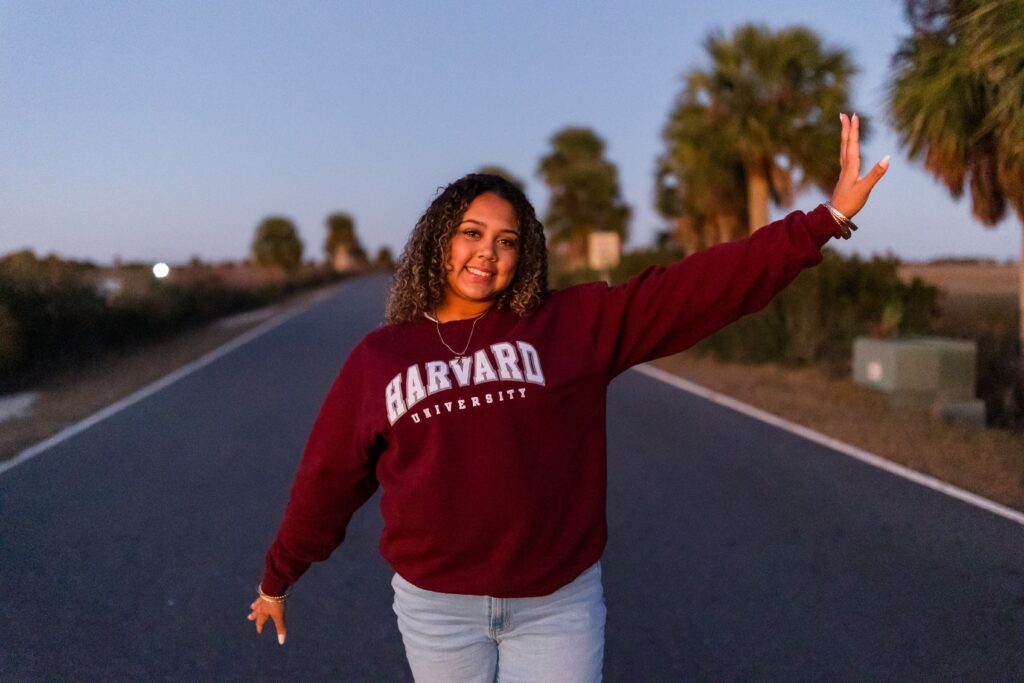
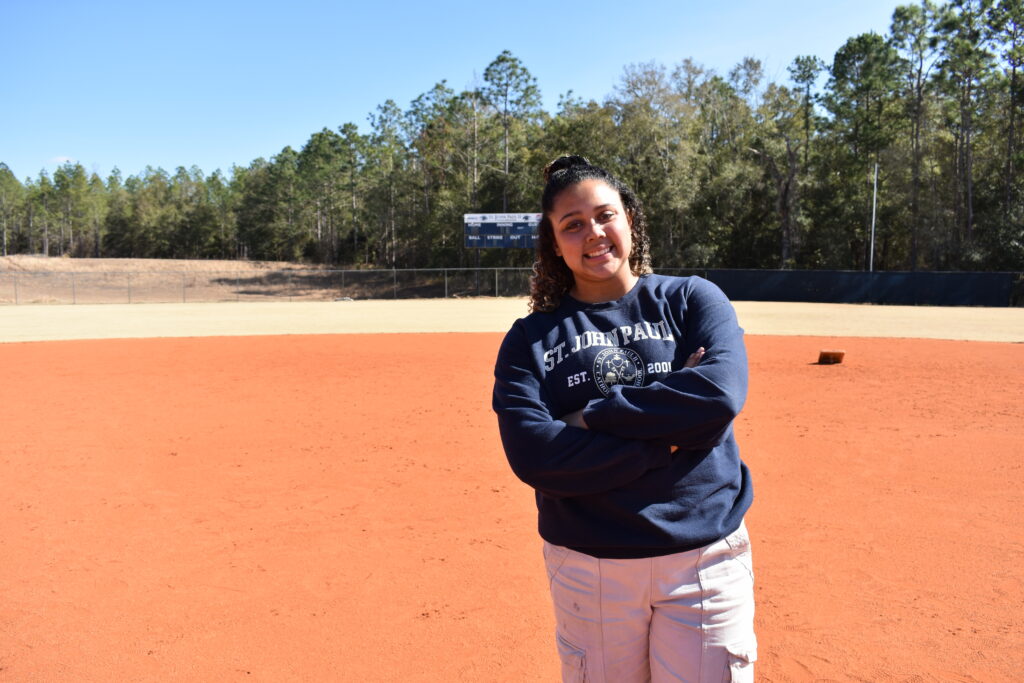
Then it’s off to Harvard University, where she plans to double-major in government and history and earn a degree from its prestigious law school. Along the way, Amanda will pitch for the Crimson softball team with designs on leading the program to its first appearance in the Women’s College World Series.
As that unfolds, Amanda is determined to play softball in the Olympics. She has attended tryouts for Team USA and is a member of the United States Virgin Islands national team.
Taken separately, any one of her goals is ambitious.
But combined?
“She has very, very high expectations,” said JPII Principal Luisa Zalzman. “She’s a go-getter, a high achiever. She has a drive that is very mature for her age.”
“She's done everything she's ever put her mind to,” said Amanda’s mother, Ashley Williard. “She said she wanted to be valedictorian, and I said, ‘OK, go be valedictorian.’ And she did it.”
Amanda is a bundle of energy and confidence. On the softball field, she has a running dialogue with everyone – teammates, opponents, coaches, umpires. In the classroom, she’s involved in every class discussion.
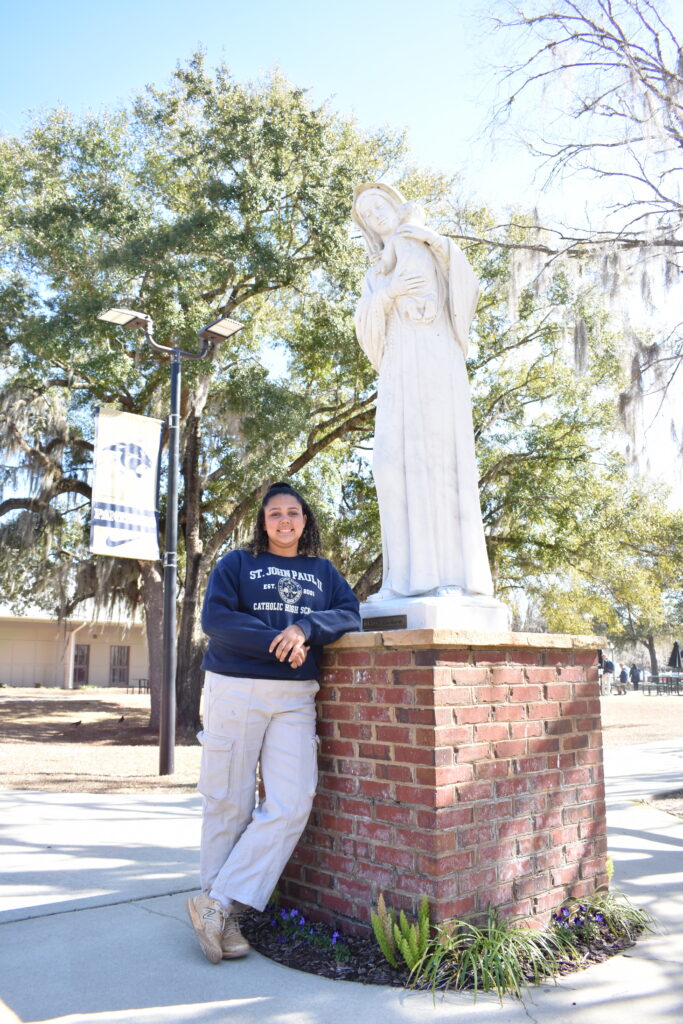
If you had approached her in August 2022 as she took the initial steps of her high school journey and told her she would graduate first in her class and be a member of Harvard Class of 2030, she would have been stunned.
“I would have said, ‘You got the wrong person.’ The difference between me then and me now is astronomical, and I think it’s because I attended this school,” she said. “It has to be.”
Amanda was a star as she rose through the ranks of the Tallahassee youth softball programs. Her parents, Ashley and James Thompson, envisioned their daughter earning an athletic scholarship to college. They were thinking of a high-end academic university like Duke or Notre Dame. That’s how Amanda, who attended her district schools until eighth grade, landed at JPII.
“We wanted a high school that was college-focused,” Ashley said. “Education is what we were looking for, and we could not have done it without Step Up For Students. No way could we afford to put her in that situation.”
There were “little things,” Amanda said, that shaped her academic future.
Her freshman English teacher encouraged her to write outside the margins during tests and essays.
“He said, ‘You don’t have to stay within this box. If you know more, write more on the paper.’ That stuck with me,” Amanda said.
Her freshman world history teacher announced to the class that Amanda scored the highest on the first test of the year.
“He congratulated me,” she said. “I thought that was insane.”
Midway through that semester, Amanda realized she had A’s in all her classes. That’s when she began to believe in herself as a student. Future valedictorian?
“Why not?” she said.
Amanda took AP World History as a sophomore and aced the AP test.
“That’s the class where I learned to learn,” she said.
Also, her love of history and government was born in that class, Amanda said. She can name all the countries of the world, tell you where they are located, and identify the flags.
“I’m working on my capitols,” she said. “It’s my hobby.”
Amanda took Spanish I and II in middle school and passed each, but not with grades that would stand out on a high school transcript. Sara Bayliss, JPII’s college advisor, suggested that Amanda retake those courses.
“She said the grades weren't good enough, that I could do better,” Amanda said.
Amanda retook both classes. She asked Principal Zalzman, a native of Venezuela, for tutoring help. The result was a pair of grades that fit proudly on the transcript Amanda sent to Duke. Duke was her dream school for education and softball.
And then Harvard called.
At midnight on Sept. 1 of her junior year – the first day college coaches can contact 11th graders – Amanda received a phone call from the Harvard softball coach.
“I didn’t even know they had a softball program,” Amanda said.
Intrigued, Amanda accepted a recruiting visit to the university located just outside of Boston. That trip marked the end of her Duke dreams.
“I want to make a difference in this world, and I think Harvard is the perfect school for me,” she said.
Terrence Brown, JPII’s softball coach, has watched Amanda emerge as an Ivy League student and a Division I softball player good enough to attend Team USA tryouts and earn a spot on the national team of a small territory with Olympic ambitions.
“She’s goal-oriented, and she doesn’t let anything get in the way of achieving those goals,” he said. “She’s worked very hard to get to where she’s going.”
Ashley and James are proud parents, but Ashley said they won’t take too much credit for Amanda’s success.
“We have nothing but pride,” Ashley said. “She is self-driven, self-motivated. We try to provide motivation. She’s missed proms and dances because of softball travel and schoolwork, and that was all her decision.
“There are a lot of sacrifices made to go along with this. She’s not afraid of hard work. She says she’s going to do something, and she goes out and does it.”
Updated Feb. 27, 2026
Record breaking interest continues with more than 400,000 students who have applied for Florida’s K-12 education choice scholarships for the 2026-27 school year.
Step Up For Students, the nonprofit organization that administers 98% of the state’s scholarships, opened applications for the 2026-27 school year on Feb. 1. A record 200,000 applied during the first three days.
By mid-day Feb. 10, a total of 300,106 students had applied for scholarships, which represents an 11.7% increase over the same 10-day period last year. By Friday morning, Feb. 27, a total of 401,507 students had applied.
Step Up For Students CEO Gretchen Schoenhaar said last week that the organization’s team and systems were ready for the surge of interest. Step Up’s technology systems processed 15% more applications on the first day this year than at the same time last year. Of the families who called for assistance, more than 90% reported being “satisfied” or “very satisfied” with the support they received.
“Another record number of applications on our opening weekend shows that Florida families increasingly value options in their children’s education,” Schoenhaar said. “Step Up For Students smoothly processed the higher demand and is prepared to support families every step of the way.”
During the 25-26 school year, more than 525,000 students have been funded on Florida’s K-12 scholarship programs to access learning options of their choice. If these students were counted as a single school district, it would be the largest in the state and third largest in the country. That makes Florida the national leader in education options.
However, not all students whose families apply end up being awarded or funded.
Step Up is focused on supporting growth. By the end of the year, Step Up expects to process 3 million reimbursements and a total of 3 million MyScholarShop e-commerce transactions.
Current scholarship families have until April 30 to renew their scholarships for the next school year. All families who want a PEP scholarship must also apply by April 30.
Private School and Unique Abilities Scholarship applications will be available through Nov. 15 for families who want a new scholarship.
Applications and more details are available here.
We will continue to update the numbers in this post until applications close.
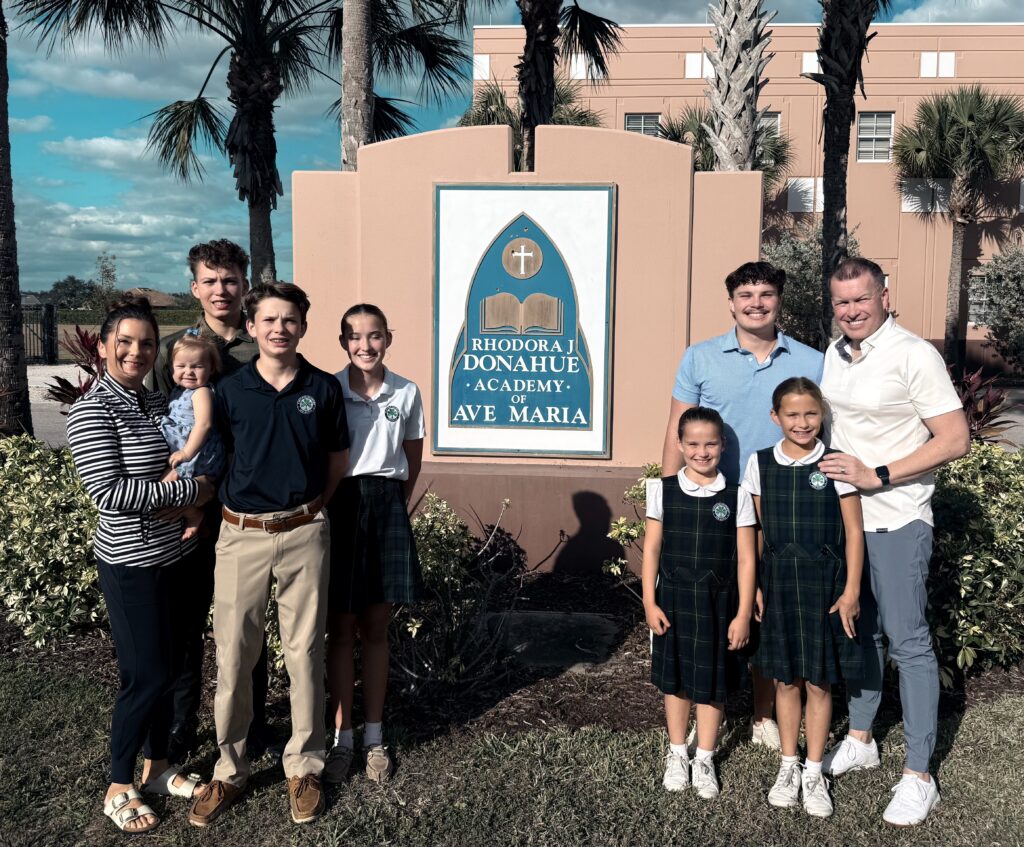
AVE MARIA, Fla. – Toby and Nicole Mickelson were thinking about moving from Minnesota even before they heard about school choice in Florida. The weather, the politics, and the taxes were all getting to be too much, plus Nicole’s parents had recently become snowbirds with a winter home in southwest Florida.
Still, it wasn’t clear which warmer, less expensive, more conservative state they might move to.
But then a friend in Florida posted praise on Facebook for the state’s private school choice scholarships, which the Florida Legislature and Gov. Ron DeSantis had made available to every single student, beginning in the 2023-24 school year and are administered by Step Up For Students.
Toby and Nicole were stunned.
“I said, ‘Can you believe this even exists?’ Nicole said, “He said, ‘Are you kidding me?’ “
“Once we found out about the Step Up money, it (Florida) was a shoo-in.”
This was in the summer of 2024.
In early 2025, the Mickelsons applied to get their kids into Rhodora J. Donahue Academy, a classical Catholic school in Ave Maria, a predominantly Catholic community about 30 miles from Naples. In April 2025, their kids were accepted.
Incredibly, the family found the perfect house in Ave Maria and sold their home near Minneapolis almost simultaneously. By July, they were Floridians, with a month to spare before school started.
“We pinch ourselves every day,” Nicole said. “We’re so grateful to be here.”
The Mickelsons aren’t alone.
The Sunshine State has become a magnet for a whole new breed of transplants. We don’t have good numbers to quantify the trend, yet, but it’s easy to find families who moved here wholly or in part because 1) Florida offers generous school choice scholarships to every family, and 2) The education landscape is increasingly diverse because of all that choice, with more options for more families all the time.
At one school for students with special needs in Jacksonville, the families of 24 students — 10% of the entire student body — moved to Florida to access the school and the scholarships. At Donahue, according to the Diocese of Venice, at least two dozen students fit that description. Meanwhile, at a school for students with autism in the Tampa Bay area, a half dozen families moved from other countries or Puerto Rico.
The Mickelsons said families in Minnesota who hear about Florida’s choice scholarships initially “don’t believe it,” Nicole said. “They think it’s too good to be true.”
But, as the Mickelsons learned, they’re real.
Toby is an occupational safety manager for a commercial kitchen company and a member of the Air Force Reserves. Nicole is the vice president of sales for her family’s long-distance trucking business.
In Minnesota, they sent their kids to classical Catholic schools. For a big family, that wasn’t a breeze financially. Tuition per child averaged nearly $10,000 a year. “You can’t sustain that,” Nicole said.
Commuting was a challenge, too. One school was 20-30 minutes each way; the other, 30-40 minutes. “We lived in our cars,” Toby said.
The Mickelsons had some familiarity with Florida.
Four years ago, Nicole’s parents bought a home in Fort Myers, where they live for half a year. And three years ago, the Mickelsons visited Ave Maria University while they were checking out colleges with their oldest child. The university is also in the community of Ave Maria.
It was then that they learned about Donahue Academy, which is also a classical school.
Classical schools “teach a lot of classic books, like Dante’s ‘Inferno,’ not New Age-y things,” Toby said. For Donahue to also be a classical school was “icing on the cake.”
At the time the Mickelsons applied, Donahue had 440 students and a long waiting list. The Mickelsons weren’t sure they had a shot. But thankfully, the school was also in the midst of a huge expansion that would allow it to serve 615 students.
Donahue could be the poster child for another Florida-centered education trend, the revival of Catholic schools. Unlike Catholic schools in much of the country, Catholic schools in Florida are growing again. No region of Florida is showing more growth than the Diocese of Venice, which includes the cities of Fort Myers, Naples, Sarasota, and Bradenton.
“My husband said, ‘Let’s apply, let’s do the paperwork. If they get in, that’s our sign to move,'" Nicole said.
After praying and fasting, they got a thumbs up.
The Mickelsons have seven children. The oldest is in college. The next-oldest is homeschooled. Four attend Donahue, in grades 9, 7, 5, and 2, respectively. The youngest is a year old.
Nicole said school choice wasn’t the only reason for the move to Florida, but she put it at the top of the list, followed by politics, taxes, weather, and her parents living nearby. She said Donahue probably wouldn’t have been affordable without the choice scholarships.
In Ave Maria, the Mickelsons no longer worry about the long commutes, either. They live a few blocks from the school, so the kids bike there. “It’s like a dream,” Nicole said.
The plan is for the kids to graduate from Donahue, then attend Ave Maria University.
Nicole and Toby are both able to work remotely. And now that everything in Florida is working out so well, word is getting back to their friends in the Gopher State.
One family recently pulled their kids out of Catholic school because they could no longer afford it. For now, they’re homeschooling. But thanks to school choice, Florida looks mighty enticing.
Said Nicole, “I have a lot of Minnesota friends who want to move to Florida now.”
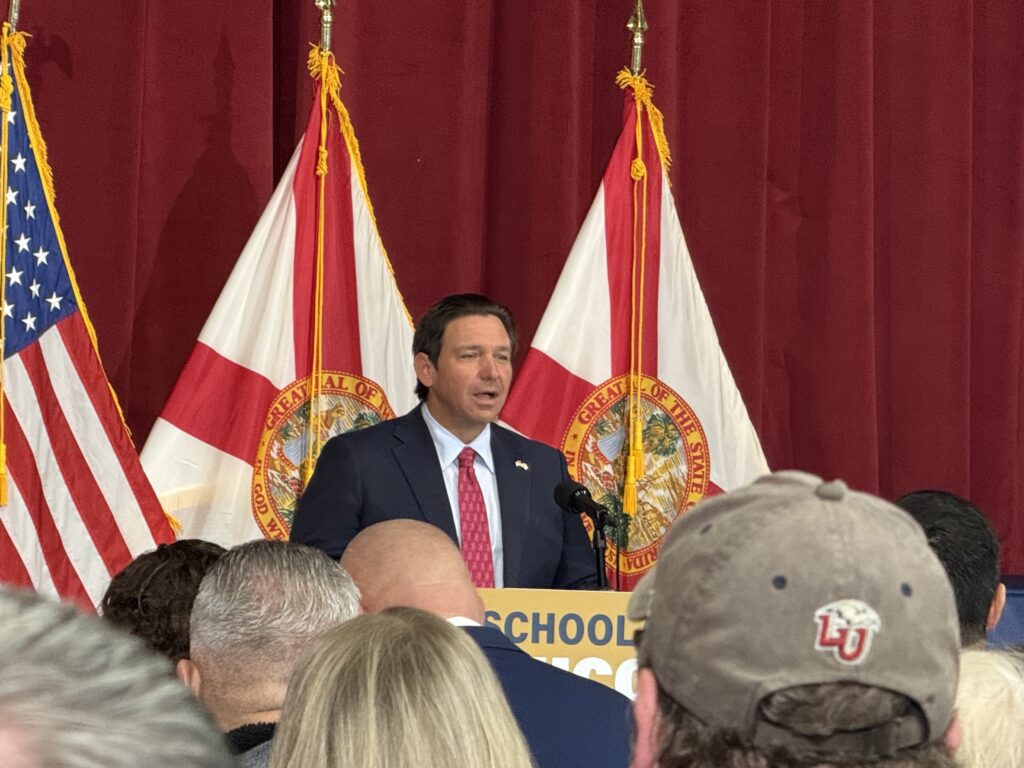
VALRICO – Gov. Ron DeSantis announced Wednesday morning that Florida will opt in to the nationwide Federal Scholarship Tax Credit program established in August by the Trump Administration.
The federal program, which will launch in 2027, is designed to bring education choice to families across the country. In doing so, it will give families from coast to coast what those in Florida have enjoyed for more than 20 years – the final word in the education of their children.
“The great stuff we're doing here probably is going to be pretty groundbreaking in states that have not yet gone down the road of school choice,” DeSantis said. “But here we are, further empowering residents and families to be able to make the most around the country.”
The federal program allows individual taxpayers to contribute to approved scholarship granting organizations, enabling students from a wide range of backgrounds to pursue the learning environment and educational resources that best fit their needs. Students in both public and private schools will benefit from resources that support tuition, tutoring, educational tools, technology, and special academic programs.
Step Up For Students, the Florida non-profit that manages the state’s education choice programs, will participate in administering the federal program by establishing the Step Up, Step Further Scholarship Fund, a separate 501c3 non-profit.
DeSantis made the announcement at Grace Christian School in Valrico as part of National School Choice Week. The school has 682 students on a Florida choice scholarship. The governor stood at the dais behind a sign that read, “School Choice Success. Florida is leading the nation.”
Anastasios Kamoutsas, Florida’s Commissioner of Education, followed DeSantis to the dais and said more than 1.4 million students in Florida benefit from a school choice option. More than 500,000 students receive one of the education choice scholarships.
DeSantis mentioned that Florida was the pioneer in education choice scholarships for students with unique abilities and for families who want to homeschool.
“Where do we rank in homeschooling? Do you know? At the top,” DeSantis said. “So we do good in homeschool because we embrace it and we empower.”
Kamoutsas said the purpose of National School Choice Week is to celebrate the freedom and opportunities that come with it.
“In Florida, that principle guides all that we do, and our students are better off because of it,” he said. “This week has been a time to showcase Florida's leadership in building the largest and most comprehensive school choice program in the nation.”

