When I think about the state of public education in Florida, I recall a song from “The Wiz,” the 1978 film reimagining of “The Wizard of Oz,” where Diana Ross sang, “Can’t you feel a brand new day?”
It’s a brand new day in our state’s educational history. Parents are in the driver’s seat deciding where and how their children are educated, and because the money follows the student, every school and educational institution must compete for the opportunity to serve them.
Public schools are rising to meet that challenge.
For the past year, helping them has been my full-time job.
Today, 27 of Florida’s 67 school districts have contracted with Step Up For Students to provide classes and services to scholarship students, and another 10 have applied to do so.
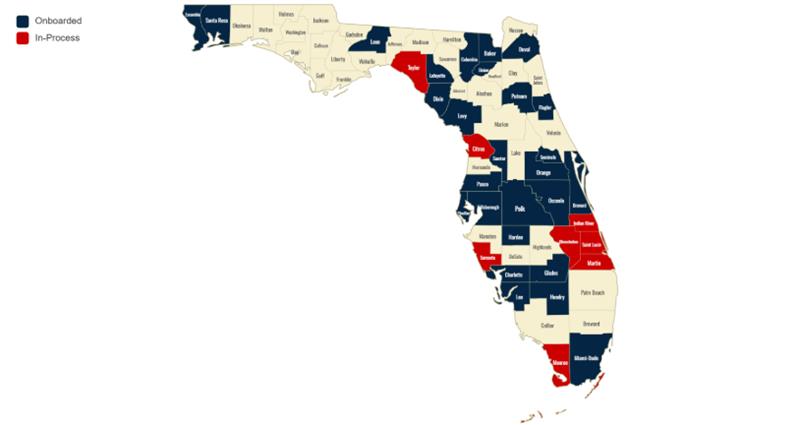
That’s up from a single school district and one lone charter school this time a year ago.
This represents a seismic shift in public education.
For decades, a student’s ZIP code determined which district school he or she attended, limiting options for most families. For decades, Florida slowly chipped away at those boundaries, giving families options beyond their assigned schools.
Then, in 2023, House Bill 1 supercharged the transformation. That legislation made every K-12 student in Florida eligible for a scholarship. It gave parents more flexibility in how they can use their child’s scholarship. It also created the Personalized Education Program (PEP), designed specifically for students not enrolled in school full time.
This year, more than 80,000 PEP students are joining approximately 39,000 Unique Abilities students who are registered homeschoolers. That means nearly 120,000 scholarship students whose families are fully mixing and matching their education.
Families are sending the clear message that they want choices, flexibility, and an education that reflects the unique needs and interests of their children.
Districts have heard that message.
Parents may not want a full-time program at their neighborhood school, but they still want access to the districts’ diverse menu of resources, including AP classes, robotics labs, career education courses, and state assessments. Families can pay for those services directly with their scholarship funds, giving districts a new revenue stream while ensuring students get exactly what they need.
In my conversations with district leaders across the state, they see demand for more flexible options in their communities, and they’re figuring out how to meet it.
For instance, take a family whose child is enthusiastic about robotics. In the past, their choices would have been all-or-nothing. If they chose to use a scholarship, they would gain the ability to customize their child’s education but lose access to the popular robotics course at their local public school. Now, that family can enroll their child in a district robotics course, pay for it with their scholarship, and give their child firsthand technology experience to round out the tutoring, curriculum, online courses and other educational services the family uses their scholarship to access.
Families can log in to their account in Step Up’s EMA system, find providers under marketplace and select their local school district offerings under “contracted public school services.” School districts will get a notification when a scholarship student signs up for one of their classes. From large, urban districts like Miami-Dade to small, rural ones like Lafayette, superintendents are excited to see scholarship students walk through their doors to engage in the “cool stuff” public schools can offer. Whether it’s dual enrollment, performing arts, or career and technical education, districts are learning that when they open their arms to families with choice, those families respond with enthusiasm.
Parents are no longer passive consumers of whatever system they happen to live in. They are empowered, informed, and determined to customize their child’s learning journey.
This is the promise of a brand new day in Florida education. For too long, choice has been framed as a zero-sum game where if a student left the public system, or never even attended in the first place, the district lost. That us-versus-them mentality is quickly going the way of the Wicked Witch of the West. What we are witnessing now is something far more hopeful: a recognition that districts and families can be partners, not adversaries, in building customized learning pathways.
The future of education in Florida is not about one system defeating another. It is about ensuring families have access to as many options as needed, regardless of who delivers them.
As Diana Ross once sang, “Hello world! It’s like a different way of living now.” It has my heart singing so joyfully.
It’s been a month since classes started, and Matthew Ottenwess is settled into his freshman year at Tampa Catholic High School.
He’s made friends and likes his teachers.
His high score on the school’s entrance exam gained him admission to three honors classes and one AP course. He plays linebacker on the junior varsity football team.
This was the educational landing his mother, Maggie, was looking for when she learned the family would move from New Mexico to Florida after her husband Chris, a Chief Master Sergeant in the United States Air Force, received a transfer to MacDill Air Force Base in Tampa.
The Ottenwesses have a Florida education choice scholarship to thank for that.
“It’s a game-changer,” Maggie said.

Maggie, Chris and Matthew visit Yellowstone National Park. (Photos courtesy of Maggie Ottenwess)
While the family was still stationed at Kirtland Air Force Base in Alburquerque, Maggie was able to apply for a Family Empowerment Scholarship for Educational Options (FES-EO), managed by Step Up For Students.
“The scholarship made the (moving) process easier, gave us more choice, allowed us to take a breath and not have to worry about additional stresses, both monetary and interpersonal,” Maggie said. “It eased the PCS (Permanent Change of Station) experience. There are countless other things that change – doctors, dentists, specialists, church, youth group, scouts. This took one of the larger chunks off the list.
“Box checked.”
Matthew had been homeschooled during the past five years. Chris and Maggie decided he would return to a brick-and-mortar school setting for high school. They also wanted that setting to be at a faith-based school, preferably a Catholic school.
They understood that would burden the family’s finances, but it was a sacrifice they would accept.
Chris received his Permanent Change of Station order on Dec. 23, 2024. Soon, Maggie was told of Florida’s private school scholarship program from other moms within the military community.
“I couldn’t believe what I was hearing,” Maggie said. “It was too good to be true.”

Maggie set her alarm for 7 a.m. local time on the first Saturday in February. Families could apply for FES-EO scholarships that day at 9 a.m. EST. Since Albuquerque is two hours behind, Maggie wanted to apply as soon as the session opened.
“In the military, on-time is late,” she joked.
Maggie found the “Scholarships for Military Families” page on the Step Up website and entered her family’s information. The process went smoothly until Maggie came to the screen that required her to enter her Florida address. Since the move wouldn’t happen until June, and since the family would live on the Air Force Base, they had yet to be assigned housing, so no Florida address.
“I was in panic mode,” she said.
Her fear was quickly defused during a live chat with customer service.
“You’re not the first,” Maggie was told. “We get this a lot.”
She just needed to upload Chris’s Permanent Change of Station order in the proof of residency screen on the application.
Once Maggie learned that Matthew was awarded a scholarship, she started researching private faith-based schools in the Tampa area and settled on Tampa Catholic because of its challenging history and science curriculums. He was accepted Feb. 28.
“Our Christian faith is important to our family,” Maggie said. “It is the foundation that makes all the complications, moves, hardships, financial struggles, stress, and the like possible. We incorporated religion into Matt's homeschool curriculum and wanted to keep that moving forward. We were open to both Christian and specifically Catholic options. We believed a faith-centered school would continue to support his character and moral compass.”
The FES-EO scholarship covers more than half of the yearly tuition at Tampa Catholic. Maggie said they can afford to cover the rest without her getting a job, something that is not easy for military spouses. Local businesses are not quick to hire someone who could be moving in two or three years.
This allows Maggie to continue her work as an advocate for younger enlisted Airmen, military families and dependents. She works on various committees, task forces, and councils that deal with medical, special needs, and religious issues.
“So, the scholarship is not only helping my son get a quality education, it's helping the mission of the military by me having the breadth and space and time to do those things,” Maggie said. “The scholarship is allowing a difference to happen.”
Chris, who is the Command Chief of the 6th Air Refueling Wing at MacDill, has been in the Air Force for 28 years. He and Maggie have been married for 18 years. They’ve lived on five bases in four different states.
Matthew, who was born when his parents were stationed in New Jersey, his mom’s home state, has lived in Mississippi, Illinois, New Mexico and now Florida.
When asked about the latest move, he said, “I was super excited, a little nervous for all the changes, but definitely excited to get a whole different experience of school.”
The experience was somewhat of a jolt at first. He said it took him a few weeks to become comfortable with the return to the classroom setting. He had attended Catholic school before being homeschooled.
He said he likes living in Tampa, and being on the football team allowed him to make friends quickly, since fall practice began before the first day of classes.
“It's really good,” he said. “(Tampa Catholic) has a really good curriculum. I like the teachers, and it's fun to hang out with my friends all day.”

The Rev. H.K. Matthews, front row, second from left, and John Kirtley, front row, far left, joined more than 6,000 marchers at a 2010 Tallahassee rally to support expanding the income-based Florida Tax Credit Scholarship Program.
By John Kirtley
The Rev. H.K. Matthews passed away Monday at the age of 97. As I urge you to read in this obituary, he was one of the towering figures in the Florida civil rights movement.
He was arrested over 30 times fighting for equal rights in Northwest Florida. He was beaten, along with John Lewis and other brave activists, on the Edmund Pettus Bridge in their first attempt to march from Selma to Montgomery. There is now a park named in his honor in Pensacola. You can also read his autobiography, “Victory After The Fall.”.
On a 2010 visit to Pensacola to recruit schools for the Florida Tax Credit Scholarship program, former Step Up For Students grassroots organizer Michael Benjamin and I met the operator of a faith-based school in town. He urged us to meet with Rev. Matthews, who he thought might respond well to the social justice message of the scholarship program. At the time, the average household income of our students was less than $30,000, and 75% were minorities. Michael and I said we would love to meet him.
Rev. Matthews didn’t say much during our initial visit; Michael and I explained how the scholarship program empowered low-income families to choose a different school if the one they were assigned to wasn’t working for them. He seemed to just take it all in but offered neither affirmation nor disagreement.
Almost as an afterthought, I invited him to a march and rally we were having the next month in Tallahassee. We needed the legislature to pass a bill to expand the scholarship program to relieve our waitlist, and we asked scholarship families to come to the Capitol to show their support. To my surprise, he agreed to attend.
On that day, over 6,000 people marched from the convention center to the Capitol. I invited Rev. Matthews to walk in front of the crowd with other faith leaders. Normally I would never walk in the front row, but I wanted to make sure everything went smoothly for him. He was very quiet as the huge crowd marched.
When we had gathered for the rally in the Capitol, I placed him in a prominent seat on the stage. A few minutes into the event, he motioned me over and asked if he could speak to the crowd. I had no idea what he was going to say, but I wasn’t going to say no. I went to the minister running our show and asked him to introduce Rev. Matthews.
What would he say? Was he with us?
I soon had my answer.
“This reminds me of the old movement,” he said. “Seeing thousands walking in the streets, fighting for the right to determine their own future, to fight for what is best for their children. When I worked with Dr. King back in the day …”
When he said those words, there was a murmur in the crowd, both students and adults. These kids had read about Dr. King in their history books. Some of them knew that there were not one but two marches across the Pettus Bridge, and here was someone who was there at the first attempt, someone who took the blows.
He was indeed with us.
Immediately after the rally, Rev. Matthews was swarmed by students young and old, some asking questions about his time with Dr. King, some young ones who just wanted to touch him — I suppose just to make sure this hero was real. They did not let him go for at least 20 minutes.
I could tell at the time this moved him. He told me so later. After that day he would call me to ask if there was anything he could do to help the movement. We had him appear at events with donors, governors, and legislators.
He would lead another march for us in 2016, when over 10,000 people came to protest the lawsuit filed by the Florida teachers union demanding that the courts shut down the Tax Credit Scholarship, which would evict 80,000 poor kids from their schools. That day Rev. Matthews was joined at the front of the procession by Martin Luther King III, the son of the man Matthews marched with 50 years prior. You can watch a 60-second video of that march here.
I had the pleasure of joining him at his church in Brewton, Alabama, where he moved in later years. He was being honored for his years of service to that church. I was honored, though very surprised, when he called me up to speak that day. Luckily, the words to praise him came easily.
They come again easily today, but not without a few tears.
How fortunate I was to have my life intersect with his, however unlikely that would have been to me before this movement changed the course of my life.
How fortunate the education freedom movement was to have his blessing and his involvement.
How fortunate the state of Florida was to have his tireless efforts fighting for civil rights.
How fortunate, all.
Rest in peace, Rev. Matthews.
John Kirtley is founder and chairman of Step Up For Students.
Two of the leading organizations in Florida’s united education choice movement are joining forces to expand access to learning opportunities at charter schools across the state.
The collaboration between Charter Schools USA and Step Up For Students will give Florida’s education choice scholarship students access to individual classes at 62 charter school campuses.
 “By opening its campuses across the state for scholarship students, Charter Schools USA is helping set the pace for education innovation,” said Gretchen Schoenhaar, CEO of Step Up For Students. “Working with charter schools in a united movement expands access to flexible, quality learning options for Florida families.”
Florida’s 500,000 K-12 scholarship students are allowed to use their scholarships to purchase individual classes and other services from charter schools and school districts. More than 100,000 of those students use scholarships that allow them to fully customize their child’s education without attending a private school full time.
By the time school starts in August, one in three of the state’s 67 school districts and five charter school networks will offer flexible learning opportunities to scholarship students.
“We are thrilled to work with Step Up on this groundbreaking opportunity to further expand school choice,” said Dr. Eddie Ruiz, the Florida State Superintendent of Charter Schools USA. “By giving parents, especially those who teach their children at home, easy opportunities to access higher level educational opportunities while maintaining their customized scholarship option, we are providing ultimate flexibility. Schooling in the future will be all about flexible options, and this allows us to be on the forefront of this exciting endeavor.”
 Keith Jacobs, Step Up’s assistant director of provider development, is a former charter school leader. He has made it his mission to collaborate with school districts and public charter schools to find creative ways to serve scholarship students.
“Charter schools began more than 30 years ago with a mission to bring much-needed innovations to education,” Jacobs said. “At Step Up, we are committed to supporting public schools across the state as they explore new opportunities to reach scholarship families. Charter Schools USA, with its proven ability to serve students across Florida, will supercharge these efforts.”
Education choice is the norm in Florida, where 3.5 million K-12 students attended schools or learning environments chosen by their families, a testament to decades of efforts by the state’s leaders to support a united movement to increase opportunities for students.

Keith Jacobs II, affectionately called "Deuce," with his parents, Keith and Xonjenese Jacobs. Photos courtesy of the Jacobs family
When our son Keith — affectionately known as “Deuce” — was diagnosed with autism spectrum disorder at age 3, we were told he might never speak beyond echolalia (the automatic repetition of words or phrases). Until age 5, echolalia was all we heard.
But Deuce found his voice, and with it, a unique way of seeing the world.
He needed to find the right learning environment, with the assistance of a Florida education choice scholarship.
Deuce spent his early academic years in a district public school, supported by an Individualized Education Plan (IEP). Despite the accommodations, learning remained a challenge. We realized that for some, a student’s success requires more than paperwork. It requires community, compassion, and collaboration with the parents.
Imagine having words in your head but lacking the ability to communicate when you need it most. That was Deuce’s experience in public school. His schools gave him limited exposure to social norms and rigor in the classroom. Additionally, through his IEP, he always needed therapy services throughout the school day, which limited his ability to take electives and courses he enjoyed.
His mother and I instilled the importance of having a strong moral compass and working hard toward his social and academic goals. Although we appreciated his time in public school, we knew a change was needed to prepare him for post-secondary education. We applied and were approved for the Family Empowerment Scholarship for Students with Unique Abilities.
Knowing the potential tradeoffs of leaving public school and the IEP structure behind, we chose to enroll Deuce at Bishop McLaughlin Catholic High School in Spring Hill, about 35 miles north of Tampa. We believed the nurturing, faith-based environment would help him thrive. It was the right decision.
Catholic school provided Deuce with the support he needed to maximize his potential. Despite his autism diagnosis, he was never limited at Bishop. He was accepted into their AP Capstone Program. This was particularly challenging, but Bishop was accommodating. The school provided him with an Exceptional Student Education (ESE) case manager dedicated to his success, and he received a student support plan tailored to his diagnosis and learning style. The school didn’t lower expectations; instead, it empowered him to take rigorous coursework with the right guidance.
Any transition for a child with autism will take time to adjust. On the first day, I received a call: Deuce had walked out of class. This was due to his biology teacher using a voice amplifier. The sound overwhelmed Deuce’s senses, and he began “stimming”— rapidly blinking and tapping his hands. Instead of punishing him or ignoring the issue, the staff immediately reached out.
Together, we crafted a Student Success Plan tailored to Deuce’s needs, drawing from his public school IEP without being bound by it. His plan included preferential seating, frequent breaks, verbal and nonverbal cueing, encouragement, and clear direction repetition. For testing, he was given extended time, one-on-one settings, and help understanding instructions.
These adjustments made all the difference.
Throughout high school, Deuce maintained a grade-point average of over 4.0 while taking honors, AP, and dual enrollment courses. Additionally, he was inducted into the National Honor Society and Mu Alpha Theta Math Honor Society while also playing varsity baseball. Because of his success at Bishop, he will continue his educational journey at Savannah State University, where he will major in accounting and continue to play baseball.

Deuce Jacobs earned an academic scholarship to Savannah State University, where he plans to major in accounting and continue playing baseball.
Catholic schools in Florida increasingly are accommodating students with special needs. The state’s education choice scholarship programs have been instrumental in making Catholic education available to more families. Over the past decade, during a time when Catholic school enrollment has declined across much of the nation and diocesan schools have been forced to close, no state has seen more growth than Florida.
At the same time, the number of students attending a Catholic school on a special-needs scholarship has nearly quadrupled, from 3,004 in 2014-15 to 11,326 in 2024-25. Clearly, many families are choosing the advantages of a private school education without an IEP versus a public school with an IEP.
So, I’m puzzled why federal legislation being considered in Congress, the Educational Choice for Children Act (ECCA), includes a mandate that that all private schools provide accommodations to students with special education needs, including those with IEPs.
Although more and more students with special needs are accessing private schools, not every school can accommodate every student’s unique needs (which is also true of public schools). And, as I learned with Deuce, some schools can accommodate students more effectively if they aren’t bound by rigid legal mandates and have the flexibility to collaborate with parents who choose to entrust them with their children’s education.
If the IEP mandate passes, it would prohibit many schools from accepting funds through a new 50-state scholarship program, undermining the worthy goal of extending educational choice options to more families. The U.S. Conference of Catholic Bishops has called it a “poison pill” that would “debilitate Catholic school participation.”
Bishop McLaughlin’s willingness to partner with me as a parent not only allowed Deuce to succeed academically but also gave him the dignity and respect every child deserves. IEPs work for many. For others, like Deuce, it takes something more like collaboration to build a path forward together.
Updated March. 31, 2025
After a record-setting opening weekend in which more than 120,000 students applied for Florida K-12 scholarships, demand remains high.
Step Up For Students, the nonprofit organization that administers 98% of the state’s scholarships, opened applications for the 2025-26 school year on Feb. 1.
By the end of the day on Friday, March 28, more than 425,00 students had applied.
That included approximately 340,000 who were renewing scholarships from past years, and approximately 85,000 students applying for scholarships for the first time.
Step Up For Students CEO Gretchen Schoenhaar said the organization’s team and systems were ready for a surge of interest. During the record-shattering opening weekend, Step Up’s technology systems had zero downtime. Of families who called in for assistance, 84% reported they were “very satisfied” with the support they received and nine of 10 said their inquiry was resolved on the first call.
“The unprecedented volume of applications on our opening weekend highlights the value Florida families place on the opportunity to choose the best possible education for their children,” Schoenhaar said. “Our teams are prepared to meet the growing demand for scholarships and support families every step of the way. Our seamless execution proves it is possible to expand education opportunities at scale.”
This year, more than 500,000 students use the state’s K-12 scholarship programs to access learning options of their choice. That makes Florida the national leader in education options. If these students were counted as a single school district, it would be the largest in the state and third largest in the country.
Step Up is focused on supporting that growth. So far this year, SUFS has paid nearly 2 million quarterly invoices to schools in 4.4 business days, on average and more than 1 million reimbursements, in 4.2 business days on average. By the end of the year, we expect to double the number of reimbursements and process a total of 2 million MyScholarShop e-commerce transactions.
Current scholarship families have until April 30 to renew their scholarships for next school year. All families who want a PEP scholarship also have an April 30 deadline to apply.
Private School and Unique Abilities Scholarship applications will be available through Nov. 15 for families who want a new scholarship or current students who do not renew their scholarship by April 30.
Applications and more details are available here.
We will update the numbers in this post each week on Monday until applications close.

