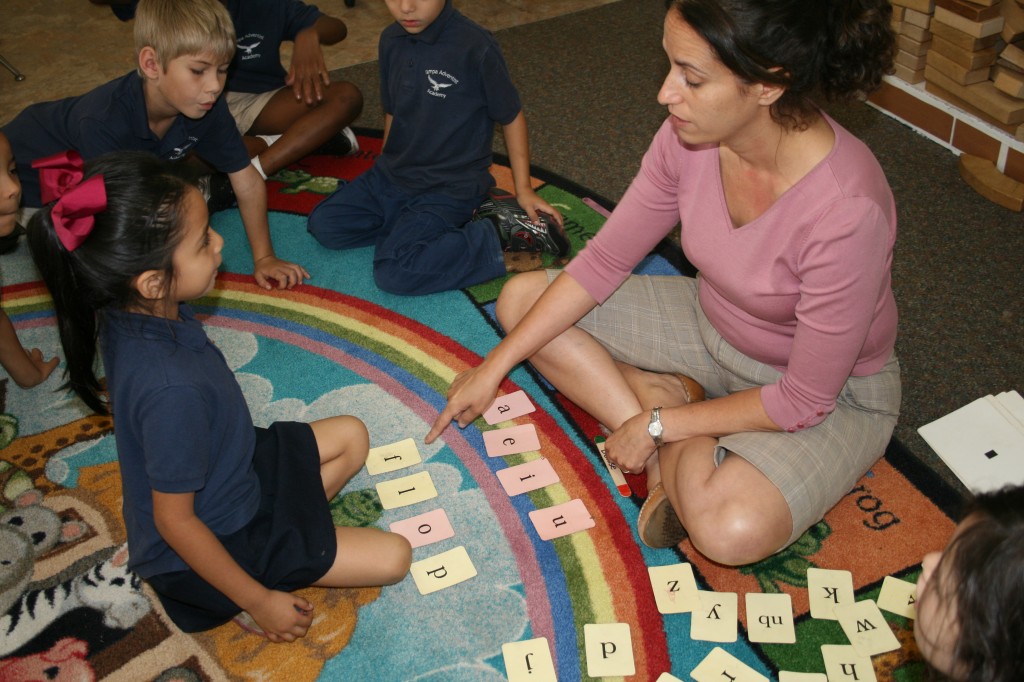
After 13 years teaching in the public school district, Merili Wyatte went to work for a private school. It was a chance to spend more time with her son and daughter, who attend the school. And to work in an environment where her religion was part of the curriculum.
This is the second story in an occasional series that looks at teachers and school choice. Read our first story here.
For years, Merili Wyatte was a special needs pre-kindergarten teacher at a perpetually A-rated traditional public school in Tampa, Fla. She loved the Title I school, her coworkers and her students. “My experience in public school was really good,’’ she said.
But the Seventh-Day Adventist and her husband sent their two children to Tampa Adventist Academy, a 155-student private school with prekindergarten through the 11th grade where Jesus is a big part of the daily lesson.
“I wanted my kids to be surrounded by that … kind of like a filter,’’ Wyatte said.
 One day, she found herself longing for that same environment.
Bring up school choice, and most people focus on what it means to parents and students. But as the school choice movement continues to grow, teachers are searching for options that work better for them, too.
Nationally, there are 602,900 private school teachers, 3.2 million district school teachers and 72,000 charter school teachers, according to the most recent figures available. There aren’t statistics, though, that track whether teachers leave public schools for private school, or explain why educators choose a charter or virtual school over a traditional one.
Anecdotal evidence points to a variety of reasons, from a desire for better pay or hours, to an opportunity to try something new or, as in Wyatte’s case, to follow personal convictions and be closer to her children.
Wyatte has a bachelor’s degree from the University of South Florida in specific learning disabilities and is half way to a master’s. After 13 years in the system, she left the Hillsborough County school district three years ago to teach kindergarten at Tampa Adventist. There she can interact with her son, 8, on the playground or at lunch, and keep an eye on her 15-year-old daughter.
“There’s a boy she likes,’’ Wyatte said. “I like that I can look out my door – and they know I’m looking.’’ (more…)
A private school student denied enrollment in a public school Junior ROTC program in Florida may get a chance to participate after all.
Clay County Superintendent Charlie Van Zant told redefinED Wednesday he is looking into his district’s recent decision with the hope of getting 15-year-old Kevin Gines into JROTC by August. Van Zant also added he is a longtime supporter of school choice options.
“It takes all kinds of programs and school offerings to get our kids where they need to be,’’ he said.
School board member Johnna McKinnon said she also plans to discuss the matter with administrators Wednesday evening, after a special district executive meeting.
“I am not aware that anyone has been denied that ability,’’ said McKinnon, who described herself as “very pro-ROTC.’’
Fellow board member Tina Bullock, a former high school principal, said she couldn’t see any reason Kevin couldn’t be admitted into the program if he was a student in good standing. “It’s clear we accept any student as long as the criteria are met and there is space available,’’ she said. “We’re looking for students.’’
Private school students can participate in public school extra-curricular activities, such as sports, and in gifted programs. And Clay County has welcomed virtual education students, homeschoolers and students from outside the district – with more than 300 special assignments this year alone, Van Zant said.
All three district leaders said they didn’t know about Kevin’s situation until after our story ran Tuesday.
Kevin attends Christian Home Academy in Orange Park on a publicly-funded scholarship for low-income students. (The scholarship program is administered by Step Up For Students, which co-hosts this blog.) Someday, he hopes to be a Marine – and he wants to start preparing now. (more…)
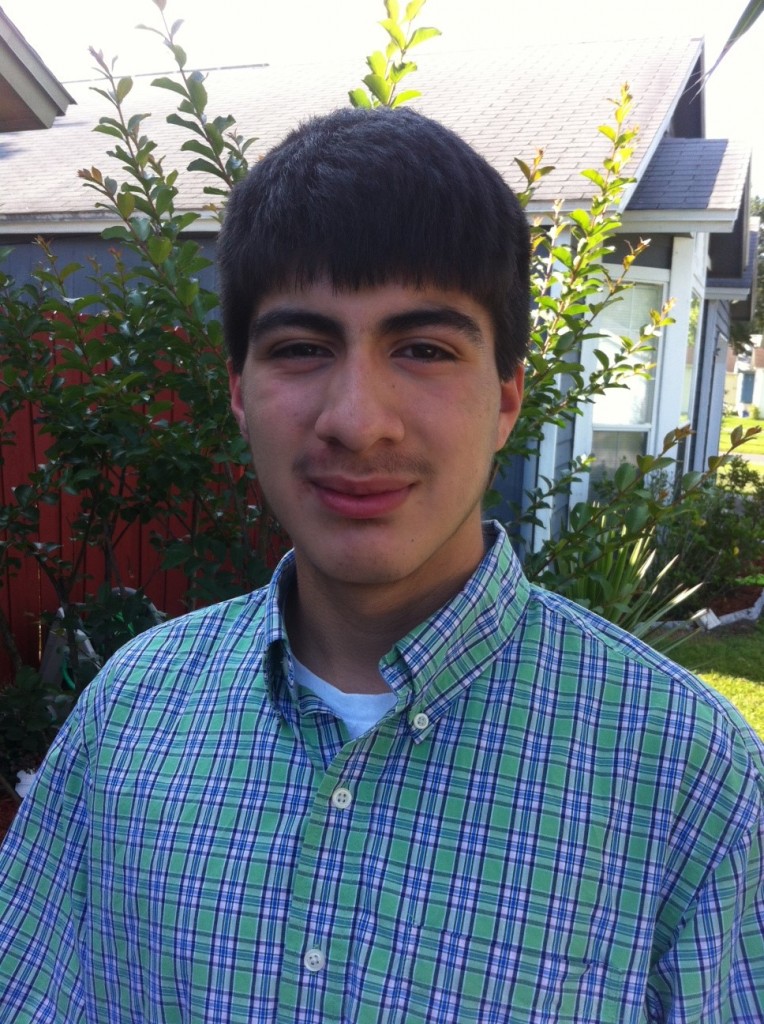
Kevin Gines
Kevin Gines is 15 years old. He attends a private school on a publicly-funded scholarship for low-income kids. He wants to be a Marine.
He’s dying to get into a Junior ROTC program to start getting prepped. But there’s one big hitch.
His small school in north Florida doesn’t have a JROTC program. And he can’t get into the JROTC program at a nearby public high school because the school district says no.
A district administrator for Clay County public schools told Kevin's father his son can’t participate because he’s not enrolled in the public school, Middleburg High.
“It’s not simply attending the after school drills,’’ wrote Lyle Bandy, director of exceptional student education, in an email to Jesse Gines (pronounced Hee-nez).
The program includes a sequence of Naval science classes during the school day that the student also must complete, Bandy said, citing the official Navy Junior Reserve Officers Training Corps website.
That was the end of it for Bandy, who did not respond to our requests for comment. But not for Gines.
He reached out to another public school with a JROTC program, Mandarin High, about 25 miles away in neighboring Duval County. A JROTC official there told him Kevin was welcome to join JROTC.
“In the past, that has taken place,’’ said Lt. Evaristo Gines (no relation to Kevin and Jesse), who is awaiting final word from his district supervisors. “All I know is that we’re in the business of trying to help the students.’’
Kevin may be caught in a gray area as the once hard-and-fast lines of public education continue to blur. Tim Tebow was homeschooled, but starred on a public high school football team. Private school students can take classes through the public Florida Virtual School. They also can participate in public school gifted programs. So why can’t Kevin join JROTC at a public school?
Jesse Gines points to state statutes that allow private school students to participate in extra-curricular activities, such as sports, at public schools. He also looked at the JROTC website and noted the requirements include a provision that lets students not enrolled in the host school become special cadets.
“It does not state denial of enrollment,’’ said Gines, a security guard at Florida State College in Jacksonville. “It does state opportunity for all schools.’’ (more…)
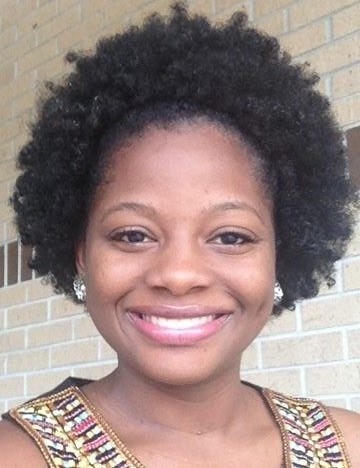
Denisha Merriweather
Former Step Up For Students scholarship student Denisha Merriweather, now attending the University of West Florida, received a standing ovation last night after speaking at the American Federation for Children school choice summit in Washington D.C. Here is the text of her prepared remarks. (Full disclosure: Step Up co-hosts this blog.)
Good evening! Thank you, Mr. Chavous, for your kind introduction.
My name is Denisha Merriweather, and I just finished my junior year at the University of West Florida in Pensacola right near the tip of Florida’s Panhandle. I am so proud to stand here before you today knowing that this time next year, I will be graduating college.
The truth is, when I was growing up, college was a dream that I didn’t even know I had. And if it weren’t for an educational option Florida gave me nine years ago, I wouldn’t be here today.
If you were to rewind my life back to my childhood, you would see someone very different. You would see someone who got in fights with her classmates. Someone destined to drop out before she made it through high school. Someone who didn’t even know what college was.
But thankfully, I did not become a statistic. Because of some help I received when I was 12 years old, my life has changed tremendously. (more…)
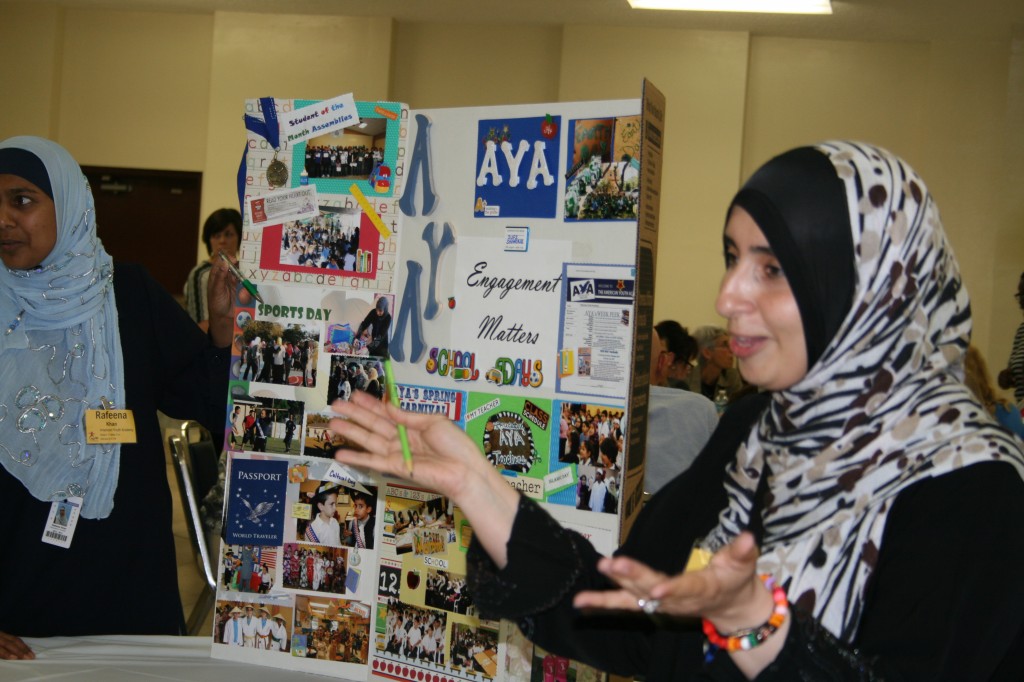
First-grade teacher Manal Ramadan explains to other educators how to get parents more involved at school. Ramadan, of American Youth Academy in north Tampa, was participating in Step Up For Students' first Success Partners Celebration Showcase at Incarnation Catholic School.
Teacher Tiffany Smith-Sutton noticed right away the difference it made when parents came to their child’s school to bake cupcakes or learn about fractions during Family Math Night.
Homework came back on time. Test scores went up. Classroom behavior improved.
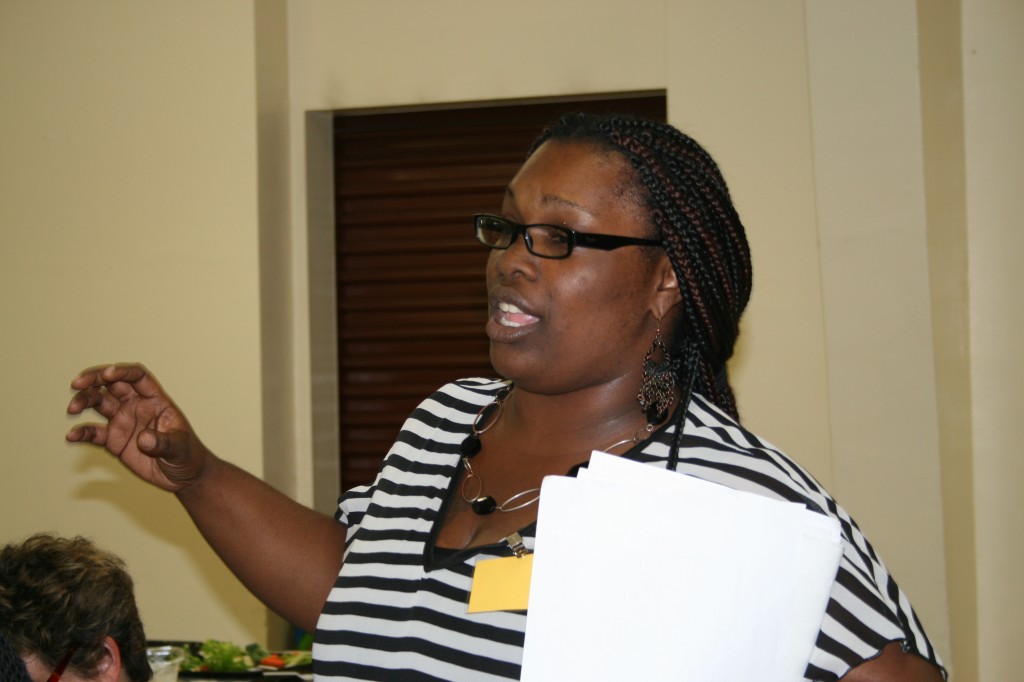
Tiffany Smith-Sutton of Bible Truth Ministries Academy talks about enticing parents to come to their child's classroom.
“With their parents there, students are good,’’ said Smith-Sutton, a first-year preschool and kindergarten instructor at Bible Truth Ministries Academy in Tampa.
And parents grow more involved in their child’s education.
It’s that connection that Step Up For Students, the nonprofit that oversees Florida’s tax credit scholarships, hopes to replicate in all 1,300 schools it works with through a free program designed to strengthen the bond between schools and families.
Success Partners started in 2011 with 10 private schools in Tampa that accept tax credit scholarships. The idea was to let each school come up with a way to forge better relationships with parents that meets their specific needs.
School teachers and administrators took part in a year-long training to learn how to create their parental engagement partnership plans. A key part is the Learning Compact, a web-based software application that introduces school leaders to new Common Core State Standards; state-of-the art learning and teaching strategies; and parent and student interventions.
Step Up For Students, which co-hosts this blog, added 17 more schools in the Tampa Bay area to the program in 2012-13. All but one of the schools came together last week to showcase what’s working and to inspire other educators to join the effort. The project will include more than 100 schools this fall.
“When parents are engaged in their children’s learning, children succeed,’’ said Carol Thomas, Step Up’s vice president for student learning and one of the creators of Success Partners. (more…)
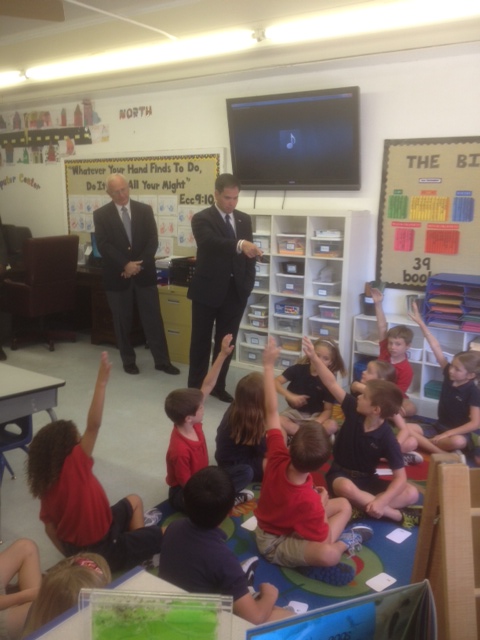
Sen. Rubio visited several classrooms at Florida College Academy, including this second-grade class. The students were in the midst of a social studies lesson on goods and services.
U.S. Sen. Marco Rubio, R-Fla., used a Tampa-area private school as a backdrop Tuesday to highlight his proposal for a federal school choice program that resembles Florida’s tax credit scholarships.
Under the bill he filed in February, low-income parents anywhere in the country would be able to defray private school tuition with scholarships funded by individuals and corporations who make donations in return for federal tax credits.“I think school choice means that every parent in America, irrespective of how much money you make or don’t make, should be allowed to put their kids in any educational environment they deem fit," Rubio said during an hour-long visit to Florida College Academy in Temple Terrace. "And I think what’s sad about the current status across most of our country is that the only people who don’t have school choice are the people who need it the most."
Rubio’s bill isn’t the first school choice bill considered at the federal level, but it may be the most sweeping. It would make private schools an option for low-income families in states that don’t currently have vouchers or tax credit scholarships, essentially bypassing resistance from teachers unions and school boards and, in some cases, state constitutions.
Individuals could give up to $4,500 a year to “scholarship granting organizations” in return for dollar-for-dollar tax credits. Corporations could give up to $100,000. The SGOs would award scholarships to students whose household incomes do not exceed 250 percent of the federal poverty level. For a family of four, that's $58,875 this year.
It's not clear what the per-scholarship amount would be. In Florida, a tax credit scholarship this year is valued at $4,335. (more…)
The cover story in this spring’s Philanthropy magazine opens with redefinED host John Kirtley walking beside a civil rights legend at the front of a record-setting 2010 school choice rally that urged Florida lawmakers to expand Tax Credit Scholarships for low-income students. It then drops backs a dozen years to trace his efforts at helping poor schoolchildren and, in the process, provides considerable detail about how and why he entered the arena of political action committees and campaign contributions.
The magazine is published by the Philanthropy Roundtable, which is directed by former Heritage Foundation educational affairs vice president Adam Meyerson, and the article certainly takes for granted that the public education system needs a profound push to get students back on track. But this story includes a variety of political and philanthropic voices, all of whom insist the charitable model for education reform must now apply business principles similar to those instituted by Kirtley and, more pointedly, be committed to stepping into the political arena to counter the powerful influences of teacher unions.
Those voices include New York City Mayor Michael Bloomberg, who tells Philanthropy: “We have an obligation to stand up for our children, for their lives, their futures, their hopes and dreams. And that means putting their needs first.”
 Al Lawson, an iconic Democratic lawmaker who served in the Florida Legislature for nearly three decades, has joined a nonprofit board that oversees state-supported scholarships for low-income schoolchildren.
Lawson was selected last week to serve on the corporate board of Step Up For Students, which is a state-approved “scholarship funding organization” that provides Tax Credit Scholarships this year to 51,000 students whose household income meets the threshold for free or reduced-price lunch. (Step Up For Students also oversees this blog.) The program is fueled by $229 million in corporate contributions that receive a dollar-for-dollar tax credit from the state.
“Throughout my legislative career, I was always concerned about students, especially minority students, who had no option when the regular school wasn’t working for them,” Lawson said. “The most important thing is to give these kids an opportunity to succeed, and this scholarship is one of those opportunities.”
Lawson was praised by Step Up board chairman John Kirtley, a Tampa businessman who helped persuade lawmakers to adopt the law in 2001. “Senator Lawson has been a smart, compassionate leader in Florida for years,” Kirtley said. “We’re thrilled Step Up and our families will benefit from his judgment and experience.”
Two-thirds of the students on the scholarship are black or Hispanic, the majority live in homes with only one parent, and their average household income is only 6 percent above poverty. State research shows they are the lowest academic performers in the public schools they left behind and, on their latest standardized test scores, they achieved the same gains in reading and math as students of all incomes nationally.
Lawson, who initially voted against the creation of the scholarship in 2001, told a newspaper reporter in 2007 that he could no longer oppose a learning option aimed at economically disadvantaged students with desperate needs: “When you have a lot of poor kids in your area that need help, and you have people saying, ‘We’re willing to work with these kids,’ ... it’s hard to say no.” By 2010, he was co-sponsor of a bill that expanded the program and made the closing argument on the Senate floor. (more…)
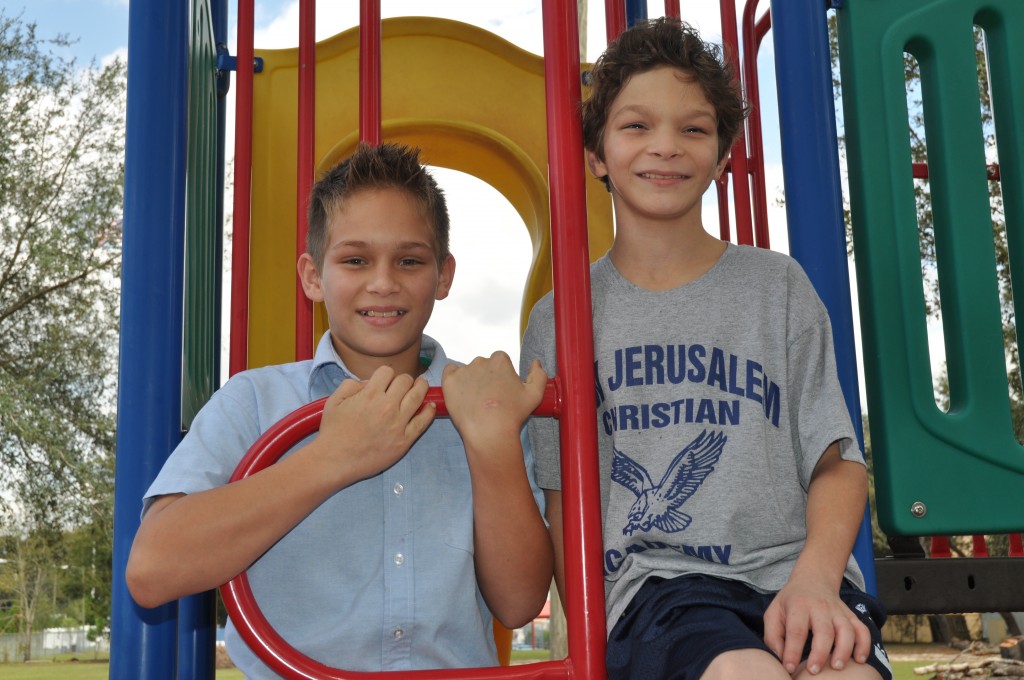
Benjamin and Isaiah
Isaiah Vargas entered the world addicted to drugs.
As the toxins were purged from his tiny body in the hospital, he had repeated seizures and fought to stay alive. His first two months of life were spent in the neonatal intensive care unit, said his grandmother, Cheryl Valladares.
“They didn’t give us a good prognosis on him,” she said. But Isaiah is now a fourth-grade Step Up For Students scholar at New Jerusalem Christian Academy in Seffner and excels academically. The 10-year-old student also plays the flute at school, and takes gymnastics at the local YMCA.
Still, he didn’t completely escape the perils of his mother’s drug addiction. Nor did she.
Isaiah’s eyes have been crossed since birth, which made sitting up and walking more of a challenge early on, and he would fall more often than a typical toddler. He also was born with spina bifida occulta, a spinal cord disorder resulting in sensory delays, so when he did fall, he couldn’t feel pain and still doesn’t feel it the way most people do. The disorder has made it difficult for his family to know when his injuries are significant. He still has difficulty with fine motor skills and shows little emotion.
For the third time, he had eye surgery in November 2012 in hopes of further straightening them. This is only some of what he copes with each day.
His mother didn't fare as well.
At age 18, Kristi became entangled in drugs, said her mother, Cheryl. She had grown up with a supportive family and gained a solid educational background, but started running with the wrong crowd, Cheryl said. She married another drug user when she was 25, and had Benjamin that same year.
Cheryl was awarded guardianship of her two grandsons in 2004 after her daughter had been arrested on previous drug charges. Shortly after, Cheryl lost her job managing a chiropractic office in Tampa where she was employed for seven years, she said, because her boss told her she would be out too much with Isaiah’s doctor’s appointments. She has worked at a much lower paying job without benefits ever since.
By the time Isaiah was 3 and in preschool, administrators and teachers at his neighborhood school were overwhelmed by his physical challenges and ultimately placed him in special education classes, despite his obvious intelligence, Cheryl said.
“His mind’s intact,” Cheryl would tell school teachers and administrators. “Please don’t treat him like he’s mentally handicapped.”
By first grade, Isaiah was given yet another lifeline by the educators in his family, who founded and still run New Jerusalem Christian Academy in Seffner, just outside of Tampa. (more…)
From the beginning, when my children were barely out of pull-ups, I was a school-choice mom. Living in a rural area, surrounded by cows and NASCAR flags, I insisted on driving 45 minutes one way, every day, so my kids could attend a Jewish preschool. Despite massive headaches caused by northern drivers on vacation, I knew the learning environment provided by the JCC was best for my kids, building a strong foundation to support lifelong learning.
 As preschool graduation neared, my husband and I chose an excellent, traditional public school for them to attend for their elementary years. This school was not located in our neighborhood and we couldn’t afford to move. But, because I was a teacher in that same district, I applied for the choice program and my children were accepted. It meant I had to transfer closer to home and still drive a half-hour out of my way, but I felt fortunate to place my children in a school that would meet their needs.
After leaving the teaching profession, I once again exercised my right to choose. We moved the kids into a private Jewish school for the rest of their elementary education. My husband and I had to live in a simpler neighborhood and forgo little luxuries, like fashionable shoes and date nights, to make it work, but our boys excelled in their new learning environment.
For middle school, our family moved yet again, prompting jokes that compared us to nomadic ancestors, and we applied for a magnet program. Once more, we were lucky. Our sons won the lottery and were accepted into a dynamic, academically rigorous program.
Who knows where we’ll end up for high school?
During these public school years, I’ve been a consistent PTSA member. Joining this organization seemed the best way to be involved in my children’s school. PTSA volunteers are dedicated parents, teachers, and students committed to helping schools raise needed funds that enhance learning opportunities. I joined to show my support for those who were educating my children, and to act as an important presence among teachers and administrators.
Over the years, though, I sadly watched the PTSA take positions that alienated moms like me, moms who choose. Sure, the organization is a presence at my sons’ middle school – they sell magnets for cars and snacks at sporting events. The PTSA agrees that magnets are a valid choice, but parents who choose other options are not represented by the PTSA and, worse yet, are regularly dismissed in alerts and agendas. I would often read PTSA literature and wonder out loud:
“Why is a parenting organization working against so many parents?”
But I’m not one to give up easily. (more…)

