 Stephen D. Sugarman, a longtime professor at the University of California Berkeley School of Law and a progressive icon of the education choice movement, died Dec. 26 after a four-year battle with kidney cancer. He was 79.
News of his death brought tributes from allies in the school choice movement, who saw him and fellow Berkeley law professor John E. (Jack) Coons as groundbreakers for choice and equal opportunity for low-income families.
“He dedicated an enormous amount of time and energy to empowering disadvantaged families with greater access to educational opportunity,” EdChoice policy director Jason Bedrick tweeted. “May his memory be a blessing.”
“Steve Sugarman, along with Jack Coons and Milton Friedman, are the founders of the modern education choice movement,” said Doug Tuthill, president of Step Up For Students, the nonprofit K-12 scholarship funding organization that hosts this blog. “Steve’s ideas about how choice programs should be structured and implemented are still guiding us today. He was a good friend and mentor. I will miss him.”
(To hear a three-part series of Tuthill’s podcasts featuring Professor Sugarman, click here, here, and here.)
A 1967 graduate of Northwestern University School of Law, Professor Sugarman joined the Berkeley law school in 1972 while helping Coons, his mentor, work on school finance issues. Along with William Clune, the pair co-wrote the book “Private Wealth and Public Education” and played a key role in litigating the case that equalized public education funding among California school districts.
Professor Sugarman and Coons teamed up again in 1978 to co-write “Education By Choice: The Case for Family Control.” The book argued in favor of scholarships for students of modest means, as opposed to universal scholarships associated with libertarians, sectarians and segregationists, according to a tribute to Professor Sugarman published by California Law Review.
As Professor Sugarman explained in a 2010 tribute to Coons, the primary goal was “to assure genuine choice to families who are financially disadvantaged, primarily working class and lower-income families.”
According to writings authored by Professor Sugarman’s colleagues to honor his work, the success of today’s school choice movement can be credited to his decades-long perseverance.
“Sugarman has toiled away,” wrote professors Daniel Farber and Mark Gergen.
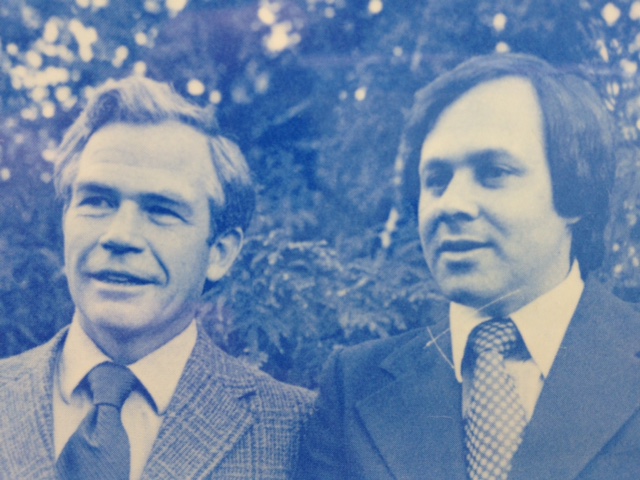
Berkeley Law professors Jack Coons and Stephen Sugarman, circa 1978.
“There were setbacks. He worked against a California referendum creating a school-choice plan that would have hurt non-wealthy families. There were roadblocks. As Sugarman explained in the 2010 tribute to Coons, states’ refusal to allow public funds to be used for religious schooling was a major roadblock to increasing school choices of non-wealthy families. Some of this resistance was based on state laws that prohibited public funds from being used for religious purposes, including religious schools. Sugarman (often working with Coons) designed and advocated for workarounds using devices such as tax credits and scholarships.”
In 2020, Chief Justice John Roberts echoed Professor Sugarman’s writings while rendering a 5-4 decision in Espinoza vs. Montana Department of Revenue.
A “State need not subsidize private education[,] . . . once a State decides to do so, it cannot disqualify some private schools solely because they are religious,” Roberts wrote in the majority decision, which sounded similar to Professor Sugarman’s arguments in favor of funding for faith-based charter schools.
Professor Sugarman began teaching at UC Berkeley School of Law in 1972, shortly after he and Coons helped litigate the original Serrano v. Priest school financing case. He served as associate dean from 1980 to 1982 and from 2004 to 2009. His specialty was social justice curriculum, including classes in torts and sports law. Additionally, he was a visiting professor at the London School of Economics, University College, London, and Columbia University.
Last April, his colleagues, family, friends and students gathered virtually to salute his long and illustrious career. At the end of the event, Professor Sugarman gave a salute of his own to those who had gathered to honor him, including his wife of “50 splendid years,” Karen Carlson.
“We law professors at Berkeley Law have the best job I can think of,” he said. “It’s beyond what I could have imagined when I came here.”
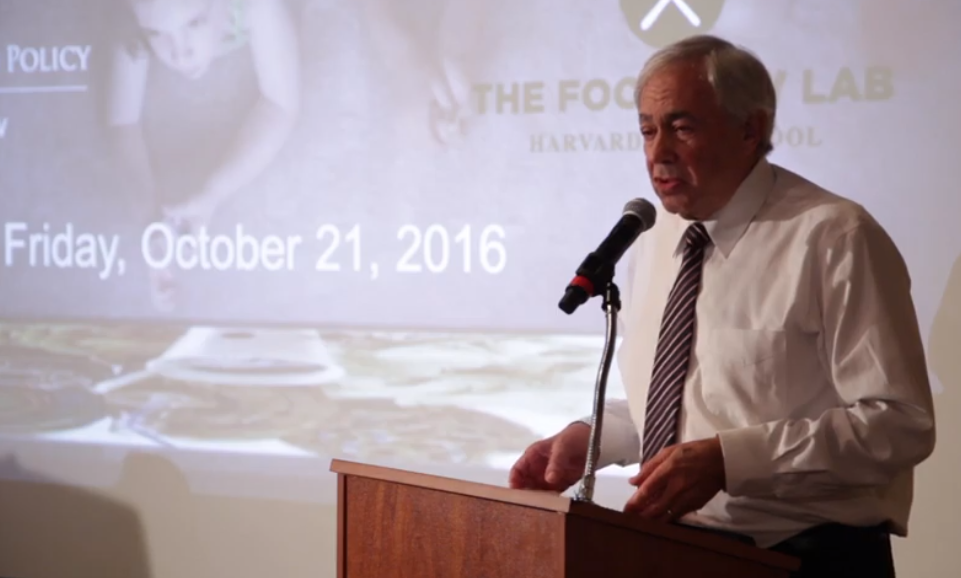
Berkeley Law giant Stephen Sugarman, an icon of the education choice movement, speaks about constitutional and regulatory frameworks at a Resnick Program and Harvard Law Lab’s conference in October 2016.
In the last of a three-part podcast series, Tuthill and Berkeley law professor Sugarman discuss the landmark Espinoza v. Montana Department of Revenue Supreme Court decision.
The June 2020 decision made it clear that a state cannot exclude religious schools from receiving funding from a program created by the state to fund private education. Chief Justice John Roberts clearly echoed Sugarman’s writing in the 5-4 decision.
In Sugarman’s analysis, there is a fundamental disagreement between the judges as to how the Court will continue to resolve the tension between the Free Exercise and Establishment clauses of the Constitution.
“Montana lawyers relied on (their interpretation of) the Blaine Amendment. They said, “not only do we not want to help these Catholic schools, we cannot. … and the Supreme Court said no; the Free Exercise Clause trumps ... the Blaine Amendment.”
EPISODE DETAILS:
· The history behind anti-Catholic sentiment after the Civil War that fueled the adoption of “Blaine Amendments” all over the country
· How Chief Justice Roberts’ decision in Espinoza echoed Sugarman’s argument for allowing faith-based organizations to operate charter schools
· Justices Breyer, Thomas and Alito’s writings in the Espinoza decision and the tension among different opinions
· How America differs from other modern countries that fund K-12-aged religious schools if they meet regulations
· Charles Glenn’s research suggesting that allowing families to educate their children in schools that reflect their religious faith strengthens the cohesion of democracy
LINKS MENTIONED:
Sugarman – Is it Unconstitutional to Prohibit Faith-Based Schools from Becoming Charter Schools?
Notable SCOTUS education choice decisions - Locke v. Davey
Notable SCOTUS education choice decisions -Trinity Lutheran v. Comer
Listen to Part 1 of Tuthill’s conversation with Sugarman here.
Listen to Part 2 of Tuthill’s conversation with Sugarman here.
Berkeley Law professors John C. Coons, left, and Stephen Sugarman, circa 1978.
On this episode, Tuthill continues his conversation with education choice pioneer Stephen Sugarman of Berkeley Law School. The two discuss Sugarman’s 2017 article in the Journal of Law and Religion in which Sugarman argues that prohibiting faith-based schools from becoming charter schools is unconstitutional under the First Amendment’s Establishment Clause.
Sugarman’s argument that it’s unconstitutional to exclude faith-based organizations from participating once a state has chosen to fund alternative education options was echoed earlier this year in the landmark Espinoza v. Montana Department of Revenue. On the podcast, he reviews the history of two notable U.S. Supreme Court cases, Locke v. Davey and Trinity Lutheran v. Comer, and how their precedents laid the groundwork for the Espinoza decision.
"There should be some room (for education choice funding) between what is forbidden by the Establishment Clause and what is required by the Free Exercise Clause. Funding choice (does) not violate the Establishment Clause.
EPISODE DETAILS:
· Sugarman’s 2017 article on the constitutionality of faith-based charter schools
· Locke v. Davey and Chief Justice Rehnquist’s explanation of the “play-of-the-joints” between the Establishment and Free Exercise clauses of the Constitution
· How teacher union hostility toward charter schools has caused the public to mistakenly think they’re private rather than public schools
· How a faith-based organization can operate a charter school by state policy while continuing to practice religious observances outside of classroom time
LINKS MENTIONED:
Sugarman: Is it unconstitutional to prohibit faith-based schools from becoming charter schools?
podcastED: SUFS President Doug Tuthill interviews education choice icon Stephen Sugarman – Part 1
You can watch Part 1 of Tuthill’s interview with Sugarman here.
The poor have been rebels, but they have never been anarchists; they have more interest than anyone else in there being some decent government.”
-- G.K. Chesterton, “The Man Who Was Thursday”
Our media rightly portray Education Secretary Betsy DeVos as enemy to our ancient order of officially branded “public” schools. She appears to feel a vocation to effect certain substantial changes that might prosper in our looming new society. In any case, for the moment I will assume so and agree that, to a point, if properly designed and focused, change in the system could be a blessing for many families and their children.
Paradoxically, I fear that, quite inadvertently, she has made herself an effective weapon for the defense and continuation of that relic system born of 19th century religious prejudice but today become the enemy of the poor and of any change that could empower such parents.
Ms. DeVos has been and appears yet to be a fervent apostle of the late Milton Friedman, sharing his free enterprise ideal for schooling as, in essence, just another arena of business, even if one of a unique sort.
I had the good fortune to meet Ms. DeVos in Michigan, probably in the late 1980s. The occasion for my visit was the organization of the campaign for her own designed and planned popular initiative for statewide school reform via vouchers for parents; someone had assumed that I would be a supporter. Sadly, the draft initiative was quite unsuited to the mission as I understood it – and would not be changed.
Before leaving for home, I explained my doubts to the good people who had invited me, drawing mixed reaction. I recall an elderly nun scolding me with the words of Pontius Pilate: “Quod scripsi, scripsi.” And she was right. What I had written I had written, and believed.
I still do.
The central problem with that first (then a successor) Michigan initiative was simply that Ms. DeVos had taken seriously the gospel of our mutual friend, Friedman, whom I had first known in Chicago as a repeat guest on my radio talk show. In his confident mind, both the end and means of any ideal system were to be settled, for schools as for any other salable good, with a virtually unregulated market, and, for reasons still unclear to me, he concluded that subsidies of equal value should go to all parents who applied regardless of their capacity to pay tuition.
With my wise collaborator (then and yet), Stephen Sugarman, I had always valued the efficiencies of markets, and, in the case of school, as a tool to rescue and empower poor and near-poor parents from futility and extend to them the experience of authority and responsibility already enjoyed in varying degrees by better-off families.
Any needs of the latter could be satisfied by graduated grants tending to zero at the high end of the income ladder. An ancillary hope was to diminish segregation by race as by wealth. Both purposes, we supposed, would be served if some modest fraction of every participating school’s admission decisions were to be made at random among all those applicants who had been rejected.
The DeVos Michigan-type initiative quickly became the model for free-marketeers in a dozen states, giving opponents the invitation to portray choice as a device for well-off parents to secure yet another free ride. Nor did it help then (or now) that such well-intended efforts for a wholly unregulated market secured most of the financial support for choice that came (and still does) from a relatively few wealthy sources.
Today’s activist centers promoting unregulated systems still label activists like ourselves “voucher left;” we, of course respond with “voucher right” while feeling truly entitled to claim “the middle.” By the way, all those Michigan-style initiatives were smashed at the polls.
That original DeVos choice has remained, for too many minds, the image of school choice as a right-wing threat to democracy, intended not for but against the poor. This calculated confusion has stayed well-financed by government unions, and, for a quarter-century, has remained an effective tranquilizer for the conscience of the open-minded but confused suburban voter who cherishes choice for his and her own and might otherwise be moved politically to take an interest in aiding the less lucky family.
Of course, I should and do applaud exceptions such as the schools of Milwaukee (per the great Howard Fuller) and those states, such as Florida which have painfully begun the rescue of the conscript family despite constant assault upon their efforts by the media at the coaxing of unions and pliant legislators.
For his own political reasons, Joe Biden – the could-be hero of the low-income family – has instead made clear his intention to avoid his chance to move the media debate over choice into the light of day. The opportunity for a federal clarification of the purpose and effective design of the necessary instruments of reform that can bring about the liberation of the family will be ignored. The fate of school choice will be left to the hero states.
Unless legislative leaders and governors receive some urgent vision, the poor family will unnecessarily remain an impotent institution. With the current population demand that we recognize the poor to be as human as the rest of us, might we instead begin to honor all parents as dignified fellow creatures?
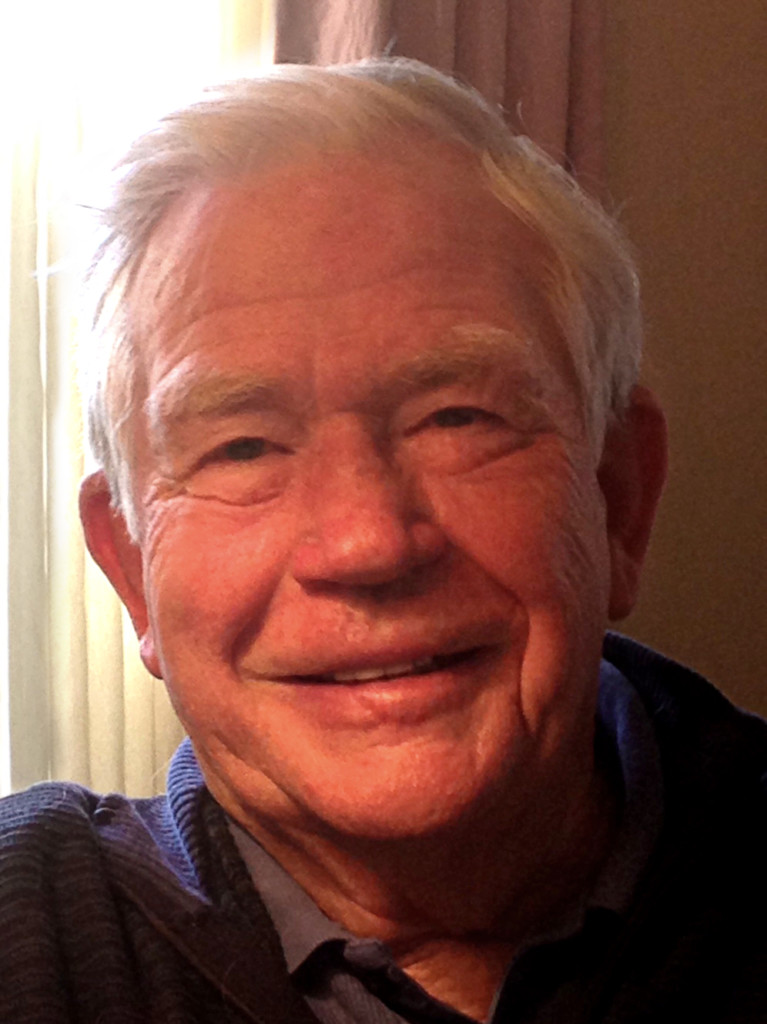
Coons
Before he became one of the most prolific and thoughtful school choice advocates in America, Jack Coons was a law professor who did what he could to promote civil rights in the 1960s.
His work on potential legal snags with boycotts led to a meeting with Dr. Martin Luther King Jr. His conscience led him to Selma. He participated in demonstrations in Chicago after violence erupted over calls for fair housing.
Those experiences helped fuel the sustained push for school choice that Coons and fellow Berkeley law professor Stephen Sugarman began in the late 1960s and continue to this day. Much of it is detailed for the first time in a fresh set of recorded interviews for Berkeley’s Oral History Center.
The civil rights movement “certainly enhanced my spirit for the job,” Coons told interviewer Martin Meeker, the center’s associate director, for a 165-page transcript. “The work that Steve Sugarman and I have done over the years has been very much animated, I think, by our feeling about its application to families who just haven’t got any authority over their children, because they don’t have any money. They have to send them to some kind of school, that’s required, and so they have to send them to the local public school, which is a junk pile, intellectually and socially. Forgive me for all the good schools in the country that just got defamed, but it’s very much driven our interests.”
Readers of redefinED know Jack Coons. Now 86, he has written dozens of posts, echoing themes he sowed and cultivated over a half-century. Nobody emphasizes parental empowerment as a primary impulse for choice in education more than Coons. Nobody’s better at highlighting the implications for schooling and everything else.
Berkeley’s Oral History Center interviews folks who have made history or been witnesses to key events in California, the West and across America. It’s an honor for Coons to have been selected.
Sugarman is honored, too, with an interview that also sheds light on an earlier era in the choice movement – and how curiously at odds it is with current, common perception.
Critics and the press often suggest school choice is solely a Milton Friedman-inspired impulse from the “right.” Those on the “left” who give the Coons and Sugarman interviews a read will find worldviews not too different from their own. (more…)
This brief essay is the fifth in a series describing forms of legislation available to any state that considers adopting vouchers for private school tuition. The previous essays focused upon rules governing admission to private schools, the dollar amount of the voucher, information required of participating schools, testing and disclosure of scores and related issues. These can be accessed here. My present subject is legislation that affects private school curriculum - with emphasis on rules that affect the teaching of virtue and civic values.
All states - sometimes with federal incentive - require the teaching in their public schools of what we can call “basics.” The education codes differ, but predictably include English, math, computers, and aspects of science that are not controversial. However, this relative uniformity diminishes with respect to value-laden subjects such as marriage, health, civics, history, sex and literature. Our media swarm with conflict over the values curriculum - what is required and what is forbidden - in public schools. And, quite apart from the statutory rules, what actually gets transmitted behind the classroom door of any public school can be a matter of mystery; it is sufficiently unpredictable that I have preferred to call it the “Bingo Curriculum.”
This gamble with the minds of children is, of course, another good reason to pity the fate of families whose relative poverty conscripts them to “free” schools of the state.
Private schools have been less burdened either by law or by complaint of those customers who, after all, have freely chosen them. State law does require such schools to address the secular basics, but generally in the broadest language; and they are left free - at the parent’s direction - to teach their own specific value systems and of course, religion. The private school can and does hire teachers who represent its distinctive vision of the good life. It does this in order to attract customers (parents) who share that view and who expect the school to help them pass it on to their child. The Waldorf, Montessori, Muslim, Catholic, Hebrew, and Lutheran school exist precisely for this purpose. The U.S. Supreme Court long ago recognized this distinctive power of parents - deriving outside secular law - to employ educators who transmit their own vision, which may well include basic ideas that are unavailable to the state.
But, if the state here lacks power, it does carry two kinds of responsibility. One is to protect the right of the child to a basic education; the other is to protect society from the risk of intellectual corruption that is always present in the adult-child relationship, including that of teacher-student. The state subsidy for the parent’s school choice thus will not be usable at schools that are either dysfunctional as basic educators or that consciously promote contempt for values foundational to civic order. (more…)

