Graduation requirements. Gov. Rick Scott signs into law the bill that creates additional diploma options that emphasize career education. Coverage from Tampa Bay Times, Orlando Sentinel, Associated Press, News Service of Florida, Northwest Florida Daily News, Tallahassee Democrat, Sarasota Herald Tribune, StateImpact Florida, WFSU.
 Magnet schools. Parents are pushing the Palm Beach County school district to expand a popular arts magnet. Palm Beach Post.
IB. Largo High in Pinellas gets official certification for its IB program. Tampa Bay Times.
Students with disabilities. StateImpact Florida writes up the bill that would give parents more power over their child's IEP. Some experts say the Hillsborough school district is unique in not allowing parents to make an audio recording of IEP meetings, reports the Tampa Bay Times.
Teacher pay. Palm Beach County teachers and district official remain skeptical about potential raises coming from the state, reports the Palm Beach Post. Gov. Scott says he's going to the mat for his proposal for across-the-board raises, reports the Tampa Tribune.
Teacher evals. Hernando Teacher of the Year highlights flaws in the new system. Tampa Bay Times. (more…)
Florida Formula. South Carolina is looking at third-grade retention and other parts of the Florida model. The State.
Parent trigger. The Senate Education Committee passes the parent trigger along - altogether now - party lines. The Buzz, WFSU, Tallahassee Democrat.
Charter schools. StateImpact Florida writes up a bill sponsored by Sen. Bill Montford, D-Tallahassee, that would allow districts to create charter-like "innovation schools." (The Senate Education Committee passed the bill unanimously.) The Orlando Sentinel notes passages of another charter bill that would beef up accountability requirements.
Dual enrollment. The DOE picks the College of Central Florida to create a website promoting dual enrollment. Ocala Star Banner. (more…)
Virtual school. Florida Virtual School supporters fear a tweak in how per-course funding is calculated will result in big cuts. The Buzz and Tallahassee Democrat.
Charter schools. A Palm Beach County charter school is appealing the school board's decision to close it, saying the district didn't do enough to help it, writes the Palm Beach Post. Converting a Lake County Montessori school into a charter would be a good thing, writes Orlando Sentinel columnist Lauren Ritchie.
School security. Gradebook: "A bill that would require Florida schools to have an armed officer on campus unless a principal designates an employee with a concealed carry permit to have a weapon has passed its first hurdle in the state House." More from The Buzz, Miami Herald Sarasota Herald Tribune, Associated Press.
The Florida model. South Carolina should pay attention to what Florida is doing; the Palmetto State spends more per student and yet its average performance for all students is below the average for low-income students in Florida. Charleston City Paper.
Diploma options. The House Education Committee likes the idea. StateImpact Florida. (more…)

Emerson
The Fordham Institute took Florida’s McKay Coalition to task Monday for a survey the institute says "stoked emotions" about state tests at private schools that serve disabled students on state vouchers. In a post by parental choice program director Adam Emerson, the Institute chided the coalition for resisting academic assessment for the McKay Scholarship, which this year serves more than 26,000 students with learning disabilities and physical limitations.
“Virtually no accountability measures … exist in most of the nation’s special-education voucher programs, including the largest such program in the United States, Florida’s McKay Scholarship for Students with Disabilities,” Emerson wrote. “And the coalition of schools that oversees the McKay program appears to want to keep it that way — and it’s wrong to do so.”
Fordham remains a strong national supporter of parental choice, including charter schools, school vouchers and tax credit scholarships. But the institute also has called on the learning options to be held to account for the achievement of their students.
In its recent report, “Red Tape or Red Herring,” Fordham looked at the participation rate of private schools in voucher and tax credit scholarship programs in 11 states and surveys from 241 private schools that do and don’t participate, and found that testing requirements are not a significant deterrent. Only a quarter of the schools ranked state-required testing as a “very” or “extremely” important factor. The response rate among participating schools was 73 percent.
McKay countered with its own yes-or-no survey of Florida private schools participating in the state scholarship for disabled students. Its response rate was 40 percent. (more…)
Backers of a bill that would give Florida students with disabilities quicker access to state-funded vouchers for private schools say they need another year to work on the proposal.
Senate Bill 172, filed by Sen. Miguel Diaz de la Portilla, R-Miami, was withdrawn from consideration last week.
The bill called for removing the rule that students spend a year in a Florida public school immediately prior to becoming eligible for the McKay Scholarship. Advocates support that provision whole-heartedly, but some feared potential complications between parents and school districts.
“We want to go back and rework it a little,’’ said Steve Hicks, president of the Coalition of McKay Scholarship Schools, which presents private schools that accept the vouchers.
The plan is to gather stakeholders and meet during the year before presenting a new bill for the next legislative session, he said.
Sen. Diaz de la Portilla could not be reached for comment.
Common Core. To conservatives: "I suggest you give up the bashing of a critically important reform simply because your political enemy endorsed it." EdFly Blog.
 Charter schools. The highly successful Pembroke Pines charter school system says it deserves a share of the Broward school district's capital improvement dollars, reports the Miami Herald. The Pinellas school district will vote yet again Tuesday on whether to shutter the long-troubled Imagine charter school in St. Petersburg, reports the Tampa Bay Times. A Palm Coast charter hopes to bounce back from an F, reports the Daytona Beach News Journal.
Teacher evaluations. Senate President Don Gaetz says the new evals may be too complicated and, combined with other big changes in education, could put the system at risk of imploding, reports the Florida Current. Washington Post ed blogger Valerie Strauss uses Gaetz's comments to tee off on Florida ed reform.
More on teacher pay. Gov. Rick Scott's proposal runs up against competing demands, reports the Tampa Bay Times. It "would provide welcome relief" but doesn't make up for "all of the damage this governor has done to public education," writes the Times editorial board. Cash shows respect, writes Times columnist Dan DeWitt. It'll help show teachers are valued, writes the Pensacola News Journal. Give Scott credit for supporting merit pay and across-the-board raises, writes the Daytona Beach News Journal. His commitment needs to be more than a one-time gimmick, writes the Palm Beach Post. A good thing no matter the motivation, writes the Gainesville Sun. Transparent pandering, writes the Panama City News Herald. "Met with skepticism," reports the Tampa Tribune. Lawmakers should be careful about both teacher raises and a proposal to transform the state retirement system, writes the Ocala Star Banner.
Satanists. They like the school prayer bill Scott signed last year. Really. Coverage from Tallahassee Democrat and Associated Press. (more…)
Top 10 again. Education Week ranks Florida No. 6 this year in its annual Quality Counts report. redefinED. Orlando Sentinel. Associated Press.
Teacher evals. StateImpact Florida writes about the new Gates study on the best way to identify the best teachers. SchoolZone notes it. Jay P. Greene rips it. District officials in Palm Beach County don’t feel good about the new, state-mandated system, reports the South Florida Sun Sentinel.
Common Core. Reformers have to win the messaging battle, writes Mike Thomas at the EdFly Blog: “Our success in passing school reforms has had more to do with prevailing in legislative bodies than prevailing in the public arena. This has led to a dangerous neglect of the need for marketing. We now are paying the price for that as our opponents vigorously fight back, defining reform as an attack on public schools that is degrading the quality of education. That this isn’t true doesn’t matter. Sound bites often trump data.”
 Rezoning retreat. After affluent parents complain, Seminole district officials back away from plans to equalize the number of low-income students at each school. Orlando Sentinel.
Fire them. Hillsborough Superintendent MaryEllen Elia recommends firing two aides and demoting a principal and assistant principal in the aftermath of the drowning of a special needs student. Tampa Bay Times. Tampa Tribune.
More school safety. Tampa Bay Times. StateImpact Florida. Panama City News Herald. (more…)
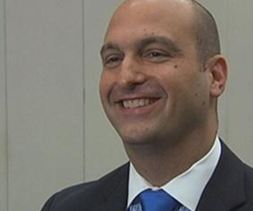
Vitti
Charter school debate. Interesting debate in Duval over the performance of charter schools. Says new superintendent Nikolai Vitti, according to the Florida Times Union: “I want the conversation in Florida and in Jacksonville to shift toward what’s best for kids, what’s best for communities, and not a conversation driven by ideology. The conversation in Florida regarding charters has been too focused and dominated by ideology and not data.”
More paths to graduation. Sen. John Legg, R-New Port Richey, says the ed policy committee will look at expanding the list of courses that can satisfy graduation requirements and find ways to make 11th and 12th grades more meaningful, reports Gradebook.
Disabled students. The Hillsborough school district asks for dismissal of a case involving the death of a disabled 7-year-old on a school bus. Tampa Bay Times. More from the Tampa Tribune. New school board chair April Griffin says finding solutions to the district’s problems with disabled students is a top priority, the Tribune also reports.
More class size. Alachua County is one of the districts most out of compliance, reports the Gainesville Sun. So is Marion County, reports the Ocala Star Banner.
From ports to … education? Democrats criticize Gov. Rick Scott’s position on a pending strike by Florida port workers, then pivot to get in a word about education funding. The Buzz.
Synthetic marijuana. School officials in Santa Rosa see progress in a crackdown on students who use “spice.” Pensacola News Journal.
Ed stories to watch in 2013. StateImpact Florida.

Shirley Ford
The mom on stage described how she and other low-income parents rode a bus through the darkness - six hours, L.A. to Sacramento, kids still in pajamas - to plead their case to power. In the halls of the legislature, people opposed to the idea of a parent trigger accused them of being ignorant, of not understanding how schools work or how laws are made. Some called them a “lynch mob.”
Then, Shirley Ford said, there was this sad reality:
“I would have thought that the PTA would have been beside me,” Ford said. But it wasn’t. “I’m not PTA bashing when I say this,” she continued. “To see that the PTAs were on the opposite side of what we were fighting for was another level of awareness of how the system is.”
Ford is a member of Parent Revolution, the left-leaning group that is advocating for parent trigger laws around the country. She spoke last week at the Jeb Bush education summit, sharing the stage with former California state Sen. Gloria Romero and moderator Campbell Brown. Her remarks, plain spoken and passionate and sometimes interrupted by tears, touched on a point that is vital and obvious and yet too often obscured.
Parents are not a monolith.
The divides are as apparent as the different dynamics that play out in schools on either side of town. In the affluent suburbs, a lot is going right. There is stability in the teaching corps. The vast majority of kids don’t have issues with basic literacy. The high schools are stocked with Advanced Placement classes. And there, behind it all, are legions of savvy, wonderfully dogged, politically connected parents who know how to mobilize when their schools are shortchanged.
The view is starker from the other side of the tracks. A parent in a low-income neighborhood is more likely to see far more teacher turnover in her school – along with far more rookies, subs and dancing lemons. She’ll see far more students labeled disabled and far fewer AP offerings. Issues like these plague many high-poverty schools, yet they don’t get much attention from school boards or news media or, frankly, from established parent groups like the PTA. (more…)
Charter school critics got a lot of mileage from a U.S. Government Accounting Office report last summer that found charter schools enrolled fewer students with disabilities than traditional public schools. But a new report (hat tip: EdWeek) offers even more reason why we should all take a more careful look before leaping to conclusions.
The Center for Reinventing Public Education found the numbers for middle and high schools in New York state were on par between the two sectors. And while fewer students with disabilities were enrolling in charter elementary schools, that didn't mean discrimination. Wrote the center:
The fact that only charter elementary schools systematically enroll lower proportions of students with disabilities than their district-run counterparts calls into question whether discrimination drives lower enrollment. There is no obvious reason to think that charter elementary leaders would be more likely to discriminate than charter middle and high school leaders. Indeed, the fact that state testing does not begin until the third grade suggests that elementary schools have arguably the weakest incentives to discriminate against students with disabilities. The grade-span differences highlight a need to examine what is different about the policies and practices of special education and the preferences of parents with students with disabilities at the elementary grades versus the upper grades. Many causes other than discrimination could be affecting enrollment.
It may be that charter schools are simply less likely to identify students as having disabilities that qualify them for special education in the first place, or that specialized preschool programs with designated district feeder schools lead parents to opt for the district school over the charter school. Or it may be that federally mandated district counseling for families of kids with disabilities creates opportunities for the district to encourage these families to stay in district-run schools, whereas non–special education students’ families never get such advice. None of these potential contributors to elementary level underenrollment in charter schools have been explored sufficiently, if at all.
The GAO report was written about widely, from the New York Times and Wall Street Journal to outlets in Florida. It'll be interesting to see what kind of coverage the new report gets.

