Critiquing the Florida Formula. Matt Di Carlo at the Shanker Blog is a critic to be taken seriously. In his latest post, he looks at the research that has evaluated different components in Florida’s reform effort, including the competitive pressures from vouchers, tax credit scholarships and charter schools. “As usual,” he writes, “it is a far more nuanced picture than supporters (and critics) would have you believe.”
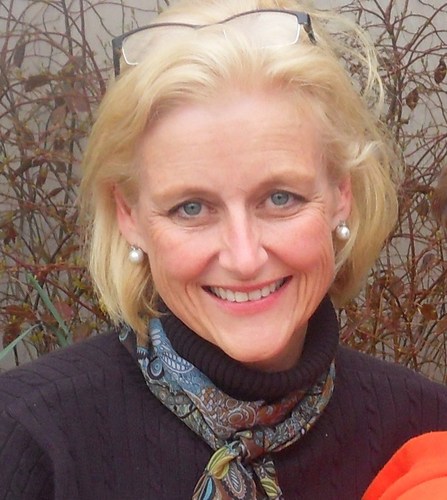
Oropeza
Legislative wish list. What do education groups want from the coming legislative session? Florida Voices asks Ruth Melton at the Florida School Boards Association; Patricia Levesque at the Foundation for Florida’s Future; Mindy Gould at the Florida PTA; and Kathleen Oropeza at Fund Education Now. Lawmakers, Oropeza writes, are out to “starve public education” and have been “intentionally bringing districts to the brink of catastrophe.”
StudentsFirst report card. Coverage from Florida Today, Orlando Sentinel, StateImpact Florida, Education Week, Fort Myers News Press. Sherman Dorn’s take here.
Online testing problems. They’re still affecting the DOE’s FAIR system. Gradebook.
Jeb Bush headed to Arkansas. He’s scheduled to visit for National School Choice Week, reports Arkansasmatters.com.
More Newtown reaction. Tampa Bay Times. Palm Beach Post. Lakeland Ledger. In Lake County, a school board member wants teachers and principals to carry district-purchased guns, reports the Orlando Sentinel. In Manatee, the interim superintendent wants local law enforcement to inspect every inch of every public school campus, reports the Bradenton Herald.
Delinquency. In public schools, a Florida Department of Juvenile Justice report finds it's down by nearly half over the last eight years, reports News Service of Florida. (more…)
 Florida earns a C- for policies and program aimed at empowering parents, but that’s good enough for a No. 4 ranking nationally, according to a report card released today by StudentsFirst.
Overall, the state earned a No. 2 rank – and a B- grade – from the report, which looked at progress in three areas: elevating the teaching profession; empowering parents; and spending wisely/governing well. Louisiana came in at No. 1, also with a B- grade. A dozen states earned F’s. StudentsFirst is led by Michelle Rhee.
In the parent category, Florida racked up points for grading public schools and requiring public school parents to be notified when their kids are placed with ineffective teachers. But the group says Florida should require consent from parents whose children are placed with such teachers. It also says Florida should pass a parent trigger bill.
Among other areas, Florida got dinged a bit for its tax credit scholarship program (which is administered by Step Up For Students, the co-host of this blog). In short, StudentsFirst doesn’t think the program is funded enough or accountable enough, although the report doesn’t spell out how it falls short on the latter.
The program is available to all low-income students – which we think is a good thing - but the report says it should be limited to low-income students in “chronically failing public schools.” The report also says Florida should amend the program to provide a scholarship amount “that is competitive with private school tuition.” The amount this year, $4,335, is far below the amount spent per student in Florida public schools.
With charter schools, the report says Florida should allow other bodies besides school boards to be authorizers (although that involves issues with the state constitution). It also says the state should reform "skimming provisions" that allow school districts to keep up to 5 percent of charter school funding.
School funding. Gov. Rick Scott wants to spend additional revenue on public schools, reports the Florida Current. Funding and other education issues are woven through a mid-term progress report on Scott from the Tampa Bay Times.
 Rezoning. The Seminole school district is swamped with proposals, reports Orlando Sentinel. Affluent parents respond with “snobbery,” writes Sentinel columnist Beth Kassab. (Image from coolsprings.com)
Florida gets a B- for ed reform policies, according to a StudentsFirst report out today, the New York Times reports. That ties it with Louisiana for the top grade. A dozen states get F’s.
Best year ever. 2012 was a year of unprecedented accomplishments for the Miami-Dade school district, writes Superintendent Alberto Carvalho in the Miami Herald.
Career and technical. The Manatee school districts spends $44 million on a new main campus for Manatee Technical Institute. Bradenton Herald.
School grading. Poor grades for Polk high schools should be taken seriously. Lakeland Ledger.
School security. Editorials from Tampa Bay Times, Tampa Tribune, Palm Beach Post. More coverage from the Tribune and South Florida Sun Sentinel.
School enrollment. It's up in public schools by 30,000 statewide, in part because of declines in private schools. Palm Beach Post. A district audit finds a Palm Springs charter school overstated its enrollment, resulting in a $160,000 overpayment, the Palm Beach Post also reports.
Home schooling. Enough with the stereotypes, writes Mike Thomas at the EdFly Blog. (more…)
Rick Scott at the BOE. Not much to report beyond board chair Gary Chartrand’s brief dig at No Child Left Behind. redefinED here. Gradebook here. Orlando Sentinel here. AP here. Sun-Sentinel here.
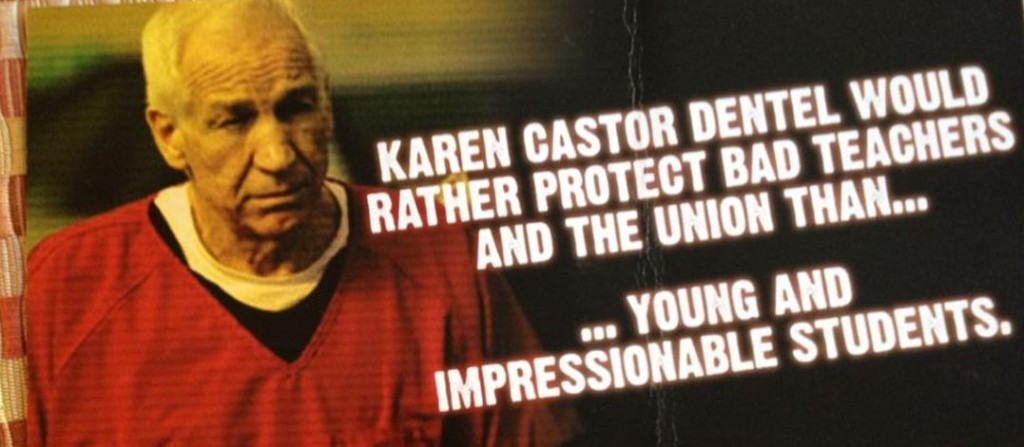 More on that ad. The campaign ad that seeks to tie a Democratic state House candidate with Jerry Sandusky is the kicker to this piece by Tampa Bay Times columnist Daniel Ruth. AP picks up the story.
Think tank doesn’t like Amendment 8. Add Education Sector to the list of those who don’t like Amendment 8 and say it’s about vouchers – but could benefit from more homework. This post on the Ed Sector blog, the Quick and the Ed, is written as if Florida doesn’t already have private-school vouchers.
StudentsFirst endorsement. Michelle Rhee’s group likes Aaron Bean, the Florida Times Union reports, in a northeast Florida race for state senate.
 Bill Cosby has joined the board of directors of StudentsFirst, the education reform group founded by Michelle Rhee.
In a statement emailed to StudentsFirst supporters a few minutes ago, Cosby, a school choice supporter, wrote: "Enough is enough. I've seen the statistics on where American students rank in the world. I've heard the stories of children being sent off to schools that are nothing more than dropout factories, and our youth end up back out on the street uneducated and unprepared for life. I refuse to sit back and watch this happen. That's why I'm joining the board of StudentsFirst and will be working alongside you and StudentsFirst members across the nation to put children's needs first."
According to Education Week, StudentsFirst named other board members today, including Connie Chung, Joel Klein, Roland Martin and Jalen Rose.
Diane Ravitch called Cosby's move "the worst news of the day."
"This is a coup for her (Michelle Rhee) in her efforts to demean our nation’s teachers and promote the privatization of American public education," she wrote on her blog. "He is clearly uninformed about what she is doing. If you know how to contact him, do so. This is not in character for him."
Editor's note: For those new to redefinED, "blog stars" is our occasional roundup of good stuff from other education blogs.
Jay P. Greene's Blog: The Way of the Future: Coursera
Watch this video from start to finish from Coursera co-founder Daphne Koller as in right now:
I’m calling it- I think that we’ve passed Clayton Christensen’s inflection point where the disruptive technology (online learning) is better than the dominant technology (traditional universities). The required mastery element that Koller describes in the video seals the deal by itself. I’m willing to bet that it is simply a matter of performing high quality evaluations and getting the results for documentation.
Second while most of the commentary on these developments naturally focuses on higher education, which is in for a major disruption, we need to start thinking about the implications of these developments for K-12. Coursera courses are available for free to anyone. K-12 students can take these courses, and other courses suited to various educational levels will certainly be developed. Full post here.
Jay Mathews' Class Struggle: Let charters bloom. Let teachers be creative.
Petrazzuolo says if a charter doesn’t offer innovative programs, that is one reason not to approve it. ... Successful charters have exposed the weakness of that argument.
When the KIPP DC: KEY Academy began in a Southeast Washington church basement in 2001, it offered a standard curriculum of math, science, English and social studies, plus two hours a day of homework and strict discipline, very old school. Before long, despite the lack of innovation, its students were performing far above the level of their neighbors in regular D.C. public schools.
What is the secret for success? The best charters and regular schools are careful about whom they pick to supervise and teach. Most schools say they have the best principals and instructors. They say they give them strong support. The best schools actually do that. Full post here. (more…)
 Michelle Rhee and I are members of the same political tribe. We’re progressive Democrats. Throughout most of the 1800s and into the mid-1970s, our tribe supported school choice, including allowing parents to use public funds to help pay for private school tuition. Our group’s position began to change in the late 1960s as urban teachers, who are core tribal members, began to unionize. By the time Jimmy Carter ran for president in 1976, the transition was complete. Progressive Democrats opposed school choice.
In the late 1970s and early 1980s, school districts began using within-district school choice to promote voluntary desegregation, so our tribal position began to gradually evolve. I say gradually because in 1986, I led a floor fight at the annual National Education Association convention, on behalf of then-NEA President Mary Hatwood Futrell, for a resolution endorsing within-district magnet schools. The opposition argued that magnet schools were voucher programs which siphoned off money and the best students from neighborhood schools. The resolution failed.
As the number of unionized teachers working in magnet schools expanded, the NEA eventually embraced magnet schools and other within-district school choice programs, and progressive Democrats followed. Today most progressive Democrats support within-district school choice programs that employ unionized teachers, and they oppose publicly-funded private school choice. But this latter position is evolving. Increasingly, core progressive constituencies, such as African-Americans and Hispanics, are embracing full school choice, as are some progressive leaders.
At Florida Gov. Jeb Bush’s annual education reform conference a few years ago, Michelle Rhee began her morning speech by saying she was hired in Washington D.C. to reverse the flow of students into charter schools. But in her new position as founder and CEO of StudentsFirst, Michelle is slowly becoming more open to school choice. (more…)

