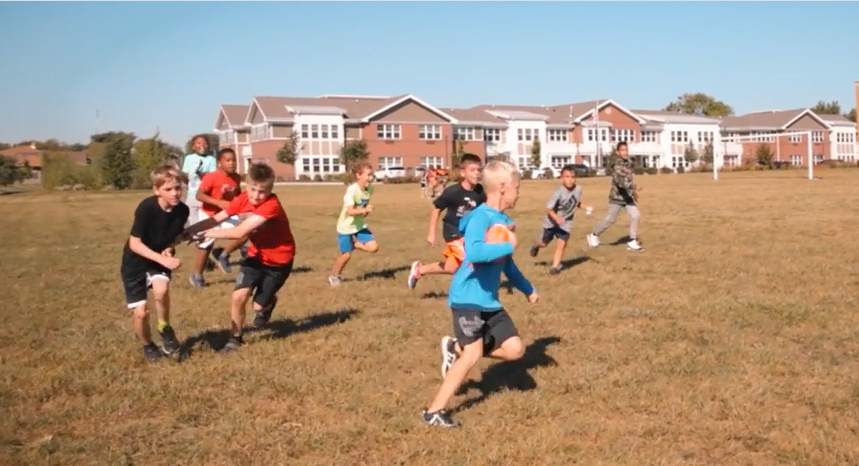
Southwest Chicago Christian Schools, with campuses in Tinley Park, Oak Lawn and Palos Heights, is a Christ-centered learning community intent on the restoration of God's world, focusing on academic achievement and discipleship where caring teachers provide a challenging curriculum.
Editor’s note: This commentary, which references Florida’s school choice programs, appeared Thursday on wirepoints.org.
Leading into Chicago’s most violent Memorial Day weekend in five years – leaving 42 wounded and nine dead – the city suspended days off for cops and played up neighborhood hang-outs with live DJs.
For teens and very young adults at risk as perpetrators or victims of violence, the idea was “give them something to do.” It didn’t work. The dismaying body count included two mass shootings. After the holiday weekend’s tragedies, one Chicagoan said, “The root issue is lack of opportunities. You got a lot of young people that don’t have parental help.”
Now we’re getting warm. How to create opportunity is debated fiercely. Perhaps that’s as it should be. But really, we’re running out of time. So let’s just say it: Opportunity for at-risk kids has to include full-on, raging K-12 school choice. So that children from low-income households can benefit from high-expectations learning and get on a path to career and life success.
Without that shift in priorities, things will continue as they are. No one can claim urban violence will quickly or fully cease once stronger school choice programs such as school vouchers take hold in Illinois.
But we need to make pathways to successful adult life wider and longer. No one could be happy with the baseline conditions. Eighty percent of Chicago homicide victims are blacks and 70% or more of known perps are Black, according to Chicago Police data. Black population in the city has declined 34% between the 1.2 million of 1980 and the nearly 800,000 of 2021.
Together, parents, students, teachers, and school administrators are responsible for academic outcomes. In Chicago Public Schools, those outcomes are bleak, though. Only 17% of K-8 black students in CPS and 25% of Latino students can read at grade level, according to 2019 State Report Card data.
With results like that, you wouldn’t expect anyone to get high marks, including teachers.
To continue reading, click here.

Jeff Laszloffy, president and CEO of the Montana Family Foundation, speaks to a crowd at the Montana school choice rally on the steps of the State Capitol in January 2017. PHOTO: Thom Bridge / Independent Record
Editor’s note: This commentary from Jesse Ramos, community engagement director at Americans for Prosperity-Montana, appeared Sunday on missoulian.com.
In my last column, I advocated for an education system where the money we spend on each student follows them, allowing them to prioritize their individual needs.
I have been told I am being naive and idealistic. Such an approach would cost too much. We would have to tear down the current education system. These criticisms are common defenses of the status quo.
Montana already has the foundation for a better education system. While there is much work to be done, Montana is already moving in the right direction.
Montana’s Tax Credit Scholarships program has been around since 2015, but the program was severely underutilized and overly constrained until last year. Tax credit scholarships provide an opportunity for more Montana families to choose an education that fits the unique needs of their children by providing a tax credit-funded scholarship.
Tax credit scholarships allow Montana taxpayers the choice to have a portion of their taxes allocated to a student scholarship non-profit. That organization then provides those funds to families to choose the right school for their children. Everyone wins.
These tax credits provide the opportunity for personalized education — which has historically only been afforded to the wealthy — to any Montana family that can get access to funds. Tax-credit scholarships allow students to succeed in the classroom and empower them to be better citizens.
To continue reading, click here.
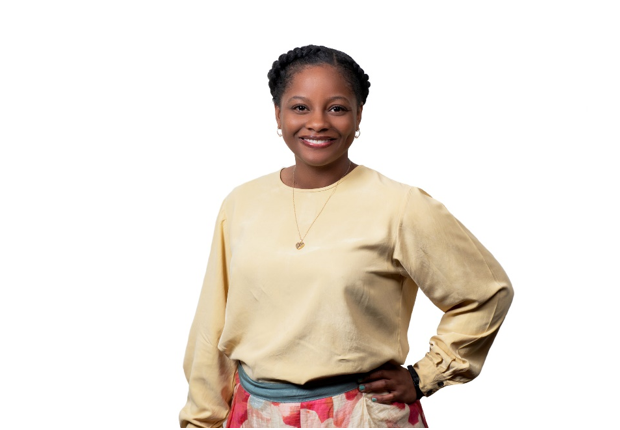 Denisha Merriweather, director of public relations and content marketing at the American Federation for Children and founder of Black Minds Matter, made another guest appearance this week on the Ricochet Audio Network.
On this episode, Merriweather, a former Florida Tax Credit Scholarship recipient, shares with Ricochet hosts Andrew Gutmann and Beth Feeley the life-changing impact a quality education had on her life.
The former political appointee at the U.S. Department of Education also discusses the recent Old Parkland Conference, self-described as a gathering to discuss alternative proven approaches to tackling the challenges facing Black Americans today, which featured Clarence Thomas, Glenn Loury, Jason Riley, Ian Rowe and Shelby Steele.
You can listen to the podcast here.
 Editor’s note: This student profile first appeared on Step Up For Students’ Marketing blog.
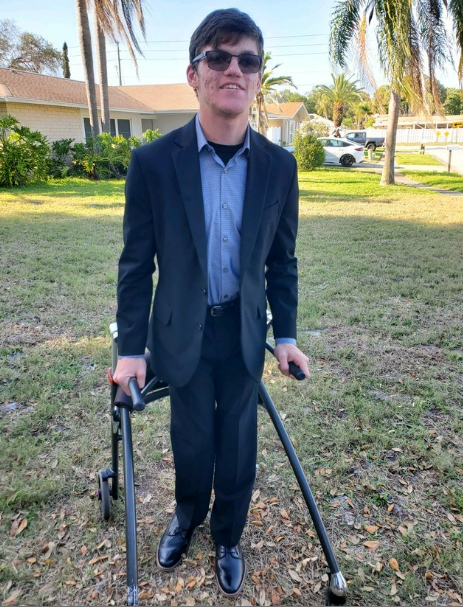
Dylan Quessenberry was 15 when he walked up a flight of stairs for the first time.
It was 20 steps, linking two floors at his school. But for Dylan, who has cerebral palsy, that staircase was more than just a route to the cafeteria at Learning Independence For Tomorrow (LiFT) Academy, a private K-12 school that serves neurodiverse students.
Those 20 steps were part of his journey to what he called “independence,” something he sought when he joined the school in the fifth grade on a Family Empowerment Scholarship for Students with Unique Abilities (formerly the Gardiner Scholarship).
“It was a defining moment in his life,” LiFT Principal Holly Andrade said. “A massive milestone.”
Dylan, now 18 and a senior at LiFT, recently recalled that day as if he were still standing at the summit, sweaty and spent and filled with a sense of accomplishment that few can understand.
Like a marathoner on race day, Dylan woke that morning knowing the years of work he put in with his physical therapist, Valerie, were about to pay off.
“Those stairs,” he thought, “are mine!”
And they were, one arduous step at a time. Leaving his walker at the bottom and cheered on by students who were involved in afterschool programs, the school staff still on campus and Valerie, Dylan made the ascent. He pumped his fists in the air when he finished.
It took nearly half an hour.
“It was amazing,” he said. “I was like, glorified.”
To continue reading, click here.
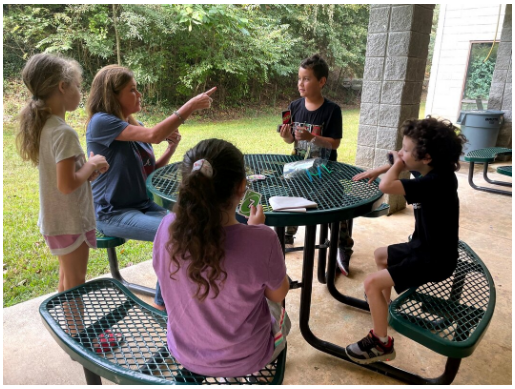
The Academy of Innovation in Gainesville, Georgia, strengthens the learning skills of students who struggle in a traditional classroom setting, including those who are dealing with specific learning disorders such as dyslexia and ADHD, and helps them succeed in any learning environment.
Editor’s note: This first-person essay from Georgia grandmother Martha Megahee was adapted from the American Federation for Children’s Voices for Choice website.
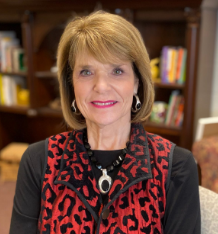
Martha Megahee
My grandson Grayson has attended the Academy of Innovation in Gainesville, Georgia, since he was 8 years old. The academy is a private school that helps children like Grayson who have had reading and learning challenges. Grayson, who is now 15, has been fortunate to attend the academy on a tax credit scholarship.
The Georgia Private School Tax Credit law allows eligible private citizens and corporations to receive tax credits for donations to scholarship funding organizations, which provide scholarships to parents of eligible children who want to attend private schools. For our family and for many others, these tax credit scholarships are a godsend.
Grayson contracted bacterial meningitis when he was just shy of 2 years old. The doctors told us that if he managed to live for 9 hours, he might survive. I was living in Richmond, Va., at the time. I got to Georgia as quickly as I could to be with Grayson, who lived through that first 9 hours but lost hearing in one ear and needed physical therapy to learn to walk again.
Once he recovered, he did not appear to be cognitively impaired, but we were told we wouldn’t know if he would have learning disabilities until he started school. We did know even then that he was hyperactive and had anger management issues. We enrolled him in a private school for kindergarten and first grade, but that’s when the problems began.
School staff had to pry him out of the car in the carpool lane because he refused to go to his classroom. His mom would have to come to get him most days before noon because he was so disruptive. We decided to have Grayson tested at Emory University and learned he had severe ADHD and probably was dyslexic. We didn’t know where to turn.
Then we found out about the Academy of Innovation. The academy started in 2007 and grew out of a tutorial service with about 20 students. The staff take a personalized approach to teaching children in grades 1 through 12 using research-based teaching methods to individually address the needs of students like my grandson who face learning barriers.
Grayson was able to start his journey there by attending a summer program and we enrolled him in the fall. His turnaround was miraculous. Before the Academy of Innovation, he hated school so much. He felt like a failure every day. But it wasn’t long after he got to the academy that he was reading beyond his grade level.
Grayson became interested in computers and can now envision a career in IT. He feels good about himself. He feels successful. He is successful. And it’s all thanks to Academy of Innovation and a tax credit scholarship. We will be forever grateful.
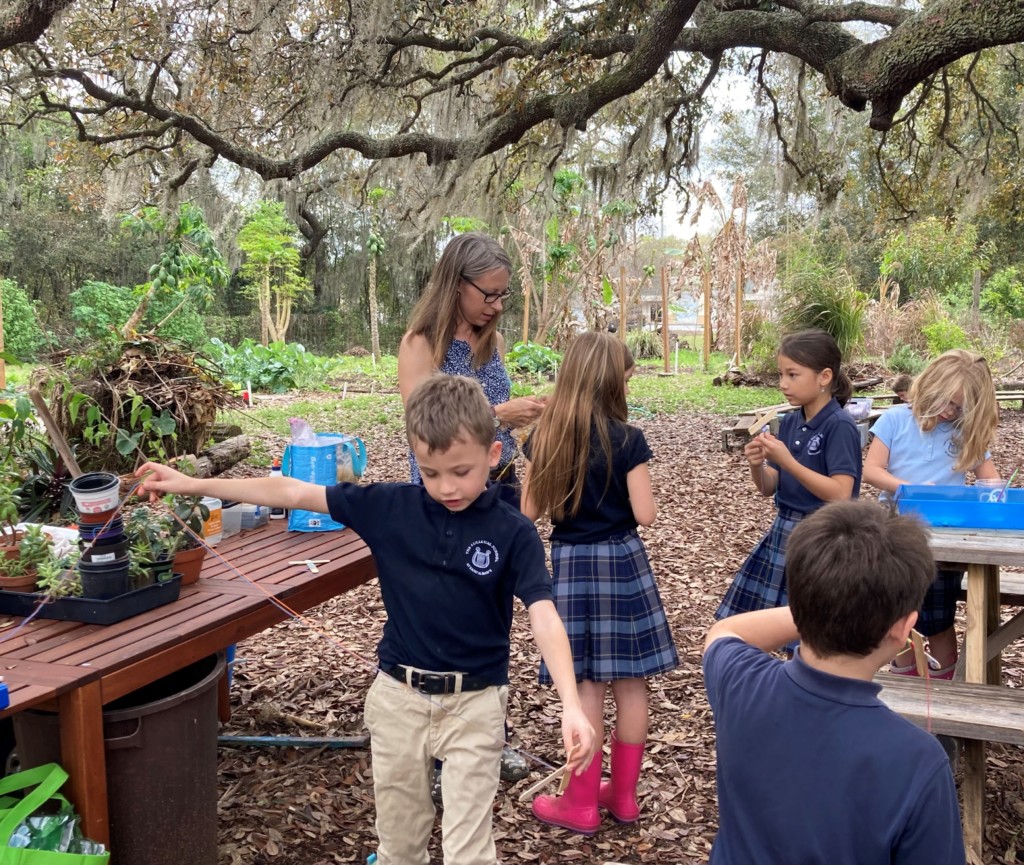
Tuition at the Ecclesial School of St. Alban’s, which opened in an Orlando suburb in 2020, is determined on a sliding scale, based on family income, and tops out at $10,750. More than 80% of the school’s students offset tuition with choice scholarships, leaving the average paid per student this year at $2,561.
Editor’s note: This commentary from Step Up For Students’ director of strategic communications Scott Kent appeared Monday on naplesnews.com.
In her April 15 column, Sharon Harris-Ewing paints a quaint, Norman Rockwell idea of public education – one that, if it ever truly existed for all, is from a bygone era. The notion that centralized systems can accommodate every client’s needs, let alone unite them under common beliefs, belies the reality that is the United States today.
Over the last several decades, in accordance with the rise in personal technologies, Americans increasingly have become accustomed to having more choices in their lives — in where, how, and when they shop for goods and services, the media and entertainment they consume, and how they express themselves.
The nation is far larger and much more diverse in culture and in thought than it was when the traditional system of public education was created in the 19th century, its citizens more capable of circumventing traditional gatekeepers and customizing their experiences.
Education choice is a natural progression of that social change. It is not replacing public education — it is redefining it for the 21st century.
Florida has been at the forefront of this transformation. For 20 years it has provided parents with more options in their children’s education, be it public, private, or homeschooling. Some families have always had these choices because they could afford them — they could move to a neighborhood and attend a zoned school that best fit their children’s needs, or they could pay out of pocket for private school tuition.
Choice scholarships have helped level the playing field, ensuring that more families have the same opportunities regardless of their socio-economic status.
To continue reading, click here.
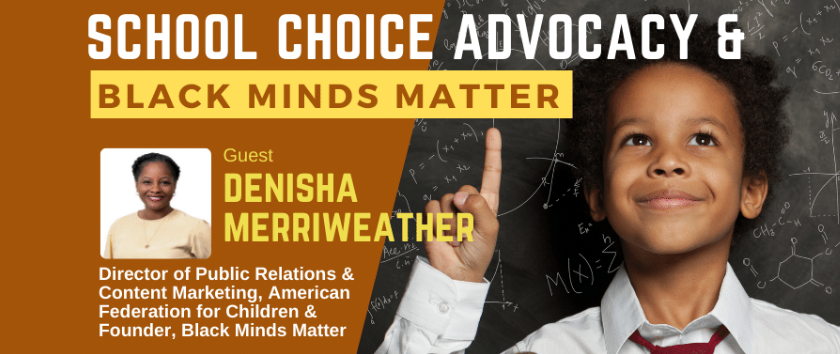 Denisha Merriweather, director of public relations and content marketing at the American Federation for Children and founder of Black Minds Matter, appeared as this week’s guest on the Ricochet Audio Network.
Merriweather shared the story of how she rose from struggling student to national spokeswoman for education choice, discussing how her experience as the recipient of a state of Florida school choice scholarship changed the trajectory of her life.
She also discussed the organization she founded – “a national movement to celebrate Black minds, support excellence, and promote the development of high-quality school options for Black students,” and explained the group’s long-term goals.
You can access the interview here.

One out of three students receiving a tax credit scholarship in the United States lives in Florida according to a new report from the Pioneer Institute, a free-market think tank based in Boston.
The report, “Earning Full Credit: A Toolkit for Designing Tax-Credit Scholarship Policies,” by Jason Bedrick, reviews the nation’s many tax credit programs, providing an overview of enrollments and rules and regulations governing each, with the aim of providing advice for legislators and parents seeking to create new programs.
Florida’s Tax Credit Scholarship program served 102,969 students in the 2020-21 school year, making it the largest scholarship program of its kind in the nation. Arizona, which created the nation’s first tax credit scholarship in 1997, four years before Florida, served 36,579. The second largest program was Pennsylvania’s scholarship program with 45,882 students served.
Of 24 tax credit scholarship programs included in the report, 19 have income restrictions, with the most restrictive programs found in Alabama and Kansas. Florida, with a threshold of 325% of the federal poverty line during the 2020-21 school year, is in the middle of the pack regarding income eligibility restrictions.
Indiana and Oklahoma limits scholarships to students in households at less than 555% of poverty, while Arizona, Montana and Ohio had no income limits.
The report also noted that Florida is the only state to offer a tax credit scholarship to students who experience bullying, sexual harassment or assault.
The report further shows that most tax credit scholarship programs offer 100% tax credits to donors, with 11 states offering partial credit. Indiana offers the lowest credit at 50% of the donation.
For the time period studied, states typically capped either the donation amount or total statewide donations. Florida had the largest cap -- $873.6 million for the income-based scholarship -- and the smallest -- $105 per donation for the Hope Scholarship for bullied students.
Florida also averaged the lowest administrative allowance, 3%, for non-profits managing tax credit scholarships. The highest was in Pennsylvania, which allowed non-profits to keep 20% of donations to cover administrative costs.
Regarding academic accountability, 12 states required testing students and 11 did not. Only two states mandating that scholarship students be tested required that test to be the same taken by public school students. Most states required at least a state-approved national-norm referenced test, the same policy as Florida’s.
Almost all states restricted scholarships to covering tuition and fees, though two states, Kentucky and Missouri, recently created tax credit scholarship-funded education savings accounts. Education savings accounts allow parents to spend scholarship dollars on additional educational expenses beyond tuition and fees, such as textbooks, school supplies, tutoring and more.
The report makes several recommendations for legislators, including:
Florida’s tax credit scholarship programs meet all the recommendations apart from allowing non-profit administrators to set their own organizational mission. In Florida, scholarship-granting organizations are required to offer scholarships to any eligible student to attend any state-approved private school and may not set aside scholarships for singular schools or religious affiliations.
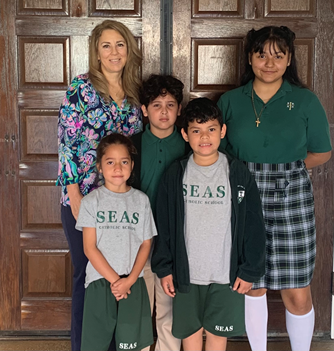
St. Elizabeth Ann Seton Catholic School principal Barbara Kavanagh poses with students who are participating in the school’s rural education program.
A parochial school program intent on extending education choice to children of migrant workers has received a national award for its efforts.
The National Catholic Education Association announced that St. Elizabeth Ann Seton Catholic School in Palm Coast, Florida, will receive the Catherine T. McNamee CSJ Award. The award is given to an individual or institution that offers exceptional leadership in promoting a vision of Catholic education that welcomes and serves cultural and economic diversity or serves students with diverse needs.
The award is one of five presidents’ awards that will be bestowed April 18 at the association’s annual convention in New Orleans. Given in honor of past NCEA presidents, the 2022 awards honor those who demonstrate change and inspiration to further the mission of Catholic education.
“Catholic school communities nationwide are blessed to have individuals and organizations such as our honorees as devoted and faithful servants to the gospel values we hold dear and a deep commitment to Catholic school education,” association president Lincoln Snyder said in a news release announcing the winners.
St. Elizabeth Ann Seton received the national recognition for its participation in a rural education program. Founded in 1997, the school, known as SEAS, has an enrollment of 189 students in 3-year-old pre-kindergarten through eighth grade.
During the pandemic’s onset, SEAS, partnered with its parish and St. John the Baptist Church in Crescent City, Florida, about 45 miles east of the school, to start the program for students of migrant workers whose parents deeply desire a Catholic education for their children.
“This endeavor is at the heart of who we are as Catholic schools,” said Deacon Scott Conway, superintendent of the Diocese of St. Augustine, which includes 12,000 students enrolled at 37 schools, including St. Elizabeth Ann Seton. “Our schools were historically built to serve a population of that was immigrating to the United States, and the initiative continues that great effort that started in 1606 when the Franciscan Friars opened the first school in what is now known as St. Augustine.”
SEAS’ first cohort was comprised of 24 students, all of whom received Family Empowerment Scholarships for Educational Options, an income-based program managed by Step Up For Students, which hosts this blog.
Donors covered the difference between the scholarship amounts and tuition rates, principal Barbara Kavanagh said. A grant from the Diocese of St. Augustine provided uniforms and bus transportation to the school, which is about an hour’s drive from Crescent City.
The school also devoted a resource teacher to the program to provide extra educational and English language support to the students.
“We thought we would need at least six months to do outreach to the families, assess educational needs, and get our transportation kinks worked out,” Kavanagh said. “Sometimes when something is ordained by God, it is on its own timeline. We started the program right away.”
Kavanagh said the program’s success is evident in the smiling faces and academic growth of the students it serves.
“They are more confident and are achieving great things academically,” she said. “Through donated funds, we were able to provide a teacher for educational support to bridge some of the students' academic gaps caused by the pandemic.”
The program has many rewards but also requires sacrifice. Students are on the bus by 7 a.m. each day and travel for nearly an hour each way.
“Our bus driver, Ms. Charlene Nieves, is bi-lingual and has established a great rapport with the students and families,” Kavanagh said.
Last week, she said, a program participant in eighth grade named Ashley came to the office with news of her acceptance to St. Joseph Academy a Catholic high school in St. Augustine.
“Beaming with joy, we shared a hug, and I teared up,” Kavanagh said, adding that the student has been dedicated to her studies, active in service projects and has a “loving, positive, attitude.”
SEAS currently is evaluating ways to expand the program and provide additional summer support.
Kavanagh said the Family Empowerment Scholarship program played a huge role in the program’s success.
“Students from an underserved population deserve every opportunity to grow in knowledge and understanding in an environment that nurtures their gifts,” she said. “We offer that to all our students at SEAS and feel especially blessed that we can offer it to our families in the rural education program.”
A former resident of New York, Kavanagh is aware that not all states support school choice as Florida does.
“I have seen the devastation and the palpable sadness when a school must close because the families who need that school community most just simply cannot afford it,” she said. “We must do more as a country to support parental choice in education for the benefit of all the children. Florida offers a fine example for the rest to follow.”
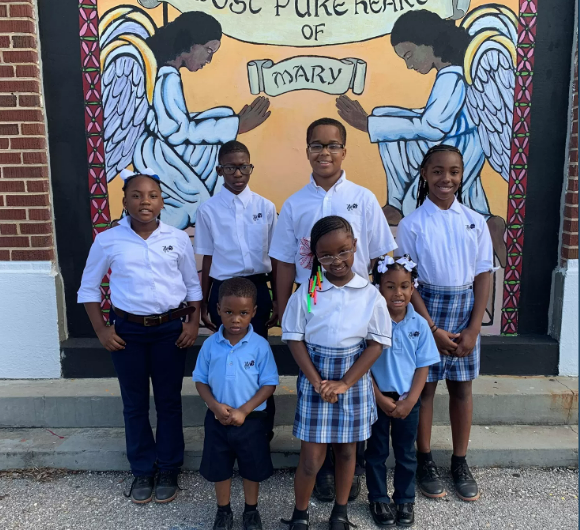
Heart of Mary Catholic School is a gospel faith community celebrating Catholic African American heritage, empowering youth to be gospel witnesses through faith-building programs. Students who are not eligible for Alabama Opportunity Scholarships can apply for a Heart of Mary Scholarship.
An Alabama parochial school that played an important role in the nation’s civil rights movement and recently was threatened with closure now will stay open.
Heart of Mary Catholic School, which has operated for 121 years in Mobile and serves primarily Black students, will continue to operate with an independent governing board, according to officials of the Archdiocese of Mobile.
“After thoughtful conversation among all responsible parties, with support of the Archdiocese of Mobile, some national and local Heart of Mary School alumni have offered to take responsibility for the continued existence of Heart of Mary Catholic School in Mobile, Alabama,” read the Archdiocese’s announcement.
The school was slated to close at the end of the 2021-22 school year due to declining enrollment, but alumni and supporters started a fundraising campaign that took in more than $450,000. The school’s alumni include former U.S. Labor Secretary Alexis Herman and Maj. Gen. Gary Cooper, the first Black person to command a Marine combat infantry company in Vietnam.
Former U.S. Surgeon General Dr. Regina Benjamin, who served during the Obama administration, did not attend the school but gave $10,000 to the campaign.
“I am overjoyed by the fact that Heart of Mary School will continue to remain open,” said Nick West, a computer software engineer and volunteer tutor who attended the school with assistance from the Alabama Opportunity Scholarship Fund. West, who was recently featured on a reimaginEDonline podcast, said his nieces and nephews have also benefited from attending the school.
The good news for Heart of Mary comes amid reports that enrollment at Catholic schools, which suffered declines for years nationally and endured a rough 2020-21, are experiencing a rebound. The latest report from the National Catholic Education Association showed an increase of more than 3.5% during the 2021-22 school year.
Florida, which has fared better over the years due to the wide availability of education choice scholarships, outpaced national enrollment figures with a 6.3% increase during 2021-22, the biggest jump of any of the 10 states with the largest Catholic school enrollments. The numbers were so good, that Archdiocese of Miami schools superintendent Jim Rigg described the trend as “the Great Registration.”
“Heart of Mary is a means of providing a quality education to students who otherwise would have been forced to attend a public school that didn’t fit their needs,” West said. He added that the Alabama education choice tax-credit scholarship program, which recently began accepting new students, will help boost enrollment at Heart of Mary and other schools and provide a high-quality education not otherwise available to families of modest means.
“I hope that increased support of the school choice movement will allow other schools like Heart of Mary to continue to serve students by providing students with a quality education that they wouldn’t have otherwise,” West said.
Heart of Mary was established in 1901 when Alabama adopted a white supremacist constitution to disenfranchise Black and poor white people. The school and its parish became a meeting place for Black people during the civil rights era.
Priests and nuns joined in marches and other demonstrations to support the Black community. You can see a video about the history of the school here.
School Board director Karlos Finley, who attended Heart of Mary starting in kindergarten, said it was a community that stood on the right side of the civil rights movement. He said no other churches would allow the Neighborhood Organized Workers, the leading civil rights organization in Mobile, to meet at their church. Heart of Mary was a staple in the community for those who felt like they had nowhere else to go to express their rights.
“The nuns and priests actually protested along with those civil rights workers and went to jail with them when they were arrested protesting in 1968 at the America’s Junior Miss contest,” Finley told WKRG-TV. The protest happened at the same time as the nationally televised pageant was held at Mobile’s new municipal auditorium to protest the lack of Black managers at the facility.
In 2021, the school adopted a new learning model as part of its strategic plan that allows faculty members to work in teams and focus on teaching their top two areas of expertise, established a corps of community volunteers to teach electives as “adjunct faculty,” and launched a new after-school program.

