 Editor’s note: This post about Denisha Merriweather, director of public relations and content marketing for the American Federation for Children, founder of Black Minds Matter and a former recipient of the Florida Tax Credit Scholarship, appeared this week on forbes.com.
Growing up on the east side of Jacksonville, Florida, the daughter of a teenage mother, Denisha Merriweather was failing. The effects of her poor, drug-laden, crime-ridden neighborhood spilled over into the local district elementary schools she attended, and by third grade she was not reading at grade level, was far behind in math and was collecting Fs on her report cards.
Merriweather’s future looked bleak. “Teachers would sigh when I walked through the door,” she said of the district schools she attended. “Another Merriweather,” they would judge. “My family name was not that bright,” she explained. The young child was on a familiar path of academic deficiency, hopelessness and missed opportunities that plagues many urban, low-income youths who are floundering in government-run schools. “Another Merriweather” was set to be a statistic.
But that’s not what happened. Merriweather went to live with her godmother who heard through her church community about a nearby private school. It was too expensive for her guardian to afford, but the family learned of Florida’s pioneering tax-credit scholarship program that expands education choice for income-eligible students looking to exit district schools.
That scholarship access, incubated by Florida’s nation-leading school choice policies, changed the trajectory of Merriweather’s life.
“All the teachers were smiling and hugging me,” recalled Merriweather. “I thought for sure that would end after my first week at the school, but it continued. The teachers were always so happy to see us, so joyous.”
To continue reading, click here.
Editor's note: reimaginED is proud to reintroduce to our readers our best content of 2021 such as this post from senior writer Lisa Buie.
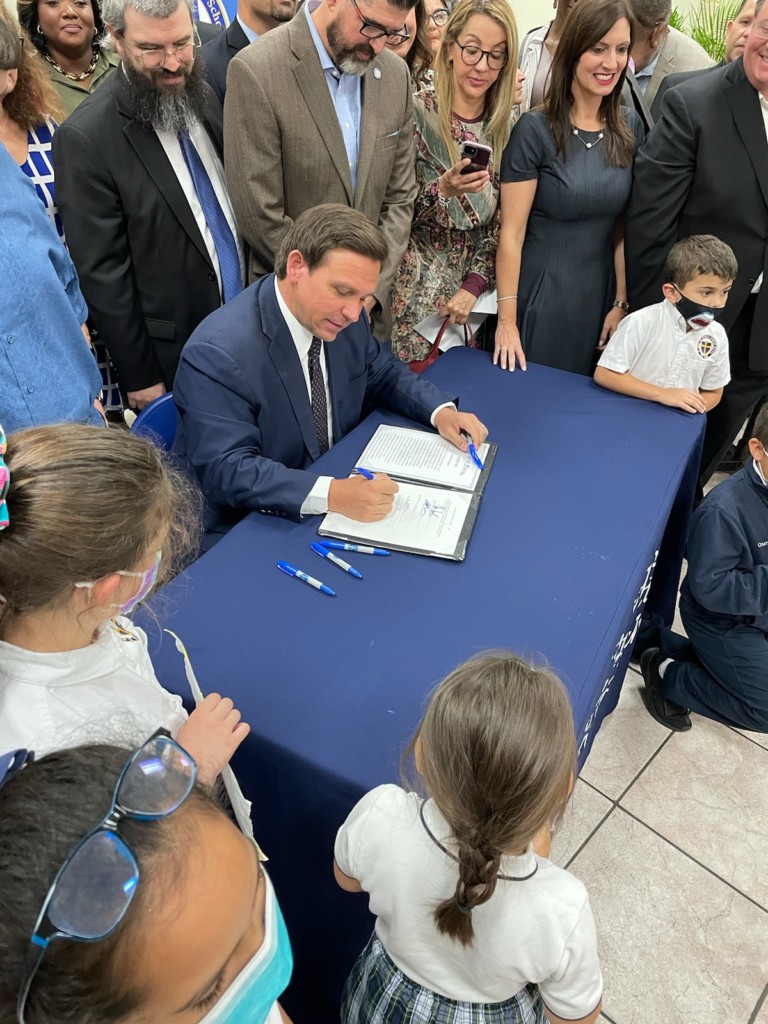
 Tens of thousands of new Florida families gained access to education choice Tuesday after Gov. Ron DeSantis signed into law a $200 million expansion of the state’s K-12 scholarship program.
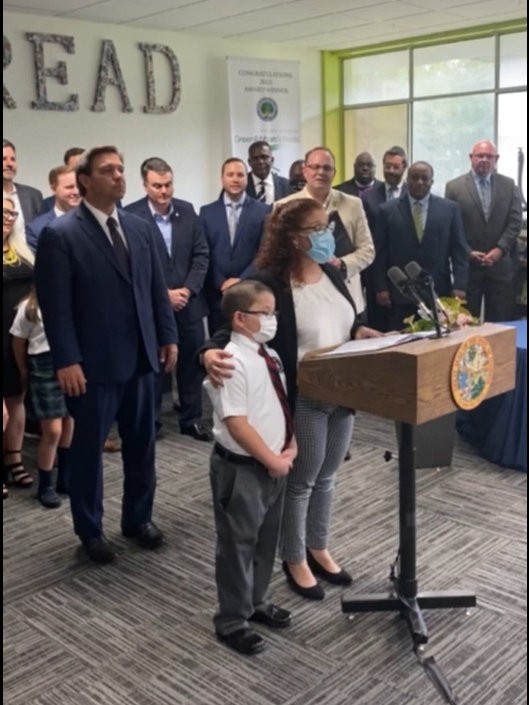
Surrounded by a crowd of supporters including sponsoring lawmakers, state Education Commissioner Richard Corcoran, Lt. Gov. Jeanette Nunez, faith leaders, school leaders and students, DeSantis signed HB 7045 at St. John the Apostle Catholic School in Hialeah, where 162 of 190 students receive school choice scholarships.
“We are proud to be able to give those families and those students who otherwise would not be able to afford a Catholic education that opportunity,” principal Robert Hernandez said as he welcomed the group to the 72-year-old school, located in the parish of state Sen. Manny Diaz Jr., R-Hialeah.
Diaz sponsored the bill along with Rep. Randy Fine, R-Palm Bay, who also attended the ceremony.
“Thank you for always supporting education choice and for supporting students and families and not institutions,” Diaz told the governor during prepared remarks.
DeSantis called support for parental choice in education “a recipe for success.”
“When you talk about low-income families, working-class families may not have the luxury of being able to get their kid in the school of their choice without the program,” he said.
DeSantis said that over the years, the state has seen many families in need, and the recent education choice expansions have had “life-changing” impact that will continue as leaders seek to add more opportunities.
“We will be doubling down on our commitment to further supporting working families,” he said.
DeSantis also pointed out his support for all forms of education and cited the 2020 allocation of $500 million to raise starting teachers’ salaries to fifth in the nation, as well as his dedication of a part of federal pandemic relief funds toward $1,000 bonuses for public school teachers.
The expansion of options “shows we’re not standing pat. We’re going on offense,” he said as the audience burst into applause.
Billed as the largest expansion of education choice in Florida history, the new law merges the state’s two scholarship programs for students with unique abilities, McKay and Gardiner, and combines them with the Family Empowerment Scholarship program approved in 2019.
One category of the Family Empowerment Scholarship will serve students with unique abilities and special needs while the other will continue to serve lower-income families.
The law leaves intact the Florida Tax Credit Scholarship program, which is funded by corporate tax donations, and the Hope Scholarship program for students who have experienced bullying at their district schools. More than 160,000 students across Florida participate in K-12 scholarship programs. The law is expected to add as many as 61,000 new students and cost about $200 million, according to a legislative analysis.
The law simplifies eligibility requirements by aligning qualifying income levels of the Florida Tax Credit Scholarship with the Family Empowerment Scholarship. The two programs previously had different income requirements.
The legislation also provides greater convenience for families by placing management of the Family Empowerment program under nonprofit scholarship organizations, which include Step Up For Students, which hosts this blog.
Under the legislation, families currently receiving flexible spending dollars under the Gardiner program will continue to receive their scholarships as education savings accounts, with McKay’s traditional scholarships converting to education savings accounts starting in 2022-23. Families currently participating in each program will receive whichever dollar amounts were higher, whether that was in the previous law or in HB 7045.
During his remarks, DeSantis addressed concerns that some families had expressed about the legislation and said the effects would be closely monitored.
“If it turns out there any hiccups in this, we will not hesitate to propose reform,” he said.
One aspect of HB 7045 that drew enthusiastic support was its elimination of a requirement that students attend a district school the previous year to qualify for the scholarship. That rule resulted in some families whose incomes took a hit during the pandemic or other tragedies from being turned down for scholarships that would have helped them keep their children in their private schools.
“If the need is there, the need is there,” DeSantis said. “You shouldn’t have to jump through three hoops.”
The change is a godsend for Lina Zelcer, a widow who was denied a Family Empowerment Scholarship for her daughter, Chana Sofia, to attend her local Jewish school because she had not attended a district school the prior year.
“I was surprised how in the middle of a global pandemic, a single mom like me wasn’t able to have the chance to receive a little support for my daughter’s education,” she said.
Zelcer said the new law will help her fulfill a promise to her husband, who died of a brain tumor at age 39, to provide Chana with an education that reflected their faith.
“Thank you, Governor DeSantis and lawmakers, for giving more Orthodox Jewish families like mine the opportunity to educate their children as they see best,” she said.
Barbara Rodriguez also praised the expansion of education choice. Her son, Angel, who has special needs, struggled in his district school, and was bullied so severely that he contemplated suicide, she said. Thanks to a Gardiner Scholarship, she was able to send Angel to a private school with smaller class sizes and an environment that allowed Angel to thrive. Today, he is a successful eighth grader who loves reading.
“The Gardiner Scholarship gave him a second chance at education — and at life,” said Rodriguez, whose two other children have benefited from the Florida Tax Credit Scholarship.
In addition to offering more convenience, the law expands scholarships to more families by raising household income limits to 375% of the federal poverty level for both the FTC and FES. That means a family of four with an income of just under $100,000 can qualify, though families earning 185% of the federal poverty level, or slightly more than $49,000 per year for a family of four, still get priority.
The law also makes siblings of students currently receiving scholarships and children of military members eligible for the program.
“They’re serving us, so we’re serving them,” said DeSantis, also a veteran.
Though the ceremony attracted a crowd, it also caught the attention of an education choice pioneer not in the room but whose influence continues to weigh heavily.
“This is truly a historic and sweeping action to empower more families and ensure more of Florida’s students can succeed,” former Gov. Jeb Bush, founder and chairman of the Foundation for Florida’s Future said in a statement issued Tuesday.
“Florida has long been a leader in school choice. This bold and massive expansion builds upon proven success, providing hundreds of thousands of students most in need with access to educational opportunities that would otherwise be out of reach.”
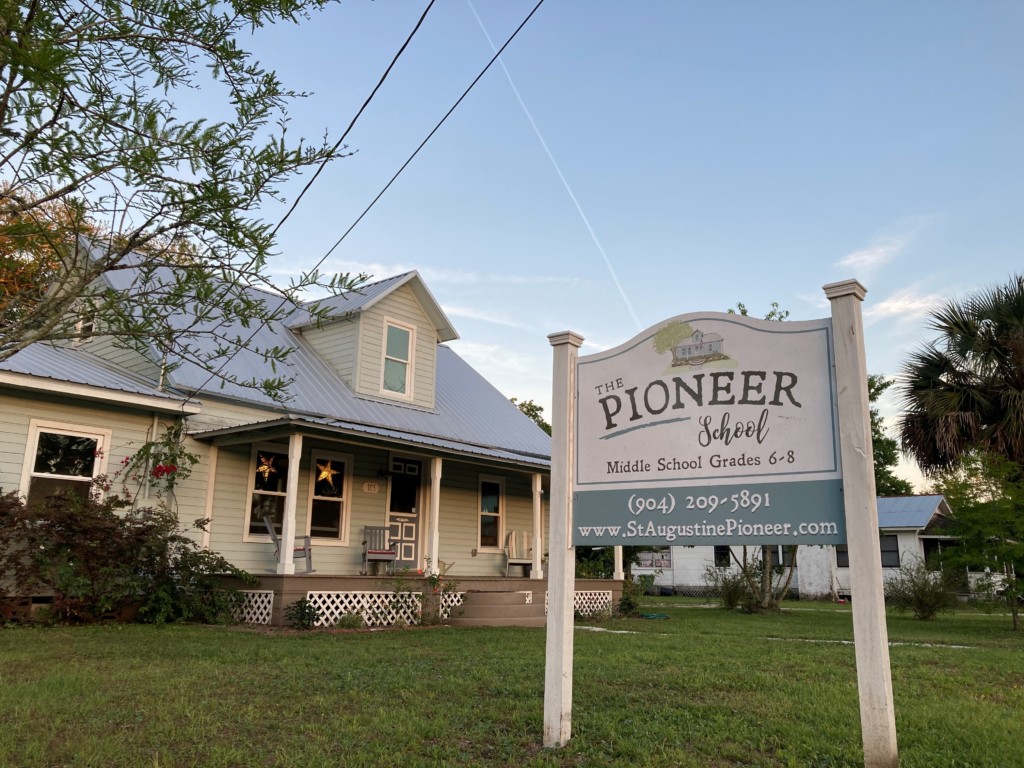
The Pioneer School aims to fully prepare its students for the next level – which, for nearly all of them, is a public high school in one of the state’s most affluent and high performing districts.
Editor's note: reimaginED is proud to reintroduce to our readers our best content of 2021. This post from Step Up For Students director of policy and public affairs Ron Matus originally published on May 12.
 ST. AUGUSTINE, Fla. – As the sun rises and smoke wisps from a diffuser, 16 students sit cross-legged in a century-old house with a tin roof and a yard sign that reads, “HATE HAS NO HOME HERE.” Their principal with the British accent, Cristina Pope, greets each one with an exchange in Spanish, then eventually settles them into a meditation session.
This isn’t how most middle schools in America start their day.
But at The Pioneer School, it’s routine. And far from the only thing about this micro-school that sweetly clashes with “school” as we know it.
The rest of the morning, these students (and, on this day, 11 more tuning in from home) will take core classes through Florida Virtual School. Then they’ll immerse themselves in enrichment offerings as eclectic as it gets:
Coding, gardening, public speaking, civil rights history, an award-winning drama program …
Along the way, they’ll learn how to make fire, use a knife, change a flat …
In the fall, they’ll add small engine repair.
The Pioneer curriculum is a blend of Waldorf, Montessori and other learning models Pope fused and honed. It’s aimed at developing skills in “leadership, citizenship, entrepreneurship … and practical life responsibilities” that will help Pioneer students excel at the next level, in whatever they pursue.
Incredibly, it’s all there for $8,000 a year.
For context, $8,000 a year is about 70 percent of per-pupil spending in Florida public schools.
The Pioneer curriculum is a blend of Waldorf, Montessori and other learning models that co-founder Cristina Pope fused and honed.
Even better, 14 Pioneer students use state choice scholarships, including 10 for families of modest means. As a result, the sons and daughters of accountants, housekeepers, boutique owners and firefighters learn side by side, in an environment that considers them all “gifted.”
“Where’s your child going to learn bread making, archery, boat building, drama, STEM … all in one year’s time?” said Serena Baar, a pre-school teacher whose 14-year-old, Trinity, attends using a Florida Tax Credit Scholarship. “It’s just a well-rounded, well-thought-out school.”
It’s also a model of possibility – another example of the diversity of learning options that can bloom when educators have real power to create their own systems, and parents have real power to access the ones that work best for their children.
With traditional schooling, “We’re trying to shove square pegs into round holes,” said Teri Aboulafia, who co-founded the school with Pope. But with education choice, “You can make it whatever you want.”
***
Pope is a University of Oxford graduate who homeschooled her son 14 years and runs a small permaculture homestead.
Aboulafia is a 20-year veteran of the restaurant business who helped push for a public Montessori school.
At Pioneer, Pope leads the teaching. Aboulafia handles operations.
They’re “like peanut butter and jelly,” said Baar. “The perfect combination.”
The idea for the school took root when Aboulafia’s kids took a class at Pope’s place. They learned to bake bread, build shelters, identify plants. Aboulafia thought, “I want this woman to educate my children.”

Pioneer co-founder Cristina Pope, left, pictured here with co-founder Teri Aboulafia, graduated from Oxford, lectured at Oxford, and did doctoral work in Latin American studies at King’s College London.
The Pioneer School started five years ago with 10 students. It now has three full-time employees and nine part-time tutors and teachers. With interest growing, it will move this fall into two modular buildings on five acres next to a creek.
The singular focus on middle school will continue.
“This is the crucial development age,” Pope said. “This is the chrysalis.”
“We knew it was important,” Aboulafia said, “to give these kids a safe, loving home where they can express themselves.”
Morning assembly is one place that happens. Among other discussion prompts, The Pioneer School has “Worried Wednesday” and “Thankful Thursday.”
On a recent Wednesday, students channeled good vibes to a horse that ate too many Sour Patch candies, a cat with shaking spells, a bearded dragon with tail issues. One student worried about a friend’s mom with Covid. Another, about her sister’s bullying friends. Another said his dad was stressed about work and upset he was going to miss his son’s birthday.
“Reassure him,” Pope told the student. “Let him know how much you love him.”
“Feels like a family” is a common refrain here.
Two years ago, Heather Garris applied to be a math tutor, but had to cancel the interview when she couldn’t find a babysitter. No problem, Pope and Aboulafia told her. We’ll reschedule. And this time, bring your little one.
Pope took Garris’s child out back to pick grapes while Aboulafia did the interview.
The Pioneer tutor is now a Pioneer parent. Last year, Garris used a choice scholarship to enroll her oldest, Eric, after bullying at his former school took a toll on his behavior and academics. Eric found peace at Pioneer, she said. The tension he used to bring home is gone.
The school “changed the whole dynamic of our household,” Garris said. “It’s been a life changer.”
***
Pope was the first in her family to graduate from high school. At Oxford, her friends included the children of corporate titans and factory workers alike.
“The ones from humble backgrounds,” she said, were “especially hungry to learn.”
Dynamic learning experiences tie students’ core studies to relevant life applications and develop their skills in leadership, citizenship, entrepreneurship and practical life responsibilities.
There are no haves and have-nots at Pioneer. Every student helps clean the school, from scrubbing toilets to taking out the recycling. All take turns being mentors, role models and team leaders.
Responsibility, ownership, common decency – all are woven into the school’s fabric.
The school is non-sectarian, yet draws families who are Christian, Jewish, Muslim, agnostic and atheist. A wide range of political views can be found here, too.
“Everybody has the freedom to be themselves, and they’re accepted,” said Baar, whose daughter had only attended Christian schools before enrolling in Pioneer two years ago. “It’s a melting pot that works.”
Baar said she and her husband, a termite tech, wanted their daughter to be “gently exposed” to other worldviews, in an atmosphere that was warm and respectful.
Along the way, Trinity found her wings.
A few weeks ago, Baar heard her daughter talking excitedly in the bathroom for 20 minutes – and assumed she was gabbing with a friend. “I was yelling at her, ‘Get off the phone.’”
But Trinity, who’ll be in a top drama program at a public high school next year, wasn’t on the phone.
She was reciting Shakespeare.
 Editor's note: reimaginED is proud to reintroduce to our readers our best content of 2021. This podcast from senior writer Lisa Buie originally published on July 27.
 On this episode, redefinED senior writer Lisa Buie speaks with the single mother of a 9-year-old and teacher of English language learners at an Orlando district high school. Echevarria, who cares for her parents in her home, earns a salary that, though modest, put her just over the income threshold for eligibility for an income-based school choice scholarship.
Echevarria talks about the reasons for sending her son, Eddie Joe, to a Catholic school, about her employer’s response to that decision, and the financial sacrifices she’s had to make to afford her son’s education without a scholarship. She also shares Eddie Joe’s reaction when he learned of the passage of HB 7045, which expanded eligibility to families at higher income levels.
Echevarria and Eddie Joe were invited to speak at one of two bill signing ceremonies where they met Gov. Ron DeSantis as well as the lawmakers who supported the bill. You can watch a video of Echevarria expressing her gratitude here.
“He started crying for joy, he started jumping. He said, ‘Mama, you can buy me ice cream with sprinkles!’ He was ecstatic.”
EPISODE DETAILS:
Florida Tax Credit Scholarship and Family Empowerment Scholarship for Educational Options (income-based scholarships):
Family Empowerment Scholarship for Students with Unique Abilities:
Hope Scholarship:
Reading Scholarship:
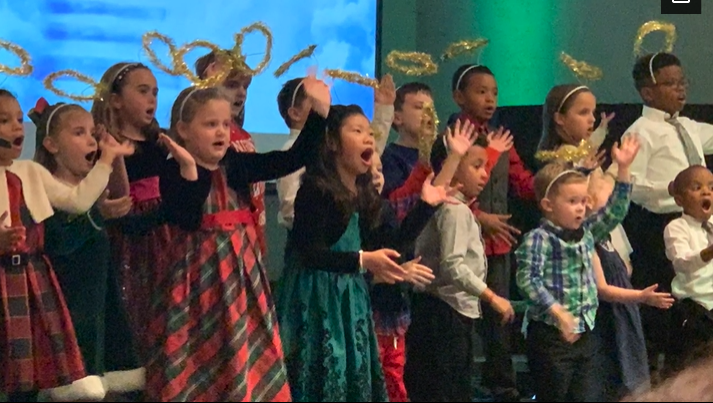
Central Christian School opened in September 1965 as the fourth Christian school ministry in the state of Georgia. The school participates in the GOAL Scholarship Program, which extends educational opportunities to thousands of children through the state.
Editor’s note: This first-person essay from Georgia mother Desiree Williams was adapted from the American Federation for Children’s Voices for Choice website.

Desiree Williams and her son, Kyle
My name is Desiree Williams, and I am the parent of a 16-year-old named Kyle.
My son has been attending Central Christian School in Sharpsburg, Ga., since sixth grade. I learned about the school from a friend whose son was attending. She told me about Central Christian because she knew I was looking for a smaller environment for my son because I knew he would learn better that way.
I believe it is so important for parents to be able to choose where their children attend school, because all children learn differently. They have different needs, so a parent’s ability to have a say in their teaching environment is crucial to how and what they learn.
At Central Christian School, my son gets the attention he needs while following the basic class curriculum for his grade level while having the opportunity to participate in a college-bound program. Every student at Central Christian has the chance to take advanced classes to prepare for higher learning after high school.
Central Christian also offers a structured environment that teaches basic Bible reading and the word of God, which I feel is important, as it means students are less likely to avoid troublesome situations and make better life choices.
There are so many things that I love about Central Christian School. One aspect I particularly appreciate is the staff. The principal, the vice principal, and all the teachers are amazing. I can tell that this is not just a job for them, it is their calling. They are very passionate, God-fearing individuals that love each child. They go out of their way to make sure every child gets all the help they need to succeed.
Central Christian has an open-door policy that encourages parents to reach out at any time to talk about our children. The staff is very quick to answer any and all questions and address any concerns we may have. And volunteering is recommended, encouraged, and welcomed at Central Christian.
When I leave my child at Central Christian, I am comfortable knowing he is in a good environment. Knowing your child is learning and thriving, and exceeding expectations, is the best feeling in the world for a parent. It’s something every parent deserves, regardless of background and income level.
As a single mom, I have endured many struggles, physically and financially, to keep my son in attendance at Central Christian. School administrators have been a huge help, and I will be eternally grateful for their support.
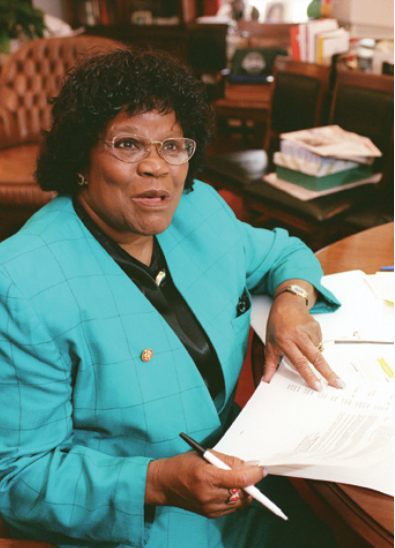
Mrs. Meek was the first African American elected to Congress from Florida since Reconstruction. She enjoyed successful careers as a public servant, college administrator and educator.
Editor’s note: To read a tribute to Carrie Meek from Pulitzer Prize-winning journalist Lucy Morgan, who accompanied Mrs. Meek on her congressional campaign trail in 1992, click here.
Much has been written about Carrie Meek, the former Florida lawmaker and one of the first Black Floridians elected to Congress since Reconstruction, in the wake of her death last week.
Mrs. Meek, who died Sunday at age 95 after a long illness, was known for her powerful oratory, frequently accompanied by the skull-and-crossbones flag she waved to signify her opposition to a bill, her championing of affirmative action, and her passionate advocacy to create economic opportunities for the poor.
What most news coverage failed to mention was that Mrs. Meek was an ardent supporter of school choice. The granddaughter of a slave whose father was a sharecropper and mother took in white families’ laundry, Mrs. Meek knew that a great education could lift out of poverty those born into it.
After graduating from a segregated Tallahassee high school, she graduated from Florida A&M University in 1946 with a degree in biology and physical education. Then, because Florida did not admit Black students to its graduate schools, she went to the University of Michigan, where in 1948 she earned a master’s degree in physical education and public health.
After leaving Congress in 2002, Mrs. Meek, a career educator, returned to Miami and turned her focus to a foundation she started a year earlier to work on education and housing issues. The Carrie Meek Foundation was among the state’s first school choice funding organizations to administer the Florida Tax Credit Scholarship program.
Three organizations, including Mrs. Meek’s foundation, later became part of Step Up For Students, which hosts this blog.
“Congresswoman Meek had a deep and sincere concern for the less fortunate, especially for those in her district who struggled to overcome poverty,” Step Up For Students Chairman John F. Kirtley said.
“She was unconcerned with what any party or politician would say about her supporting an educational choice program. She told me with great joy about parents coming up to her in the grocery store to thank her for their Carrie Meek Scholarship.”
Mrs. Meek’s dedication to education earned her a position at Bethune Cookman College as an instructor. She became the school’s first female basketball coach. In 1958, she returned to Florida A&M as an instructor in health and physical education, a position she held until 1961. The university named its building for Black history archives in her honor in 2007.
Mrs. Meek continued her teaching career at Miami Dade Community College as the first Black professor, associate dean, and assistant to the vice president from 1961 to 1979. She ran for the Florida House in 1978 and defeated 12 opponents.
She won a Senate seat in 1982 and in 1992 was elected to Congress. At her victory party on the night she won the Democratic nomination, which she attended with her son, Kendrick, who would later win a seat in the Florida House, she memorably told her supporters: “Congress ain’t seen nothing yet.”
Mrs. Meek retired from politics a decade later and turned her full attention to her foundation, pursuing her lifelong passion of removing educational barriers to low-income Floridians.
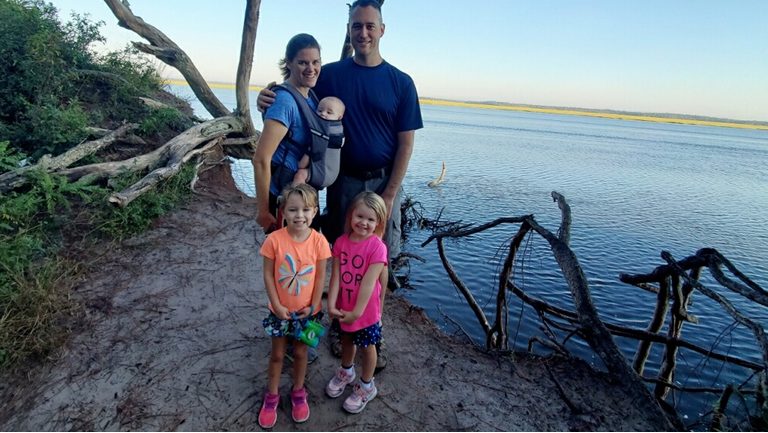
Megan and Jameson Luten and their children, Patrick, Ellie and Julia
On this episode, reimaginED Senior Writer Lisa Buie talks with Megan Luten, a mother of three from Jacksonville, Florida, whose 5-year-old daughter, Ellie, attends Catholic kindergarten thanks to the Family Empowerment Scholarship Education Options scholarship.
Luten, a speech therapist, discusses the search she and her husband, Jameson, a registered nurse, undertook to find the right educational option for Ellie, who, like a many young children, gets a little anxious at times.
After looking at traditional district, charter, and private schools, they decided that Holy Family Catholic School was the best environment for their daughter to start her formal education.
“We found out this summer that thanks to the new income threshold for the state scholarship, we were going to be eligible for it, and that was really huge in our decision making in sending Ellie to Catholic school … we probably would not have been able to do that had we not been eligible for the state scholarship, so we are really, really thankful for that. It’s been a huge blessing for our family.”
EPISODE DETAILS:
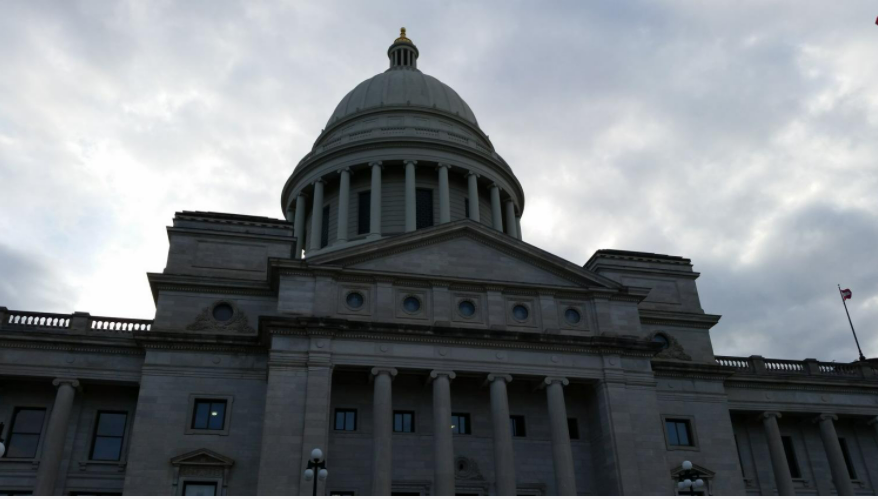
Arkansas legislators approved the state’s first voucher program in 2015. In April, they passed a $2 million tax credit voucher program that will provide a full tax credit to individuals and corporations who donate to a fund that will pay private school tuition for families with incomes up to 200% of the federal poverty level.
Editor’s note: This commentary from Arkansas State Rep. David Ray appeared last week in the Arkansas Democrat Gazette.
Much has been written about education being the defining issue in this month's Virginia gubernatorial election between Democrat Terry McAuliffe and Republican Glenn Youngkin.
Youngkin, a businessman with no prior political experience, pulled off an upset that few saw coming in a state that has trended strongly toward the Democrats in recent years. He did so in large part by appealing to parents who are dissatisfied over the current state of public education.
Parents were upset by many factors, including the prolonged school closings, even as most of society has returned to some measure of pre-pandemic normal. They were upset that teachers' unions resisted a return to in-person instruction, even though students had experienced tremendous learning loss throughout the pandemic.
On top of that, many parents were disturbed by the injection of left-wing politics into their kids' education. The reported teaching of critical race theory and a letter from the National School Boards Association to President Biden essentially accusing concerned parents of being potential domestic terrorists only added fuel to the fire.
Virginia's recent elections are a strong reminder that states need to give parents more choices in education. In addition to their local traditional public schools, parents and children need the ability to choose an environment that meets their individual needs for a whole host of reasons (academic, values, bullying, learning disabilities, etc.).
To continue reading, click here.
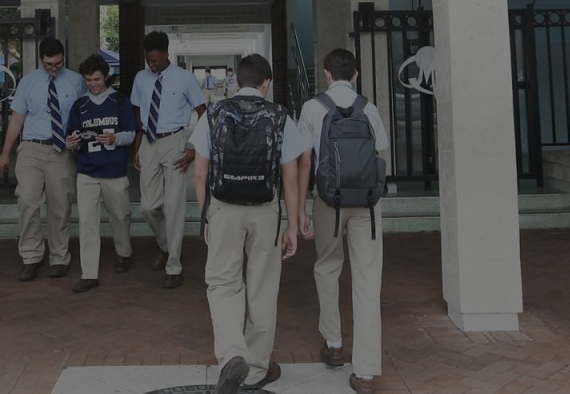
Christopher Columbus High School in Miami, established in 1958, is a Catholic college preparatory school conducted by the Marist Brothers of Schools. With a student-teacher ratio of 16 to 1, 100% of Columbus students graduate and go to college.
Editor’s note: This first-person essay from Florida mother Sharifah Lee was adapted from the American Federation for Children’s Voices for Choice website.
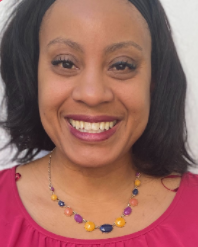
Sharifah Lee
I am a hometown Florida girl, born of parents who came to this country with seven children. My siblings and I are the product of public schools. Because of my parents’ effort, I was able to attend college in Georgia and earn a law degree. I have since become a teacher.
I started raising my boys in Georgia, where they attended a public charter school. I was grateful for the charter school option. While there are some great traditional public schools, not every school is great for every child. Sometimes, children get railroaded; they no longer thrive.
When I moved back to my hometown of Miami, which was the best thing for my boys, I knew as both a parent and an educator that I didn’t want them in the public school system. I wanted them to attend a school where they would have more opportunities.
At the time, I was recently divorced and wasn’t making much money, so my options for private school were limited. Then I learned about the Florida Tax Credit Scholarship. It allowed me to send my boys to Christopher Columbus High School, a Catholic school for young men that got its start in 1958.
The staff at Christopher Columbus High School believe that providing an excellent education is more than just imparting knowledge; it’s helping young men become all they can be, in every facet of their lives. Columbus is the beginning of a great adventure that, as the school website says, starts the moment a boy enters the school courtyard.
One of my children has an Individual Education Plan for children with special needs, but he is held to the same high standards as all students. Both of my boys are learning the same things, just at slightly different levels. My special needs child is not on the sidelines.
That likely would have been the case in a large public school. Teachers in the public school system have to teach to the test. They don’t have the creativity teachers in private schools have to do what’s best for their students.
In that way, Columbus has been a blessing for me as well as a blessing for my boys. When we first moved to Miami, I taught at a public school. Then I got a job at Columbus, teaching U.S. History honors classes. Soon, I will begin teaching Criminal Justice honors classes, which will allow the students to earn dual enrollment credit at Florida International University.
Each year, we will add a new law class, beginning with a mock trial team. We’ll be bringing back former students who are now judges, attorneys, and workers in the criminal justice field to help the students build crucial critical thinking skills.
At Columbus, the benefits go beyond education. My boys and I can express our faith without being stifled. We are encouraged to express that faith. Columbus has given my boys the opportunity to grow into the men they were meant to be.
I know it’s by the grace of God that I have overcome so many challenges. Neither I nor my boys are statistics. I appreciate the Florida Tax Credit Scholarship both as a parent and as an educator.
I am just so grateful and want to sincerely thank those who made the Florida Tax Credit Scholarship program possible.

