The following bill has been filed for the 2022 Florida legislative session, which begins Jan. 11 and runs through March 11.
BILL NO: HB 487
TITLE: State Scholarship Programs — 2022
SPONSOR: State Rep. James Bush III, D — Opa Locka
WHAT IT WOULD DO: The bill would rename Florida’s five state K-12 scholarship programs — Opportunity Scholarship, Family Empowerment Scholarship, Florida Tax Credit Scholarship, Reading Scholarship Account and Hope Scholarship — in honor of Mary McLeod Bethune, an educator and civil rights activist who founded what is now called Bethune-Cookman University in Daytona Beach, Florida. The bill would keep the original scholarship names but add Bethune’s last name to the beginning of each.
For more information, click here.

Third-grade teacher Ashley Clarke leads her class at Somerset Academy Eagle Campus in Jacksonville, Florida, which has as its focus academic excellence, leadership development, personal responsibility, community involvement and character.
JACKSONVILLE, Fla. – Dorian Smith wanted a more academically challenging environment for his daughter, D’Yani, so after third grade he moved her from her struggling neighborhood school to a magnet school.
Because of staff churn, though, that school wasn’t working out either. So, in the middle of fifth grade, Smith turned to a college-prep charter school other parents had been telling him about for years.
Now D’Yani is a sixth grader at Somerset Academy Eagle Campus, and excelling.
Smith described the school as having “more of a home vibe.” It’s smaller, warmer, and more structured, he said. It sets high expectations for student performance and communication with parents. And it matters, he said, that in a school where 96% of the students are Black, so are nearly 70% of the teachers and administrators.
“It boils down to a little more understanding and a little more trust,” said Smith, a police officer. “Sometimes you need that familiar face to relate and connect a little better. That’s not to say there is a guarantee that because of that your child is going to prosper. But it helps. Once you ease the comfort level, it’s easier to learn.”
If “school choice is the Black choice,” as choice enthusiast Roland Martin likes to say, then nowhere is that truer than Florida. More than 100,000 Black students in Florida each year are now enrolled in choice options outside of public-school districts, with charter schools at the top of the list.
Last year, 65,481 Black students were enrolled in Florida charter schools, up 86% from a decade ago. And the evidence suggests they’re benefitting academically.
Somerset Academy is representative of those trend lines. The 10-year-old school in the gleaming, white-and-teal building is serviced by the charter school support organization Academica, and is actually two schools in one, an elementary and a middle. Before Covid hit and the state temporarily suspended school grades, the schools earned an A and a B, respectively.
Three-quarters of Somerset’s 600 students hail from working-class neighborhoods near the school, but there’s no doubt their parents had other options.
Duval County is home to nearly 40 charter schools, with more on the way. Many of them have well-earned reputations for ably serving students of color, including the independently operated Wayman Academy, the KIPP network, and IDEA schools, which will open in Jacksonville next year.
Duval also is home to more than 100 private schools that participate in the state’s school choice scholarship programs, including many tied to Black churches that have anchored their communities for generations. (Several of those scholarship programs are administered by Step Up For Students, the nonprofit that hosts this blog.)
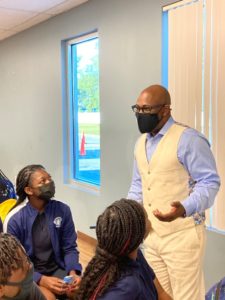
Somerset Academy Eagle Campus principal Tunji Williams believes education is a two-way street, a partnership between school and family, with the parent as the child’s first teacher.
Somerset principal Tunji Williams said many Somerset students did not have good experiences at their prior schools. “That leaves a lot of parents with a bad taste in their mouth,” said Williams, a 27-year educator who has led both district and charter schools. “They heard, ‘Your kid is a behavior problem.’ Or ‘We can’t teach your kid.’ Or ‘Here she comes again.’ “
Margaret Lamkin can relate. The retired insurance benefits analyst is the grandmother of two former Somerset students and one current student. Her two oldest granddaughters were accused of being “disruptive” in their former schools, she said, but once at Somerset, the issues vanished.
Lamkin said her youngest grandchild, Lovely, a second grader, has been at Somerset since kindergarten because “we didn’t want to repeat ourselves.” Like Smith, she said having a staff that reflects the student body makes a difference.
“Young Black girls need to see strong Black women,” she said. “That confidence and that drive, they see that, and they strive to be that.”
Lamkin also said she is not surprised more Black families are turning to choice schools.
“They saw the same thing I did,” she said. Their prior schools “weren’t up to their standards.”
In Florida, more choice and better outcomes have gone hand in hand.
Before Florida began expanding education choice in the 1990s, Black students in the Sunshine State scored near the bottom relative to Black students nationally on the four, core reading and math tests that make up the National Assessment of Educational Progress.
A quarter century later, Black students in Florida are among the national leaders on three of the four tests, and right at the national average on the fourth.
Black students in charter schools are helping to set that pace.
NAEP data shows they’re outperforming like students in Florida district schools on all four core tests. In eighth grade reading, for example, 75% of low-income Black students in Florida charter schools are reading at the basic level or above, compared to 52% of low-income Black students in Florida district schools.
There are caveats. It’s possible charter schools are attracting more engaged parents. It’s also tough to pinpoint what factors led to academic gains in Florida, given Florida introduced a number of major policy changes at the same time it shifted school choice into high gear.
On the other hand, Florida has long had among the highest rates of low-income students in America, and among the lowest per-pupil spending. At the least, the experience of Black families in Florida shows the claims made by opponents of choice – that choice schools are hurting both the students enrolled in them, and the students who remain in traditional public schools – don’t make sense.
Somerset teacher Yolanda Davis has both of her children, Yjanell, 5, and Meckhi, 10, enrolled at the school.
It was more convenient for Meckhi to be in his neighborhood school, Davis said. But a couple months into third grade, she saw him struggling with reading and not getting the academic supports that she, as a teacher herself, knew were available. Meckhi got back on track at Somerset and now is reading above grade level.
“I never thought about choice until then,” Davis said. “But I knew it was a critical year for him, and I didn’t want to wait until he was failing.”
Like all parents, Davis said, Black parents want more rigor and responsiveness in their schools.
With more choice, more are getting what they want.
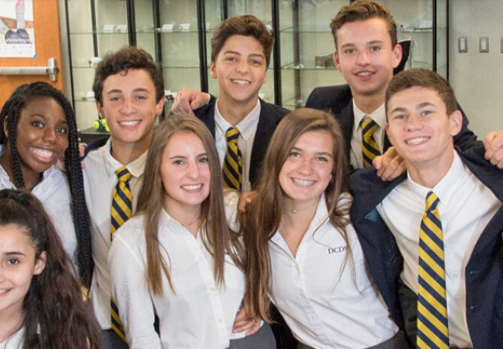
Detroit Country Day School, with campuses in Bloomfield Hills and Beverley Hills, Michigan, is a private, independent, non-denominational school serving children from preschool through Grade 12 with a focus on a well-rounded, college preparatory liberal arts education.
Both the Michigan House and Senate are advancing bills, introduced last week, that would provide tax credits to residents who contribute to a scholarship program for students to use at schools of their choice.
Under the legislation, individuals could contribute money toward scholarship-granting organizations under the Student Opportunity Scholarship program. The program would be capped at $500 million in contributions each year.
Republican Sen. Lana Theis, who sponsored the bills alongside Republican Sen. Tom Barrett, said that after a “year unlike any other,” it’s time for the state to rethink education.
"There is no reason our kids can’t be among the most successful in the country, but doing things in the same way over and over again will not lead to success," Theis said.
Students eligible to receive a scholarship would include those in households with an income under 200% of the financial eligibility for free or reduced-price lunch, have some sort of disability, are in the foster care system or have someone else in their household receiving funds through the Student Opportunity Scholarship program.
Money could be used for tuition or fees for public or private school education, online learning programs, tutoring, extracurricular programs, textbooks and instructional materials, computer hardware, uniforms, standardized test fees, summer school, after-school programs or childcare, dual enrollment, transportation, sports fees and career technical programs.
Funding for public school students would be capped at $500, or for a public school with a disability, at $1,100. For nonpublic school students, funding would be capped at 90% of the minimum foundation allowance spent on public school students, minus three-eights of the percentage that the household income exceeds free or reduced-price lunch eligibility criteria.
Nonprofits wising to participate in the program will be able to apply to the Michigan Department of Treasury to become a scholarship-granting organization.
Since the bill packages are separate, one or the other must be approved by the opposite chamber before heading to Gov. Gretchen Whitmer for her signature.
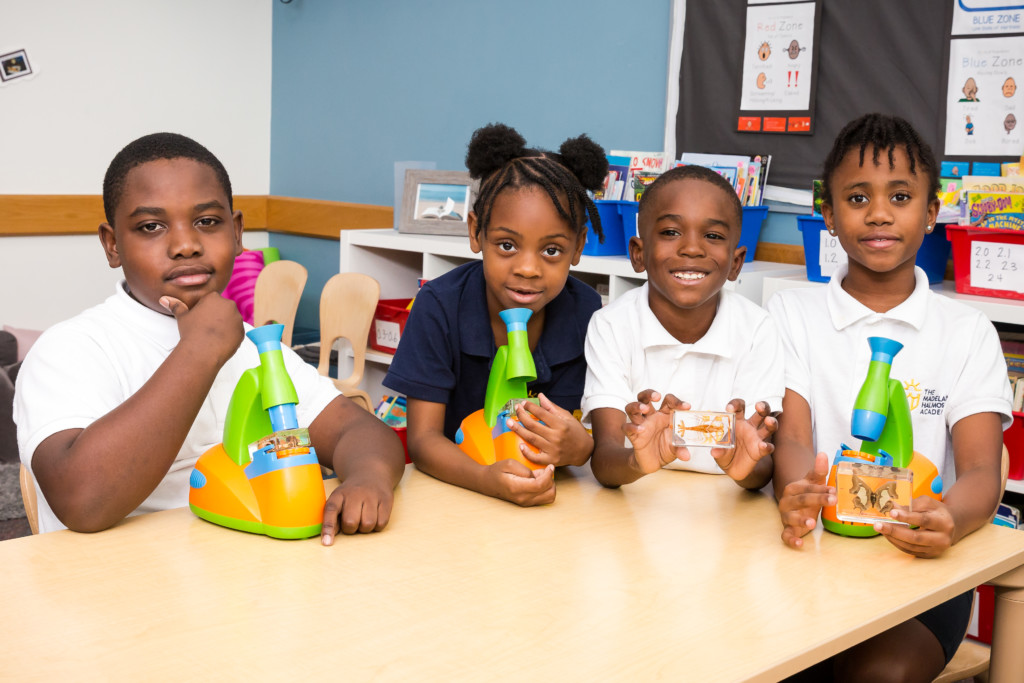
More than 1.7 million Florida students participate in some form of school choice. Options include private schools, public charter schools, professional and career academies and district magnet programs.
Editor’s note: This first-person essay from Florida mother Katrina Gray debuted on the American Federation for Children’s Voices for Choice website.
Katrina Gray and son
I have two sons. My oldest attended a private school on a Florida Tax Credit Scholarship and he’s now graduated from college. I was so impressed with the school and the type of education my son was getting through the scholarship that I said to myself, “This is something good that I can carry on to my next son.”
A personalized education for your child is what’s right. I like the scholarship option because it gives parents the opportunity to place their child in an educational setting that is smaller and geared toward the child. Instead of just passing my child on to the next grade because of attendance or because of participation, he passed because he understands the curriculum.
I didn’t want my son to go to our district school because the teachers taught according to how the children behaved. I’m glad my son’s father heard about the scholarship. My son got the education we wanted for him so he will be successful in life.
I wouldn’t say my son was happier at his new school because he wanted to be with the neighborhood kids. But in terms of education, he did much better. He did get a scholarship to play college football, but his grades were excellent as well. Either way, he would have gotten a full scholarship to college.
My younger son is 10. He’s had the scholarship his entire time and is doing very well in his lessons.
I think parents should have a choice just like I did. We need to give kids smaller class sizes so they can have one-on-one attention. It’s important because some kids can sit in the back of a classroom with dozens of other kids and get unnoticed. The teachers know they’re there, but what about their work?
There needs to be a time-out to say, “Okay, that child is struggling.” He needs to be helped along instead of being simply made to take a test. He may get a C, which is passable, and they’ll just send him along. But there’s no guarantee that he knows his lessons.
With the scholarship and our new school, when they leave here, we know they’re leaving with something.
I think everyone should have a choice. Give the community and the parents a choice to get their children the education they need, the education they need so they can be successful. These children are our future doctors, our lawyers. We want to make sure they know how to take care of us when the time comes.
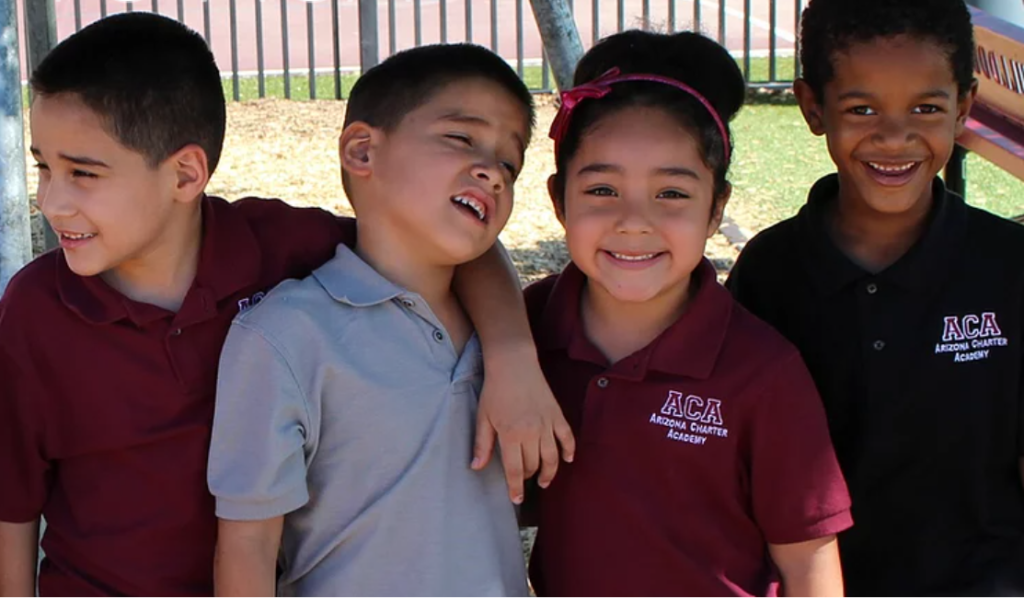 It’s become increasingly clear that education choice is important. Research shows it improves academic outcomes. It increases a student’s chances of getting into college. It also plays a key role in addressing an increasingly distressing and problematic truth, one that isn’t talked about enough: Most kids don’t understand why they go to school, or why they should want to.
Parents, students, and education reformers assume that American education exists for some purpose. For decades, that purpose was to train young Americans in basic, universally understood concepts to support a literate and competent American workforce.
Yet with the rise of the tech age and America’s hyper-industrialized, service-based economy, the question for many has become: What is the purpose of education, now?
My younger brother recently asked me, “Why should I work hard in high school? Why would I want to work hard to get into a good college where I’ll put myself into debt studying subjects I could have learned online?”
While I don’t agree with his perception of the situation, I can’t blame him for having it. Every day, with our family’s encouragement, he works hard in pre-calculus, U.S. history, and Advanced Placement Psychology, because we keep telling him it’s important. But from his perspective, he doesn’t know why he’s working so hard.
There is an old saying that holds, “Sometimes it matters not to be strong, but to feel strong.” Similarly, even when a student doesn’t understand the full scope of how important education is for his or her life, it’s important that they feel that they’re doing something worthwhile.
Many in my generation fashion themselves as “entrepreneurs” who don’t need math or science or literature or history because they don’t see how that knowledge will be used in their lives. Many want to sell things online or make TikTok videos rather than go to school and learn.
Personally, I think all young people should take more of an interest in physics, but if alternative learning styles – like the innovative and flexible education methods that have risen out of the pandemic – is what it takes to motivate a student’s focus on mathematics, then why get in the way?
In the past few years alone, the innovation born from alternative school models and programs is astounding. Many private schools, including my brother’s, are integrating technology into the curriculum and training students to be good “digital citizens.” Other schools have adopted personal finance curriculum to prepare students for the “real world.” My old high school attracts families with its engineering program, which features computer-aided drafting certifications that students can make use of in college or trade school.
For adults, the benefits of education are obvious. For disillusioned students, education choice helps reveal those benefits and sparks the desire to learn. As exemplified by hundreds of Voices for Choice stories compiled by the American Federation for Children, when students understand the opportunity they’ve been given, and the novel programs that come with that opportunity, they quickly see the value of working hard in the classroom.
The recent transition of Step Up For Students’ policy and public affairs blog, redefinED, to reimaginED, celebrates the completion of a mission to “redefine” education, and a commitment to “reimagine’ it. As a younger adult whose life was changed for the better by education choice, I think education reformers, parents, and students alike should remember how education choice opens doors – not only to traditionally better academic outcomes, but also to a new scope of educational pathways that can recapture student interest.
Students always will learn best when they want to learn, and education choice has an important role to play in fostering that desire, perhaps even beyond what our empirical data suggest.
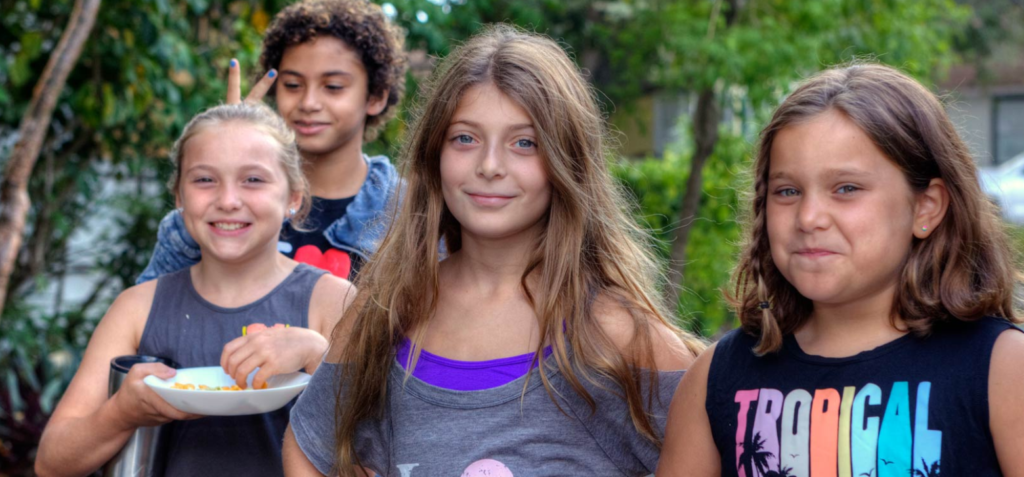
Founder Ali Kaufman describes Space of Mind in Delray Beach, Florida, as a “boutique educational experience,” designed for a modern, social world. Its creative, flexible and personalized educational environment fosters growth for all kinds of learners – children, parents, and educators alike.
Like a school, but better.
That’s how Ali Kaufman, founder and CEO of Space of Mind, describes a revolutionary program that engages students, families, educators and the larger community in experiential learning.
Kaufman’s brainchild, launched in 2004, is not a traditional school. Nor is it a tutoring center. It’s not even a learning pod. The entrepreneur herself recently had this to say about it: “Everything is different about Space of Mind versus the public schools.”
In her interview with reimaginED, she said the best way to describe Space of Mind is to call it “a tutoring service for homeschool children.” But there’s so much more to it than that.
Searching for a learning solution that could provide parents more flexibility while still challenging students in the classroom, Kaufman combined elements of the most cutting-edge education delivery systems available to better meet students’ individual needs. Starting with just three students in her Delray Beach, Florida, living room, she grew the group to eight by 2011, when Space of Mind moved into a historic home in her city’s downtown area.
Some Florida children with special needs have the option of using education savings accounts to attend Space of Mind through the state’s Family Empowerment Scholarship program. Families can use these accounts to customize their child’s education through full- or part-time teaching and tutoring services during regular school hours. But parents of mainstream children also are taking advantage of Space of Mind, many citing the benefits from an individualized school day based around student needs.
Still others are drawn to the 3-to-1 student-teacher ratio and that Space of Mind uses the entire city of Delray Beach as an extended classroom beyond its 10,000-square-foot space, which can serve up to 80 students. Parents not using a Family Empowerment Scholarship or other private-school scholarship option pay tuition for their child to attend Space of Mind, just as though their child were attending a private school.
(You can watch first-hand accounts of Space of Mind’s success at https://www.youtube.com/watch?v=9L1jPmniB0M&t=5s.)
Families who have chosen learning options such as homeschooling and learning pods, which proved to be a lifeline for students during the pandemic, also enroll their children at Space of Mind. Homeschool and learning pod students are able to access subjects and receive tutoring that may not be available through their homeschool or pod curriculum. Scholarship students, private school families, homeschool children, students in learning pods—Space of Mind has something to offer a wide range of families.
“Everything is collaborative and creative, and very much personalized to the students,” Kaufman said.
***
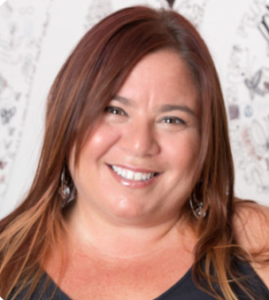
Ali Kaufman
Kaufman’s idea for Space of Mind evolved from 17 years of professional coaching experience for adults and children with special needs. Business leaders and CEOs who struggled with attention-deficit issues and other behavior needs also sought her out for professional coaching. Her services made such an impact that the CEOs asked her to work with their families in tandem with therapists to help adults and children who wrestled with anxiety.
She developed a passion for helping students with school-related stressors. After successfully helping students and parents create productive homework and time management strategies, Kaufman began working with teachers, guidance counselors and school teams to translate that success to the classroom.
In the process, she says, she met intelligent children who did not want to go to school because of bullying or test anxiety. Recently, students cited the distractions of safety drills at school in the wake of the school shooting at Marjory Stoneman Douglas High School, located just 20 minutes from Space of Mind.
Safety drills are nothing short of essential after violent incidents, but Kaufman says that some Stoneman Douglas students enrolled in Space of Mind because the constant reminder of the threat of violence made it hard for them to concentrate on their schoolwork.
Seventeen-year-old Tal Argov told the Sun-Sentinel last year that Space of Mind gives him the opportunity to work on projects instead of only memorizing material for tests. Argov attended Space of Mind on the Delray Beach campus from fifth through eighth grades, left for two years, and then came back.
He calls it “a different way of learning.”
“It’s family-oriented, more personal with the teachers,” Argov said. “It helps me enjoy learning. There’s a lot of leeway and flexibility compared to public school.”
***
Reducing stress is "mission critical" at Space of Mind, where students are encouraged to engage in creative projects that stretch their imaginations.
Kaufman and her team designed their own curriculum, aligning it with Florida’s state standards and allowing students to earn a state of Florida high school diploma. But it goes further to include social, emotional, wellness and character-building standards that are integrated into every academic and extracurricular program.
Students have an array of benefits, from academic coaches, who provide one-on-one assistance for skill development and strategy building. They are eligible for honors, Advanced Placement and college dual enrollment, as well as the Florida Bright Futures Scholarship. Space of Mind reports a 100% acceptance rate for college-bound students.
It’s an understatement to say that Space of Mind is difficult to categorize. It doesn’t meet the definition of a homeschool co-op; parents are not part-time teachers during the school day. It doesn’t fit the description of a learning pod; with 60 students enrolled this fall in the “full-time schoolhouse,” it’s far larger than most learning pods.
Yet it appears to be a “just right” learning option as families grapple with how to best meet their children’s educational needs during the continued pandemic.
“The No. 1 problem when parents call is they say, ‘My kid doesn’t care about anything,’” Kaufman told the Sun-Sentinel. “We’re wildly well-positioned. We can give families a lot of safety and choice.”
And before, during, or after a pandemic, this should give parents peace of mind.
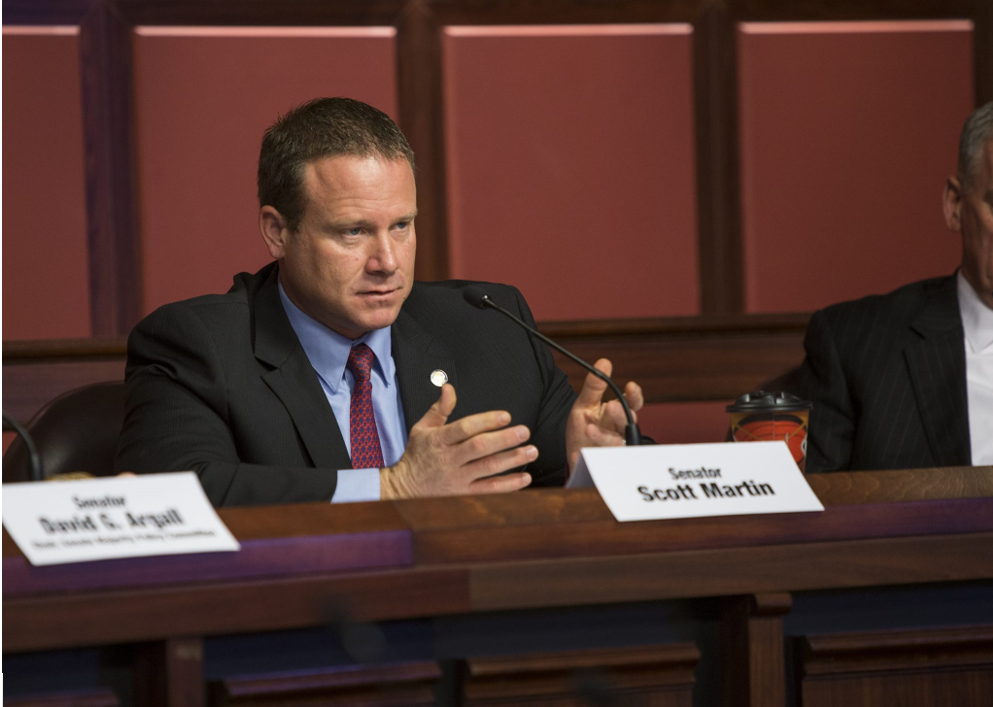
 On this episode, Tuthill talks to the chair of the Pennsylvania Senate Education Committee about education choice in the Keystone State and the outcome of the 2021 legislative session. Despite a divided government, Pennsylvania created new charter school authorizers and increased its Educational Improvement Tax Credit program funding by $40 million, bringing total funding to $225 million.
Tuthill and Martin discuss how Martin’s upbringing as the oldest of seven children influences his ambition to expand education choice to all those who want it. They also discuss the politics of trying to expand choice with a Democratic governor as well as legislative plans for additional choice options in Pennsylvania.
"There's all different reasons family may want to seek a different education opportunity beyond just whether a school might be failing. The environment may not be right for them (socially), or for a disability. That often gets lost in these conversations."
EPISODE DETAILS
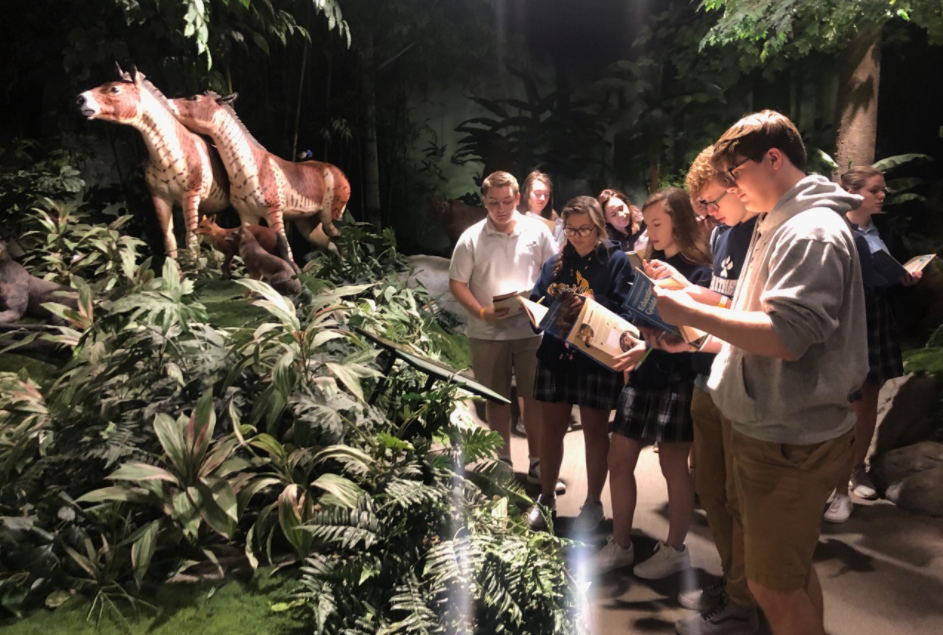
Students at the Whitefield School in Louisville, Kentucky, will be able to use Education Opportunity Accounts this year for tuition as well as for a variety of a la carte education services, including public school classes and non-athletic extracurricular activities, instructional materials, technology, transportation, school uniforms, testing fees, summer and after-school programs, therapies and college courses.
Editor’s note: This commentary from John Schoof, a research associate at the Center for Education Policy at The Heritage Foundation, appeared Thursday on The Daily Signal.
Over a million additional students will be eligible to use private school choice options this school year, thanks to the legislative boom across the country in 2021.
Accelerated by the COVID-19 pandemic and curriculum controversies related to critical race theory, 18 states have either expanded or established a combined 28 school choice programs, earning 2021 the title of “the year of educational choice” by many.
Public opinion shows that support for school choice has reached an all-time high. A June 2021 poll shows that 74% of voters support parents’ ability to choose where their child is educated. The largest jumps in public opinion were among K-12 public school parents, climbing from 67% in April 2020 to 80%.
School choice even gained support among Democrats, climbing from 59% to 70%.
State lawmakers responded to families and turned to school choice in a big way. They saw the problem with relying on the current one-size-fits-all K-12 education system, which is supposed to serve the needs of a diverse population, and gave families the better alternative.
Of the seven new programs, Kentucky, Missouri, New Hampshire, West Virginia, and Indiana established education savings accounts, flexible savings accounts where parents can spend on a variety of educational resources, including, but not limited to, tuition, tutoring, online learning programs, special education services, and more.
To continue reading, click here.
 When the producers of the national podcast Ruthless sat down to brainstorm topics for coverage at the start of the new school year, one idea rose to the top of the list: a deep dive on education choice and how it’s currently playing out across the nation.
They chose two prominent figures in the education choice world, Tommy Schultz, chief executive officer at the American Federation for Children, and Denisha Merriweather, director of public relations and marketing at AFC, to feature.
Among the topics Schultz and Merriweather discuss on the podcast, which came online Thursday: how education choice originated as a movement, how COVID-19 has impacted the rise of education choice in America, and the expansion of entrepreneurial opportunities for educators in the wake of that phenomenon.
You can listen to the podcast at this link. Fast forward to the 4-minute mark to begin listening to the interview.
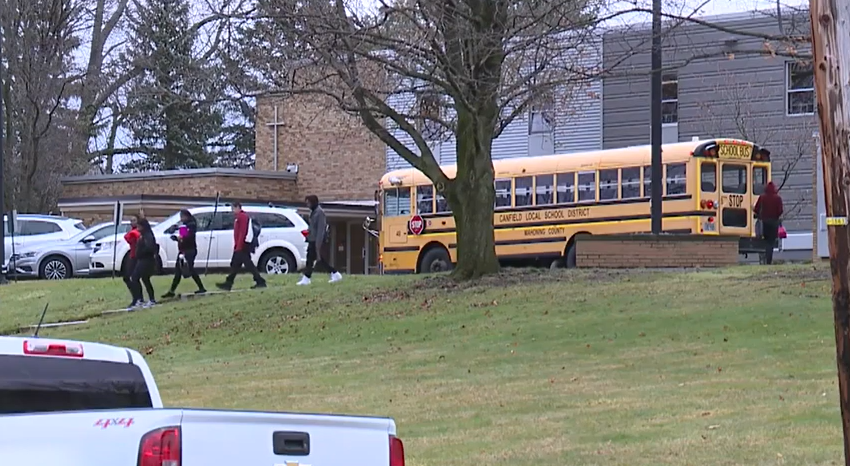 A coalition of about 70 Ohio public school districts is threatening a lawsuit challenging legislation enacted this year to provide a broader range of educational opportunities for families.
Included in HB 110 was removal of caps on the number of EdChoice Scholarships allowing children from low- and middle-income households to attend private schools of their choice, ensuring that any eligible student applying for an EdChoice scholarship would receive one.
The bill also called for an increase in funding amounts for both the EdChoice and Cleveland scholarships, which had fallen behind public school spending. Perhaps more important, it ensured scholarship amounts would automatically rise in future budgets in proportion to any increase in public school base funding.
Bill Phillis, executive director of the Ohio Coalition for Equity and Adequacy of School Funding, the group bringing the suit, says his organization ultimately is calling for the end of the EdChoice program.
“The bottom line of all this is these alternatives, including vouchers, is diminishing the state’s ability to meet its obligations,” said Phillis, who said the state has removed around $25 billion from K-12 public education in favor of vouchers or other private school options.
For most of Ohio’s legislative session, education debates focused on technical issues with the state’s school funding formula and overall spending levels. That changed in mid-June, when lawmakers unveiled the Senate’s education plan for the state budget for 2022–23 (HB 110).
School-choice proponents such as the Buckeye Institute, a Columbus-based think tank, called the additions bold and significant.
“Gov. Mike DeWine has signed a budget that expands existing school choice options and creates Ohio’s first-ever education savings account program helping parents afford desperately-needed resources and giving them the flexibility necessary to improve their children’s educational outcomes,” said Rea Hederman Jr., executive director of the Economic Research Center at the Buckeye Institute and vice president of policy. “These bold reforms are some of the most significant that Ohio’s families have seen in a decade.”

