This is the latest post in our ongoing series on the center-left roots of school choice.
Four years ago, Angela Kennedy, a teacher in Orlando, Fla., actualized an idea once prominently advanced by school choice supporters on the left. After 14 years of mounting frustration with public schools, she started her own private school.
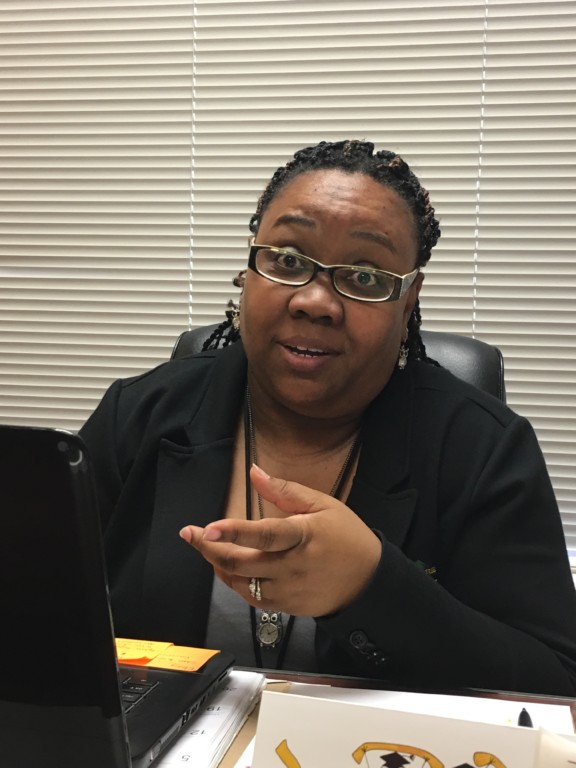
Kids and parents aren't the only one who benefit from school choice. Teachers do too. Dr. Angela Kennedy was a 14-year veteran of public schools when she left to start her own private school. The Deeper Root Academy is now thriving with more than 70 students using school choice scholarships.
Today, thanks to more than 70 school choice scholarships, Kennedy’s faith-based Deeper Root Academy is a high-quality haven for low-income and predominantly black students. It’s also another concrete example of what’s possible, for teachers and principals, when school choice expands.
What better time than now to remind people.
This spring, progressives across America cheered teachers striking for more money, and it’s a safe bet the striking and cheering will resume this fall. But for decades, other progressives have urged teachers to embrace school choice so they can have more power.
In 1970, the War on Poverty liberals who led a school voucher experiment for the U.S. Office of Economic Opportunity stressed that choice would allow teachers to create their own schools, free from soul-sucking bureaucracies. “Given freedom and financial resources,” they wrote, “educators might create large numbers of schools that are significantly different from those now operated by local boards of education.”
In 1973, pioneering choice advocate (and former UMass ed school dean) Mario Fantini posited that expanding options would liberate “the imprisoned teacher.” “Obviously, we need to open up educational alternatives within the framework of public education, not by chance but by choice,” he wrote in “Public Schools of Choice” (his emphasis, not mine). “Teachers (and there are a significant number who feel imprisoned by the structure itself) ought to be encouraged to develop alternative forms that are congruent with their own styles of teaching and can offer them greater professional satisfaction and to increase significantly the chances for educational productivity.”
In 1978, Berkeley law professors Jack Coons and Stephen Sugarman opened “Education by Choice” with a story about a fictional student and a fictional teacher. The student is keen on art and bored at her school. But there isn’t an easily accessible option within the district, and her parents can’t afford private school. Meanwhile, the teacher has developed an arts-based curriculum, but can’t persuade the district to give it a shot. Starting his own school is out of the question because “he prefers not to run an elitist school” and no state-supported scholarships exist to promote equity and diversity.
The Berkeleyites’ solution: Give teachers power to create schools. Give parents power to choose them, or not.
In choice-rich states like Florida, growing numbers of teachers are using that power. (more…)
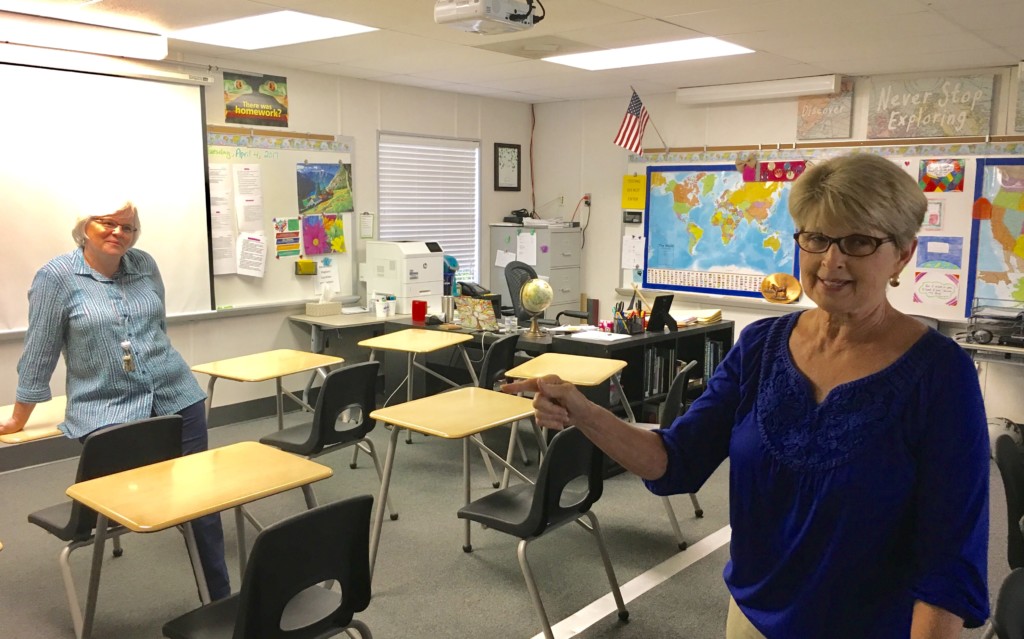
School choice can't work in rural areas? Tell that to Judy Welborn (above right) and Michele Winningham, co-founders of a private school in Williston, Fla., that is thriving thanks to school choice scholarships. Students at Williston Central Christian Academy also take online classes through Florida Virtual School and dual enrollment classes at a community college satellite campus.
Levy County is a sprawl of pine and swamp on Florida’s Gulf Coast, 20 miles from Gainesville and 100 from Orlando. It’s bigger than Rhode Island. If it were a state, it and its 40,000 residents would rank No. 40 in population density, tied with Utah.
Visitors are likely to see more logging trucks than Subaru Foresters, and more swallow-tailed kites than stray cats. If they want local flavor, there’s the watermelon festival in Chiefland (pop. 2,245). If they like clams with their linguine, they can thank Cedar Key (pop. 702).
And if they want to find out if there’s a place for school choice way out in the country, they can chat with Ms. Judy and Ms. Michele in Williston (Levy County’s largest city; pop. 2,768).
In 2010, Judith Welborn and Michele Winningham left long careers in public schools to start Williston Central Christian Academy. They were tired of state mandates. They wanted a faith-based atmosphere for learning. Florida’s school choice programs gave them the power to do their own thing – and parents the power to choose it or not.
Williston Central began with 39 students in grades K-6. It now has 85 in K-11. Thirty-one use tax credit scholarships for low-income students. Seventeen use McKay Scholarships for students with disabilities.
“There’s a need for school choice in every community,” said Welborn, who taught in public schools for 39 years, 13 as a principal. “The parents wanted this.”
The little school in the yellow-brick church rebuts a burgeoning narrative – that rural America won’t benefit from, and could even be hurt by, an expansion of private school choice. The two Republican senators who voted against the confirmation of Education Secretary Betsy DeVos – Lisa Murkowski of Alaska and Susan Collins of Maine – represent rural states. Their opposition propelled skeptical stories like this, this and this; columns like this; and reports like this. One headline warned: “For rural America, school choice could spell doom.”
A common thread is the notion that school choice can’t succeed in flyover country because there aren’t enough options. But there are thousands of private schools in rural America – and they may offer more promise in expanding choice than other options. A new study from the Brookings Institution finds 92 percent of American families live within 10 miles of a private elementary school, including 69 percent of families in rural areas. That’s more potential options for those families, the report found, than they’d get from expanded access to existing district and charter schools.
In Florida, 30 rural counties (by this definition) host 119 private schools, including 80 that enroll students with tax credit scholarships. (The scholarship is administered by nonprofits like Step Up For Students, which co-hosts this blog.) There are scores of others in remote corners of Florida counties that are considered urban, but have huge swaths of hinterland. First Baptist Christian School in the tomato town of Ruskin, for example, is closer to the phosphate pits of Fort Lonesome than the skyscrapers of Tampa. But all of it’s in Hillsborough County (pop. 1.2 million).
The no-options argument also ignores what’s increasingly possible in a choice-rich state like Florida: choice programs leading to more options.
Before they went solo, Welborn and Winningham put fliers in churches, spread the word on Facebook and met with parents. They wanted to know if parental demand was really there – and it was.
But “one of their top questions was, ‘Are you going to have a scholarship?’ “ Welborn said. (more…)
Editor’s note: This is the ninth post in our school choice wish series. See the rest of the line-up here.
by Gary Beckner
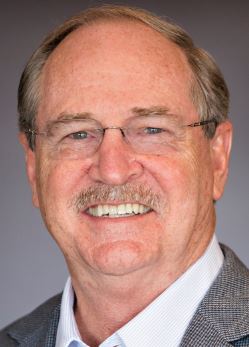
Gary Beckner
School choice policies are making daily headlines across the country. While we often highlight the successes of individual schools and students, teachers are largely left out of the broader choice conversation. This holiday season, it’s my wish that educators are recognized as essential contributors to this important movement in American education.
The fact is every educational setting is a choice. District schools, private and parochial schools, public charter schools, and virtual schools – these are all choices in action. As we adapt to a dramatically changing education landscape, educators everywhere are embracing these new teaching environments, with tens of thousands of teachers educating millions of students nationwide.
This new renaissance in education is both shaking up our classrooms and fundamentally altering the face of the teaching profession. Dedicated, professional teachers should be given credit for their role in supporting and participating in choice settings. In sharing their talents in these new and exciting education environments, teachers are helping to create a brighter future for students who need personalized options.
Educators on the front lines know a one-size-fits-all system does little to address the unique needs of all our students. Students learn differently, just as teachers have their own strengths and weaknesses. In adapting to system of choice, professional educators are realizing these advances are not only meeting needs for students, but also providing professional opportunity.
While some try to promulgate a myth that teachers are not in favor of choice policies, thousands of teachers support this new direction and are teaching in choice schools every day. According to Association of American Educators (AAE) membership surveys, teachers are warming to these ideas.
Specifically, 69 percent of survey respondents support the Washington, D.C. Opportunity Scholarship Program (OSP) that awards need-based annual scholarships to eligible District children. The program has received notable bipartisan support in Congress and is considered one of the most prominent choice systems in the country. There is an understanding amongst educators that options for students are beneficial and that educators, in turn, can also reap rewards.
Take AAE Member Amy Rosno for instance. (more…)
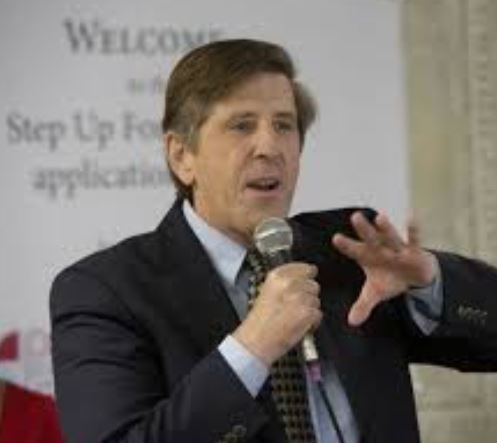
Doug Tuthill is president of Step Up For Students, which helps administer the nation's largest private school choice program (and co-hosts this blog).
I often get asked how I went from being a teachers union president to the president of the country’s largest private school choice organization. It feels like a natural transition to me, but when I step back I can see how others might find it an unusual journey.
My wife likes to tell everyone how boring I am and that I’ve been giving the same empowerment speech since I was 22. She’s right on both counts.
My world view has changed little since I was first elected a local teachers union president in 1978. I was 22, and believed strongly that organizations and societies work best when they maximize the value of their greatest asset – their people. And since individual empowerment is a necessary condition for healthy human development, my work in public education has always focused on creating well-managed education systems that empower individuals.
As a teachers union leader in the 1970s, 80s, and 90s, I was a strong advocate for teacher empowerment. I traveled across the country on behalf of the National Education Association, our nation’s largest teachers union, preaching the gospel of school-based decision making.
But while the NEA leadership regularly highlighted my views in speeches, publications and press events, most of the NEA bureaucracy thought I was naïve and wrong. They saw teachers unions as being in the business of protecting teachers from bad administrators, clueless politicians and dysfunctional school districts. They saw decentralization of power as antithetical to their efforts.
These teachers union traditionalists believe teacher power should be centrally controlled and used by the union for the greater good of teachers collectively, which is where I split from them. I believe a primary function of collective teacher power is the empowerment of individual teachers.
A good example of this difference is how teacher compensation is determined. I believe in free agency. That is, teachers should be able to sell their services to the highest bidder. I would use the collective power of teachers to strengthen free agency, similar to what the professional sports unions do. Teachers unions strongly oppose free agency. They believe all teacher salaries should be determined centrally through a one-size-fits-all salary schedule.
Another good example is found in how teachers unions think about charter schools. I believe teachers unions should help teachers start and run their own schools, while the traditionalists think all publicly-funded schools should be centrally owned and managed by school boards and district bureaucracies.
The school choice movement is founded on a belief in parental empowerment, so adding that to my lifelong commitment to teacher empowerment feels natural to me. I believe in giving teachers the power to create and manage new and innovative learning options for families, and I believe in giving families the power to match their children with the learning options that best meet their needs. For me, both are necessary components of a highly effective and efficient public education system.
I’m a strong advocate of teachers organizing themselves and using their collective power to promote the public good. I’m convinced teachers unions will eventually embrace a model that does that. But this shift is still years away. Until then, teachers unions will continue to be one of the biggest obstacles to improving our country’s public education system.
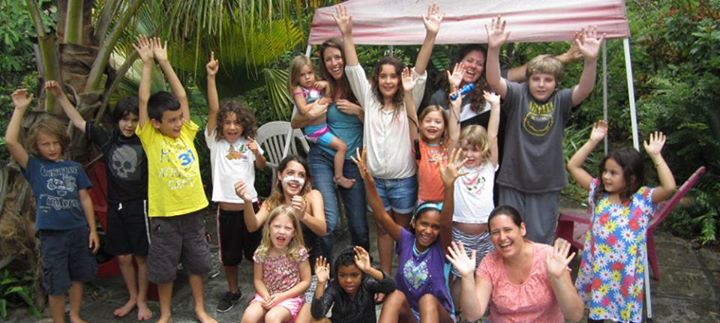
Last day of school this year at Sunset Sudbury School in Davie, FL.
Editor's note: Dionne Ekendiz founded the Sunset Sudbury School in South Florida. In her own words, here's why she did it.
I always wanted to become a teacher and make a difference in the lives of children. I truly believed in public education and wanted to be part of making it better. But like many “smart” students, I was dissuaded from that career path, especially by my math and science teachers. They encouraged me to do something “more” with my life, so I went off to MIT and pursued a degree in engineering. After 12 years as an engineer, computer programmer, and project manager in the corporate world, I finally had the confidence and courage to make a change. Others thought I was crazy to leave a great career, but I was driven to pursue my own passion.
 I entered a master’s of education program and sought to get the most of my experience there. When I heard about a professor who was conducting research in the “best” public schools in the area, I volunteered to be his graduate assistant. This took me into the schools twice a week. I loved working with the students, but there were things I didn’t like about the environment. One of the most disturbing was how teachers and aides would yell at students to “stay in line” and “don’t talk” in the hallways. Those were the times that schools felt most like prisons to me. But still, I believed a good teacher could learn to control his/her students in a more humane way, so I didn’t let it bother me so much.
A year into my education program, I gave birth to my first child. Watching her grow and learn on her own, especially during her first years, made me see the true genius inside her. Indeed, it is a genius that exists in all children. She was so driven to master new skills like walking, talking, and feeding herself. I was always there with love, support, and encouragement, but my instincts told me to stay out of her way as much as possible and let her own curiosity guide her. Because of my own experiences with schooling and well-meaning teachers, I was determined to let my daughter make her own choices. I knew that with curiosity and confidence intact, she could do and be anything she wanted to.
It slowly dawned on me that everything I was learning about teaching was contrary to the philosophy I was using in raising my own daughter. The goal of teachers, in the traditional setting, is to somehow stuff a pre-determined curriculum into students’ heads. Some teachers do it more gently than others and make it more fun, but the result is the same. Teachers must stifle their students’ own interests and desires to meet the school’s agenda. Simply put, regardless of how nice a teacher is, s/he must coerce students into getting them to do what s/he wants them to do. What I was once willing to do to other people’s children, I wasn’t willing to do to my child. That was a huge wake-up call for me. (more…)
Tuthill
Editor's note: This is the fourth and final post in a series on the future of teachers unions.
Over the last 20 years, the federal government and state governments have used standards, assessments and regulatory accountability to assert more top-down control over classroom teachers. As state-mandated teacher evaluation and merit pay systems have become ubiquitous, the level of teacher disempowerment and alienation has soared, and teacher unions have hunkered down and become even more defensive and conservative.
School choice is the way out - not only because it is breaking down public education’s 19th Century industrial management model, but because teacher unions are so economically tied to this model they are fighting to preserve it, even though it is bad for teachers and students. Ironically, teacher union dues today are used to perpetuate a dysfunctional management system, and to protect teachers from being abused by this same system. It’s crazy.
I say this as a former teacher union leader.
I started teaching in fall 1977. In January 1978, I sat at a table with other teachers and heard a divorced mother with two young children tearfully tell us she had rejected her boss’ sexual advances and now he was ending her employment contract. At the time, we didn’t have a union or a union contract.
I was 22 years old and became a union organizer while sitting at that table. We organized ourselves, collected cards and successfully petitioned the state to hold a collective bargaining election. We won a court case management had filed to block the election. Then we won the election and bargained and ratified a contract that included protections against arbitrarily firing employees.
In 1984, I joined a more mature union (and the school choice movement) when I moved to St. Petersburg, Fla. to help start one of the state’s first magnet schools. The Pinellas Classroom Teachers Association had been a professional association for several decades before turning into an industrial union in the late 1960s. By 1984, its collective bargaining agreement had been in place for more than a decade, and it had established a collaborative working relationship with management.
After the intensity of building a union from scratch, PCTA felt stagnant. The union was part of district management. It did a great job protecting teachers from the abuses of a politically-managed bureaucracy, but there was no energy or vision for progress. PCTA’s only internal and external message was, “We need more money.”
Pinellas teacher salaries increased by an average of 45 percent from 1981 to 1986, yet teachers were still miserable. More money was great, but they wanted greater job satisfaction. Individuals become teachers because they want to make a meaningful contribution to children’s lives, but that’s difficult - and often impossible - in a mass production bureaucracy that treats teachers like assembly line workers and students like identical widgets.
We attempted reform from within. (more…)
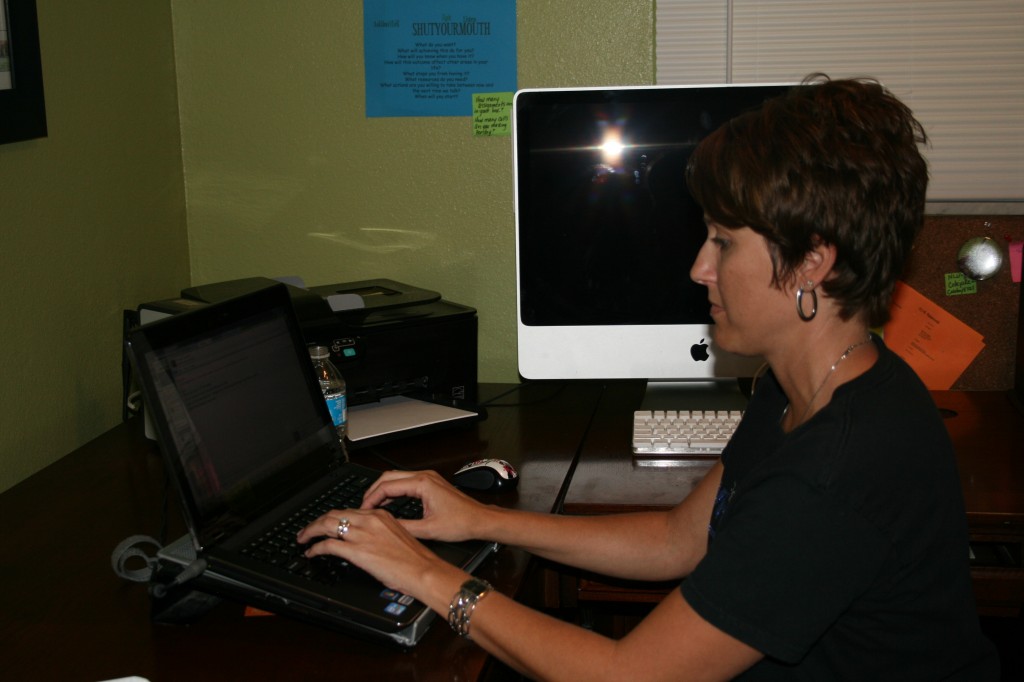
Wife and mother Carlene Meloy left the Pinellas County school district nine years ago for a teaching job with Florida Virtual Schools. There were some trade-offs, but after four years "I don't think I would ever go back.''
When Carlene Meloy answers her front door on a recent weekday afternoon, she looks like any other stay-at-home mom in blue jeans and a T-shirt.
Husband Chris is away at work. In a few hours, their two kids will be home from school. Until then, a barefoot Meloy juggles laundry and dinner with her other job as a teacher at Florida Virtual School.
“I can grocery shop in the morning,’’ she said, and be back in front of her computer in time for a 1 p.m. high school leadership class. If her daughter, Camryn, needs to go to the community center for a theater class, “I can use the Wi-Fi’’ to stay connected to students.
It’s that flexibility that convinced Meloy, 38, to leave the local school district four years ago and work for the nation’s largest online education program.
Meloy is among a growing number of educators across the country that has discovered school choice is an opportunity not only for parents and students, but for teachers, too. No longer are their options defined by school boards or unions – or traditional school calendars.
Today, teachers willing to embrace choice and, maybe, take a bit of a risk, can find satisfying careers in charter schools, private schools and online education. The bonus: a job that gives them more of a say in customizing lesson plans, including ones that adhere to personal religious beliefs; and access to cutting-edge technology that, to some extent, allows them to set their own schedules.
“Now that I look back, I realize I felt stuck,’’ Meloy said of her old job, where she often had to rush from her fourth-grade classroom to take her son, Cole, to baseball practice. “I really do not have the stress that I did in a brick-and-mortar school.’’ (more…)
Newtown school shooting resonates. In added security and what to say.Tampa Tribune. Palm Beach Post. Tampa Bay Times.
 $1 million for cell phones. The Education Action Group looks at credit card statements in the Palm Beach County school district and finds “enough questionable spending to make an average millionaire blush.”
Trojan horse? Another conspiracy theory about vouchers. StateImpact Florida.
Tony Bennett. His selection is more “same old, same old” and reflective of “institutional arrogance,” editorializes the Ocala Star Banner. Advice from the South Florida Sun Sentinel editorial board and Tampa Tribune columnist Steve Otto. Tampa Bay Times political editor Adam Smith names Bennett "winner of the week."
More PIRLS. The Tampa Bay Times editorial board says good job, I think.
Close it. An administrative law judge recommends shutting down a struggling charter in Volusia County. Daytona Beach News Press.
Book club. Miami-Dade teachers discuss ed reform in their living rooms. One conclusion: “Change must be local.” Miami Herald.
The help he needed. A reading specialist at Northeast High in Pinellas County helps a talented athlete find success. Tampa Bay Times.
 A Florida Board of Education member proposed today that the state end its textbook adoption process, saying teachers and principals are best equipped to decide which materials are needed to help students.
Roberto Martinez of Miami said the time is right for that step, given Florida’s education reforms - tough standards, a tough accountability system and big changes to the teaching profession – as well as digital learning advances that are easing access to high-quality instructional materials.
“It seems we’re now at the stage - and certainly will be at the stage in the next couple of years - where the teachers and principals working with the districts should then be able to have the freedom to do as they deem appropriate, based upon the exercise of their professional judgment, to use whatever materials they want,” Martinez said at a board meeting this morning. “If they want to use textbooks, let them use textbooks. If they want to use primary source material, fine. Digital? Fine. Whatever it is. But I think we’re at that stage where we can give them that kind of freedom to accomplish the outcomes that we want.”
Martinez said he wanted the board to add elimination of textbook adoption to its legislative priorities for next year. He did not offer a timeline for ending the process, but in a letter to board members Monday he wrote that the Department of Education needed to work with school districts to develop “an effective transition plan.”
“These changes would get rid of the expensive and unnecessary burdens that impede the ability of our teachers and students from accessing the latest, most advanced, and best educational materials, many of which are, or will become, available through digital learning,” he wrote.
Martinez’s proposal isn’t entirely new; last year, the board discussed a plan to make Florida classrooms all digital within five years. Nevertheless, Tuesday’s comments drew an enthusiastic response from fellow board members and two superintendents in attendance. (more…)
Unlike Kelly Garcia, fresh out of college I knew a lot about unions.
I grew up in a union household. My mom worked on a factory assembly line and was a member of the United Auto Workers. My dad was a fireman and a member of the International Association of Firefighters.
I started teaching in the fall of 1977, and by the spring of 1978, I was president of our local teachers union and a member of our state union’s board of directors. I moved to Pinellas County, Fla. in 1984 and joined their teachers union, where I was elected vice president in 1988 and president in 1991.
As my term was winding down in 1994, I thought about what I had experienced and learned over the previous 16 years and became convinced we needed a new model of teacher unionism.
Unions are always a reflection of the larger industries in which they reside. A union of freelance software engineers functions differently than a union of Ford autoworkers, or a union of independent truckers. Since today’s public education system took form during the industrial revolution, in the mid-to-late 1800s, today’s teachers unions operate much like the blue-collar unions that were spawned in those early factories.
New organizational structures were developed during the industrial revolution to efficiently manage the increased productivity generated by new machinery, and a rapidly growing public education system soon adopted many of these new structures and management systems. By the late 1800s, public schools increasingly began to resemble factory assembly lines with centralized, command-and-control management systems to generate greater efficiency and productivity through standardization. By the early 1900s, most public school students were moving along educational assembly lines in batches with teachers adding the prescribed knowledge and skills at each grade level.
Since children are not widgets, this production system was ineffective - and at times harmful - for many students. But as bad as these early school systems were for students, they were worse for teachers. They were controlled by politicians who were often more interested in accumulating and using power than educating students, and teachers were often the victims of their political manipulations. Increasingly, teachers rebelled against this unchecked political power, and began to fight back by organizing unions.
Adopting a union model similar to that used by the steel and auto workers made sense for teachers, given schools were organized like factory assembly lines. Teachers embraced centralized collective bargaining to respond to centralized management, and started bargaining for one-size-fits-all rules to counter the one-size-fits-all management practices.
By 1994, I understood the strengths and weaknesses of our blue-collar unionism. While we had blocked management’s ability to abuse their power, we had not empowered teachers and addressed their core desire to be more effective with students. We had turned school districts into unmanageable bureaucracies in which teachers and students were increasingly frustrated and alienated. And, under the guise of protecting public education, we had become the primary defenders of these bureaucracies. In essence, we had become an extension of management. (more…)

