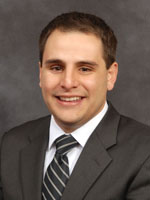
Rep. Trujillo is a co-sponsor of the House parent trigger bill
The parent trigger bill is back in the Florida Legislature this year and, judging by the spirited 8-5 party line vote it got in its first committee stop Thursday, perhaps as contentious as ever. But unlike last year, some Florida parents and child advocates not only voiced support, but drove to Tallahassee to tell lawmakers in person.
Former Marion County teacher Karen Francis-Winston trekked 200 miles from Ocala with her daughter to testify in favor of the bill sponsored by Republican Reps. Michael Bileca and Carlos Trujillo.
Pastor Alfred Johnson came from Tampa,where he said he serves a low-income community.
“I don’t understand what’s the matter with empowering parents to make a recommendation,’’ he told the Choice & Innovation Subcommittee. “We’re doing nothing but recognizing they have a voice, a say in the process.’’
House Bill 867, with an identical version filed by Sen. Kelli Stargel, R-Lakeland, allows parents with children in an F-rated school to petition the school district to consider a turnaround plan that could include bringing in a charter school operator. The petition would need signatures from a majority of parents. (more…)
Florida Gov. Rick Scott delivered the State of the State Address to the Legislature on the opening day of its session Tuesday, stressing jobs and education. Here are his remarks on education, as prepared for delivery:
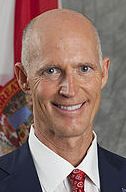
Gov. Scott
Our work to cut spending and live within our means over the last two years has allowed us to once again invest in education.
The workers of tomorrow are in Florida classrooms today.
When I first stood before you in 2011, I said, “The single most important factor in student learning is the quality of teaching.”
Since that time, we eliminated teacher tenure. We signed performance pay into law, and it will take effect in 2014.
Florida’s education system is making tremendous progress, due in large part to our great teachers and the work begun by Governor Bush and many in this legislature.
Our students and teachers were recently ranked sixth for educational quality; and our fourth-graders scored among the highest in the world on a recent reading evaluation.
Accountability is working.
The best way we can build on this progress is to reward our hard-working teachers with a $2,500 pay raise.
Some say they are afraid that giving raises to all teachers may mean that a teacher doing a bad job gets rewarded. But, thanks to our work, we are now in a better position than ever before to reward good teachers and move bad teachers out of the classroom.
We don’t want a war on teachers; we want a war on failure. (more…)
Parent trigger. Sen. Kelli Stargel, R-Lakeland, files a bill similar to last year's, drawing immediate fire from the Florida Democratic Party. News Service of Florida. More from the Tallahassee Democrat.
 More tutoring oversight. The U.S. Department of Education is disturbed by what the Tampa Bay Times found with Florida's state-mandated tutoring program, reports Gradebook. Pinellas Superintendent Mike Grego asks Education Commissioner Tony Bennett to scrap the program completely, Gradebook also reports. The Miami-Dade school district also wants the mandate repealed, reports the Miami Herald. A tutoring company owner in Miami-Dade pleads guilty to 47 counts of fraud and grand theft and is sentenced to five years probation, the Herald also reports.
Charter schools. South Florida Sun Sentinel columnist Michael Mayo writes about the money feud that's pitting the successful Pembroke Pines charter school system against the Broward school district.
More Rubio vouchers. StateImpact Florida logs it in.
Teacher absenteeism. Florida teachers collectively have one of the lowest absentee rates in the country, according to a new Center for American Progress report, notes Gradebook. But with 29.1 percent missing at least 10 days in a 180-day year, it is still high.
Teacher evaluations. The Florida Times Union objects to the Florida Education Association's request to intervene in the newspaper's suit against the Department of Education for withholding teacher eval data. (more…)
The most contentious education bill in last year's Florida Legislature is back this year.Sen. Kelli Stargel, R-Lakeland, filed a "parent trigger" bill Wednesday that is similar to last year's.
Senate Bill 862 would give more power to parents in struggling schools that are mandated by state accountability rules to implement a "turnaround" strategy. A majority of parents could petition the school board to pursue one of several turnaround options, including conversion to a charter school. The school board would not be required to follow the majority's wishes, but the state Board of Education would ultimately determine whether the parent option or district option is pursued.
Last year's parent trigger bill drew national attention. It cleared the House along mostly party lines, but died in the Senate on a dramatic 20-20 vote. It has been widely assumed that the bill would get another shot this year.
Stargel's bill would also require school districts to notify parents when their children are assigned out-of-field teachers or teachers with poor evaluations. The notice would let parents know that virtual instruction with a higher performing teacher was available. The bill also bars districts from giving a student a low-performing teacher two years in a row.
So far, there is no House companion to Stargel's bill.
More from Gradebook and SchoolZone.
Florida's status. Matt Reed, Florida Today's editorial page editor, takes a look at NAEP data and the most recent Education Week Quality Counts report and concludes: "We obviously have room to improve. But our system is neither starving, as educators always say. Nor is it “broken” or “failing,” as reformers keep telling us."
Florida's status, Part II. Diane Ravitch's latest take, after quoting a Florida teacher at length: "There is no Florida miracle. Education has only gotten worse over the past few years, no matter how schools, districts and the state itself game the system. And, contrary to what the media will tell you, it is NOT teachers’ fault, unions’ fault, and I won’t even blame it on the kids or their parents this time. It is the fault of education “reform” led by Jeb Bush et al."
Charter schools. The South Florida Sun Sentinel writes up the bill that would require school districts to share unused or underused facilities with charter schools. Bad idea, editorializes the Palm Beach Post.
Gays and lesbians. The Lake County School Board considers rules that would keep a Gay-Straight Alliance from forming at a middle school. Orlando Sentinel.
Teacher evaluations. Tampa Bay Times on one impact (or not) of the new system in Hillsborough: "After years of planning and training, observation and deliberation, the first wave of firings has begun under a teaching-improvement project funded by the Bill & Melinda Gates Foundation. The tally: Three teachers." (more…)
Teacher pay. Gov. Rick Scott says he wants to set aside enough money in this year’s budget to give every district teacher a $2,500 raise. Coverage from Tampa Bay Times, South Florida Sun Sentinel, Naples Daily News, Sarasota Herald Tribune, Associated Press, Tallahassee Democrat, Pensacola News Journal. Politics and poll numbers are at play, the HT also writes. Teachers "suspicious," writes the Lakeland Ledger. Teachers "skeptical," writes the Tampa Tribune. Teachers unions "cautiously optimistic," writes the Florida Times Union.
Marco Rubio. The senator tells an audience at the U.S. Chamber of Commerce that he’ll be pushing education reform, even if it’s not the sexiest issue: “The good news is it’s not partisan, the good news is it’s something that there’s broad support for," he said. "The bad news is because it’s not partisan. Because it’s not controversial, it’s not getting nearly enough attention as it needs to be getting." The Hill.
Tony Bennett and the Legislature. Gov. Scott cancels his appearance before the Senate Education Committee, but Tony Bennett talks to senators about voucher accountability, Common Core, SB 736, etc. Coverage from redefinED, SchoolZone (two posts here and here) Gradebook (two posts here and here), StateImpact Florida and the Associated Press.
Slow down. Florida superintendents want a longer timeline to implement a suite of changes, including new tests and teacher evaluations, reports the Fort Myers News Press.
Charter schools. A new study based on Florida data suggests charter schools might not be any better than district schools at showing low-performing teachers the door. Shanker Blog.
Teacher preparation. The National Council for Teacher Quality gives Florida a B- (the best grade it gave any state) for its teacher preparation policies. SchoolZone. Sherman Dorn critique here. (more…)
 Florida earns a C- for policies and program aimed at empowering parents, but that’s good enough for a No. 4 ranking nationally, according to a report card released today by StudentsFirst.
Overall, the state earned a No. 2 rank – and a B- grade – from the report, which looked at progress in three areas: elevating the teaching profession; empowering parents; and spending wisely/governing well. Louisiana came in at No. 1, also with a B- grade. A dozen states earned F’s. StudentsFirst is led by Michelle Rhee.
In the parent category, Florida racked up points for grading public schools and requiring public school parents to be notified when their kids are placed with ineffective teachers. But the group says Florida should require consent from parents whose children are placed with such teachers. It also says Florida should pass a parent trigger bill.
Among other areas, Florida got dinged a bit for its tax credit scholarship program (which is administered by Step Up For Students, the co-host of this blog). In short, StudentsFirst doesn’t think the program is funded enough or accountable enough, although the report doesn’t spell out how it falls short on the latter.
The program is available to all low-income students – which we think is a good thing - but the report says it should be limited to low-income students in “chronically failing public schools.” The report also says Florida should amend the program to provide a scholarship amount “that is competitive with private school tuition.” The amount this year, $4,335, is far below the amount spent per student in Florida public schools.
With charter schools, the report says Florida should allow other bodies besides school boards to be authorizers (although that involves issues with the state constitution). It also says the state should reform "skimming provisions" that allow school districts to keep up to 5 percent of charter school funding.
I wish the education reform movement would put more focus on the broken schools of education that fail to attract highly qualified students or to train them to perform well in the nation’s classrooms.
 Six years have passed since The Education Schools Project, headed by Arthur Levine, former president of Teachers College at Columbia University, issued a comprehensive and scathing indictment of the nation’s schools of education. The report found an overwhelming lack of academic standards and understanding of how teachers should be prepared. It determined that “most education schools are engaged in a ‘pursuit of irrelevance,’ with curriculums in disarray and faculty disconnected from classrooms and colleagues.” Moreover, schools of education have become “cash cows” for universities. The admissions standards are low. The research expectations and standards are far below those expected in other disciplines. And there is no pressure to raise student academic outcomes because, at least in part, school districts often only care about a “credential” and not the learning it represents.
Have things improved since Levine’s report? Speaking at a panel during the recent Excellence in Action National Summit on Education Reform, Kate Walsh, president of the National Council on Teacher Quality, previewed the results of a comprehensive study to be published in U.S. News & World Report in April 2013. It affirms little has changed. For example, only about 20 percent of schools of education have admission standards that even require applicants to be in the top 50 percent of their high school graduating class. Only 25 percent of schools of education require their students to be placed with an “effective” teacher when student teaching. (more…)
More on teacher evaluations. Problems with teacher evaluation data this week are the latest in a string of mistakes involving the DOE, writes Gradebook. Lower-profile reports are dogged with inconsistencies, too, though it’s not always the state’s fault, notes StateImpact Florida. Ultimately, the revised numbers released Thursday aren’t much different from the numbers originally released Wednesday morning – or from the out-of-whack numbers under the old system. If nearly 97 percent of teachers are rated effective or highly effective, has Florida made accountability too easy? asks EdFly Blog. More from Tampa Bay Times, Lakeland Ledger, Florida Times Union, Fort Myers News Press, Naples Daily News, Hechinger Report.
 Too much reform on the runway? School Zone. (Image from pictureboston.com)
Achievement gaps in vocabulary. Gradebook. School Zone.
Tony Bennett’s views on Florida’s reforms. StateImpact Florida. Testing Is Not Teaching isn’t a fan of the former Indiana state superintendent, reports the South Florida Sun Sentinel.
Charter conversion. Parents of an A-rated school in Miami-Dade are pressing to convert it into a charter so they can more quickly remedy a problem with aging buildings, reports the Miami Herald.

Shirley Ford
The mom on stage described how she and other low-income parents rode a bus through the darkness - six hours, L.A. to Sacramento, kids still in pajamas - to plead their case to power. In the halls of the legislature, people opposed to the idea of a parent trigger accused them of being ignorant, of not understanding how schools work or how laws are made. Some called them a “lynch mob.”
Then, Shirley Ford said, there was this sad reality:
“I would have thought that the PTA would have been beside me,” Ford said. But it wasn’t. “I’m not PTA bashing when I say this,” she continued. “To see that the PTAs were on the opposite side of what we were fighting for was another level of awareness of how the system is.”
Ford is a member of Parent Revolution, the left-leaning group that is advocating for parent trigger laws around the country. She spoke last week at the Jeb Bush education summit, sharing the stage with former California state Sen. Gloria Romero and moderator Campbell Brown. Her remarks, plain spoken and passionate and sometimes interrupted by tears, touched on a point that is vital and obvious and yet too often obscured.
Parents are not a monolith.
The divides are as apparent as the different dynamics that play out in schools on either side of town. In the affluent suburbs, a lot is going right. There is stability in the teaching corps. The vast majority of kids don’t have issues with basic literacy. The high schools are stocked with Advanced Placement classes. And there, behind it all, are legions of savvy, wonderfully dogged, politically connected parents who know how to mobilize when their schools are shortchanged.
The view is starker from the other side of the tracks. A parent in a low-income neighborhood is more likely to see far more teacher turnover in her school – along with far more rookies, subs and dancing lemons. She’ll see far more students labeled disabled and far fewer AP offerings. Issues like these plague many high-poverty schools, yet they don’t get much attention from school boards or news media or, frankly, from established parent groups like the PTA. (more…)

