
Campbell
Elected black Democrats who support vouchers and charter schools are slowly but surely finding themselves less isolated. And for that, they can thank relentless parents, said Kenneth Campbell, president of the Black Alliance for Educational Options.
The tide is changing because of “this constant drumbeat that they’re hearing from parents about how much their kids are struggling,” Campbell told redefinED in the podcast interview attached below. “More and more people are just coming to this realization that even if I don’t necessarily like the people that are proposing this, we don’t have any other options. And we’ve heard that time and time again, as we’ve gone out and worked with elected officials - that we can’t ignore the pleas of our parents anymore.”
Campbell offered his comments on the eve of BAEO’s annual symposium, which is being held today through Saturday in Orlando. The largest gathering of black school choice supporters in the country will draw 650 people this year, including 50 current and former elected officials. It comes amidst head-spinning ferment on the choice front, with states as disparate as Louisiana, Washington and New Hampshire passing historic measures in the past year alone.
“There are a lot of people in our community who are rightfully concerned and skeptical about motives, and about is this the right thing to do,” Campbell said. “But I think increasingly, we have reached the point where there’s no excuse for not acting with urgency in giving kids and parents options.”
BAEO has been a leading voice for parental school choice since it formed in 2000. Its ranks include a number of leading reformers, including Howard Fuller, Kevin Chavous and T. Willard Fair, who co-founded the first charter school in Florida and served as chair of the state Board of Education.
Florida is an apt place for the group to meet. (more…)
More Rubio vouchers. U.S. Sen. Marco Rubio needs a Florida-style coalition - meaning some Democratic lawmakers who see the value in expanded school choice - to get his plan for federal tax credit scholarships off the ground, writes Adam Emerson at the Choice Words blog. Education Week logs it in.
 More tutoring oversight. In light of abuses, the state-mandated program - which allows low-income parents to choose and access private tutors - should be scrapped, editorializes the Tampa Bay Times. The Miami Herald editorial board offers a more measured response, calling for better oversight and more regulatory accountability but acknowledging the predicament of low-income parents.
More parent trigger. Florida Times Union. FCIR.
Wall of shame. At Jefferson High in Tampa, teachers keep tabs on embarrassing questions from students with a "Wall of Shame" in the teachers' lounge. Tampa Bay Times.
School safety. A 14-year-old is arrested for allegedly molesting an 8-year-old at a school for special needs students in Clearwater. Tampa Bay Times.
Charter schools. Teachers need more options, too, says Senate President Don Gaetz, reports StateImpact Florida. A growing number of charters in Palm Beach County increasingly pits independent charters against charter networks, reports the Palm Beach Post.
Magnet schools. Palm Beach district officials hope they can land a federal grant to create and bolster magnets at three underutilized schools. Palm Beach Post.
Dual enrollment. Growing numbers of students are taking the classes, raising concerns about state college costs and high school curriculum. Tampa Bay Times. (more…)
 Editor’s note: This is the third installment of “A Choice Conversation,” an ongoing dialogue between Doug Tuthill, president of Step Up for Students and a redefinED host, and John Wilson, a former NEA leader who writes the Unleashed blog at Education Week.
Doug Tuthill: John, it’s fascinating to see the new opportunities customization is providing teachers. In Florida, it’s increasingly common for teachers to teach at a district school in the morning, at a private school in the afternoon, and for an online school in the evening. The opportunities provided by technology are particularly intriguing. Three years ago my son’s Florida Virtual School teacher lived in Portland, Oregon, where she was a stay-at-home mom. Many online teachers are at home raising young children while teaching full time.
Recently, I’ve been wondering how customization will impact the services teacher unions provide their members. Given teachers will increasingly have multiple employers in the future, perhaps a key union service could be helping teachers manage the complexity that comes with multiple employers. For example, maybe teachers would prefer to be employed by their union and contracted out to various providers. That would reduce employment hassles for teachers and strengthen their relationship with the union. Unions could also provide financial and administrative support for teachers wanting to open their own schools, and form collaborative networks of teacher-owned schools. You’ve been much closer to internal union discussions in recent years than I have. How do union leaders think customization will affect the services they provide teachers?
John Wilson: Doug: You raise some very interesting points. Every teacher that is treated in a collective manner needs a union to leverage the unity of the group for fair wages and benefits, excellent learning and teaching conditions, and job security for being a good teacher. Customization can be bargained to accommodate those uniquenesses. I have heard some horror stories from virtual teachers as it relates to their employee status. They need a union. Those that are employees of a district have a union to represent them. Unions need to do a better job with those that are in a different configuration. Some of our state affiliates like Pennsylvania are reaching out to virtual teachers.
The challenge is not that teachers in virtual schools need a union. That is evident. The challenge is building the trust in unions to advocate policies that sustain their job. NEA supports a blended approach as the best method for virtual education. That may not be possible in every situation. There is a "chicken and egg" challenge here. If virtual educators joined the union and became activists, they would influence the policies. I have seen charter school educators do that in some state affiliates. It makes a difference, but virtual educators must join first and work from within.
Doug Tuthill: John: In this age of customization, teacher unions should use their collective power to ensure every teacher is treated as an individual. One-size-fits-all is as ineffective for teachers as it is for students. (more…)
Editor's note: This is the second installment of "A Choice Conversation," an ongoing dialogue between Doug Tuthill, president of Step Up for Students and a redefinED host, and John Wilson, a former NEA leader who writes the Unleashed blog at Education Week.
 Doug Tuthill: John, in our last exchange you called “for a new contracting arrangement for providers to serve the unique educational needs of targeted student populations and innovation.”
Floridians have heeded your advice and are expanding options for educators and families through innovative public-private partnerships. For example, the Okaloosa school district contracted with Embry-Riddle Aeronautical University to run Florida’s best aeronautics high school institutes. The Florida Virtual School contracts with Connections Academy to operate its K-5 program, and last year the Duval County school district contracted with local churches to implement programs for suspended students. The Pinellas County teachers union has a corporate subsidiary that contracts with its school board to tutor students; career academies throughout Florida contract for services from a plethora of businesses and trade associations; and the state’s charter schools, Voluntary Pre-K program, McKay Scholarships and tax credit scholarships are all implemented through public-private partnerships, as are many magnet schools.
Managing all these public-private partnerships is challenging, and you’ve suggested using the “institution of public schools” as the oversight entity. I’m curious what you mean by the term “institution of public schools.” I’m also interested in your criteria for distinguishing between acceptable and unacceptable public-private contracts.
John Wilson: Doug, I guess you could say I am a traditionalist when it comes to describing the institution of public schools, but I am an innovator when it comes to expanding the providers of customized education for targeted students and innovation.
I see the district board of education as the "traffic cop" for assuring that all providers, whether charters, private, or public-private, operate within a contract signed by the board of education and the provider. The "traffic cop" should assure that providers meet their fiduciary responsibility, improve student achievement, and adhere to the relevant laws and regulations as well as the contract that was signed with the board of education. I think the community needs to know these arrangements are cost-efficient and effective with their tax dollars and that their children are receiving a high-quality education. Let me add that I am not so naive as to know that we will need to build, and in some cases rebuild, trust and a shared vision with all parties that provide education opportunities. (more…)
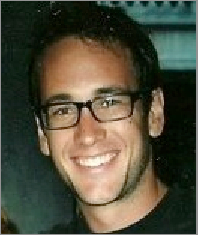
Editor’s note: Washington state is one of only nine states that don’t have charter schools. But voters can change that in November if they approve Initiative 1240, which will allow up to 40 charters statewide over five years. Chris Eide, who heads a Seattle-based ed reform group called Teachers United, tells redefinED in this emailed Q&A that it’s the students who struggle the most who will benefit if voters say yes.
 This is the fourth time Washington voters will go to the polls to vote on charter schools. They said no the first three times. Why will this time be different?
The last time voters looked at the option of charter schools in our state was eight years ago. Over that time, we have been unable to significantly address the needs of our struggling students. Moreover, the families of those students are often without high-quality options that can adapt to and address the needs of their children. Additionally, over the past eight years, high-performing charter schools across the country have demonstrated success for struggling students. Families in 41 other states have this option now, and Washington voters are faced with an easy decision to help struggling students.
Why does Washington state need charter schools?
Like other states, Washington has had a difficult time addressing the needs of struggling students. In some schools, nearly 40 percent of students are dropping out and far too many who do graduate are not prepared for college or their career. Public charter schools would be an option that will allow those students and families to attend a school that might better address their needs. If we hope to have more of our students graduating high school prepared for life after K-12, we are going to need all of the high-quality options that we can get.
You pointed out in a recent Seattle Times column that Initiative 1240 will only allow high-performing charters. How is that defined? And why did you stress that distinction? (more…)
“This should be a moment of renaissance in education in America.”
- President Bill Clinton, keynote speaker, KIPP School Summit 2012
 Advocating for students isn’t easy. Reform opponents regularly engage in ad hominem and anonymous attacks, tactics they condemn in others. The vitriol and anger they express are unworthy of the children they claim to be fighting for.
So it was refreshing to be with educators at last week’s KIPP conference in Orlando who reject that tone. The idea of spending a week with 3,000 dedicated educators, who champion the idea of putting students first, was a lifeline I grabbed with both hands.
In all of my eight years in education, I can honestly report I’ve never experienced anything like a KIPP gathering. The differences were startling and immediate.
KIPP teachers don’t complain about long hours or low salaries. KIPP teachers don’t fear change; they embrace it.
KIPP teachers don’t hold sessions on how to defeat education reform. They don’t hold sessions on how to defeat anti-reformers, either.
KIPP teachers don’t allow anyone to use uninvolved parents or poverty as an excuse for low performance. They don’t allow students to, either.
KIPP teachers don’t teach to the test.
Instead, KIPP teachers are focused on solutions. Their positive energy is contagious. They have hope for the future and talk about what they can do, which is:
Build a better tomorrow. Reach more students who need them the most. Double the number of kids in their schools. Double the number of their graduates in college. This is impressive, considering KIPP graduates go on to graduate from college at four times the rate of non-KIPP students from the same communities.
KIPP teachers at the summit talked about being a catalytic force in the communities they serve. Hearing them talk about how they can be even better was enough to make even the most beaten-down reformer feel good about the movement again.
But then it got better. (more…)
 The number of instructional personnel in Florida charter schools more than doubled in the past five years and topped 10,000 for the first time last year, according to state data requested by redefinED.
Between the 2007-08 and 2011-12 school years, the number climbed from 4,900 to 10,707, the Florida Department of Education figures show. The vast majority are classroom teachers, but “instructional personnel” also include guidance counselors, media specialists, school psychologists and other professional staff.
The growth is more evidence of an underplayed dynamic in debates over school choice and education reform: Teachers, like parents, are increasingly choosing alternative educational options.
Florida is among the leading states in the number of charter schools and students enrolled in them. Since the 2007-08 school year, the number of charter schools in Florida has risen from 358 to 518; the number of students, from 105,239 to 179,940. Over the same period nationally, charter school enrollment grew from 1.3 million to more than 2 million, according to data from the National Alliance for Public Charter Schools.
The number of charter school teachers in Florida still pales in comparison to the number in traditional public schools. The number of instructional staff last year, in both the charter and traditional sectors, fell just shy of 190,000 last fall, according to DOE. That included 168,135 classroom teachers.
The Miami-Dade school district, the state’s biggest, had the most charter school teachers within its boundaries last year (2,085), followed by Broward (1,615), Polk (840), Palm Beach (710), Hillsborough (649) and Lee (631).
The number of online K-12 teachers is also growing fast in Florida. In the 2007-08 school year, Florida Virtual School had 424 full-time teachers. Last year, it had 1,175.
FVS began in 1997 with seven.
Editor's note: Here's another selection of "choice nuggets," a feature we started last week to keep some smaller but still blogworthy items from going to the compost heap. 
Are vouchers too popular, or not popular enough?
For years, school choice critics have posited that vouchers and tax-credit scholarships will open the floodgates for a mass exodus from public schools. So it was a bit of a monkey shock last week to read Diane Ravitch belittling Louisiana’s new voucher program because, in her view, too few students had applied.
“Not exactly a stampede for the exits,” Ravitch wrote. “No big rush to enroll in the little church schools that are supposedly better than the public schools … ”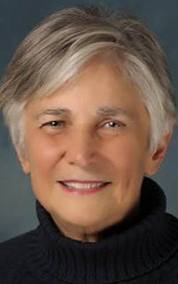
According to published reports, about 9,000 students applied for vouchers, not counting those already enrolled in the voucher program in New Orleans. Sounds like a lot of people to me. But if it’s obvious that only a small percentage of parents will opt for private schools (because, truth be told, most parents are satisfied with their public schools) then why are critics so upset? Doesn’t that undermine the argument that school choice is a Trojan Horse for profiteers?
Ravitch ends her piece by suggesting Louisiana officials puffed up the application numbers. “As usual,” she concluded, “they were playing the media for headlines.”
Two days later, the Washington Post’s “Answer Sheet” blog ran Ravitch’s piece in full.
A tale of two reports
Two national reports released in the last week purported to offer some gauge of academic progress in Florida’s public schools. One relied on apparently undisclosed measures to determine that Florida’s educational ranking dropped from No. 35 to No. 42 in the past year. The other tracked nearly 20 years of scores from the National Assessment of Educational Progress to conclude that Florida students have made more progress than their peers in every state but one.
Guess which report got more play? (more…)

