 Recent election outcomes offer a snapshot of what people really think about education reform, said John Podesta, chairman and founder of the Center for American Progress. And lawmakers, advocates and opponents of school reform should all take note.
This month’s stunner - the ousting of Indiana public schools chief Tony Bennett, who implemented many of the same reforms found in Florida – is proof enough that reform “is not yet on solid ground,’’ said Podesta, the keynote speaker Tuesday during the fifth annual Excellence in Action National Summit in Washington, D.C.
At the same time, he noted, there are plenty of signs of progress, including historic passage of a ballot initiative in Washington that paves the way for charter schools.
The common ground seems to be a desire to create a system that works for children, he said, and reformers should seize the moment.
“As the lines blur, the movement has to invest in collaboration … ,’’ said Podesta, a former White House chief of staff to President Bill Clinton and longtime policy adviser.
“I think complete division between unions and reform is not helpful,’’ he said. “We have to let this go.’’
He also said reformers can’t “steamroll’’ measures without educating the public. “Stop just focusing on your enemy and start shoring up your allies,’’ he said. (more…)
Michelle Rhee, in this morning's Tampa Bay Times:
I'm a Democrat because I believe in the party's basic principles, particularly the idea that we have to look after one another and stand up for those who need help. I believe in fighting for the civil rights of all Americans, especially children and those facing injustices.
That's why I was heartened to see Chicago Mayor Rahm Emanuel advocating for the rights of kids in his standoff with the Chicago Teachers Union. Although his stance made perfect sense to me, it surprised many political observers.
Emanuel went head to head with the union to get a better contract for the city's schoolchildren. In the process, he underscored a transformation in the Democratic Party. Increasingly, those who staunchly side with unions at any cost appear to be in the minority, while more Democrats are saying we have to look at education differently. Full op-ed here. RedefinED interview with Rhee, on why ed reform must be bipartisan, here.
From the Associated Press tonight:
CHICAGO (AP) -- The Chicago teachers union decided Sunday to continue its weeklong strike, extending an acrimonious standoff with Mayor Rahm Emanuel over teacher evaluations and job security provisions central to the debate over the future of public education across the United States.
Union delegates declined to formally vote on a proposed contract settlement worked out over the weekend with officials from the nation's third largest school district. Schools will remain closed Monday.
Union president Karen Lewis said teachers want the opportunity to continue to discuss the offer that is on the table.
"Our members are not happy," Lewis said. "They want to know if there is anything more they can get."
She added: "They feel rushed."
Talk about unintended consequences. Has anything ever - ever - generated more positive publicity for school choice than the teachers strike in Chicago? For charter schools especially, the strike is the gift that keeps on giving. They're open. The traditional public schools are not. Meanwhile, the framing of the strike in the mainstream press dovetails with the parental empowerment rumble from Won’t Back Down. But don’t take my word for it. Check out the ABC News clip above and the snippets below.
New York Times: "Sharonya Simon was looking for a better fit for her son when she pulled him out of a gifted program in a traditional district school five years ago and enrolled him — and later her daughter — in Chicago International Charter School Bucktown, on the Northwest Side. At the neighborhood school, “I did not feel like he was being challenged,” she said during a parents’ meeting at the school on Wednesday. Ms. Simon also said that teachers spent too much time disciplining troubled students, and that many of her son’s classmates came from families with uninterested parents. At the charter school, she said, “you have a different group because of what we have to go through to get our kids into a charter school. You have more involved parents here.””
Education Week: “Broy (Andrew Broy, the president of the Illinois Network of Charter Schools) said his organization has received three times as many inquiries as normal about charter schools from parents and others over the past few months, as news of the impasse between the district and the union has spread. "There's no doubt that over the past two months there's been an increase in the amount of interest charters have received," he said. He suspects that interest has spiked in recent days. "A lot of parents are seeing their neighbors sending their kids to a charter school and are saying, 'Why are you still in session?'" Broy added.”
Chicago Tribune columnist John Kass: When Chicago Teachers Union President Karen Lewis led her members out on strike this week, she said real school would be closed. "Negotiations have been intense but productive," she said. "However, we have failed to reach an agreement that will prevent a labor strike. Real school will not be open (Monday)." Real school? You mean that public system where four of 10 students don't graduate? Since real school wasn't open, I was compelled to visit an unreal school. A South Side school where 100 percent of the students graduate, and 100 percent are accepted to college. A Roman Catholic all-boys school that draws from poor and working-class neighborhoods, a school where there are no cops or metal detectors, no gang recruitment, no fear.”
Huffington Post: “With the strike having an adverse affects on those students who are already the most disadvantaged, parents are now questioning what they can do to get their children off the streets and back into school. Akers (Beth Akers, fellow in the Brookings Institution's Brown Center on Education Policy) believes having options in public schools would help these students. "Unfortunately they don't have a lot of options right now," Akers said to The Huffington Post. "That's the issue with k-12 education right now and why we believe in the notion of introducing choice in this market. Right now it's sort of a monopoly that these teachers are all part of the union and students don’t have the option of selecting into another school." “ (more…)
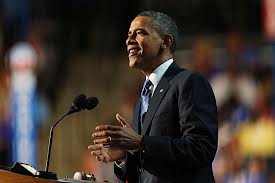 DNC: President Obama suggests Mitt Romney would gut education spending, but avoids mention of Race to the Top (redefinEd). (Image from Minnesota.publicradio.org) Panel discussions sponsored by Democrats for Education Reform highlight the battle within the party over education policy (redefinED). Teachers union leaders promise to campaign hard for Obama, despite difference over teacher evaluations, charter schools and other policies. (Education Week)
Florida: The new chair of the state Board of Education helped bring the KIPP charter school network to Florida (redefinED).
North Carolina: The state board of education authorizes the opening of 25 more charter schools next year. (Associated Press)
California: The Los Angeles school district, which has more charter schools than any district in the country, is scheduled to discuss a moratorium on new ones. (Los Angeles Times)
Indiana: Republican gubernatorial candidate Mike Pence unveils an education agenda that includes expanding vouchers, but it's light on details. (Associated Press)
Pennsylvania: Cyber charter school are growing rapidly in the state, creating tensions with traditional school districts. (Pittsburgh Post-Gazette)
Tennessee: The state education commissioner blasts a privately-owned online school for its test results, calling them "demonstrably poor." (TheLeafChronicle.com)
New Mexico: The state's first virtual charter school begins classes. (Santa Fe New Mexican)
After more than a decade working in education reform I learned long ago that if I stopped to kick every snapping dog along the pathway, I would never arrive where I needed to go. But every now and then I read something, such as Diane Ravitch’s latest op-ed on CNN.com, and have to take a breath and ask “Really?” One of my earliest resources as I was starting in education reform back around 2000 was her book, “Left Back: A Century of Failed School Reforms.” But now it appears she’s utterly abandoned that historical analysis in favor of status quo incrementalism and apologies for failure.
Let’s just think about Dr. Ravitch’s assertions:
The NAEP test scores of American students are at their highest point in history: for black students, white students, Hispanic students, and Asian students.
They are at their highest point in history in fourth grade and in eighth grade, in reading and math.
I tend to agree with Dr. Ravitch that the National Assessment of Educational Progress (NAEP) test is the most valid measure of academic performance. But why is that? Primarily, as my American Center for School Choice colleague, Alan Bonsteel, recently reminded us, it is because most states have catered to their own self-interest, aligning examinations to weak standards to give the appearance of academic achievement rather than actually increasing the amount of learning necessary for student success in this century. So for most of the last 10 years, under No Child Left Behind, we permitted widespread creation of dysfunctional and often meaningless standards aligned to dysfunctional and meaningless tests. Logically, this history does not make for a persuasive indictment of the value of legitimate standards and assessment tools.
But beyond that, let’s look at Dr. Ravitch’s assertion:
The “highest point in history” while true, is relative to what?

With the exception of the Asian/Pacific Islander group, I doubt anyone is throwing a parade for the educational system’s accomplishments over the last 20 years. Are 7-point gains over 20 years for African-Americans and Hispanics and a 9-point gain for white students really the kind of progress we expect after multiple billions of real increased educational spending? Yet this seems to be what Dr. Ravitch finds acceptable performance. (more…)
Editor's note: A response to Kelly's piece from redefinED host Doug Tuthill is scheduled to run tomorrow morning.
by Kelly Garcia
Fresh out of college, I was green about unions. I knew little about what they were and why they existed, yet I blamed many of the American education system’s woes on the powerful and bureaucratic teachers unions. Like most of my young and idealistic colleagues in Teach For America, I likened teachers unions to status quo. I resented them for that.
I also admired Michelle Rhee, a TFA alumnus, for her efforts to award Washington D.C. teachers for making achievement gains with their students. Performance pay was a concept that most union members did not support. I could not see the benefit of joining a union that was seemingly perpetuating the achievement gap by maintaining the system.
Over time, though, my black-and-white views about unions became more gray.
At the end of the first week of my first year of teaching, my roommate, a TFA corps member and a teacher in the Houston school district, came home to tell me she had met with a union rep at her school and joined the union. It seemed like an insult to her commitment to Teach For America, and to closing the achievement gap. I couldn’t make sense of her decision.
She explained she joined because teaching was a dangerous profession. At any time, a student or parent could make an accusation against her that could be career ending or have serious financial implications. She even shared a horror story of how the union helped save an accused teacher’s career and bank account after a student accused the teacher of sexual harassment.
Two years later, as I entered the public school system in Hillsborough County, Fla., I was invited to join the union for the first time. I declined. (more…)
Beyond the boos for his vow to undo President Obama's health care overhaul, Republican president Mitt Romney stressed school choice in his speech to the NAACP today, talking up charter schools and suggesting Obama’s ties to teachers unions hampered his efforts to help disadvantaged kids.
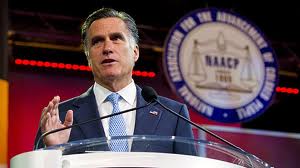 “If equal opportunity in America were an accomplished fact, black families could send their sons and daughters to public schools that truly offer the hope of a better life,” he said, according to his prepared remarks. “Instead, for generations, the African-American community has been waiting and waiting for that promise to be kept. Today, black children are 17 percent of students nationwide – but they are 42 percent of the students in our worst-performing schools.”
“Our society,” he continued, “sends them into mediocre schools and expects them to perform with excellence, and that is not fair. Frederick Douglass observed that, “It is easier to build strong children than to repair broken men.” Yet, instead of preparing these children for life, too many schools set them up for failure. Everyone in this room knows that we owe them better than that.”
Media coverage of today's event in Houston is focusing heavily on the negative reaction Romney received for his plans to scuttle "Obamacare." The Republican candidate got a more polite response to his education positions.
Romney noted his support for charter schools as governor of Massachusetts, despite opposition from teachers unions and Democratic lawmakers.He also pitched his plan to allow federal education funding to follow the student to the school of the parents’ choosing, including private schools “where permitted.”
The dig at Obama's education agenda came without mentioning the president’s name. (more…)
Editor's note: In our third installment of "blog stars," we're shifting course slightly. We'll continue to highlight posts from ed blogs. But if we stumble on a thoughtful newspaper column now and then, we'll throw that in the mix, too.
Rick Hess Straight Up: The Culture of 'Can't' in American Schools
 When it comes to reforming our nation's public schools, we hear a lot about what educational leaders can't do. Contracts, laws, and regulations assuredly handcuff school and system leaders. But the ardent drumbeat for "reform" has obscured the fact that school and system leaders can actually do much that they often complain they can't, if they have the persistence, knowledge, ingenuity, and motivation. In truth, it's tough to know how much blame should be apportioned to contracts and laws and how much to timid school boards and leaders who prize consensus and stakeholder buy-in ...
The problem is that in selecting, training, socializing, and rewarding leaders, we do not equip or encourage them to lead. Traditional educational leadership counsels tell leaders that they should rely wholly on coaching and consensus -- while placidly accepting contractual, bureaucratic, or policy barriers. Meanwhile, would-be reformers divert attention from lethargic leadership by rushing to blame "the union." Full post here.
Hartford Courant: A Eulogy For New London's St. Mary's School
That the school hung on until 2012 may be a minor miracle. The nuns are gone, but like other Catholic schools it managed to attract talented lay teachers willing to work for less than they would make at a public school. I chatted with the church's pastor, the Rev. Robert Washabaugh, who said a foundation called The Compass Fund has been a godsend to the school, helping many youngsters from low-income families — the traditional constituency of Catholic schools — make the $2,600 tuition. Alas, the recession caused the fund to cut back on its support.
What is particularly sad is that the school had come up with a good pedagogical plan. The school's 115 students today are 60 percent Latino, 30 percent African American and 10 percent Caucasian. Last year the school developed a dual language initiative, a plan that would make it the first Catholic school in the state to teach classes in English and Spanish. It was an excellent idea for 21st century America; sadly, the fiscal realities stopped it barely out of the gate.
In New London, where the public schools have struggled, St. Mary's was a great option for many families. At the risk of offending my friends at the ACLU, a situation such as this cries out for school vouchers. Religion and ethics aren't the worst problems these kids face. Full column here. (more…)
Getting lost in the complexities of education reform is easy, so I use the following analogy to help me understand the daily ebb and flow of school reform issues.
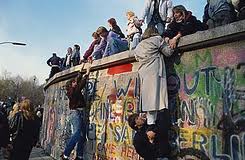 School districts are East Germany.
School choice programs are refugee camps comprised of people who have left East Germany.
The promised land (i.e., a better public education system) is West Germany.
The promised land becomes attainable when the number of families in refugee camps becomes large enough to make a well-regulated, market-driven public education system viable.
I equate school districts with East Germany because they are command-and-control, politically run monopolies where teachers and parents have little decision-making power. School districts employ legal barriers (i.e., the Berlin Wall) to prevent families from leaving, although affluent families have always been able to buy their way out. Increasingly, lower-income families are accessing resources (i.e., tax credit scholarships and vouchers) which allow them to get out also.
While this analogy is not precise, it does help me understand the motivations, tensions and contradictions that permeate the current education reform movement. Today we have two parallel reform movements. One is attempting to improve productivity within East Germany, while the second is trying to knock down the Berlin Wall and turn all of public education into West Germany. (more…)

