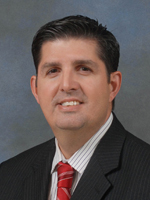
Rep. Manny Diaz Jr.
A key player in legislation to expand school choice scholarships in Florida said Monday he will fight to keep scholarship students from having to take the same standardized tests as their public school counterparts.
The comments from state Rep. Manny Diaz, R-Hialeah, are squarely at odds with calls for a same-test mandate by Senate President Don Gaetz, R-Niceville, and suggest positions may be hardening over a critical potential piece of the legislation.
"I do want to see any mandates to require the state test," Diaz, who is shepherding the bill for House Speaker Will Weatherford, said during a live chat with redefinED.
"I plan to fight to keep away from any mandate of state testing that would stymy innovation at these schools," he continued. "Since there is no current new state test in Florida this would be a mistake. I believe that as we work this (through) the process we will find a solution that will show this program has accountability without placing it in a one-size-fits-all box."
Diaz's comments came on the eve of the bill's hearing Tuesday in the House Choice & Innovation Subcommittee. So far, no testing language has surfaced with the House bill or its Senate counterpart, but Gaetz has indicated that additional testing requirements are a priority. Currently, tax credit scholarship students are required to take state-approved, norm-referenced tests in reading and math, but not the same tests taken by public school students.
Also during the chat, Diaz said he believed the bill will still earn some bipartisan support, as similar legislation has in recent years. No Democrats voted in favor of the bill during its first stop two weeks ago in the House Finance & Taxation Subcommittee. (more…)
As if education politics in Florida couldn’t get more complicated.
Opponents of Common Core in public schools are hoping to seize on anti-Common Core sentiment among their counterparts in private schools. The prompt: Calls by Senate President Don Gaetz, R-Niceville, for tax credit scholarship students in private schools to take the same standardized tests as their public school peers.
In a recent newsletter, the Florida Stop Common Core Coalition wrote:
“Senate President Gaetz is determined to impose Common Core standards on private schools by requiring the state Common Core tests for all voucher/scholarship tax credit students. He stated these intentions in an interview in the Orlando Sentinel and in his opening day of the legislature speech. (See our report. Senator Bill Galvano (R-Bradenton) is carrying this bill, SB 1620, which if changed and passed as Gaetz wants, would prevent up to 330,000 students from being free from Common Core. This is completely unacceptable. Please let him know how much of a problem this really is … “
A bill to strengthen and expand the scholarship program cleared the House Finance & Taxation Subcommittee last week on an 11-7, party-line vote. But the bill did not include testing language, and some House members said they opposed the proposed testing mandate. So far, no test language has surfaced with the Senate bill, either. (Full disclosure: the scholarship program is administered by Step Up For Students, which co-hosts this blog.)
Whether Common Core would help or hurt private schools and school choice has been a heated side debate in the fight over the standards. Some private schools clearly oppose the standards, while others are embracing them.
 Florida Senate President Don Gaetz says he wants low-income students on the Tax Credit Scholarship to take a different standardized test, but his message has gotten a bit garbled in translation.
Somehow, the word “different” keeps disappearing.
Gaetz is raising a perfectly legitimate issue – whether a proposed expansion of the 12-year-old scholarship program for economically disadvantaged students should include a requirement that the scholarship students take the same standardized test the state is getting ready to roll out for public students in 2015. That test will be tied to Florida’s version of the Common Core standards. Currently, scholarship students are taking nationally-normed standardized tests approved by the state.
Somehow, even some of the state’s best newspapers have gotten this distinction wrong.
One report called Gaetz's idea "a dramatic swing in Florida's experience with school choice, where critics have complained voucher programs were diluting public schools with no evidence they were improving the outcomes for poor children.” Another said that “Senate leaders are proposing for the first time that scholarship recipients take standardized tests.” An editorial asked of the academic achievement in the program: "How do we know"
This is important because the error feeds a narrative – there is “no evidence” the scholarships are helping children – that is wrong. (For the record, the scholarship program is administered by Step Up For Students, which co-hosts this blog.) (more…)
Editor's note: With debate heating up over a proposal to expand Florida's tax credit scholarship program, a good amount of misinformation is circulating too. C.E. Glover, senior pastor and CEO of Mount Bethel Ministries, based in Fort Lauderdale, penned this op-ed in response to an editorial in the South Florida Sun Sentinel. The Sun Sentinel published Dr. Glover's piece today. (And again for the record, the school choice scholarship program is administered by Step Up For Students, which co-hosts this blog.)
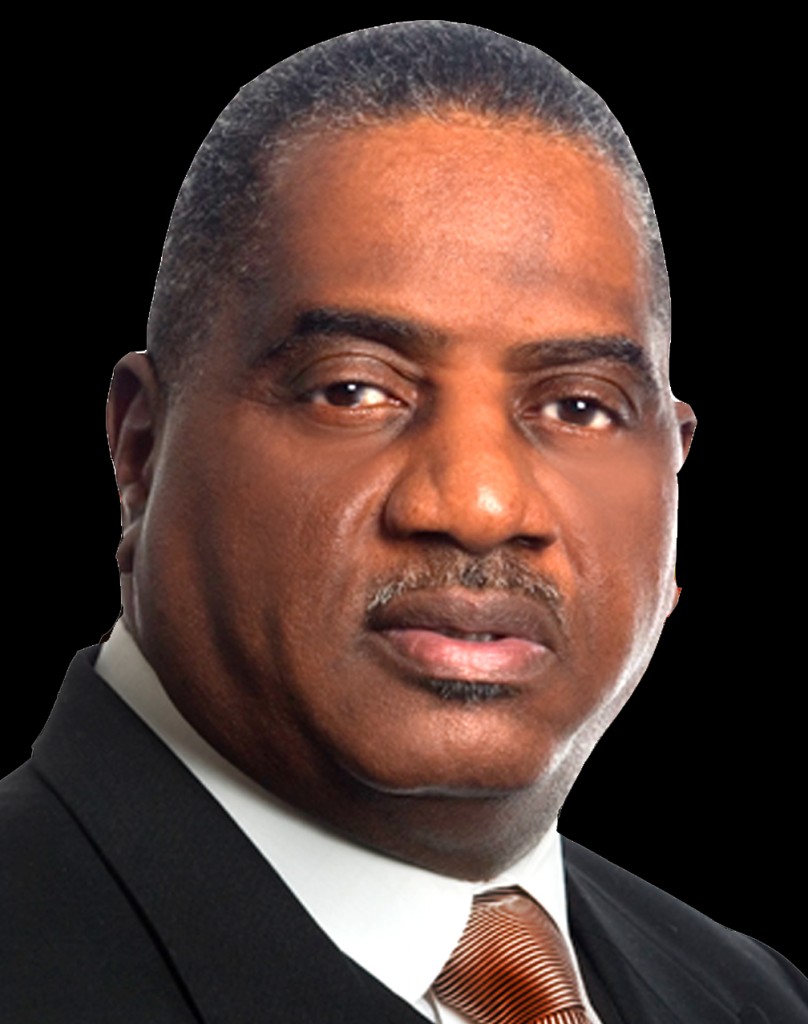
Dr. Glover
Since we opened Mount Bethel Christian Academy in 1990, we have worked with a steady stream of students who arrived in our classrooms academically behind. Many of them were in danger of falling through the cracks in school – and in life.
In recent years, many of them were able to come to us only because of Florida's tax credit scholarship program, which offers educational options to the low-income parents who need them the most. And, I'm happy to report, many of those students have gone on to excel not only at our school, but in other schools both public and private.
I bring this up in response to the Sun-Sentinel's editorial, "Make testing a part of state vouchers." The suggestion that tax credit scholarship students should take the same standardized tests as public school students is worthy of serious public debate. All of us want to make sure that all students, whether they are in public school or private school or some other sector, are learning enough to succeed in a world that's getting more competitive and complicated by the second.
But the Sun-Sentinel omitted some important details about the scholarship program that are vital to having an informed debate.
To be clear, tax credit scholarship students are not exempt from accountability tests. Since 2006, they have been required, by state law, to take a state-approved standardized test. At our school, they take the widely respected Stanford Achievement Test. The results are sent to a top-notch education researcher for analysis and comparison to public school students. Since 2010, state law has also required the public disclosure of average test score gains or losses for private schools with 30 or more students in tested grades.
We know two important things from the test data. First, the students who use tax credit scholarships tend to be the lowest-performing students in the public schools. That finding is in sync with our experiences. Second, scholarship students are making the same annual learning gains as students of all income levels nationally. That should be encouraging to parents, taxpayers and policy makers.
It's worth noting that scholarship students are achieving these results with much less public funding than children in public schools. This year, the scholarship amount was $4,880. And though that's roughly half of total government spending on children in Florida public schools, it still comes with meaningful requirements for financial accountability. (more…)
Editor's note: Jason Fischer, a pro- school choice school board member in Duval County, Fla. penned an op-ed for today's Context Florida in response to criticism of the testing requirements for students in Florida's tax credit scholarship program. Here's a snippet (and, full disclosure, the tax credit program is administered by Step Up For Students, which co-hosts this blog):

Jason Fischer
Tax Credit Scholarships serve underprivileged children. The scholarship serves 59,674 students in 1,414 private schools this year. What we know at this point is that the students come from homes that struggle, with incomes on average that are only 9 percent above poverty, and with the majority headed by a single parent. We know more than two-thirds are black or Hispanic.
More importantly, we know the students who choose the scholarship are among the lowest performers in the public schools they leave behind. And we know this: these same students achieve the same gains in reading and math as students of all incomes nationally.
That’s encouraging data, but detractors call it irrelevant and “inscrutable” simply because the students don’t take the state FCAT. While it would be simpler if all students in all schools took the same test, the nationally norm-referenced tests required of scholarship students are undisputed tools of academic measurement. Also undisputed is their ability to gauge whether students are gaining or losing ground to their peers nationally.
So policymakers are sometimes required to strike a balance. Full op-ed here.
Sass
Students who attend Florida charter high schools are more likely to persist in college and earn more money than their counterparts in district schools, an “especially striking” finding given little differences in test scores, according to a new working paper. (Hat tip: Colin Hitt at Jay P. Greene’s Blog).
The paper is co-authored by four researchers, including Tim Sass, formerly an economics professor at Florida State University and now at Georgia State University. It builds on earlier research that found students in charter high schools in Florida and Chicago were more likely to graduate from high school and enroll in college than like students in traditional public schools. (Both groups examined attended charter schools in eighth grade.) The more recent data continues to show the same thing. But the researchers also found:
In both cases, the researchers found the differences to be statistically significant. They write in their conclusion:
“Exactly what charter schools are doing to produce substantial positive effects on educational attainment and earnings is an open question. Charter high schools might be able to produce positive effects on initial college entry merely by providing better counseling and encouragement to apply and enroll. But that could not explain higher rates of persistence in college or higher earnings, suggesting that charter high schools are endowing their students with skills that are useful for success in college and career but that test scores do not capture. The fact that charter high school students have higher earnings even if they do not attend college further supports this interpretation …
“Positive impacts on long-term attainment outcomes and earnings are, of course, more consequential than outcomes on test scores in school. It is possible that charter schools’ full long-term impacts on their students have been underestimated by studies that examine only test scores.”
In Florida, those studies include this, this, this and this.
Editor's note: Peter Hanley is executive director of the American Center for School Choice.

Hanley
I wish we could have a more sophisticated, more realistic discussion of testing in our education reform debate. We do not yet have testing right, but the noise, much of it irrelevant to constructive dialogue, is making it difficult to determine if we are making much progress.
For all the imperfections of No Child Left Behind, the evidence seems clear that focusing even imperfectly on achievement and academic outcomes, as well as highlighting key subgroup performance, made a difference. Testing was clearly a key part of NCLB and plenty of room for legitimate debate exists about the amount and use of those tests. But the ongoing campaigns to nearly abandon testing, especially standardized testing, seem an overreaction and ill-advised.
The progress could have been greater. We could have been smarter and not allowed politics to put so many states in a race to dumb down the definition of “proficiency” so they could appear academically stronger than they were. The Fordham Foundation still rates only 10 states with history standards at an “A” or “B” level. Most of the science standards are mediocre to poor. The English/language arts standards improved little between 2005 and 2010. So in much of the country, even assuming the tests were aligned to the standards, we were starting with many defects built into the assessment system. If the standards did not ask for much critical thinking, problem solving, or teamwork skills, testing for them was highly problematic from the start. Yet this fundamental flaw is seldom a factor in any conversation about testing.
Nevertheless, the system broke through some stagnation despite NCLB’s shortcomings. Installing a testing and accountability system, however flawed, played a significant part. After treading water or deteriorating for 30 years, the high school graduation rate improved between 2000-10, even for African-Americans and Hispanics. To be sure, we are not anywhere close to where we need to be, but we got better. The focus on reading and math, on testing and then publishing the results, seems likely to have contributed to materially higher NAEP scores in the 2000 decade than over the previous period of the late 1980’s and 90’s. The result: greater numbers of better prepared freshmen entering high school, in turn leading to higher percentages of them graduating. This increase occurred even though 70 percent of high school students by 2010-11 had to pass some sort of exit exam to receive a diploma.
For all the continuous complaining about “teaching to the test,” where the standards were high and the tests were aligned, that did not seem to be a bad thing. In California, with which I am most familiar and whose standards are Fordham-rated at mostly the “A” level, academic progress has been steady. In 2013, the majority of students were “proficient” in math, English and science compared with one-third 10 years earlier. Unquestionably, many issues still remain in California – performance of subgroups, especially Latino students, and performance at the high school level, which is much lower than at the elementary level, to name just two of the most worrisome. But until California put in place its own stricter accountability system in 1999, tied heavily to testing and then coupled with NCLB, education outcomes had deteriorated markedly. (more…)
AP results. Florida students rank No. 4 in the nation in the percentage of graduates passing an AP exam. redefinED. Tampa Bay Times. Miami Herald. Tallahassee Democrat. Orlando Sentinel. CBS Miami. Florida Today. Associated Press. Fort Myers News Press.
 Tutoring oversight. The Tampa Bay Times elevated a handful of bad actors to taint the overall tutoring effort in Florida and ridicules a program championed by the late Sen. Ted Kennedy to help low-income families, writes Steve Pines, executive director of the Education Industry Association, in an op-ed response to the Times series and editorial.
Teacher evals and school grades. Despite the concern of Education Commission Tony Bennett and others, the two systems are not meant to be in sync. Shanker Blog.
More conspiracy! Now in Education Week.
Class size flexibility. There's bipartisan support for a bill to provide that. StateImpact Florida.
Common Core. Florida Education Commissioner Tony Bennett talks more about the why's behind Plan B. Education Week. (more…)
Teacher pay. Gov. Rick Scott says he wants to set aside enough money in this year’s budget to give every district teacher a $2,500 raise. Coverage from Tampa Bay Times, South Florida Sun Sentinel, Naples Daily News, Sarasota Herald Tribune, Associated Press, Tallahassee Democrat, Pensacola News Journal. Politics and poll numbers are at play, the HT also writes. Teachers "suspicious," writes the Lakeland Ledger. Teachers "skeptical," writes the Tampa Tribune. Teachers unions "cautiously optimistic," writes the Florida Times Union.
 Marco Rubio. The senator tells an audience at the U.S. Chamber of Commerce that he’ll be pushing education reform, even if it’s not the sexiest issue: “The good news is it’s not partisan, the good news is it’s something that there’s broad support for," he said. "The bad news is because it’s not partisan. Because it’s not controversial, it’s not getting nearly enough attention as it needs to be getting." The Hill.
Tony Bennett and the Legislature. Gov. Scott cancels his appearance before the Senate Education Committee, but Tony Bennett talks to senators about voucher accountability, Common Core, SB 736, etc. Coverage from redefinED, SchoolZone (two posts here and here) Gradebook (two posts here and here), StateImpact Florida and the Associated Press.
Slow down. Florida superintendents want a longer timeline to implement a suite of changes, including new tests and teacher evaluations, reports the Fort Myers News Press.
Charter schools. A new study based on Florida data suggests charter schools might not be any better than district schools at showing low-performing teachers the door. Shanker Blog.
Teacher preparation. The National Council for Teacher Quality gives Florida a B- (the best grade it gave any state) for its teacher preparation policies. SchoolZone. Sherman Dorn critique here. (more…)
New Florida Education Commissioner Tony Bennett offered more hints Wednesday that he is not satisfied with the current accountability framework for Florida private schools that accept students with vouchers and tax credit scholarships.
Making his first appearance before the Senate Education Committee, Bennett was asked by Sen. Bill Montford, D-Tallahassee, for his thoughts on “holding everybody accountable that receives tax dollars.” His response:
“I would suggest to you that this is a place where with all candor, sir, that even some of my supporters have been uncomfortable in the past. Because I do believe that schools that receive state funds should be held accountable and I believe that accountability should be just as transparent as what we expect from our traditional public schools.
“So I would share with you that in Indiana, every school that received state funds got a letter grade that was all calculated the same way. A public charter school got its letter grade calculated the same way as the traditional publics. Schools that received vouchers – and we did have the nation’s most expansive voucher program, pure voucher program – they got a letter grade, based on the same measurements as our traditional publics. And that way the public could make an informed choice around school quality.
“Now I know that constitutionally, the voucher situation here isn’t the same was Indiana. And I know there’s that discussion about state funds. So I want to lay that out there. But again, these were all schools that received money from the state budget. And I believe as a steward of the state tax dollars, we have to think about making sure that our citizens know the performance of schools that receive state tax dollars. And our job is to set the expectations for those schools and drive to those expectations.”
Senators also asked Bennett about a wide range of other issues. His biggest priorities, he said: implementing Common Core standards and reviewing SB 736, the far-reaching 2011 law that changes how district teachers are evaluated and paid. (more…)

