 New Hampshire: The state legislature overrides Gov. John Lynch's veto of a tax credit scholarship bill. (Manchester Union-Leader)
North Carolina: School choice leaders throw in the towel on a legislative proposal for tax credit scholarships. (Associated Press) A judge rules that a virtual charter school cannot open, siding with the state board of education, which had refused to consider the proposed school's application. (Raleigh News & Observer)
New Jersey: Gov. Chris Christie says it's unlikely that a school voucher bill will move in the state legislature this year. (NJ Spotlight)
Florida: Faced with declining enrollment and increased competition from school choice, the Broward County School Board wants to open its own charter schools. (South Florida Sun Sentinel) Meanwhile, the state Charter School Appeal Commission sides with four of five charter school applications rejected by the Palm Beach County School Board. (Palm Beach Post)
Pennsylvania: A well-funded political action committee and the Philadelphia Archdiocese are pushing hard to expand the state's tax credit scholarship program. (Philadelphia Inquirer)
Texas: The state's main charter school group filed suit against the state, charging it with short-changing charters on facilities funding and arbitrarily capping the number of charters that can open. (Houston Chronicle) (more…)
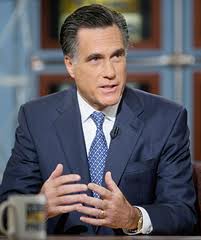 Mitt Romney’s white paper on education, “A Chance for Every Child,” offers laudable support for increased parental choice and for other changes, such as tenure reform, that must occur to improve education in America. Like Obama, Romney wants to leverage federal dollars to move states in the right direction on public school choice, especially the removal of charter school caps and the adoption of open enrollment policies. He also advocates for private school choice “where permitted by state law.”
But is his plan viable? And will he lead to implement it?
Romney would remove most of No Child Left Behind’s accountability standards in favor of expanded reporting on how schools are different. He would allow states to set their own standards and tests, but print the state’s National Assessment of Educational Progress (NAEP) outcomes on school and district report cards. NAEP brings much value to the discussion of education performance in America, but none to how an individual school district or school is performing because it does not test sufficient numbers or in every school and district. Implicit in this move - away from accountability by achievement measures towards improved information about schools - is that such information is lacking today. But parents are actually quite knowledgeable about local schools’ pluses and minuses and can access sites such as www.Greatschools.org for more detailed information.
So, for this information to be vastly more empowering than it is today, Romney recognizes that school choice would have to be dramatically expanded. That’s especially true for public school choice where, frankly, most of the schools will be for the foreseeable future.
The Romney plan seeks to expand choice primarily in two ways. First, he would convert Title 1 and federal special education (IDEA) funds that go to schools serving economically disadvantaged students. They would become vouchers that the eligible Title 1 and special ed students could take to any other school, including a private school, or even to a tutoring provider or digital school. Second, he would require states, as a condition for receiving these funds, to adopt open enrollment policies and eliminate caps on charter and digital schools.
The Title 1 and IDEA proposal is worthy of consideration. (more…)

