New Florida Education Commissioner Tony Bennett offered more hints Wednesday that he is not satisfied with the current accountability framework for Florida private schools that accept students with vouchers and tax credit scholarships.
Making his first appearance before the Senate Education Committee, Bennett was asked by Sen. Bill Montford, D-Tallahassee, for his thoughts on “holding everybody accountable that receives tax dollars.” His response:
“I would suggest to you that this is a place where with all candor, sir, that even some of my supporters have been uncomfortable in the past. Because I do believe that schools that receive state funds should be held accountable and I believe that accountability should be just as transparent as what we expect from our traditional public schools.
“So I would share with you that in Indiana, every school that received state funds got a letter grade that was all calculated the same way. A public charter school got its letter grade calculated the same way as the traditional publics. Schools that received vouchers – and we did have the nation’s most expansive voucher program, pure voucher program – they got a letter grade, based on the same measurements as our traditional publics. And that way the public could make an informed choice around school quality.
“Now I know that constitutionally, the voucher situation here isn’t the same was Indiana. And I know there’s that discussion about state funds. So I want to lay that out there. But again, these were all schools that received money from the state budget. And I believe as a steward of the state tax dollars, we have to think about making sure that our citizens know the performance of schools that receive state tax dollars. And our job is to set the expectations for those schools and drive to those expectations.”
Senators also asked Bennett about a wide range of other issues. His biggest priorities, he said: implementing Common Core standards and reviewing SB 736, the far-reaching 2011 law that changes how district teachers are evaluated and paid. (more…)
Financial irregularities. Eighty-five percent of district schools in Palm Beach County show financial irregularities, an audit finds, with some cases involving “thousands of missing dollars, spotty tracking of fundraising cash and outstanding deficits in school funds,” reports the South Florida Sun Sentinel.
 Teacher turnover. The Pasco district knows it must find ways to slow the revolving door in high-needs schools. Tampa Bay Times.
Inconvenient truths. Florida Voices columnist Rick Outzen says it’s an “inconvenient truth” that Florida’s grad rates are so low. (It’s also an inconvenient truth, not mentioned in the column, that they’re among the fastest-rising in the country.)
Construction money. Supporters of traditional public schools say charter school funding is leaving them in a bigger bind, reports the St. Augustine Record. Says Colleen Wood with 50th No More (and Save Duval Schools): “It seems to be the idea that parental choice is the guiding principal (for charter schools) as opposed to (students getting) the best education possible.”
Rubio and tax credit scholarships. Florida offers a model for a federal program proposed by U.S. Sen. Marco Rubio, writes the Choice Words blog. (Step Up For Students, which co-hosts this blog, administers the Florida program.)
Evals. The ones for administrators came out last week, too. StateImpact Florida. But there's a disconnect between the new evals and school grades, writes Naples Daily News columnist Brett Batten.
Early learning funding formula. Gov. Rick Scott says the state won’t change it this year, drawing praise from early learning coalitions, reports Gradebook.
Stuck in the '70s. In an editorial about the three finalists for ed commish, the Tampa Bay Times likens the DOE to "an old pinball machine" and asks: "At what point does the privatization of the public school system go too far? And what will you do move the focus off of vouchers and back to the heart of Florida's future - its traditional public schools?" Orlando Sentinel columnist Beth Kassab says go with Tony Bennett.
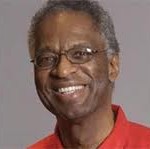 When Indiana's celebrated state superintendent of instruction, Tony Bennett, spoke in support of universal vouchers at last week's American Federation For Children summit, the panel's moderator did not sit quietly. After all, just last year, Howard Fuller (pictured here) fought legislative attempts to include high-income families in a Milwaukee voucher program he helped create for poor children. Of the prospect of universal vouchers in Wisconsin, Fuller proclaimed, "That's when I get off the train."
So Fuller, a legend in the school choice movement, politely invoked "the moderator's privilege" after Bennett spoke. And he was characteristically blunt.
“The thing that I most worry about is that people will forget the importance of protecting poor people in this,” Fuller said, before adding a few sentences later, “I just want people to know … when folks move towards universal (vouchers), just know that some of us are going to fight it.”
The world of school choice is more textured and dynamic than it’s portrayed. It’s not a monolith. It’s many camps, with overlapping but not always consistent visions. For the most part, those differences were glossed over at the AFC summit, and for good reason. The summit was a fitting celebration of recent victories. It was rightly punctuated by moving speeches from New Jersey Gov. Chris Christie, Louisiana Gov. Bobby Jindal and Newark Mayor Cory Booker.
But the differences are there. And beneath the surface, some tensions too. Fuller has drawn a line in the sand before, including in this podcast interview last year with former redefinED editor Adam Emerson. Here are his latest remarks in full, as best as I could hear and transcribe them: (more…)

