This fall, after wowing millions of TV viewers, falling just short of the final round on NBC's The Voice and gaining national exposure that she hopes will launch a lifelong music career, Shalyah Fearing tried something new. She started learning in a traditional classroom at a local public high school.
Now 16 and a junior, she takes three classes at River Ridge High School in New Port Richey, Fla. while managing the rest of her course load online.
Her family has experienced just about every flavor of school choice — public, private, virtual, home education. So it was fitting that they lent their voices to one of the first events of National School Choice Week, which runs Sunday through Jan. 28, and includes more than 20,000 events across the country.
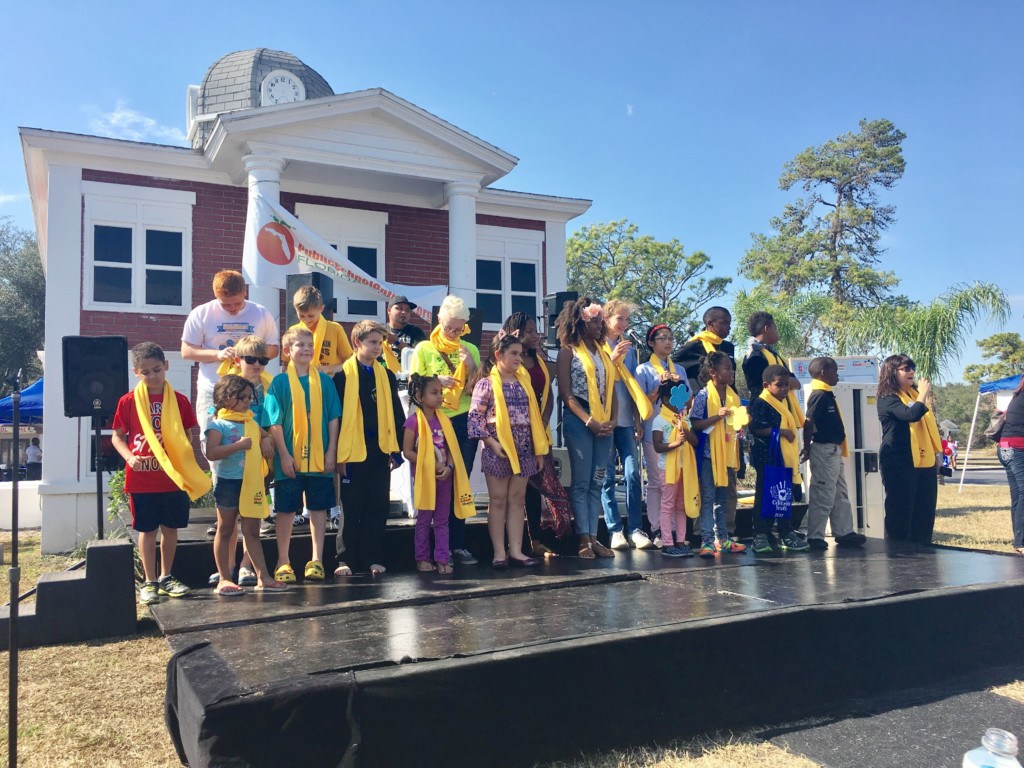
Students join Shalyah Fearing on stage during a celebration of educational options in Pasco County, Fla.
The events steer clear of politics and encompass multiple educational options.
Among others, Saturday's celebration in Shady Hills featured local Catholic schools, the Pasco County school district's career academies and the statewide virtual school that allowed Shalyah to take classes while she chased her musical dreams in California.
For most of Shalyah's life, she and her six school-age brothers and sisters were homeschooled. As her mother puts it, they enrolled at Fearing Academy.
When she traveled to Los Angeles to compete on reality television, she took classes through Florida Virtual School. She tackled assignments as her schedule allowed, and kept up with teachers and classmates online and by phone.
"All I had to do was carry my laptop everywhere I went," she said. "My teachers were always available." (more…)
Jeynes
For many school choice supporters, enrollment growth across many sectors is reason to cheer. But new research may give policymakers pause about whether they're pursuing the options that result in the best academic outcomes.
William Jeynes, a professor at California State University, Long Beach, and a senior fellow at the Witherspoon Institute, found students in religious schools were, on average, a full year ahead of their peers in traditional public and charter schools. After controlling for parental involvement, income, race and gender, the students were, on average, seven months ahead.
The findings, recently published in the Peabody Journal of Education, were based on a first-of-its-kind meta-analysis of 90 studies that compared academic performance across the three sectors. Jeynes also found:
The implications for school choice, he said, are obvious. (more…)
Vitti
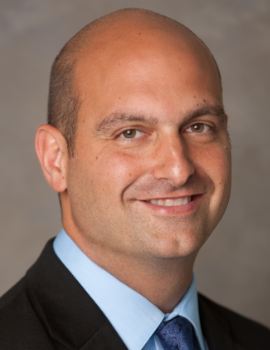
To appreciate the significance of what Nikolai Vitti is saying about parental choice, one must first read his resume. He’s a 36-year-old with a Harvard education doctorate who served as chief academic officer to nationally recognized Miami-Dade school superintendent Alberto Carvalho before being chosen in the fall to run the Duval County school district, the 22nd largest in the nation.
So Vitti is, by anyone’s definition, a comer on the national public education scene.
And he says this: “I support choice because I think parents need options, especially those that do not have the financial means to go to a private school.”
And this: “I just don’t believe that anyone should tell a parent where they should send their child to school. I’m vehemently opposed to limiting options, especially to parents whose children are in lower performing schools or parents who don’t have the financial means to have the same flexibility that a parent would have of means. And that’s historically what’s happened with our public education system.”
These statements, in an enlightening podcast posted to this blog on Monday, are all the more impressive given that the school district he now commands has an uneasy history with private school choice. The pressure on him to continue to wage high-profile war is certainly great. But Vitti comes from a place, and perhaps a generation, where choice is not a dirty word. He openly praises charter operators such as KIPP, even borrowing from some of their practices while in Miami, and asserts that competition is making school districts up their game. In one of his first meetings on the new job, he recommended, and the school board approved, 12 new charter schools.
Vitti, then, is owed more than a pat on the back. He is also trying to break through the political divide to encourage open-minded debate on how to make choice actually work. Toward that end, he brings legitimate concerns to the table and needs to be heard. (more…)
Financial irregularities. Eighty-five percent of district schools in Palm Beach County show financial irregularities, an audit finds, with some cases involving “thousands of missing dollars, spotty tracking of fundraising cash and outstanding deficits in school funds,” reports the South Florida Sun Sentinel.
 Teacher turnover. The Pasco district knows it must find ways to slow the revolving door in high-needs schools. Tampa Bay Times.
Inconvenient truths. Florida Voices columnist Rick Outzen says it’s an “inconvenient truth” that Florida’s grad rates are so low. (It’s also an inconvenient truth, not mentioned in the column, that they’re among the fastest-rising in the country.)
Construction money. Supporters of traditional public schools say charter school funding is leaving them in a bigger bind, reports the St. Augustine Record. Says Colleen Wood with 50th No More (and Save Duval Schools): “It seems to be the idea that parental choice is the guiding principal (for charter schools) as opposed to (students getting) the best education possible.”
Rubio and tax credit scholarships. Florida offers a model for a federal program proposed by U.S. Sen. Marco Rubio, writes the Choice Words blog. (Step Up For Students, which co-hosts this blog, administers the Florida program.)
Evals. The ones for administrators came out last week, too. StateImpact Florida. But there's a disconnect between the new evals and school grades, writes Naples Daily News columnist Brett Batten.
Early learning funding formula. Gov. Rick Scott says the state won’t change it this year, drawing praise from early learning coalitions, reports Gradebook.
Stuck in the '70s. In an editorial about the three finalists for ed commish, the Tampa Bay Times likens the DOE to "an old pinball machine" and asks: "At what point does the privatization of the public school system go too far? And what will you do move the focus off of vouchers and back to the heart of Florida's future - its traditional public schools?" Orlando Sentinel columnist Beth Kassab says go with Tony Bennett.

