 Across the state: The State University System of Florida is investigating the presidential search at Florida Atlantic University, the Florida Board of Education is meeting this week to weigh approval of proposed rules, staffing shortages are plaguing districts across the state as the first day of school approaches and books that include the works of William Shakespeare are being debated for use in schools. Here are details about those stories and other developments from the state’s districts, private schools, and colleges and universities:
Orange: A descendant of the founders of the town of Eatonville has joined a lawsuit contesting the Orange County School District's control of property dedicated to the education of Black children. Plaintiff Bea Leach Hatler is the great-granddaughter of Robert Hungerford, whose namesake is the school built on the site. The school board attempted to sell 100 acres for the construction of a mixed-use development, but community objections forced the developer to call off the project. Now, the community hopes to develop a museum, conference center and school in honor of Zora Neale Hurston, who was born there. Florida Phoenix. Meanwhile, the district is on track to reopen Riverdale Elementary at the start of the school year. The school has been closed since Hurricane Ian hit and flooded it with 2.5 feet of floodwater, officials say. WKMG.
Pasco: A Zephyrhills math coach who supports the parental rights movement wants to serve on the Pasco school board. Clyde L. Smith has worked in Pasco schools since 2010. Tampa Bay Times.
Staffing woes: Students in Bay county will be heading back to school in less than a month. Meanwhile, district officials are hoping to be fully staffed when classes begin on Aug. 10. School officials are considering partnering with a full-tine substitute staffing company. "Over the last several years, we have experienced a sub shortage in the classroom, and on a daily basis, normally fill in about 78% of the vacancies," said Executive Director of Human Resources Holly Buchanan. WJHG. In Santa Rosa county, there are about 200 positions open. Those positions need to be filled in all 38 schools in the district. School officials say 107 of those positions are instructional, and 80 are education support positions. WEAR.
Student loan forgiveness: More than 804,000 federal student loan borrowers will soon be notified that their debts will be automatically erased. "For far too long, borrowers fell through the cracks of a broken system that failed to keep accurate track of their progress towards forgiveness," said U.S. Secretary of Education Miguel Cardona in press release. NPR. CNN. WFLA. While the U.S. Supreme Court struck down President Joe Biden's widespread plan for student loan forgiveness in a 6-3 ruling, another plan that could gradually achieve similar results is in the works. Biden's plan would have provided up to $20,000 in debt relief to Pell grant recipients and $10,000 to non-Pell grant recipients. NPR. Florida Today.
University and college news: A state investigation was launched into Florida Atlantic University's presidential search, which is currently suspended. The State University System of Florida, the agency in charge of regulating the public university system, assigned its inspector general to look into the process, and FAU cancelled public forums with the three candidates. Chancellor Ray Rodrigues cited two concerns regarding the search: The search committee's use of secret ballots to narrow down candidates and a questionnaire asking about applicants sexual orientation and gender identity. "This office has received concerning information regarding anomalies that have been alleged in the Florida Atlantic University presidential search," a letter from Rodrigues said. Florida Phoenix. South Florida Sun-Sentinel. WPEC. Florida Times-Union.
Teacher recognition: Gov. Ron DeSantis announced that teachers have received recognition for their civics training. Over 11,000 teachers participated in the state Department of Education training and received over $33 million. The Summer Civics Professional Learning Series and Civics Seal of Excellence Endorsement provides teachers tools to teach civics in the classroom. The 50-hour online program had video lessons on America's history and government. Each teacher who earned the endorsement got a $3,000 stipend. DeSantis and the state Department of Education launched the Civics Seal of Excellence in January. WFTV.
School grades: This year, school grades will be delayed anywhere from late November to early January, according to an Escambia County District Schools data scientist. The reason: Florida students moved to a series of brand new state assessments called Florida Assessment of Student Thinking, or FAST, which prompted a delay in administering the grades. Pensacola News Journal.
Book challenges: Some say that the work of William Shakespeare could be at risk from being taught in state schools due to a new book challenge law, HB 1069, which took effect on July 1. Media specialists across the state are wondering if their interpretation breaks the law if they don't remove media that has certain definitions. Tallahassee Democrat.
State Board of Education rules: The Board is slated this week to weigh approval of proposed rules that include measures that would stop the use of the social media app TikTok on campuses and bar teachers from asking students their preferred pronouns. Some of the proposals, which go before the board during a Wednesday meeting in Orlando, stem from new laws that arose from the 2023 legislative session. WMNF.
Shorter school week: Some schools across the nation are moving to a four-day week, with Mondays off. The goal? Promoting self-care and quality of life for both students and teachers. About 2,100 schools across 26 states have switched to four-day weeks, data shows. Fox 35.
Best college's list: Money magazine's best colleges in America 2023 list included 17 Florida schools. The list looks at graduation rates, tuition, financial aid and alumni salaries. Patch.
Opinions on schools: One of the most insightful responses to the U.S. Supreme Court blocking affirmative action policies in university admissions came from Scott Galloway, a marketing professor at New York University. The solution, Galloway argues, is to create radically more space in top universities. Travis Pillow, reimaginED. Liberal professors leaving Florida has prompted a variety of views from residents. Tampa Bay Times. I recently received thank you notes saying I had been a good teacher. I also got an invite to a graduation party. The truth is, I don't feel like a good teacher. Yvette J. Green, Chalkbeat.
This is a message from the new editor of reimaginED.
For decades, Florida has expanded the educational options available to families. But some of the hardest and most important work is yet to come.
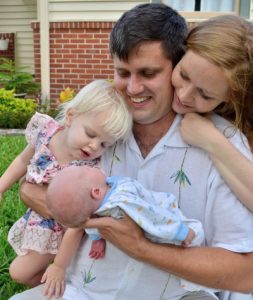
I see the progress to date and the work ahead through the needs of my own family—though neither of our children yet old enough to start kindergarten.
Our family lives in Sanford, Florida, a few blocks from a public elementary school. Part of me looks forward to walking my now-2-year-old daughter to school and back home every day.
But we have other options. Many of our neighbors send their kids to a public charter school a short drive away. A nearby science magnet school might be an even better fit. My daughter's current obsession is the solar system. A few months ago, she stopped by Goldsboro Elementary for a tree planting ceremony. She received an impromptu tour of the Kids Space Center. The episode remains a fixture in her frequent monologues.
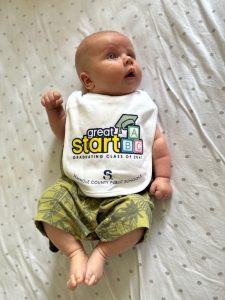
Will he be part of Seminole County Public Schools' class of 2041?
In May, my wife and I welcomed our son into the world. At the hospital, we received a bib from the Seminole County school district that claimed him as part of its 2041 graduating class.
As a member of one of the district's earlier graduating classes, I appreciate the sentiment.
I also know that Florida school districts can no longer assume that every baby born within their borders will grow up to attend schools they operate. Our local Catholic school offers a well-regarded academic program that aligns with our family’s faith. Thanks to Florida's proliferation of scholarship programs, it can enroll students who reflect the diversity of our community.
But we may opt not to enroll our children in any school. By the time our son is old enough for kindergarten, all families in the state will have access to scholarships that support a mix-and-match approach to education.
Mixing and matching describes our daughter’s current educational arrangement. She goes to preschool three mornings a week. We intersperse that conventional learning with a variety of other experiences: an outdoor school for toddlers, swimming lessons, free days at the park and the library.
I sometimes worry that she would find spending six hours a day sitting still in a conventional classroom excruciatingly dull by comparison. I wonder if we'd prefer to use a scholarship to support a diverse assemblage of learning experiences, rather than rely on a school to deliver them all in a single package.
If we do find a school that works for our children, it will not be enough. They'll need access to learning opportunities that prepare them to thrive in the adult world—learning that often happens best outside school walls. They might need tutoring or other supplemental learning opportunities. They'll definitely need useful ways to spend their time during Florida's sweltering summers.
Our family—really, all families—could use some help navigating all these choices and assembling a coherent program for each of our children.
My wife made a career teaching high school English at well-regarded charter school networks of New Orleans. But we quickly learned that public school teaching is simply incompatible with being a fully present parent to an infant and a toddler. She currently works part time teaching advanced English courses remotely to immigrant students in other states. She earns more money per hour, and enjoys far more flexibility, than she could ever find in a traditional classroom.
Her experience inspires my zeal to push the boundaries of a teaching profession that lacks the flexibility, advancement opportunities, and collegial collaboration that knowledge workers in other fields have come to expect.
All around us, I see unrealized possibilities. A 13-minute drive from our home is PSI High, a high-performing jewel of our school district, a seeming success story in a mixed bag of high-profile efforts to reimagine high schools. It has more students who want to attend than spots to enroll them, and no shortage of teachers eager to work with its project-based curriculum. But it remains a niche program, and there's no talk of scaling it to meet the burgeoning demand from teachers hoping to work there or students hoping to learn there.
Scale is one thing that sets Florida apart. Nearly half of our state's more than 3 million students attend some option other than their assigned public school. And that array of options will only grow more diverse and more complex.
So far this year, Step Up For Students (which hosts this blog and pays my salary) has approved nearly 290,000 applications for the state's newly expanded scholarship programs. The scholarships' potential uses have expanded beyond traditional private schools. Families can use them to pay for public-school classes, online courses, part-time tutoring, homeschool curricula, and other options instead of, or in addition to, school tuition.
Our next phase of work involves building the infrastructure that pushes this evolution toward greater customization further and helps realize its potential.
We need to build systems that allow families to make informed decisions, not just about where to send their children to school, but about what combination of learning products and services will meet their children's needs, and how they all fit together.
We will need to eliminate the walls between schools and communities and help families seamlessly cross boundaries between public schools and private learning options.
We will need to help promising schools, educators and entrepreneurs offer their services to all students who stand to benefit.
We will need to partner with schools and families to create the conditions for educators to do their best work—which for many, especially those who are young parents, will look nothing like a conventional six-hour school day in a typical classroom.
At reimaginED, we will offer a clear-eyed look at how this progress is unfolding in Florida. Along the way, we’ll highlight challenges, barriers, opportunities, promise and potential. Our goal is to learn quickly and inform the work happening across the country.
If you have tips, insights, ideas, or suggestions, please don’t hesitate to drop me a line.

