 Across the state: The State University System of Florida is investigating the presidential search at Florida Atlantic University, the Florida Board of Education is meeting this week to weigh approval of proposed rules, staffing shortages are plaguing districts across the state as the first day of school approaches and books that include the works of William Shakespeare are being debated for use in schools. Here are details about those stories and other developments from the state’s districts, private schools, and colleges and universities:
Orange: A descendant of the founders of the town of Eatonville has joined a lawsuit contesting the Orange County School District's control of property dedicated to the education of Black children. Plaintiff Bea Leach Hatler is the great-granddaughter of Robert Hungerford, whose namesake is the school built on the site. The school board attempted to sell 100 acres for the construction of a mixed-use development, but community objections forced the developer to call off the project. Now, the community hopes to develop a museum, conference center and school in honor of Zora Neale Hurston, who was born there. Florida Phoenix. Meanwhile, the district is on track to reopen Riverdale Elementary at the start of the school year. The school has been closed since Hurricane Ian hit and flooded it with 2.5 feet of floodwater, officials say. WKMG.
Pasco: A Zephyrhills math coach who supports the parental rights movement wants to serve on the Pasco school board. Clyde L. Smith has worked in Pasco schools since 2010. Tampa Bay Times.
Staffing woes: Students in Bay county will be heading back to school in less than a month. Meanwhile, district officials are hoping to be fully staffed when classes begin on Aug. 10. School officials are considering partnering with a full-tine substitute staffing company. "Over the last several years, we have experienced a sub shortage in the classroom, and on a daily basis, normally fill in about 78% of the vacancies," said Executive Director of Human Resources Holly Buchanan. WJHG. In Santa Rosa county, there are about 200 positions open. Those positions need to be filled in all 38 schools in the district. School officials say 107 of those positions are instructional, and 80 are education support positions. WEAR.
Student loan forgiveness: More than 804,000 federal student loan borrowers will soon be notified that their debts will be automatically erased. "For far too long, borrowers fell through the cracks of a broken system that failed to keep accurate track of their progress towards forgiveness," said U.S. Secretary of Education Miguel Cardona in press release. NPR. CNN. WFLA. While the U.S. Supreme Court struck down President Joe Biden's widespread plan for student loan forgiveness in a 6-3 ruling, another plan that could gradually achieve similar results is in the works. Biden's plan would have provided up to $20,000 in debt relief to Pell grant recipients and $10,000 to non-Pell grant recipients. NPR. Florida Today.
University and college news: A state investigation was launched into Florida Atlantic University's presidential search, which is currently suspended. The State University System of Florida, the agency in charge of regulating the public university system, assigned its inspector general to look into the process, and FAU cancelled public forums with the three candidates. Chancellor Ray Rodrigues cited two concerns regarding the search: The search committee's use of secret ballots to narrow down candidates and a questionnaire asking about applicants sexual orientation and gender identity. "This office has received concerning information regarding anomalies that have been alleged in the Florida Atlantic University presidential search," a letter from Rodrigues said. Florida Phoenix. South Florida Sun-Sentinel. WPEC. Florida Times-Union.
Teacher recognition: Gov. Ron DeSantis announced that teachers have received recognition for their civics training. Over 11,000 teachers participated in the state Department of Education training and received over $33 million. The Summer Civics Professional Learning Series and Civics Seal of Excellence Endorsement provides teachers tools to teach civics in the classroom. The 50-hour online program had video lessons on America's history and government. Each teacher who earned the endorsement got a $3,000 stipend. DeSantis and the state Department of Education launched the Civics Seal of Excellence in January. WFTV.
School grades: This year, school grades will be delayed anywhere from late November to early January, according to an Escambia County District Schools data scientist. The reason: Florida students moved to a series of brand new state assessments called Florida Assessment of Student Thinking, or FAST, which prompted a delay in administering the grades. Pensacola News Journal.
Book challenges: Some say that the work of William Shakespeare could be at risk from being taught in state schools due to a new book challenge law, HB 1069, which took effect on July 1. Media specialists across the state are wondering if their interpretation breaks the law if they don't remove media that has certain definitions. Tallahassee Democrat.
State Board of Education rules: The Board is slated this week to weigh approval of proposed rules that include measures that would stop the use of the social media app TikTok on campuses and bar teachers from asking students their preferred pronouns. Some of the proposals, which go before the board during a Wednesday meeting in Orlando, stem from new laws that arose from the 2023 legislative session. WMNF.
Shorter school week: Some schools across the nation are moving to a four-day week, with Mondays off. The goal? Promoting self-care and quality of life for both students and teachers. About 2,100 schools across 26 states have switched to four-day weeks, data shows. Fox 35.
Best college's list: Money magazine's best colleges in America 2023 list included 17 Florida schools. The list looks at graduation rates, tuition, financial aid and alumni salaries. Patch.
Opinions on schools: One of the most insightful responses to the U.S. Supreme Court blocking affirmative action policies in university admissions came from Scott Galloway, a marketing professor at New York University. The solution, Galloway argues, is to create radically more space in top universities. Travis Pillow, reimaginED. Liberal professors leaving Florida has prompted a variety of views from residents. Tampa Bay Times. I recently received thank you notes saying I had been a good teacher. I also got an invite to a graduation party. The truth is, I don't feel like a good teacher. Yvette J. Green, Chalkbeat.
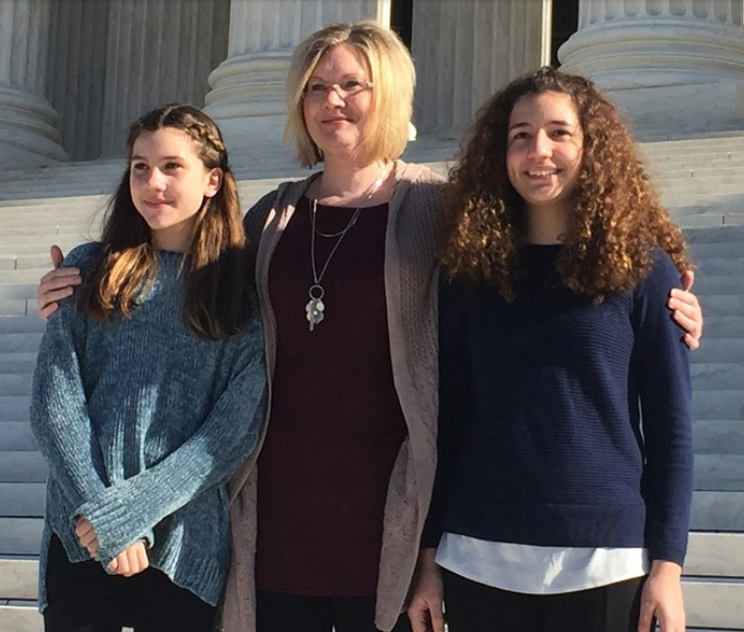
Kendra Espinoza of Kalispell, Montana, lead plaintiff in the case, with her daughters Naomi and Sarah outside the Supreme Court in Washington, D.C., in January.
Editor’s note: During the holiday season, redefinED is reprising the "best of the best" from our 2020 archives. This post originally published June 30.
 In a landmark decision today on school choice, the U.S. Supreme Court ruled that the Montana Department of Revenue’s shutdown of a tax-credit scholarship program for low-income students is unconstitutional, potentially opening the door for states to enact such programs for students to attend private faith-based schools.
The court said in its 5-4 decision on Espinoza vs. the Montana Department of Revenue, written by Chief Justice John Roberts, that the Montana Department of Revenue cannot disqualify religious schools simply because of what they are.
“A State need not subsidize private education. But once a State decides to do so, it cannot disqualify some private schools solely because they are religious,” the opinion said.
The ruling also stated:
“Drawing on ‘enduring American tradition,’ we have long recognized the rights of parents to direct ‘the religious upbringing’ of their children … Many parents exercise that right by sending their children to religious schools, a choice protected by the Constitution.”
Roberts was joined by Justices Samuel Alito, Clarence Thomas, Brett Kavanaugh and Neil Gorsuch. Dissenting were Justices Ruth Bader Ginsburg, Sonia Sotomayor, Elena Kagan and Stephen Breyer.
“The Supreme Court delivered a major victory to parents who want to choose the best school for their children, including religious schools,” said Institute for Justice senior attorney Erica Smith, who was co-counsel on the case. “This is a landmark case in education that will allow states across the country to enact educational choice programs that give parents maximum educational options.”
Organizations that support education choice praised the decision.
“It’s a good news day for those who love the freedoms we enjoy in this country and seek to advance and preserve those freedoms,” said Leslie Hiner, leader of the Legal Defense & Education Center for the nonprofit advocacy group EdChoice. “Today the Supreme Court has re-affirmed its role as the guardians of our Constitution. The Montana Supreme Court has disregarded the U.S. Constitution, and in particular the First Amendment’s clause protecting our right to the Free Exercise of whatever faith we choose as individuals, when it struck down a modest school choice program that allowed parents to choose any school, religiously-affiliated or not, for their children’s education.”
The case started in 2015, when the Montana Legislature enacted a program that provided a dollar-for-dollar tax credit for taxpayers who donated to a Student Scholarship Organization. That meant a Montana resident could donate to a scholar organization, and in turn, would receive a tax credit for the donation.
The Student Scholarship Organization used the donated money to provide scholarships to students to attend private schools, including private schools affiliated with a religion.
Shortly after the program was enacted, the Montana Department of Revenue promulgated an administrative rule (“Rule 1”) prohibiting scholarship recipients from using their scholarships at religious schools, citing a provision of the state constitution that prohibits “direct or indirect” public funding of religiously affiliated educational programs.
Kendra Espinoza and the two other mothers filed a lawsuit in state court challenging the rule. The trial court determined that the scholarship program was constitutional without the rule and granted the plaintiffs’ motion for summary judgment. On appeal, the Department of Revenue argued that the program is unconstitutional without Rule 1. The Montana Supreme Court agreed with the Department and reversed the lower court.
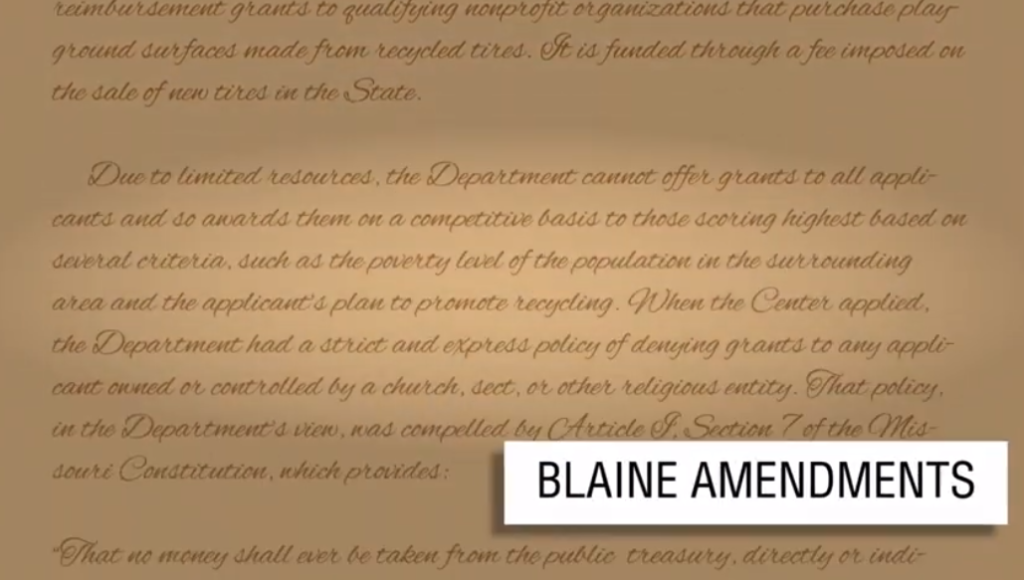
At issue in the case are Blaine Amendments, also called “No Aid” clauses, which are provisions in 38 state constitutions, including Florida’s, that bar public aid to religious organizations. They get their name from James G. Blaine, a congressional representative and later senator and presidential nominee from Maine who unsuccessfully attempted to amend the U.S. constitution in 1875 to include “anti-aid” language onto the end of the first amendment. Where he failed at the federal level, many states inserted Blaine Amendments into their constitutions. As a result, Blaine Amendments frequently act as state-level barriers against school choice.
“I am thrilled that the courts ruled in favor of the Constitution and maintained a parent’s right to choose where their children go to school,” Espinoza said in a news release issued by the Institute for Justice. “For our family, this means we can continue to receive assistance that is a lifeline to our ability to stay at Stillwater. For so many other families across America, this will potentially mean changing lives and positively altering the future of thousands of children nationwide. What a wonderful victory.”
The win and the promise of continued scholarships is a significant boost to Espinoza, who has had to work multiple jobs, including cleaning houses and doing janitorial work, to afford her daughters’ tuition payments at a private Christian school in Kalispell. Kendra transferred her two daughters to Stillwater Christian School after they struggled in their public school. Montana’s scholarship program has helped Kendra and families across the state keep their children in the school that works best for them.
“It’s been a century-and-a-half since the bigoted Blaine movement took root in state constitutions throughout the country,” IJ Senior Attorney Richard Komer, who argued the case before the Court said in the news release. “Today’s decision shows that it is never too late to correct an injustice, even one with as long and ignoble a pedigree as this one.”
Today’s decision will affect most of the 14 states that have strictly interpreted their state constitution Blaine Amendments to bar scholarships to children at religious schools. For decades, the creation and expansion of school choice programs have been inhibited by legislative concerns that they might conflict with state constitutions. Those concerns are now removed with today’s decision in Espinoza.
 “Like to one more rich in hope.”
Twelfth Night, Shakespeare
The media are calling the long-awaited U.S. Supreme Court decision in Espinoza v. Montana Department of Revenue a victory for “conservatives.” The Court has liberated a few low-income Montana families from conscription by the state and the teachers union, and yet we hear this rescue is “conservative.”
It is, I concede, an act of conservation, preserving the basic legal authority of the poor over their own children. These parents are, to a limited degree, made free to participate in the great school market. It is a victory for the lower-income family – but conservative?
Could it be that our English language is, for this scenario, simply lacking in resource to describe the reality? If you don’t like the judicial outcome of some dispute, you are free to call it whatever you think will give it a black eye in your own intellectual neighborhood. Hence, “conservative” we shall hear.
Last week’s decision is a powerful, if very limited, reaffirmation of the basic constitutional right, authority, and power, even of low-income parents, to decide just what style and content of formal schooling their child will experience – what teacher we shall allow to instruct their child in the skills she or he may need and what version of human origin and personal perfection will be delivered to these young minds for whom we are so full of hope.
The decision reminds us that 95 years ago, a case titled Pierce v. Society of Sisters et al. gave America the basic precept that parents – not the State – have the authority to decide where Susie goes to school. But a fundamental problem has remained: If you are not well-off, how can you exercise that authority by paying tuition? And, if you can’t do so, will the government that makes school compulsory leave you helpless with no option but P.S. 42? Must Susie go where strangers – i.e., “the State” – decide to send her?
So far in history, government has shown little interest in assisting the exercise of your parental authority. The primary concern of its legislatures and its governors has been to keep the teachers union electing them.
The Montana decision will not by itself end this great shadow on human liberty and authority. But the majority opinion justifies hope for development of ever more radical motions (“conservative,” if you prefer). The majority opinion by the chief justice relies exclusively upon the First Amendment’s guarantee that “Congress shall make no law … prohibiting the free exercise” of religion, extended by the 14th Amendment to limit the states.
One can wonder (“conservatively”?) about the regimes of public schooling born of 19th century anti-Romanism by which schools became mandatory, but those elite who could afford it could, and still do, go private or religious at their choice.
Is it still constitutionally sound for a state to make schooling a parental duty, but then to protect choice only for the well-off? Will the Court let the inner-city “public” school last forever it its captive mission, thus saving the bacon for officers of the teachers union?
Talk to your state legislator – and stay tuned to the conservative Court.
Kendra Espinoza of Kalispell, Montana, lead plaintiff in the case, with her daughters Naomi and Sarah outside the Supreme Court in Washington, D.C., in January.
In a landmark decision today on school choice, the U.S. Supreme Court ruled that the Montana Department of Revenue’s shutdown of a tax-credit scholarship program for low-income students is unconstitutional, potentially opening the door for states to enact such programs for students to attend private faith-based schools.
The court said in its 5-4 decision on Espinoza vs. the Montana Department of Revenue, written by Chief Justice John Roberts, that the Montana Department of Revenue cannot disqualify religious schools simply because of what they are.
“A State need not subsidize private education. But once a State decides to do so, it cannot disqualify some private schools solely because they are religious,” the opinion said.
The ruling also stated:
“Drawing on ‘enduring American tradition,’ we have long recognized the rights of parents to direct ‘the religious upbringing’ of their children … Many parents exercise that right by sending their children to religious schools, a choice protected by the Constitution.”
Roberts was joined by Justices Samuel Alito, Clarence Thomas, Brett Kavanaugh and Neil Gorsuch. Dissenting were Justices Ruth Bader Ginsburg, Sonia Sotomayor, Elena Kagan and Stephen Breyer.
“The Supreme Court delivered a major victory to parents who want to choose the best school for their children, including religious schools,” said Institute for Justice senior attorney Erica Smith, who was co-counsel on the case. “This is a landmark case in education that will allow states across the country to enact educational choice programs that give parents maximum educational options.”
Organizations that support education choice praised the decision.
“It’s a good news day for those who love the freedoms we enjoy in this country and seek to advance and preserve those freedoms,” said Leslie Hiner, leader of the Legal Defense & Education Center for the nonprofit advocacy group EdChoice. “Today the Supreme Court has re-affirmed its role as the guardians of our Constitution. The Montana Supreme Court has disregarded the U.S. Constitution, and in particular the First Amendment’s clause protecting our right to the Free Exercise of whatever faith we choose as individuals, when it struck down a modest school choice program that allowed parents to choose any school, religiously-affiliated or not, for their children’s education.”
The case started in 2015, when the Montana Legislature enacted a program that provided a dollar-for-dollar tax credit for taxpayers who donated to a Student Scholarship Organization. That meant a Montana resident could donate to a scholar organization, and in turn, would receive a tax credit for the donation.
The Student Scholarship Organization used the donated money to provide scholarships to students to attend private schools, including private schools affiliated with a religion.
Shortly after the program was enacted, the Montana Department of Revenue promulgated an administrative rule (“Rule 1”) prohibiting scholarship recipients from using their scholarships at religious schools, citing a provision of the state constitution that prohibits “direct or indirect” public funding of religiously affiliated educational programs.
Kendra Espinoza and the two other mothers filed a lawsuit in state court challenging the rule. The trial court determined that the scholarship program was constitutional without the rule and granted the plaintiffs’ motion for summary judgment. On appeal, the Department of Revenue argued that the program is unconstitutional without Rule 1. The Montana Supreme Court agreed with the Department and reversed the lower court.
At issue in the case are Blaine Amendments, also called “No Aid” clauses, which are provisions in 38 state constitutions, including Florida’s, that bar public aid to religious organizations. They get their name from James G. Blaine, a congressional representative and later senator and presidential nominee from Maine who unsuccessfully attempted to amend the U.S. constitution in 1875 to include “anti-aid” language onto the end of the first amendment. Where he failed at the federal level, many states inserted Blaine Amendments into their constitutions. As a result, Blaine Amendments frequently act as state-level barriers against school choice.
“I am thrilled that the courts ruled in favor of the Constitution and maintained a parent’s right to choose where their children go to school,” Espinoza said in a news release issued by the Institute for Justice. “For our family, this means we can continue to receive assistance that is a lifeline to our ability to stay at Stillwater. For so many other families across America, this will potentially mean changing lives and positively altering the future of thousands of children nationwide. What a wonderful victory.”
The win and the promise of continued scholarships is a significant boost to Espinoza, who has had to work multiple jobs, including cleaning houses and doing janitorial work, to afford her daughters’ tuition payments at a private Christian school in Kalispell. Kendra transferred her two daughters to Stillwater Christian School after they struggled in their public school. Montana’s scholarship program has helped Kendra and families across the state keep their children in the school that works best for them.
“It’s been a century-and-a-half since the bigoted Blaine movement took root in state constitutions throughout the country,” IJ Senior Attorney Richard Komer, who argued the case before the Court said in the news release. “Today’s decision shows that it is never too late to correct an injustice, even one with as long and ignoble a pedigree as this one.”
Today’s decision will affect most of the 14 states that have strictly interpreted their state constitution Blaine Amendments to bar scholarships to children at religious schools. For decades, the creation and expansion of school choice programs have been inhibited by legislative concerns that they might conflict with state constitutions. Those concerns are now removed with today’s decision in Espinoza.
Editor’s note: The U.S. Supreme Court on Wednesday heard oral argument in the latest chapter of the battle over the use of public funding for religious schools. Supporters of such funding argue that the government should not be allowed to discriminate against religious families and schools, while opponents warn that requiring the government to allow public funds to be used for religious schools could harm public education. redefinED executive editor Matt Ladner shares his thoughts in today’s post. Stay tuned for an analysis from Leslie Hiner, vice president of legal affairs at EdChoice, coming next week.
I’m not an attorney, nor do I play one on television. Nevertheless, the transcript of the Espinoza vs. Montana oral arguments in the U.S. Supreme Court make for fascinating reading.
In 2015, the Montana Legislature passed a small scholarship tax credit under which taxpayers donate to groups providing scholarships to students wishing to attend private schools. The state provides the donor with a credit against their state tax burden and the nonprofit collects funds to provide scholarship aid to eligible families.
After the Montana program passed, the Montana Department of Revenue made an administrative ruling that the scholarships could not be used at religious private schools. The amendment reads:
The legislature, counties, cities, towns, school districts, and public corporations shall not make any direct or indirect appropriation or payment from any public fund or monies, or any grant of lands or other property for any sectarian purpose or to aid any church, school, academy, seminary, college, university, or other literary or scientific institution, controlled in whole or in part by any church, sect, or denomination. This section shall not apply to funds from federal sources provided to the state for the express purpose of distribution to non-public education.” (Montana Const. Art. X, § 6)
A group of Montana mothers challenged the administrative ruling in state court, noting that the position of the Montana Department of Revenue was contrary to a number of U.S. Supreme Court rulings requiring government neutrality toward religious groups. The Montana Supreme Courts ruled against the mothers and struck down the entire program. The plaintiffs appealed to the U.S. Supreme Court.
So, let’s get a few things out of the way.
The Montana Department of Revenue ought not to have made this ruling in the first place. The Montana Legislature did not make an appropriation, and the purpose of what it did was not to aid any church or school, but rather to aid students and families.
Read the argument in its entirety, but in my book, the crucial exchange came in a question from Justice Kavanaugh to the attorney defending Montana’s action:
JUSTICE KAVANAUGH: But this is a – this is a school, in education, there satisfies the compulsory education laws of the state, correct?
UNIKOWSKY: That's true.
This exchange reveals that the scholarship program fulfills a public purpose in providing a K-12 education to students. For however long Montana has had compulsory K-12 attendance laws is the same period that attendance at a private school has satisfied that state requirement.
The U.S. Supreme Court has established a standard of government neutrality toward religious groups, Trinity Lutheran Church of Columbia Inc. v. Comer being the most recent. Thus, a Montana fire department would be engaging in unconstitutional religious discrimination if it refused to put out a fire in a burning place of worship for fear of “aiding” religion.
Several justices further noted that if Montana decided to establish a scholarship program but then decided to strike it down based upon the race of the recipients, that would represent unconstitutional discrimination. Why, they asked, should the Montana Supreme Court be allowed to strike down this neutral program simply because some of the families would choose a religious education?
Disbanding a program simply because some of the beneficiaries would be religious lies at the heart of this case.
The Institute of Justice’s Dick Komer summed it up well in his closing:
What we're saying here is that Trinity – what Trinity Lutheran says, the state can't discriminate on the basis of religion. The decision is crystal clear when you read it that that is what they are doing in this case. They focus on the religious affiliation or religious nature of the schools. They are not talking about what the schools do. They are talking about what the schools are.
Second, Zelman has already answered the question about who this program is aiding. It's not aiding the schools. It is aiding the parents. You have a choice to make about the parents here. You can either view them as mere inconsequential conduits through which public funds flow to the religious schools they choose or you can regard them, as you did in Zelman, as free and independent decision-makers who are being given the power to choose a religious education or a secular education in private schools.
We’ll learn the ruling of the justices later this year.
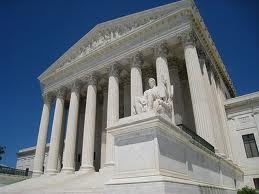
Montana parents are appealing a ruling that found tax credit scholarships unconstitutional - and its impact might be felt around the entire country
Montana parents appealed to the U.S. Supreme Court last week, asking the court to overturn a ruling that found tax-credit scholarships unconstitutional in the state.
The Montana Supreme Court had ruled 5-2 in December that the state’s tax credit scholarship program violated the state’s constitutional bans aid to sectarian schools. The ruling allowed the state to create a new tax credit scholarship program for students to attend only non-religious private schools.
“It is a bedrock constitutional principle that the government cannot discriminate against religion,” said Institute for Justice attorney Erica Smith in a press release. “Yet for the past 24 years, some states have blocked religious schools and the families who choose them from participating in student-aid programs. It is time for the U.S. Supreme Court to step in and settle this issue once and for all.”
At issue is Montana’s Blaine Amendment, a relic of anti-Catholic and anti-immigrant bias that swept America in the late 19th century. The amendment is still on the books and bans direct and indirect aid to religious schools.
Florida has a similar ban on aid to religious institutions, though these arguments failed to sway the Florida Supreme Court in Bush v. Holmes (2006) and McCall v. Scott (2017).
Scholarship parents in Montana are asking the U.S. Supreme Court to determine if banning participation in educational programs because of religious preferences ultimately discriminates against religious parents in violation of the “free exercise” clause of the First Amendment of the U.S. Constitution.
Past U.S. Supreme Court cases also come into play, such as Zelman v. Simmons-Harris, which ruled vouchers did not violate the Establishment Clause because aid was to the student and not the religious institution.
The Court also has rejected the notion that tax credits are equivalent to tax expenditures by the government in Arizona Christian School Tuition Organization v. Winn (2011).
More recently, the Supreme Court ruled in Trinity Lutheran v. Comer (2017) that state governments could not deny grants to religious organizations for playground resurfacing while providing grants to similar, but non-religious organizations. Denial of the grant, the court ruled, violated the “free exercise” clause of the First Amendment.
In light of that ruling, the U.S. Supreme Court ordered the Colorado Supreme Court to revisit Taxpayers for Public Education v. Douglas County School District (2015), which found the district-run voucher program violated the state’s Blaine Amendment ban on direct aid to religious schools. However, the voucher program was dismantled and the issue rendered moot after the American Federation of Teachers funneled $600,000 into local school board election and took over conservative Douglas County.
Blaine Amendments have successfully struck down vouchers in Arizona and Montana but failed in Florida, Nevada and Oklahoma.
If the appeal from the Montana parents is accepted, a ruling by the U.S. Supreme Court likely would clarify how states may read their respective Blaine Amendments.
The Senate will no longer hold confirmation hearings on prospective Education Secretary Betsy DeVos Wednesday, but another hearing will have at least as much potential to rock the world of public education.
The U.S. Supreme Court will hear arguments in what could be a landmark special education case. And unlike confirmation hearings, marked by their predictable partisanship, the case has confounded the tribalism that typically marks America's education debate.
The nation's largest teachers union and the national charter school association have filed friend-of-the court briefs on the same side. The National Education Association is at odds with several associations of public-school administrators and districts.
Ironies abound. The school district in Douglas County, Colo. argues it shouldn't have to pay private school tuition for the family of a child with special needs. Yet the same school board is currently petitioning the high court to hear a separate case arguing its unique, district-created voucher program — which could help all students attend private schools at public expense — is constitutional.
At its core, Endrew F. v. Douglas County School District deals with bedrock questions about educators' obligation to help all children meet their potential.
It also highlights society’s evolution when it comes to educating children with special needs, and the ways the existing education system sometimes falls short of its ideals.
According to the Denver Post, Endrew's parents placed him in a private school that specialized in serving children with autism after he began to show serious behavior issues in the public school he attended.
The district, they argue, should reimburse them for tuition to fulfill its obligation to provide him with a Free Appropriate Public Education - a right spelled out in the Individuals with Disabilities Education Act, first passed in 1975. (more…)
 Turnaround strategy: A turnaround team proposes pay increases of up to $25,000 a year for teachers and administrators to work at five struggling St. Petersburg elementary schools. The team, led by Antonio Burt, also wants to lengthen the schools' day by an hour. The proposal goes to the Pinellas County School Board April 12. The schools, which are mostly black, became some of the worst in the state after the school board abandoned integration efforts in 2007, then did not follow through on providing the proper resources. Tampa Bay Times.
Charter connection? A charter school run by the wife of the next Florida House speaker is asking for permission to expand. The Legislature recently voted to shorten the period that charter schools must wait to get state money for construction. Rep. Richard Corcoran, R-Land O'Lakes, says the two events are not related, and that the legislative action was part of a broader reform. Tampa Bay Times.
Education on trial: Gainesville kindergarten teacher Susan Bowles testifies against the state in the Citizens for Strong Schools v. Board of Education, a civil trial in which the state is accused of not fulfilling its constitutional mandate to provide a quality education for all public school students. Bowles, who opposes the state's testing requirements, told an attorney for the state that her students used to spend more time preparing for the test than the attorney spent getting ready to take his law school admission test. WCTV.
School uniforms: The Volusia County School Board approves school uniforms for students in every grade. Students will be required to wear collared polo or button-down shirts in specific colors with a wide variety of bottoms, including blue jeans. The board also changes the rules for athletic eligibility. Students no longer have to pass all classes to be eligible, but they do have to maintain a 2.0 grade point average. Daytona Beach News-Journal. (more…)
Editor's note: This op-ed ran in today's Orlando Sentinel.

This photo is from the St. Andrew Catholic School website.
Florida allocates five different scholarships from prekindergarten to college that allow students to attend faith-based schools. They don't violate the U.S. Constitution because students choose, and government doesn't coerce.
Both factors were why, in 2002, the U.S. Supreme Court ruled that a Cleveland school voucher did not violate the Establishment Clause, even as 96 percent of the students chose faith-based schools. To the court, in the landmark Zelman v. Simmons-Harris case, the program met three critical standards that also apply to Florida: The primary objective is education; students can choose among secular and sectarian schools; and parents exercise an independent choice that is not steered by government.
The article "Many church schools get tax cash" in Sunday's Orlando Sentinel did not mention the Zelman case or that the Florida Supreme Court specifically avoided religion in 2006, when it overturned the private-school portion of the Opportunity Scholarship program. Consequently, readers might have thought that these programs are constitutionally suspect, when they are not.
The tax-credit scholarship is one of Florida's five scholarships. It strives to give low-income students access to the same learning options now available to more affluent families, via a $4,335 scholarship. This program complements other choice programs, such as magnet and charter schools, and is built on the truism that students learn in different ways. Last year, parents placed more than 1.2 million public-education students in schools other than their assigned district school.
In this new world of customized learning, encouraging differentiated instruction while maintaining quality control is a challenge. The tax-credit scholarship does this, in part, by requiring nationally norm-referenced tests that show these students are achieving the same gains in reading and math as students of all income levels. (more…)
Amendment 8 debate. Video at the Naples Daily News. Featuring Jim Towey, Ave Maria University president, and Howard Simon, Florida ACLU executive director. The Naples Daily News also runs this op-ed in favor of 8.
Drug-sniffing dogs. The U.S. Supreme Court considers arguments in two cases, including one in Florida, with potential implications for the use of drug-sniffing dogs in public schools, reports Education Week.
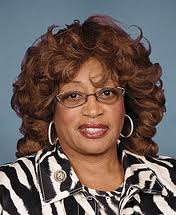
U.S. Rep. Brown
Request for investigation. U.S. Rep. Corrine Brown, D-Jacksonville, wants an investigation of online education provider K12, reports StateImpact Florida.
Online growth. Lake County appoints its first virtual school principal, reports the Orlando Sentinel.
Growth in tax credit scholarships. From redefinED (with speadsheet showing district-by-district growth over the past eight years). From Gradebook.
Vouchers and the Florida Supreme Court. Critics of the three justices up for a merit retention vote say their 2006 ruling on vouchers is evidence of liberal judicial activism, the Washington Post reports in a broader story about the campaign against the justices.

