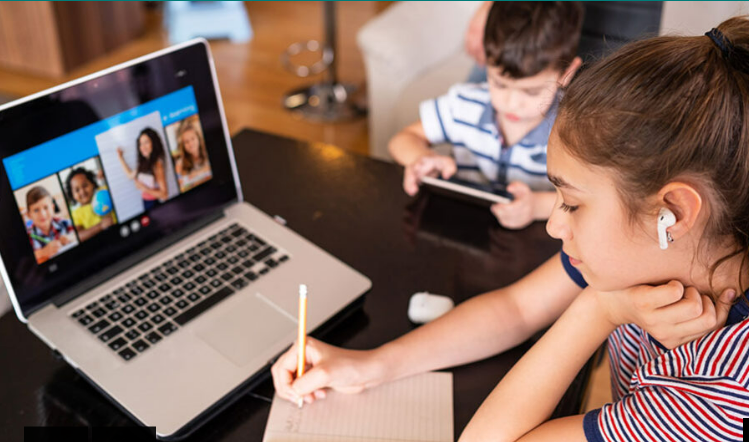
Pecos Cyber Academy in Edgewood, New Mexico, is a free, public, online and virtual school that launched in 2016 as another choice for the state’s families. The academy opened with seven employees and 250 students and has grown to serve just under 2,000 students in kindergarten through 12th grade.
Editor’s note: This first-person essay from New Mexico mother Ashley Guerra was adapted from the American Federation for Children’s Voices for Choice website. You can learn more about Guerra’s family and her education choice journey by listening to a reimaginED podcast at https://nextstepsblog.org/2022/10/podcasted-new-mexico-siblings-enjoy-customized-education-thanks-to-multiple-choice-mom/.
Ashley Guerra
Education has always been a priority in our family. I was raised to value opportunities and work diligently to pursue areas that would allow me to contribute successfully to our community. As I grew up and became a mother, education remained an integral component of my life and a central focus in our family.
But our educational journey was interrupted when I was unexpectedly diagnosed with acute lymphoblastic leukemia during the summer between my son’s kindergarten and first grade years. Because of the aggressive nature of my specific type of leukemia, the intensive treatments would last for years, and we knew we needed to identify a new school model for our son.
We needed an educational environment to help him learn and keep me safe while my treatments continued. We were grateful to discover a new virtual public charter school, Pecos Cyber Academy, and enrolled him in this program.
We discovered this brand-new virtual public charter school that could be attended from anywhere, including our home in New Mexico, from a local public television commercial. The school featured a state-certified and nationally recognized curriculum that gave us access to incredibly talented, knowledgeable, and experienced certified teachers.
We chose this option because we felt confident it would provide our son with an excellent academic experience while ensuring he achieved the academic progress expected of him and his peers. We also were impressed with the flexibility it provided us to work around my treatment requirements and medical appointments.
Our son completed five years at Pecos Cyber Academy. In the years that followed, our daughter attended, and she now is starting her sixth year. Witnessing our children develop areas of specific interest, identify their subject strengths, learn personal accountability, and develop resilience in their learning process has been a true joy.
As Nelson Mandela said, “Education is the most powerful weapon you can use to change the world.” Each child is unique, their circumstances are distinct, and our education system should empower all to capitalize on their potential.
Providing academic options enables families to select for their children the school that will create the greatest opportunity to learn, grow, and become contributing members of our society. I believe that families should have the opportunity to seek out the best education option for their children and their circumstances.
The power to select your child’s educational structure creates equity in education and competition within the school system. As educational entities evolve through various academic models, school systems will promote even newer education models to their communities.
This will allow families to access a uniquely specific school program, resulting in a relationship of accountability and partnership between the school institution and the family/child. With this model, everyone wins – students, families, teachers, and the community.
We are grateful for this educational option and the positive results we’ve seen in our children’s academic learning, growth, retention, and enjoyment in the learning process.
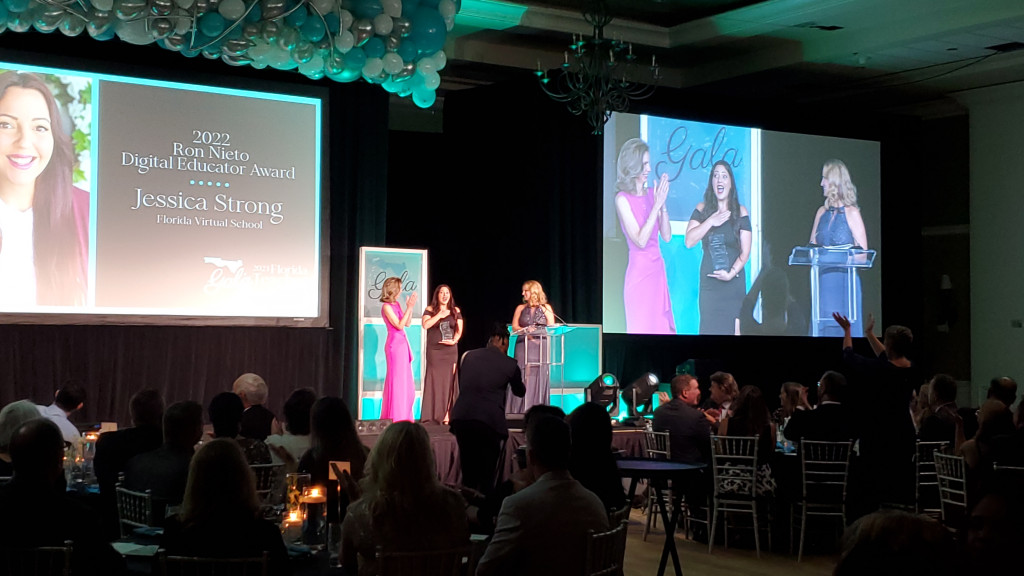
Jessica Strong, a sixth-grade teacher at Florida Virtual School and the first person in her family to graduate from high school and college, received the 2022 Ron Nieto Digital Educator Award.
On this episode, ReimaginED Senior Writer Lisa Buie talks with Jessica Strong, a sixth-grade English language arts teacher at Florida Virtual School, who recently received the Ron Nieto Digital Educator of the Year Award for 2022. Named in memory of Nieto, who served as Florida’s first deputy commissioner of innovation, it is given to a Florida educator who excels at using technology in the classroom to positively impact student outcomes.
https://nextstepsblog.org/wp-content/uploads/2022/08/Reimagined.jessstrong_mixdown-final.mp3
As the only child of a single mom whose struggles had forced her to leave school in seventh grade, Mrs. Strong never imagined she would go to college, much less become an educator. But not only has she become a teacher, but also one of the best digital educators in a state that pioneered high quality virtual education.
“My internship was with FLVS, and it was a unique experience, and I fell in love. I saw how innovative and interesting things can be done with a student who isn’t right in front of you…Students are tech natives, so their natural inclination is to learn and find out things on the computer, so putting education on computers is such a fascinating concept and with a little ingenuity, there’s nothing I can’t do.”
EPISIDE DETAILS:
RELEVANT LINKS
https://blog.flvs.net/inspiring-the-next-generation-2021-22-team-members-of-the-year/
https://store.classroomauthors.com/product/mnv-v6xn
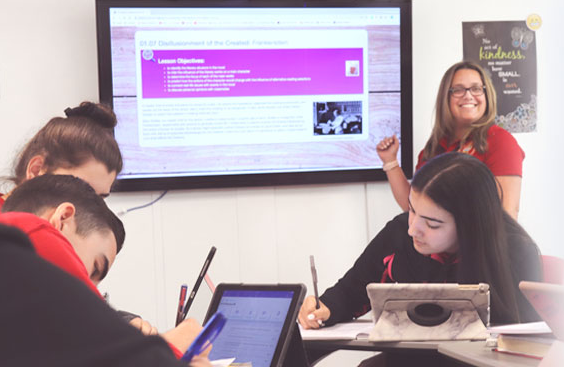
The Archdiocese of Miami Virtual Catholic School, owned and operated by the Archdiocese of Miami, is the only Cognia-accredited and archdiocesan supported virtual Catholic school in the nation. The school has the unique opportunity to provide Catholic education to communities on a global scale.
As Catholic schools across the nation experienced the first enrollment increase in two decades as part of a pandemic rebound in 2022, enrollment figures for the Archdiocese of Miami Virtual Catholic School grew, too.
Figures from the school show that full-time and part-time enrollment combined climbed from 1,187 in 2019-20 to 2,208 during the 2021-22 school year, translating to an increase of more than 86%. Principal Rebecca Bautista said that about 90% of that number represents part-time enrollment.
“I think things are going great,” Bautista said. “I think we’ve been able to reach a lot more families, and I think it’s going great not just for us, but for traditional Catholic schools.”
Bautista attributes most of the growth over the past three years to the coronavirus pandemic when many families sought refuge from the virus or from mask mandates.
“A lot of schools needed a virtual option, to be honest with you,” she said.
Jim Rigg, superintendent of schools for the Archdiocese of Miami, said the virtual school, along with Catholic schools overall, experienced gains during that time as public school board meetings became contentious over mask mandates and other cultural issues.
“I think a lot of families turned to Catholic schools so they could avoid the drama that was happening in public schools,” he said. He added that before COVID isolation and quarantine rules were relaxed, the virtual school provided students a way to stay on track with their schoolwork until they could safely return to campus.
“The virtual school has always existed to serve the students in the Catholic schools in Miami,” he said. “They have been a tremendous resource during COVID and can even better serve our Catholic schools.”
Most of the students who were attending full time back then have returned to traditional brick-and-mortar Catholic schools, and that’s perfectly fine with Bautista.
“Our bread and butter is not to take students away from brick-and-mortar schools,” she said.
In addition, state officials also did not extend a temporary waiver to a law that requires students receiving state scholarships to attend in-person brick-and-mortar schools. The state Department of Education issued the waiver in 2020 to allow flexibility during the pandemic and extended it during the 2020-21 school year but let it expire in 2021-22.
That meant that all students who were attending private schools on income-based education choice scholarships would lose that aid if they didn’t return to campus. The Family Empowerment Scholarship for students with Unique Abilities, which uses an education savings account model allows for spending flexibility and was not affected by the law.
(The FES-UA as well as other income-based scholarships are administered by Step Up For Students, which hosts this blog.)
Bautista said a handful of students attended the school using the FES-UA and that if Florida were to convert all its scholarships to ESAs, most of the families would prefer to stay at in-person schools. However, she sees benefit in ESAs because the flexibility would allow them to use spend part of their funds on courses virtual courses for enrichment.
She explained that school was founded in 2013 to support traditional Catholic schools by offering students the opportunity to take a class that was not available at their school, to recover credits or to get ahead through programs such as dual enrollment that allow middle schoolers to take high school courses.
The virtual option also allows students whose medical conditions may require that they attend school at home or whose participation in sports or other activities required frequent travel to have access to a Catholic education.
Archbishop Thomas Wenski, in a letter to families in 2013, said the school stressed the importance of “all Catholic schools to keep pace with the demands of the 21st century.” The school has kept that promise uppermost over the years, and in 2020, added kindergarten through fifth grade, bringing its enrollment that year to about 800. The school has since kept its lower grades and added adult education and Catholic certification courses for teachers.
‘We are fully K-12,” Bautista said.
Rigg, the superintendent, said the virtual school is no longer limited to serving the Archdiocese of Miami and has received a lot of calls from other areas.
“Through its programming, it’s enrolling a lot of different students,” he said. “They have growing clientele from around the country and around the world.”
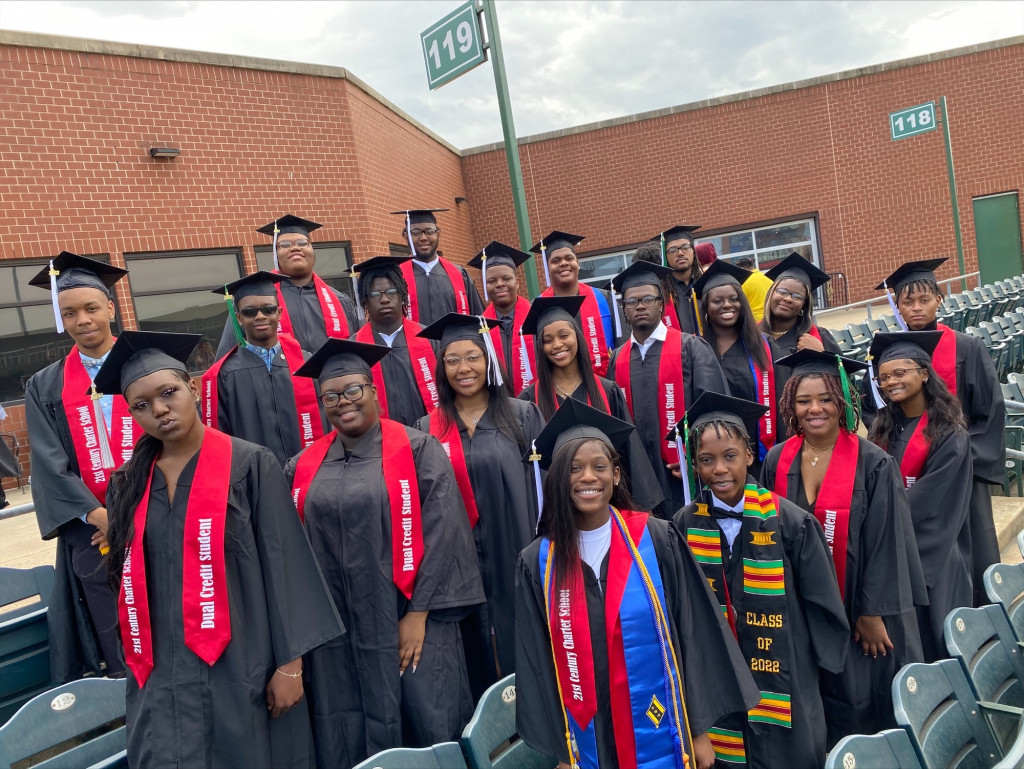
For the past dozen years, the GEO Foundation nonprofit has offered students enrolled at its high schools access to higher education through its college campus immersion program. A state grant for $8.3 million has allowed it to expand the program statewide.
Kevin Teasley loves success stories.
That’s because he has plenty of them to tell.
There’s the student who was on the verge of dropping out of school, only to graduate from high school with a college degree. Then there’s the academically gifted student who started taking college courses at age 13 and earned his bachelor’s degree before he got his high school diploma.
“We have a very different approach to empowering families with choices,” said Teasley, founder of the Indianapolis-based Greater Education Opportunities Foundation, also known as the GEO Foundation, which operates a mix of charter and private schools in Indiana and Louisiana. “Even within our schools we have a very different approach. We don’t believe the money that comes from the state belongs to us. We believe the money belongs to the students.”
Teasley started the nonprofit organization in 1998 to support all quality means of educating children, including public, private, charter and religious schools as well as homeschooling. The foundation also works to develop a community understanding of school choice to align with its belief that providing families with a menu of educational options will strengthen all schools.
Teasley has even more stories these days, thanks to an $8.3 million grant that the Greater Education Opportunities Foundation received from the Indiana Department of Education in 2021. GEO used the grant to extend its college immersion program to six Indiana schools and a public school district.
“When you apply for these grants, you ask for the moon, not expecting to get the moon,” he said. “We got the moon.”
The program allows high school students to take college courses. However, a partnership with the colleges lets the students travel to the local campuses, unlike most dual enrollment programs where students take the classes at their high schools from their own teachers who have been specially trained.
“There’s nothing wrong with that,” he said, “but we don’t think that is as powerful an experience as putting students on a college campus, so they get that whole climate, that culture and experience from a real college professor, from students sitting next to them who aren’t their high school buddies, but other college students, and they could be adults. So, our students get the whole experience while they are at our schools.”
GEO had been offering the program to students enrolled at its own schools for about a dozen years. Teasley says it has helped turn many would-be dropouts into first-generation college graduates.
He said many students at GEO schools, which cater to families who are low-income and minorities, didn’t consider higher education because they have no college role models in their families. At GEO’s school in Gary, Indiana, a community with 50% high school dropout rates, GEO first tried the traditional college prep approach when it opened the school in 2005. They talked up the advantages of college degrees, including higher-paying careers. They arranged for campus tours.
All of that failed.
“It was going right over the heads of kids,” Teasley said. What the students told him was that they valued school mainly for its social scene.
“They said, ‘I’m not really going to high school to go to college. I’m in high school because this is where my friends are. This is where I get to play football. This is where I get to play basketball.’”
Teasley decided he had to change that mindset.
“These kids are smart, but they’re not thinking beyond high school, and what incentive do they have to do well on those state tests or on SAT and ACT tests because they’re not going to college, so why would they do their best on them?”
One 16-year-old student had planned on dropping out. Most of his adult relatives had dropped out, and he didn’t consider himself college material. Teasley challenged him to take the entrance exam at Ivy Tech Community College. If he passed, the school would pay for him to take classes on campus.
When the test results came back, the teen’s eyes lit up as he saw his passing score. Teasley said he was now a college student and would be taking classes at Ivy Tech for free.
“I’ll start paying for you to go to college,” Teasley recalled. “We’re going to do that while you are at my high school.”
The student, who originally had planned to drop out of high school, not only earned his diploma but also an associate degree, an achievement that still makes Teasley swell with pride.
So, when it came time to apply for the competitive acceleration grant, GEO’s application stood apart from the pack.
The department planned to award the grant as part of its initiative to accelerate learning, which for most schools meant remediation for pandemic learning loss. However, Teasley is quick to point out that not everyone fell behind in 2020.
“Many of our students in Gary, Indiana, Baton Rouge and Indianapolis chose to use that time to accelerate, and by that, I mean that that we empowered them to enroll in college courses,” he said. “We had students earn their associate degrees during COVID. They didn’t lose ground; they accelerated.”
Teasley said those students’ experiences inspired his foundation to apply for the grant to help more students across the Hoosier State attend college while in high school.
The GEO Foundation is partnering with six schools and the Vigo County School Corp. in Terre Haute, Indiana. The grant is being used to pay college tuition, tutors and other staff to support the participating students, as well as transportation, which Teasley admits is one of the most challenging areas to administer.
“We’re like air traffic controllers,” he joked.
The programs have paid off, with Teasley estimating that more than 1,000 students have benefited from the grant. Those results align well with GEO’s mission of helping students improve their lives by removing barriers to better education.
For families of modest means, the biggest barrier to college is cost.
“We’re paying full freight for students to get college courses,” Teasley said. “If it’s $1,000 per class, that’s what we pay. We do that because we think it’s a valuable experience for kids. It gives students a reason to stay in high school because they begin to believe they are college capable.”
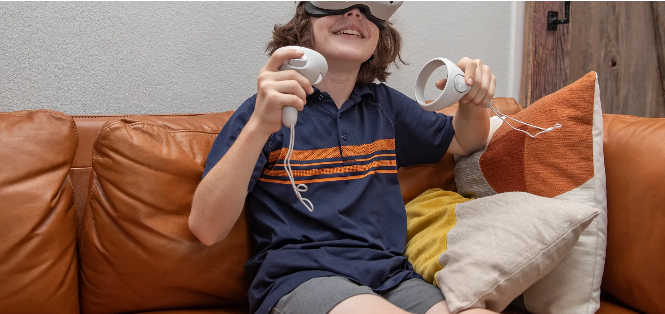
Optima Classical Academy, a tuition-free virtual reality public school for Florida students in grades 3-8, uses virtual reality technology to solve the challenges of disengaged, unsocialized scholars.
Editor’s note: You can read more about Optima Classical Academy here.
On this episode, Tuthill interviews former Collier County School Board member Donalds, who is president and CEO of the Optima Foundation, a network of charter schools serving more than 3,000 students. The organization is set to launch Optima Classical Academy this fall, the nation's first virtual reality charter school, for students in grades 3-8.
Tuthill and Donalds discuss how the pandemic sparked inspiration for the revolutionary new school that will offer a classical liberal arts curriculum and creative virtual “field trips” that will give students the opportunity to travel to outer space and under the sea.
They also provide a glimpse into how education savings accounts could play a critical role in giving greater access to families who want their children to experience the virtual reality academy via unbundling of educational services.
"It is really amazing the number of things that can be done and the creativity of our teachers ... They are over-the-moon excited about the possibility of teaching in virtual reality."
EPISODE DETAILS:
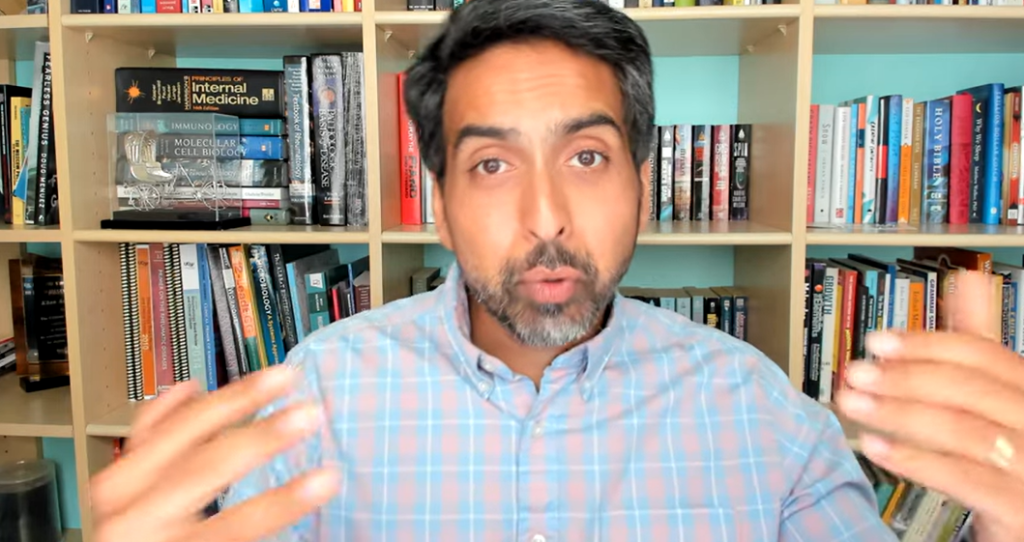
Sal Kahn, founder of Kahn Academy, has teamed up with a nationally recognized education leader to launch a new venture based on the concept of students learning together. Listen to Kahn talking about Kahn World School here.
Editor’s note: You can read more about Arizona University Academy Prep Digital here.
During the pandemic, traditional schools designed exclusively for in-person instruction found themselves forced to hastily cobble together remote learning programs to get them through the end of the 2019-20 school year.
Many of these life raft programs, which continued into the 2021-22 school year in states that kept campuses shuttered, quickly developed a reputation for failing to engage students, frustrating parents, and contributing to learning losses.
Schools re-opened, yet the stereotype of “Zoom schools” being somehow deficient to in-person education tended to stick – an unfair judgment of established online programs such as Arizona University Academy Prep Digital and Khan Academy, which existed years before the first human tested positive for COVID-19 and were designed to deliver effective full-time education and tutoring.
Now, the two education powerhouses are teaming up to offer Khan World School, a virtual high school that will combine the best elements of both organizations to provide a robust learning environment for students from Nebraska to Nepal.
“Everyone was doing online, but not very well,” Amy McGrath, chief operating officer at ASU Prep Digital recently told Forbes. “But our infrastructure, which has been in design for quite some time, really thrived, and our learners, in fact, outperformed state averages.”
Khan Academy founder Sal Khan strongly agrees with McGrath. He likens their partnership to the nation’s strategic petroleum reserve, observing that the world needs to establish a strong model that can serve everyone during emergencies.
With that in mind, the school will launch in August with 200 ninth-graders who live anywhere in the world. Plans call for other grades to be added. Free for ASU Prep Digital students, the program will be available to other U.S. students for $9,900 annually, while international students will pay $12,900.
Based on concepts discussed in Khan’s 2012 book, “The One World School House,” the new school has three main goals: providing mastery-based learning; putting students at the center of education; and providing community for participants.
Khan said traditional forms of education leave learning gaps that are difficult for students to bridge. For example, a student takes a test, makes 80% and moves on with the rest of the class. A mastery-based system lets students who make 80% continue to learn the 20% they missed.
“You don’t have the gaps that come back to bite you,” Khan said at a recent webinar for parents.
Khan World School will provide student-centered education by allowing students to learn at their own pace and master 100% of the concepts and skills. Students who learn material faster will be encouraged to forge ahead. Those who excel in certain areas will be designated as peer tutors for their classmates.
Flying in the face of the commonly held belief that virtual education leads to isolation, Khan World School students will be divided into groups of 40 for synchronous seminars where they’ll dive into deep discussions and look for ways to solve the world’s most pressing problems. Khan compares these groups to the houses at Hogwarts Academy in the Harry Potter novels.
Meanwhile, groups, called squads, will be limited to five students. The squads will serve as a support system, ensuring collaboration as students navigate their coursework.
And should anyone doubt the rigor of this ramped-up program, all students will be expected to read a minimum of 12 books each year, which they will choose from a wide array of titles. They also will be required to attend tutorials with coaches and have access to guides who will lead the seminars and provide individual support.
“This defies the stereotypes of virtual education,” Khan said. “We are connecting humans even more, I would argue, than in a traditional, physical school.”
The beauty of Kahn World School goes beyond personalization and connection, Kahn said.
“We really hope that this is gong to be the first wave of a generation of learners who can make the world a better place.”
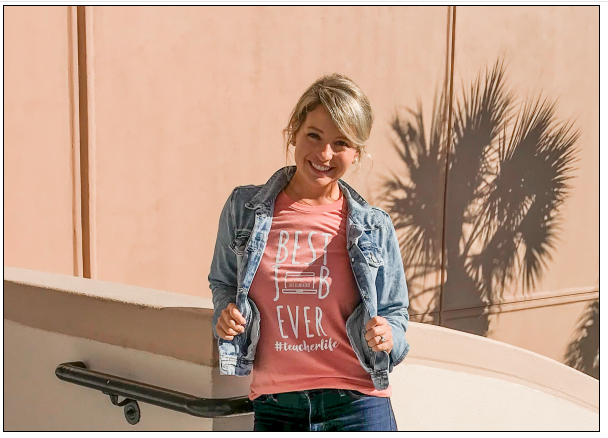 On this episode, reimaginED Senior Writer Lisa Buie talks with Caroline Tevlin, an elementary school Spanish teacher who customizes her students’ education by tapping into their individual learning styles.
Tevlin transitioned to teaching online after working in a traditional school setting for six years. Four years into her experience at Florida Virtual School, she enjoys the flexibility as an educator and recognizes its benefits for her students.
“It was such a great fit for me. It was nice to be there at the beginning of the Spanish program. It was so great to have that flexibility along with so many tools I could utilize … This really made me think creatively and connect with students and meet them where they’re at. I have always known that every student learns differently.”
EPISODE DETAILS:
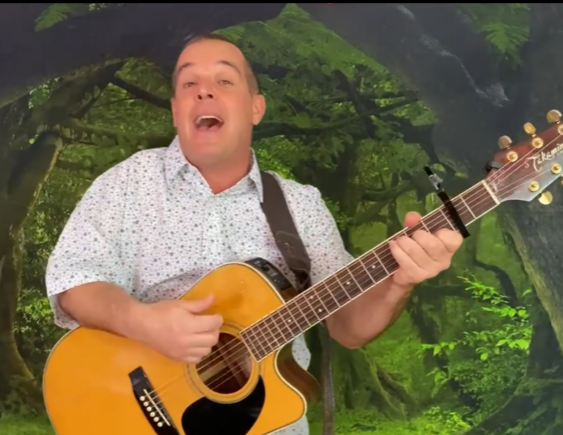 On this episode, reimaginED Senior Writer Lisa Buie talks with Michael Bonick, an elementary teacher and guitar player at Florida Virtual School, who engages students by incorporating music in core academic subjects.
A teacher for 22 years, Bonick’s interest in music blossomed when his father suggested that he play the saxophone to address an injury that prevented him from moving his right arm. Bonick, who was 7 at the time, quickly lost interest in the sax but later taught himself how to play the guitar because his condition created a challenge, and he thought his success would inspire students someday.
Bonick began his academic career as a pre-school teacher, transitioned to teaching elementary students, and joined Florida Virtual School in 2020 when the coronavirus pandemic hit. Despite campus re-openings, Bonick never looked back.
He always shows up for his online classes with his guitar and composes ditties on the spot that incorporate students’ names with the concepts he’s teaching.
“The first day I taught at the preschool, and we had lunch and I walked out, and I thought, ‘Okay are you going to walk back into that classroom?’ It was one of those defining moments … I said, ‘Go back. It’ll be the best decision you ever made.’ And it was. It has been for 22 years.”
EPISODE DETAILS:
The following bill has been filed for the 2022 Florida legislative session, which begins Jan. 11 and runs through March 11.
BILL NO: SB 980
TITLE: Virtual Instruction Programs
SPONSOR: Sen. Manny Diaz Jr., R — Hialeah
WHAT IT WOULD DO: SB 980 would make it easier for out-of-state virtual schools to offer services in Florida by removing requirements that providers must have an administrative office in Florida, that their administrators are Florida residents and that their instructors are Florida-certified teachers. If passed, the bill would take effect in July 2022.
For more information, click here.
 Editor’s note: This commentary from Julie Young, managing director of ASU Prep Academy and ASU Prep Digital and a reimaginED guest blogger, appeared Wednesday on The 74.
A story is told about a flood that rose so quickly, a man had to go to the second floor of his home, where he prayed for God to save him. Before long, a neighbor came by in a canoe and yelled to the homeowner, “Come on in. I’ll get you out of here.”
The man answered, “No, I’ll be fine. I have faith God will save me. You go help the other neighbors.”
A little while later, the man had to climb into the attic, where he looked out a window and saw the waters rising further. Just then, a fire department rescue boat arrived and urged the man to let them send up a rescuer to bring him down.
The man yelled out the window, “No, you go on ahead to the other neighbors. I have faith God will save me.”
The waters rose still further, and the man had to go up on the roof. Not long after, a helicopter came by with a rescue worker dangling from a ladder to hoist the man up.
“No, no!” the man said, “I’m going to be fine. God will save me. You go help the other neighbors!”
Soon, the man was swept away in the flood, and he died. When he got to heaven, he was sad, dejected and a little angry. When God asked, “Why the sad face?” the man replied, “I prayed for you to save me, and you didn’t!”
God replied, “I sent you a canoe, a rescue boat, and a helicopter! What more did you expect?!”
The analogy describes the crisis many schools are encountering now as they face a flood of school disruptions, students in quarantine, and a growing number of students being left behind academically. We’ve been given a technological canoe, boat, and helicopter, but we aren’t using them.
In spring of 2020, schools across the nation scrambled to implement the hardware, systems, long-neglected tech infrastructure, software, and online curriculum to serve students in any location. It was the worst possible way to deploy online learning on a national scale, but our nation’s educators had no choice.
Dedicated teachers moved mountains to get resources, however imperfect, into the hands of their students and families. District leaders, committed to their teams, did everything in their power to resource and support their staff.
It was messy and monumentally frustrating, and it was a wake-up call to schools and districts everywhere to systematically design for resilience through digitally supported options and alternative learning models.
How is it possible that now, in the fall of 2021, we are nearly back where we started?
Nationwide, schools are again being forced into rolling closures, not only because of COVID but also because of teacher shortages, compounded further by legislated mandates regarding face-to-face learning. When it comes to tech infrastructure, content solutions, and teacher readiness, schools are leaps and bounds ahead of where they were pre-pandemic.
That’s why it is almost surreal that many schools, facing yet another round of closures, are actually prohibited from leveraging the very infrastructure they built precisely for this purpose.
To continue reading, click here.

