Third Way promises fresh thinking, but that's what seems to be missing in the centrist think tank's recent rehash of familar talking points against school vouchers.
Authors Tamara Hiler and Lanea Erikson Hatalsky argue against a federal policy supporting "taxpayer-funded scholarships that can be used by parents to send their children to private or religious schools," and peg their post to proposals to allow federal Title I funds to follow children in poverty to whatever public school they attend (which may not pass this year).
It's an issue that deserves a nuanced look, but the authors resort to blanket statements that echo tired arguments about school choice.
Here's a look at what's missing in their five main claims.
1) "Voucher programs have not proven an ability to deliver on the promises of academic success"

The evidence cited by the authors indicates small but positive benefits for low-income and minority students. It also shows some school choice programs resulted in small, but positive, achievment gains for students in nearby public schools.
Choice has been shown to have other benefits, like higher graduation rates, higher college attendance rates, and a correlation with stronger civic values.
The authors contend these marginal improvements don't "justify the diversion of resources away from districts and schools that sorely need it," but vouchers also divert the cost of educating those students.
Since private school choice both saves taxpayers money and seems to help public school achievement more than it hurts, could someone making this argument actually present evidence of harm to public schools?
2)"Voucher programs escape accountability and obscure how students are doing."
Forget for the moment that the authors conflate true accountability with everyone taking the exact same test.
Each voucher and tax-credit scholarship program is regulated differently. Some require state testing, others don’t. Some require testing to be reported to the parents. Others require schools to report test results to the state. In fact, a new report finds that "accountability" has been increasing in private school choice programs.
It's worth looking for ways to give parents and taxpayers better comparisons of student performance across schools, and balancing that against concern that excessive regulations might cause some schools not to participate. Those are issues to weigh while creating and managing a program, not as an easy talking point against one.
3) "Voucher programs wreak havoc on school district budgets"
With more than a quarter-million K-12 students (see p. 5) using vouchers or tax-credit scholarships (compared to 50 million public school students) one might think they could at least point to an example of a place where vouchers wrought havoc on a district budget.
Instead, they focus on objections to a system in which federal money follows the child made by the national association of school district superintendents.
This raises the question: Should education policy be dictated by making the job of district employees easier, or education quality for students better? Also, contrary to what some opponents of student-based funding claim, not every cost in education is fixed. (more…)
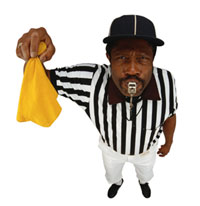 Accountability in education has been a contentious issue for decades. Unfortunately, the word accountability is too often used to mean “sameness” rather than “to be held responsible for results.” The misuse of the term complicates school choice debates as both choice supporters and critics tend to forget the political and historical context surrounding education “accountability.”
Take Wisconsin’s voucher program. Republican lawmakers proposed an “accountability” bill in late 2013 that would have required private schools accepting voucher students to a) use the same state standards b) use the same state test to measure student achievement c) be graded on performance in the same manner as public schools and d) face sanctions for low-performance.
Democrats and the teacher union in Wisconsin wanted even more “accountability,” arguing the need for state certified teachers in participating private schools as well.
Only “sanctions for low-performance” meet the definition of “accountability.” Sanctions, such as closing or restructuring schools, are a means of holding schools responsible for results. The rest are either inputs – believed by some to be necessary for desired results – or are a means of measuring results.
How, for example, does requiring all private school teachers to be state certified hold schools responsible for results? A state certified teacher is an input, not a result. This is clearly an example of someone using the word “accountability” to mean “sameness,” not “holding responsible for results.”
The misuse of the term appears to be rooted in a belief that it might be unfair, or even hypocritical, to operate school choice programs without subjecting private schools to the same rules as traditional district schools. A little history is in order. (more…)
Vouchers and testing. A new report from the Fordham Institute finds that mandated testing - and even public reporting of test results - isn't that big a concern for private schools worried about government regs tied to vouchers and tax credit scholarships. Coverage from redefinED, Choice Words, the Cato Institute's Andrew J. Coulson and Gradebook. AEI's Michael McShane says Florida's tax credit scholarship program (which, altogether now, is administered by Step Up For Students, which co-hosts this blog) finds the "sweet spot" with its testing and financial reporting requirements: "These regulations don’t sound too crazy to me; they seem to strike a good balance of accountability for safety, fiscal responsibility, and academic performance without being overly dictatorial in how schools must demonstrate any of those."
 Shooting rockets. Senate President Don Gaetz tells the Associated Press that Florida needs to slow down on ed reforms until it rights the new teacher evaluation system and other changes in the works: "We need to quit shooting rockets into the air. We need to give schools and school districts, teachers and parents time to institutionalize the reforms that have already been made. We need about a two-year cooling off period."
Ford Falcons. Schools need competition. EdFly Blog.
School choice. Education Commissioner Tony Bennett says at a National School Choice Week event in Tampa that some Florida districts deserve credit for expanding public school options such as magnets and career academies, reports redefinED. More from Tampa Tribune.
Charter schools. The National Alliance for Public Charter Schools ranks Florida fifth for its charter laws. SchoolZone. Gradebook. South Florida Sun Sentinel. StateImpact Florida. The Pinellas school district postpones a decision on whether to close a long-struggling Imagine school in St. Petersburg, reports the Tampa Bay Times and Tampa Tribune. The Volusia district's decision to shut down a struggling charter in Deland is headed to appeals court, reports the Daytona Beach News Journal. (more…)
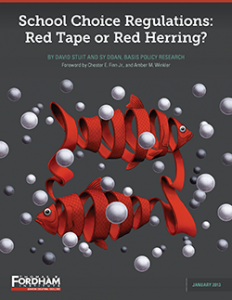 The Fordham Institute may be the closest thing to an honest academic broker in the contentious private school choice arena these days, and its latest report will no doubt enhance that reputation. "Red Tape or Red Herring?", released today, provides strong evidence that private schools are not averse to academic or financial oversight – a finding that runs counter to a longstanding libertarian narrative.
As Fordham president Chester Finn Jr. acknowledged in the forward: “Many proponents of private school choice — both the voucher and tax credit scholarship versions — take for granted that schools won’t participate (or shouldn’t participate) if government asks too much of them, regulates their practices, requires them to reveal closely held information and — above all — demands that they be publicly accountable for student achievement.”
The report looks at the participation rate of private schools in voucher and tax credit scholarship programs in 11 states and surveys from 241 private schools that do and don’t participate, and it finds that testing requirements are not a significant deterrent. Only a quarter of the schools ranked state-required testing as a “very” or “extremely” important factor. Among the schools not participating in voucher or scholarship programs, testing was the fifth most-cited concern – behind such issues as protection of religious activities and admission processes and government paperwork.
This is not to suggest that private schools are eager to embrace more government regulation. The report did find a modest negative correlation between the degree of regulation in a state and the rate of schools participating. But the survey is a reality check on private schools and the educators who run them. Catholic schools remain a major player in the voucher-scholarship market, in part because their mission is to serve poor children, and they also demonstrate remarkable leadership on the issue of testing and academic accountability.
The report echoes similar on-the-ground work in Florida. (more…)
 The Friedman Foundation’s latest “ABCs of School Choice” guide is out, and the numbers go like this: 21 states, 39 programs, 255,000 kids.
The guide offers a state-by-state rundown of the publicly funded, school choice options that are a vital piece of the overall school choice picture. It includes profiles of the students, parents and teachers who benefit from them. And it presents some thought-provoking stats, like how the value of each choice option compares to per-pupil funding in traditional public schools.
In Florida, a tax credit scholarship for low-income students is 34 percent of what’s spent on a traditional public school student, according to the Friedman analysis. Our own back-of-the-envelope calculations would put the percentage slightly higher, but the point is spot on: “voucher” students receive far less for their education than their public school peers. It’s a relevant detail that deserves more attention as the debate unfolds over testing for scholarship students and regulatory accountability measures for the private schools that enroll them.
The Florida section of the guide also includes a mini-profile of Davion Manuel-McKenney, a former tax-credit scholarship student who is now a freshman at Florida State College at Jacksonville. (Full disclosure: the tax-credit program is administered by Step Up For Students, which co-hosts this blog.) The story of Davion and his mother is a moving one. Click here to read more about it.
A bill filed in the Florida Legislature this week could give the families of disabled students quicker access to McKay Scholarships, state-funded vouchers for private schools, and likely result in an expansion of the $151 million program.
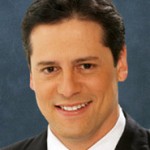
Florida Sen. Miguel Diaz de la Portilla
Senate Bill 172, sponsored by Sen. Miguel Diaz de la Portilla, R-Miami, nixes the requirement that students spend the prior school year in a Florida public school before becoming eligible for the scholarship. Similar bills were proposed in 2009, but died in committee.
The idea behind the public school rule, said Miami attorney Allison Hertog, an advocate for students with special needs and their parents, was to allow school districts time to get to know students and properly evaluate what kind of services they needed.
Then districts could develop a comprehensive education plan known as an IEP or 504 – a federally mandated road map that helps set a course for learning. The better the plan, Hertog said, the better the services and, ultimately, the more money families receive.
So why remove the requirement?
“When students struggle, the goal is to try to get them into the most successful environment as quickly as possible,’’ said Steve Hicks, president of the Coalition of McKay Scholarship Schools, which represents private schools that accept the scholarship dollars.
Families don’t necessarily want to wait a year before they can move their child into a better setting – and they shouldn’t have to, Hicks said.
“Kids, if they feel like they’re going to fail, they will shut down,’’ he said. “Trying to get them going again is very difficult. Our goal is to expand the program to allow parents to access immediately all the services available, whether it’s public or private school, tax credit scholarships, or whatever.’’

Tony Bennett
Tony Bennett on testing voucher students. From Gradebook: “I do believe we have a responsibility, be it at a public school or whatever, when we are spending taxpayer dollars - and I go back to what I believe we should do, set expectations, set standards and hold people accountable - that we should be able to prove that schools perform for the money they are given.” Full Q&A in Tampa Bay Times here.
More Tony Bennett. Lakeland Ledger: “Let's just hope he brings to the position a more inclusive management style than that of his predecessors."
“Life is combat.” From the Palm Beach Post’s Jac Versteeg: “Good morning, children, and welcome to your first day of first grade at Eddie Eagle Charter School. We will be piloting the new NRA curriculum the Florida Legislature has mandated for all public schools. My name is Mr. LaPierre.” Putting deputies in elementary schools makes more sense that arming teachers, editorializes the Northwest Florida Daily News.
Ed funding. The Gainesville Sun’s Ron Cunningham references the Legislatures “slash-and-burn approach to funding education” in his year-ahead column. The Ocala Star-Banner’s editorial board says the state’s “cheap route on education” is to blame for the Marion school district’s failure to meet class-size requirements. The Sun makes the same case for noncompliance in Alachua County.
On the right track. Broward Community College President J. David Armstrong notes how much academic progress Florida has made in the past decade. South Florida Sun Sentinel.
Career academies. Students in Palm Beach County’s career academies will get a chance to shadow professionals at their jobs, thanks to a partnership with the business community, reports the Palm Beach Post.
Rocky year in the rearview. A glance at the past year in Florida education from the Tallahassee Democrat. Some superintendents want a break from new mandates in 2013, the Democrat also reports.
School grades don’t show much. Editorializes the Palm Beach Post.
Florida Catholic schools are embracing Common Core academic standards and seriously considering whether to take the coming state tests aligned to them. In the meantime, their leaders say, 30 to 40 Catholic schools want to administer the FCAT in 2014, in what would be a trial run for potential transition to Common Core testing.
“Our mission is the same, public or Catholic school, to create productive citizens in our world that actually have the skills in life they need,” Alberto Vazquez-Matos, schools superintendent for the Diocese of St. Petersburg, told redefinED. “We’ll all be raising the standards and talking the same academic language.”
The push by Catholic schools towards common standards - and perhaps common tests - is an interesting counterpoint to the debate that followed last week’s comments by Gov. Rick Scott. Scott re-opened the door to a long-running conversation about voucher and tax-credit scholarship programs by saying he wants to see students in those programs take the same tests as their public school peers.
Right now, the state does not require tax credit scholarship students to take the FCAT, but they are mandated to take another comparable, state-approved test such as the Stanford Achievement Test or Iowa Tests of Basic Skills. Disabled students who use McKay vouchers to attend private schools are not required by the state to take any such tests.
This year, Catholic schools in Florida enroll 7,673 tax credit scholarship students. (The scholarship program is administered by Step Up for Students, which co-hosts this blog.)
Scott’s comments sparked suggestions from some school choice critics that private schools were dodging comparisons to public schools. But Florida’s Catholic schools have been quietly moving towards Common Core for more than year. In fact, all 237 Catholic schools in Florida will be rolling out a “blended’’ version of the language arts standards, right along with public schools, in 2014. (more…)
Editor's note: Step Up For Students president Doug Tuthill wrote the following letter, which was published this morning in the Tampa Bay Times. It's in response to this Times editorial about testing for students in Florida's tax credit scholarship program and recent comments from Gov. Rick Scott. Some recent news stories have also suggested that testing for scholarship students is limited or nonexistent.
 Florida's public education system is so rich with learning options that last year 1.3 million students chose something other than their assigned neighborhood school. So the debate about how best to hold these diverse programs accountable for student progress is important.
Unfortunately, the manner in which the Times questioned testing for one of those programs — a Tax Credit Scholarship for low-income students — was incomplete and misleading. While it is true scholarship students are not required to take the FCAT, that doesn't mean the test most of them take annually, the Stanford Achievement, is irrelevant. This test is considered the gold standard in national exams, and has now been administered for six years with two consistent findings: 1) The students choosing the scholarship were the lowest performers in their district schools; and 2) They are achieving the same test gains in reading and math as students of all incomes nationally.
The expansion of options such as magnet programs, charter schools, virtual schools and scholarships for low-income children strengthens public education. These options all undergo rigorous academic evaluation, and the new national Common Core standards will hopefully make comparative evaluations even easier for parents and the public.
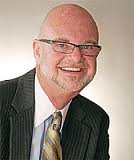
Andy Ford
Not the best fit. Andy Ford, president of the Florida teachers union, says in this Q&A with the Orlando Sentinel that Tony Bennett is “the best fit for the Jeb Bush power structure, but not the best choice for Florida's students, parents and school employees.” Board of Education member Kathleen Shanahan cites the PIRLS results in responding to a critical editorial about Bennett in the Tampa Bay Times.
Conflicts of interest? Three Board of Education members contributed to Tony Bennett’s campaign in Indiana. Gradebook.
Rick Scott is right to require students with vouchers and tax credit scholarships to take the same standardized tests as their public school peers, writes Adam Emerson at Choice Words.
In the wake of Newtown. Security beefed up at Florida schools: Tampa Bay Times, South Florida Sun Sentinel, Palm Beach Post, Lakeland Ledger. Beneath the surface, emotional scars, reports the Miami Herald. State Rep. Dennis Baxley, R-Ocala, and the author of the "stand your ground" law, says schools would be safer if teachers and principals could bring guns, reports the Sarasota Herald Tribune. More from Orlando Sentinel, Fort Myers News Press, Naples Daily News, Florida Today.
Remediation series. StateImpact Florida.

