Vouchers and accountability. Gov. Rick Scott’s call for “voucher” students to take the same standardized tests as public school students is long overdue, editorializes the Tampa Bay Times: “Voucher proponents can't have it both ways,” it concludes. “They can't claim they are a good bargain for taxpayers but then be unwilling to prove it.”
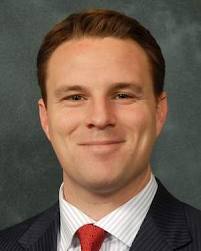
Weatherford
“Yes we are!” House Speaker Will Weatherford gives Tony Bennett a thumbs up on Twitter after a critical Tampa Bay Times column says the selection shows the state is doubling down on Jeb Bush ed reforms. Gradebook. A look at Bennett’s re-election upset in Indiana. Tampa Bay Times.
Home-schooled or truant? A Flagler County dad faces a criminal charge after not following requirements for home-schooling, reports the Daytona Beach News Herald.
Sex abuse lawsuits. Involving a former middle school teacher. Miami Herald.
Basking in the glow. Interim education commissioner Pam Stewart touts the PIRLS results on CNN. U.S. Education Secretary Arne Duncan offers praise, notes Orlando Sentinel. More from Fort Myers News Press.
More Tony Bennett. Tampa Bay Times columnist John Romano sees the same old agenda. The Tampa Bay Times editorial board says the BOE pick shows it “values conservative ideology over proven performance.” More from Tampa Bay Times, Florida Times-Union, Palm Beach Post, News Service of Florida, Sunshine State News,
More on testing and voucher kids. According to this Tampa Bay Times story, Gov. Rick Scott will propose that tax-credit scholarship students take the Common Core tests when they replace the FCAT.
DOE errors. Board of Education members criticize mistakes in teacher evaluation data. Gradebook. School Zone. Sun-Sentinel columnist Michael Mayo isn’t a fan.
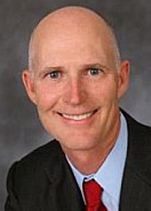 What does Rick Scott want? Orlando Sentinel columnist Beth Kassab on the possibility of Tony Bennett coming to Florida: “Indiana's loss could be Florida's gain. Then again, it will all depend on whether the state board and the governor are looking for somebody to push Florida forward or somebody to soften Scott's image on education reform. There are worrisome signs that Scott is looking for the latter.” Two knocks don’t make a pattern, but this is the second time in a month Scott has been criticized from the reform side.
Joining the chorus. Miami Herald columnist Leonard Pitts says the state Board of Education lowered the bar for minority students when it adopted short-term achievement goals that called for steeper rates of improvement for those students.
Tax credit scholarships and religious schools. The Orlando Sentinel takes a look at a long-established fact - the majority of students receiving tax-credit scholarships attend religious schools – and critics recycle myths about funding and accountability.
State settles with Christian college. From the News Service of Florida: “Settling a federal lawsuit that involved questions about the school's "secular purpose," state education officials will allow students at a Central Florida Christian college to be eligible for a popular grant program.” Complaint here. Settlement here.
Charter school analysis. News outlets continue to highlight UCF Professor Stanley D. Smith’s analysis, which finds that as a group, charter schools in Florida under perform traditional public schools. Smith writes an op-ed for the Tampa Bay Times. The St. Augustine Record uses his findings as a basis for this editorial. (more…)
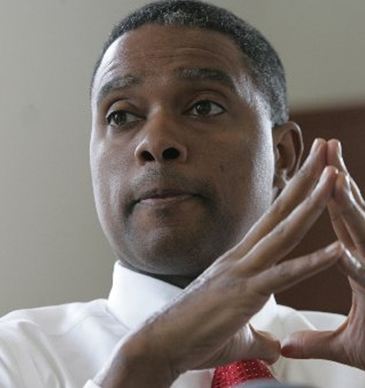 Gerard Robinson. The former Florida education commissioner, who stepped down three months ago, will be among the panelists next week responding to a new Brookings report on standardized testing and the Common Core. More here.
DOE responds to Tampa Bay Times contracting story. I can't remember the last time DOE did a point-by-point, line-by-line rebuttal to a story. Press release here.
Career academies. Get a nice write-up in the Gainesville Business Report.
Testing. New Duval Superintendent Nikolai Vitti removes some internal standardized tests from the district schedule, prompting praise from teachers union president Terrie Brady, reports the Florida Times Union.
FCAT. Will any private schools that accept tax credit scholarships give it? Asks Gradebook.
Contract talks. Continue next week in Palm Beach County after nearly falling apart last week, reports the Palm Beach Post’s Extra Credit blog.
Schools put kids in reach of convicts. Tampa Bay Times columnist Sue Carlton.

Colburn
David Colburn is a respected former University of Florida provost and progressive academic who should have done more homework before he blithely characterized those who support private school options as salesmen and hucksters. His recent commentary in the state’s largest newspaper, the Tampa Bay Times, rather pointedly ignored important evidence in his own backyard.
Dr. Colburn is good thinker on education issues, but somehow managed to treat all school vouchers as though they are inherently unaccountable. “There is something basically wrong when public funds are earmarked for these private schools,” he wrote, “and the state fails to insist on accountability measures for student achievement outcomes.”
That assumption is demonstrably false, and he need look no farther than his own state. The state’s first voucher program, which was declared unconstitutional in 2006, required students to take the state test. The current pre-K voucher that served 145,551 4-year-olds last year requires pre- and post-academic evaluations that are used to rate providers.
Lincoln Tamayo, who runs the highly successful Academy Prep Centers of Tampa and St. Petersburg that serve underprivileged middle school students, was also quick to note in a letter to the editor that the Florida Tax Credit Scholarship serving 49,000 low-income students has required nationally norm-referenced tests since 2006. The test scores for Tamayo’s students, who are treated to an intensive six-day-a-week, 11-months-a-year program, reveal both year-to-year academic gains and 8th grade reading and math scores in the 70th and 76th percentile range.
There is ample room for principled debate over whether the current testing approach for these private options is sufficient to assure that students are making academic progress. For example, there are certainly challenges in trying to compare the test results of low-income students in private schools with their low-income colleagues remaining in public schools, in part because the scholarship students tend to be much poorer.
But Dr. Colburn instead seemed content to assert that vouchers “court disaster,” as though every one of these programs is flying blind. His lack of intellectual rigor was, needless to say, disappointing.
From Patricia Levesque, executive director of the Foundation for Excellence in Education, in the Shreveport Times (H/T to EdFly Blog and Jay P. Greene's Blog):
The rhetoric surrounding parental choice often becomes apocalyptic in tone, despite very clear evidence that it improves public schools. Much of the Louisiana discussion has focused on the issue of accountability. Louisiana's statute provides for student testing and includes strong mechanisms to remove under performing schools. This is a higher standard of accountability for private schools than the standard that applies to school districts in Louisiana, and across the nation. The bottom-up approach created by empowering parents to vote with their feet if their child's school is not meeting their needs represents the ultimate form of accountability. No amount of regulatory compliance can hope to match a system of decentralized parental choice. Compliance models focus on school and grade level average results, while empowered parents focus on the particular needs of their child. Full op-ed here.
The gurus of school choice have often shuddered at the word “regulation.” On occasion this instinctive hostility has been tactically justified. Viewed objectively, however, it is meaningless - even self-contradictory. And too often has it driven fair-minded listeners from the civic conversation about the ideal structure of this very necessary reform called “school choice.”
Regulation is itself a pre-condition of any system of choice, whether the intended beneficiary be the have-not family or the comfortable suburbanite. The empowerment of parents always comes as the effect of a particular set of rules. Nor is this reality limited to reforms aimed at the complex and private world of the family. The simplest of legal systems - one, for example, that embraced the most complete market freedom - would depend upon the regulatory oversight of some third-party authority to interpret and enforce those promises which constitute any market. Contracts are not self-enforcing. Nor is parental choice or any other human regime.
Children present perhaps the most obvious example of my point; by nature their lives will be regulated by someone. The only question is “by whom?” That the state will be one of the players seems quietly accepted by all. This includes the school choice reformer who has unequivocally embraced compulsory education - a thing to be enforced and paid for by the state. The issue, then, becomes how far beyond the requirement of schooling shall the state penetrate the natural territory of the family?
We appear to agree on rules forbidding child abuse. Beyond this and compulsory schooling, where shall we the people allow (or require) the state to go? The answer can come only in some cluster of regulation - some that command, some that limit the state. If it is parents who are to rule (i.e., to regulate their children), then government must be commanded (again, regulated) first - in a positive way - to subsidize the family’s preference in schooling, and second – negatively - to avoid subverting parental authority by unnecessary busybody rules. The state itself must be ruled in both positive and negative ways: it must do this; it may do this - but not that. (more…)
 Louisiana: State education officials set accountability rules for private schools participating in the state's new voucher program (Reuters). More from the New Orleans Times Picayune. The state deems a troubled private school ineligible to receive vouchers (Alexandria Town Talk). Meanwhile, a law firm representing a state teachers union sends letters to participating private schools, threatening them with litigation unless they opt out of the program until a lawsuit is settled (New Orleans Times Picayune).
Wisconsin: A Milwaukee charter school gets help from a national fund co-run by tennis legend Andre Agassi (Milwaukee Journal Sentinel)
Michigan: Speaking at the American Federation for Teachers convention, Vice President Joe Biden takes aim at vouchers and says teachers are under "full blown attack" from Republicans. (MLive.com)
Indiana: The state's year-old voucher program is becoming more diverse as it grows (Indianapolis Star). The mayor of Indianapolis tussles with parents over the future of a low-performing charter school (Indianapolis Star).
Florida: The school board in Pinellas County votes to allow an F-rated charter school to remain open after students and teachers plea for more time. (Tampa Bay Times)
Illinois: Charter school leaders in Chicago fear budget cuts because of uncertainty over the district's contract with teachers. (Chicago Tribune) (more…)
 Ideologues tend to exaggerate political debate, but Louisiana school superintendent John White reminded us Tuesday that rational policy is the key to integrating vouchers into a robust public education system. The accountability that White introduced, and the Board of Elementary and Secondary Education (BESE) adopted, represents a thoughtful balance of testing, regulation and market forces that ultimately will require vouchers to prove their value.
That's a formula for how private learning options will become mainstream.
Lawmakers have shown themselves to be particularly inept at writing policy framework for vouchers so, in expanding the New Orleans voucher program to the rest of the state, the Louisiana Legislature punted accountability to the bureaucrats. That left White, a former Teach For America administrator and New York City schools executive under chancellor Joel Klein, with a task that requires careful calibration in a volatile environment. (As if to reinforce the rhetorical excess, one BESE board member on Tuesday assured his colleagues they were about to bite into the forbidden fruit of Eden and could be assured that “evil is going to arise.”)
What makes accountability so difficult is that there is still no clear blueprint. Every state with a voucher or tax credit scholarship has a different iteration, and the loudest voices are usually at the extremes – the voucher critics who demand the private schools be held to precisely the same standard as a public school and the voucher advocates who argue that no regulation is necessary because the market will force schools to respond. So the chore is to find the right balance, one with academic and financial oversight that taps into the accountability that follows from a parent who can walk out the door. This is made all the more challenging by the fact that, in most states, the students who receive the scholarship or voucher represent a minority of the enrollment in the private school.
White navigated the academic maze this way: 1) Every voucher student takes the state test; 2) The results of every test are reported on a statewide basis; 3) Any school with at least 40 students taking the test is held accountable; 4) Those schools will be evaluated on a scale similar to that of public schools. If they fail three out of any four years, their students will be given priority to attend other schools. Furthermore, the failing school will not be allowed to take new students and could be dropped from the program.
The rule has been criticized because the accountability portion is projected to capture only about a fourth of the participating schools in the first school year and schools will not be banned after one failing year. But the small number of schools with at least 40 tested students is the very nature of this school landscape. The 5,600 Louisiana students who receive vouchers this fall will not generally be attending schools where every student receives public support. Instead, they will go to private schools with mostly private-paying students, and you can’t reliably measure a school’s fitness based on two or three or a dozen student test scores.
That said, there is nothing sacrosanct about the lines that are drawn in this new Louisiana accountability rule, and they will no doubt be amended and improved over the years. But the rule is a commendable start and one, similar to the approach in Indiana, that makes an important statement about private learning options. They are part of, not in competition with, the public education system, and they need to be properly held to account.
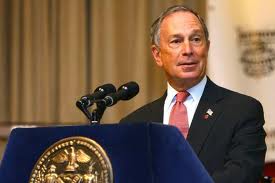 New York: For the third year in a row, New York City charter schools outperform traditional public schools, drawing praise from Mayor Michael Bloomberg, pictured here (New York Times). More from the New York Daily News.
New Jersey: The state teachers union fights new charters even as it attempts to unionize charter school teachers (NJ Spotlight). State education officials approve nine new charters, but reject 10 and postpone 13 (NJSpotlight), including a full-time virtual charter. (NJ.com)
Florida: State education officials reject appeals from three virtual charter schools seeking to open in the Miami-Dade school district. (Miami Herald) Education Commissioner Gerard Robinson defends charter schools at a town hall meeting (South Florida Sun-Sentinel). In a key Democratic primary in South Florida, state senate candidates differ over support for vouchers and tax credit scholarships. (Palm Beach Post)
Louisiana: Students and schools in the state's new voucher program are not likely to face the same regulatory accountability measures as public schools (Baton Rouge Advocate). A nonpartisan watchdog group recommends state education officials seek legislative guidance as they craft accountability rules (Associated Press). The state teachers union pans the academic results of the state's first all-grades, on-line charter school, but the school fires back with accusations of cherry picking (Baton Rouge Advocate).
Michigan: Democrats fear vouchers will be part of Gov. Rick Snyder's plans to overhaul school funding (MLive.com).
Washington: Gubernatorial candidates Rob McKenna and Jay Inslee agree on many aspects of education policy, but disagree on charter schools. (Seattle Times)
Elsewhere: Study finds students in K12 Inc. virtual charter schools are lagging behind their peers in traditional public schools. (Washington Post)

