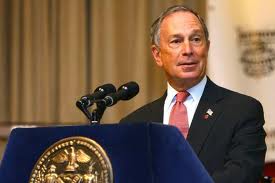
 New York: For the third year in a row, New York City charter schools outperform traditional public schools, drawing praise from Mayor Michael Bloomberg, pictured here (New York Times). More from the New York Daily News.
New Jersey: The state teachers union fights new charters even as it attempts to unionize charter school teachers (NJ Spotlight). State education officials approve nine new charters, but reject 10 and postpone 13 (NJSpotlight), including a full-time virtual charter. (NJ.com)
Florida: State education officials reject appeals from three virtual charter schools seeking to open in the Miami-Dade school district. (Miami Herald) Education Commissioner Gerard Robinson defends charter schools at a town hall meeting (South Florida Sun-Sentinel). In a key Democratic primary in South Florida, state senate candidates differ over support for vouchers and tax credit scholarships. (Palm Beach Post)
Louisiana: Students and schools in the state's new voucher program are not likely to face the same regulatory accountability measures as public schools (Baton Rouge Advocate). A nonpartisan watchdog group recommends state education officials seek legislative guidance as they craft accountability rules (Associated Press). The state teachers union pans the academic results of the state's first all-grades, on-line charter school, but the school fires back with accusations of cherry picking (Baton Rouge Advocate).
Michigan: Democrats fear vouchers will be part of Gov. Rick Snyder's plans to overhaul school funding (MLive.com).
Washington: Gubernatorial candidates Rob McKenna and Jay Inslee agree on many aspects of education policy, but disagree on charter schools. (Seattle Times)
Elsewhere: Study finds students in K12 Inc. virtual charter schools are lagging behind their peers in traditional public schools. (Washington Post)
 It’s another persistent myth about expanding school choice: Ethnic and religious groups will retreat into walled-off camps that are more insular and intolerant. Society will splinter. Democracy will crumble.
Rabbi Moshe Matz offers a polite rebuttal. “The reality is that an educated population is bound to be the force for greater democracy and greater embracing of unity in a society,” Matz, a school choice stalwart in Florida, says in the redefinED podcast interview below. “Look around. Tyranny always feeds off the uneducated.”

Rabbi Matz
Matz, 39, is director of Agudath Israel of Florida, which represents roughly 100 rabbis and synagogues. In 2010, he was literally front and center when 5,000 people marched in Tallahassee to support an expansion of Florida’s tax credit scholarship program. Last school year, 27 Jewish schools participated in the program, with 778 students on scholarship.
Matz’s comments are especially timely now. Conversation about school choice in the Jewish community spiked a bit in the spring after a provocative op-ed in the Wall Street Journal by author and pundit Peter Beinart. Jews in America could strengthen Jewish identify by shoring up Jewish schools, he wrote – and vouchers would be vital to that effort.
The past few months have also seen a steady stream of anti-Muslim comments in school choice debates, including a state lawmaker in Louisiana who said she regretted voting for that state’s new voucher program because she now fears it will promote Islam. Matz called such comments unfortunate and a distraction.
“The argument can’t stray away from the real issue here, which is parental choice,” he said. “Concerns like this are going to be out there, like they are probably for many other choices that parents are going to make for what’s the best education for their child. But ultimately, I think that you can’t allow these types of things to distract us from the ultimate goal.”
Editor’s note: Tuesday’s New York Times story about tax-credit scholarship programs sparked a flurry of reaction from leading school choice supporters, including John Kirtley, who chairs Step Up for Students, the non-profit that administers the tax credit program in Florida. In a blog post today, the Cato Institute’s Adam Schaeffer took exception to some of the guidelines Kirtley proposed for other state programs, and also raised concerns about what he calls the “hyper-centralization” of Florida’s program. Here is Kirtley’s response:
First, I want to thank Adam Schaeffer of the Cato Institute for his engaged dialogue on the vital subject of tax credit scholarship program design. I also want to say that I have been an admirer of Cato for over a decade, and even attended its wonderful “Cato University” in the late 1990’s.
The main point of my response is this: as someone who is trying to pass, grow and protect parental choice laws in Florida and across the country, I live in the real world of legislation and politics. We are trying to change something that has been the same for 150 years. Those who don’t want change are extremely powerful, well-funded, and have willing allies in the press. We have to fight hand-to-hand legislative and political combat state by state. And we can’t hand our opponents grenades with which to blow us up.
Adam is absolutely correct that you can only drive so much excellence through top-down accountability. Our scholarship organization’s president, Doug Tuthill, and I constantly talk about the “new definition” of public education we would love to see — a transformation from “East Germany” (pre-Berlin Wall fall) to “West Germany.” We see a system where end users allocate resources and choose among many providers and delivery methods – public or private. Of course I understand, as Adam asserts, that such a system will produce better results. I’m a businessman! Or at least I used to be, before this movement took most of my time. But we can’t wave a magic wand and create that transformation overnight. And as in any free market system, there is a role — though many will argue over the extent – to be played by government.
Adam points out there is more fraud and waste in public schools than in scholarship programs. So what? We’re held to a higher standard. It’s not fair, but it’s a fact. In Florida, when stories of public school teachers having sex with students was the topic of Letterman and Leno monologues, one of the most respected newspaper columnists in Florida blasted vouchers because a private school principal took a bunch of young girls unsupervised to Disney World. There weren’t even any scholarship kids at the school. Another newspaper called for the repeal of the tax-credit program because (among other things) not every school had submitted documentation of their fire inspections. At the same time, the Orlando Sentinel (to its credit) ran an article about public schools in the area that were so out of fire code they had to hire fire marshals to stand watch at them. No one called for those schools to be shut down.
The point is we operate in a zero tolerance environment in Florida. Opponents to choice are desperate for examples that the program isn’t being operated properly. They would love to find a family that makes too much money to qualify, or to learn household incomes or sizes weren’t documented properly. And it would hurt us if they did. (more…)
 Last year, Indiana stole the spotlight for school choice. This year it was Louisiana. And next year, if Virginia Walden Ford has anything to do with it, it just might be Arkansas.
“Miss Virginia,” the heart and soul of the Opportunity Scholarship voucher program in Washington D.C., moved back to her home state of Arkansas last summer and slipped a bit off the national radar. But she didn't go to retire. She’s meeting with parents, talking with lawmakers – and making bold predictions.
Vouchers and tax credit scholarships in Arkansas are now “being seriously discussed,” Walden Ford, 60, said in a phone interview with redefinED. “I believe in 2013 there will be school choice legislation that will pass in this state.”
After three decades in the nation’s capital, Walden Ford said she wanted to be closer to her family (her mother is 90). But the daughter of public school educators also wanted to take the knowledge gained from 15 years of grassroots activism in D.C. and apply them to Arkansas, a state that does not have a voucher or tax credit program but may be ripe for a strong move in that direction.
Among the reasons: The University of Arkansas has a young but hard-charging Department of Education Reform, with nationally known voucher experts like Jay Greene and Patrick Wolf. The state’s leading newspaper, the Arkansas Democrat Gazette, has a reform-minded publisher. The state is earning a reputation, through indicators like Education Week’s Quality Counts report (where it ranked No. 5 this year) of being a state on the move. And constitutionally, it does not appear to have the legal hurdles that could snare choice programs in other states.
“The people here in reform in Arkansas are much further ahead than I had anticipated,” Walden Ford said. “I fought the D.C. fight so … I’m very much a realist. But this is what I’m seeing. I’m quite excited about it. I don’t think it’s going to be easy … but it’s on the minds of people now, legislators and citizens, that we have to change something.”
Are Democratic legislators among them? (more…)
 Florida: State Education Commissioner Gerard Robinson responds to newspaper questions about charter schools and vouchers. (Tampa Bay Times Gradebook blog) He suggest school choice critics have a double standard. (redefinED)
Wisconsin: Vouchers have become an issue in the Democratic primary for governor between candidates Tom Barrett and Kathleen Falk. (wispolitics.com)
South Carolina: Jeb Bush talks education reform and school choice at a summit for educators, lawmakers and business leaders. (Associated Press) Parents rally for choice as Legislature considers several proposals. (The State)
Connecticut: Public school choice lottery leaves thousands of Hartford-area students without the school of their choice. (Hartford Courant)
Virginia: State Board of Education approves the state's first full-time virtual school. (Richmond Times-Dispatch) (more…)
 Today at redefinED we’re going to smash another stereotype: not all public school teachers oppose expanded school choice.
Lorena Castillo is chairwoman of CHISPA, the Coalition of Hispanic Instructors in Support of Parental Awareness. CHISPA falls under the umbrella of the Hispanic Council for Reform and Educational Options, and its 180 members – almost all of them teachers in traditional public schools - support charter schools, private school vouchers and tax credit scholarships.
Castillo sees no conflict between that support and support for public schools. The bottom line for CHISPA, she said in the redefinED podcast below, is finding the right fit for Hispanic students who are struggling. That way, they can catch up, earn diplomas, become good citizens – and not become statistics. “We have great public schools, and dedicated public school teachers,” said Castillo, who teaches middle school science in Dade County, Fla. “But for some students with special needs, they need other options in order to graduate.”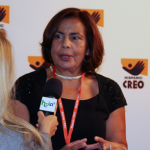
Castillo can relate. She was a teacher and principal in her native Nicaragua but moved to the U.S. 25 years ago. Before becoming certified to teach here, she worked a full-time job, a part-time job and attended night school to learn English – all at the same time.
“We were out of our environment. Different language. Different culture. So we had to struggle a lot to adapt,” she said of herself and her family. “When I see any Hispanic student in my classroom struggling, the same way I did and my kids did, I completely understand and I can make a complete connection.”
As far as we know, there are no other organized groups of public school teachers who openly support expanded school choice options. Coincidentally, “chispa” is Spanish for “spark.”
 Editor's note: We're going to try something new today - "blog stars," an occasional round-up of material from other blogs that we think is worth spotlighting. Some of the most illuminating commentary/analysis about education issues nowadays is found not in traditional media like newspapers, but in the blogosphere. As with everything else we do, we'll emphasize posts that touch on school choice, parental choice and common ground in education reform. Here goes:
Dropout Nation: Embrace the Power of Families
The move today by Louisiana’s legislature to approve the expansion of the state’s voucher program can only be seen as a success for children in that state. The centerpiece of Gov. Bobby Jindal’s school reform efforts, the proposal — which would transform the program from one that just serves 3,000 students in New Orleans — will likely help as many as 300,000 more children get out of the Bayou State’s failure mills and dropout factories.
But the passage of the plan, along with one that would allow for the opening of more charter schools, is another reminder of the important shift that is happening, not only within Louisiana’s public education system, but throughout American public education as a whole. Families once relegated to the sidelines are taking more-powerful roles in shaping education decisions decision-making. It’s past time for this to happen. It is absolutely immoral and unacceptable to deny families, especially those from the poor and minority households, the ability to reshape education for their kids and keep them out of the worst education in this nation has to offer.
As Dropout Nation has reported over the past few years, more families are realizing that they can no longer assume that their children will fare well in just any school. Thanks to the work of the school reform movement — including the work of standards and accountability advocates and civil rights-based reformers in advancing the array of measures that would eventually come together in the No Child Left Behind Act — parents know more about the abysmal quality of teaching and curricula endemic in both the worst urban districts and mediocre counterparts in suburbia. And this data, along with the first wave of school choice efforts that started in the early 1990s with Milwaukee’s school voucher program and the first charter schools opened in Minnesota, have allowed families, especially those from low-income backgrounds, to realize that they don’t have to take anything that is given by traditional districts. Full post here.
Choice Words: 10 years after Zelman, challenges still loom for voucher advocates
Ten years after the U.S. Supreme Court upheld the constitutionality of the Cleveland voucher program, state judges are still sending conflicting signals about the viability of private school choice. The latest setback for choice proponents took place last week in Oklahoma, where a Tulsa County judge ruled that a voucher for students with special needs violated the state’s constitutional prohibition of public money for sectarian institutions. (more…)
 The Louisiana Senate made national headlines this week with its historic 24-15 vote in favor of a statewide voucher program. But once again, media coverage ignored a key development: The vote was bipartisan.
Seven of 15 Democrats, including four black Democrats, voted in favor of HB 976, which also expanded other school choice options. That's on top of 12 Democrats who voted for the bill in the House. All of them did so despite tremendous pressure not to stray from the traditional party line or from historic allies like the Louisiana teachers union.
Despite all the Democratic votes, the union stuck to the story: The voucher agenda was pushed by out-of-state influences, the conservative American Legislative Exchange Council and Wall Street - a nefarious cabal out to "rob local funds from our neighborhood schools."
Widely repeated lines like these are what prompted redefinED this week to spotlight a couple of Florida folks who support vouchers and tax credit scholarships. One is a St. Petersburg, Fla. pastor who also happens to be a Democrat and the head of the local NAACP. The other is a Sanford, Fla. dad whose podcast interview I posted this morning. "I'm just a dad looking to do the best for his son," Mike Enters told me.
The debate over school choice is more dynamic and nuanced that its loudest critics want you to believe. And it's more interesting than what you'll read in the papers.
Folks who think the school choice movement is about tearing down or privatizing public schools should set aside a few minutes to listen to Mike Enters.
Enters, 52, is the father of 13-year-old Jack Enters, a sixth grader at tiny Lake Monroe Christian School in Sanford, Fla. Jack had severe health problems in his earliest years and has struggled a bit to fit in socially. Enters thought it best to place him in a small school with few distractions, lots of one-on-one attention and strong relationships between parents and staff. He has been financially able to do that thanks to a tax-credit scholarship.
“If it wasn’t for the scholarship program, I would have had to kind of send him out like a sheep into the wolves, you know, and see what would happen,” Enters told redefinED.
Dad is happy with how things turned out. Jack and his teachers continue to work on his social skills. Meanwhile, he’s academically solid across the board and light years ahead in subjects like geography and astronomy. The school has “been perfect for him,” Enters said. “It’s been tailor made and I couldn’t have asked for anything better.”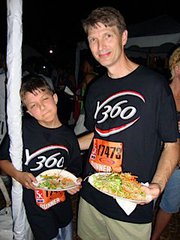
Enters, a former missionary, said he doesn’t have anything against public schools. In fact, his father was a public school teacher and principal for 39 years. But “I’ve got one crack, you know, at doing well with Jack,” he said, “and I didn’t want to take a chance to see if that would work, whether he would be accepted in a public school or not.”
“I’m just a dad looking to do the best for his son,” he continued. “I see where public schools have their place, definitely. It’s just that the description I gave before for the way Jack is, the way he’s wired, he would be one of those kids left behind, that are kind of shunted to the side at best. At worst, he’d be teased, he’d be, you know, just his spirit broken. I couldn’t picture myself putting him through that.”
[powerpress]
Eric J. Smith, the highly regarded Florida education commissioner who left after Gov. Rick Scott became governor, has landed at the George W. Bush Institute. His name and new title - fellow in education policy - surfaced today in the Huffington Post, in an op-ed he penned urging states to keep pushing for strong accountability measures. Part of Smith's argument included a general nod towards expanded school choice:
Another essential principle of strong accountability systems is state intervention when schools don't see achievement rates rise. And the most intensive interventions should occur in schools whose students don't reach grade-level standards.
In that vein, school choice is an important option for students. Every single student deserves a quality education. It is simply not acceptable for a parent to be forced to keep their child in a failing school in the hope that the local teachers and administrators will eventually clean up their act.
States generally want to be creative and federal legislation isn't standing in their way of doing that. Officials are empowered to employ tools beyond the standard choice policy of vouchers, including innovative reforms like allowing students in low-performing schools to get connected with high quality educators online.
The George W. Bush Institute's principles call on states to build on the current foundation, apply the lessons learned, and provide parents with an even broader array of choices if their child is trapped in a persistently low-performing school.

