California: The award-winning American Indian Model charter schools face closure after failing to fix problems with financial oversight that resulted in $3.8 million of questionable expenses (The Oakland Tribune).
Wisconsin: Three former state House speakers push for a voucher expansion (Associated Press). School choice options continue to grow with proponents pointing to achievement gains (WisconsinReporter).
Indiana: Ball State University pulls its sponsorship of seven struggling charter schools, likely ensuring their closure (Associated Press). School choice supporters press for an expansion of the state's voucher program (NWI.com).
Texas: A school choice proponent testifies that a tax credit scholarship program would save the state $2 billion a year (Houston Chronicle). More from San Antonio Express News. Waco-area school boards support a resolution opposing any publicly funded private school choice options for the state (Waco Tribune Herald).
Michigan: The legislative path for Gov. Rick Snyder's school choice expansion plans remain murky (MLive.com).
Tennessee: A school board member in Knox County tries unsuccessfully to convince his colleagues that private school vouchers are a good thing (Knoxnews.com). State lawmakers scrutinize Tennessee Virtual Academy, operated by K12 Inc., over poor test results (Tennessee Public Radio). Memphis charter schools are poised to grow - again (Memphis Business Journal). The NAACP pushes for more regulatory accountability for charter schools in the wake of complaints about one in Memphis (Memphis Commercial Appeal). Gov. Bill Haslam is expected to unveil his proposal for a limited statewide voucher in his State of the State speech tonight (News Channel 5).
New York: Twenty-four more Catholic schools in the state will close because they're not financially self-sufficient (New York Times). (more…)
 Words such as voucher, privatization, profit and corporation are often used as weapons by individuals and groups who oppose parental empowerment and school choice. Using words as weapons is especially common during periods of significant social change - we all do it - but the practice undermines civic discourse and makes finding common ground more difficult.
“Market” is another term school choice opponents use to connote evil, but our way of life is largely based on markets, and public education is increasingly embracing market processes as customized teaching and learning become more common. Our challenge moving forward is regulating public education markets in ways that maximizes their effectiveness and efficiency.
People access products and services in one of two ways. Either their government assigns them, or they choose for themselves. In the United States, we have historically allowed citizens to choose, and this system of provider and consumer choice is a “market.”
In a goods and services market, providers decide which goods and services they want to sell, and consumers choose those they want to buy. Markets, when implemented properly, are preferable to assignment systems because they better utilize people’s knowledge, skills and motivation. Citizens are allowed to use their own experiences and judgments when making selling and purchasing decisions, and this citizen empowerment maximizes the universe of ideas from which improvement and innovation derive.
When governments assign products and services to their citizens, they rely on a small group of people to decide what to offer. This top-down approach is less open, transparent and effective than the decision-making that occurs in markets, and it discourages creativity. This is why most improvements in goods and services emerge from market systems rather than government assignment systems.
Markets allow providers to learn from consumers. When governments dictate to consumers what goods and services they may have, their citizens’ true wants and needs are not fully considered. The voice of the customer is silent. But when consumers are empowered to choose for themselves, providers learn from these choices and adjust accordingly. In markets, this necessity to meet customers’ needs drives innovation and continuous improvement. (more…)
Vouchers and accountability. Gov. Rick Scott’s call for “voucher” students to take the same standardized tests as public school students is long overdue, editorializes the Tampa Bay Times: “Voucher proponents can't have it both ways,” it concludes. “They can't claim they are a good bargain for taxpayers but then be unwilling to prove it.”
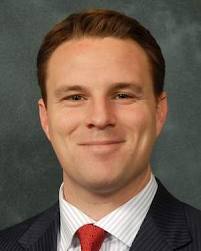
Weatherford
“Yes we are!” House Speaker Will Weatherford gives Tony Bennett a thumbs up on Twitter after a critical Tampa Bay Times column says the selection shows the state is doubling down on Jeb Bush ed reforms. Gradebook. A look at Bennett’s re-election upset in Indiana. Tampa Bay Times.
Home-schooled or truant? A Flagler County dad faces a criminal charge after not following requirements for home-schooling, reports the Daytona Beach News Herald.
Sex abuse lawsuits. Involving a former middle school teacher. Miami Herald.
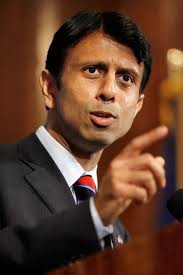
Gov. Jindal
A district judge ruled Friday that Louisiana's statewide voucher program is unconstitutional because of the mechanism it uses to send public funds to private entities, prompting groans from school choice supporters, cheers from teachers unions and promises of an appeal from Gov. Bobby Jindal.
"Today is really significant," said Steve Monaghan, president of the Louisiana Federation of Teachers, according to Reuters. "What the governor was doing was unprecedented and unconstitutional under Louisiana law."
The reaction from Jindal: "Today's ruling is wrong headed and a travesty for parents across Louisiana who want nothing more than for their children to have an equal opportunity at receiving a great education," he said in a statement reported by the New Orleans Times Picayune. "That opportunity is a chance that every child deserves and we will continue the fight to give it to them."
More coverage from Associated Press, Wall Street Journal, Washington Post, Baton Rouge Advocate, Houma Today, Alexandria Town Talk, Christian Science Monitor, Education Week.
Reaction from American Federation for Children, Friedman Foundation, Louisiana BAEO, Dropout Nation, Time-Picayune columnist Andre Perry and the Louisiana School Boards Association.
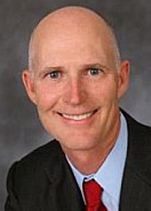 What does Rick Scott want? Orlando Sentinel columnist Beth Kassab on the possibility of Tony Bennett coming to Florida: “Indiana's loss could be Florida's gain. Then again, it will all depend on whether the state board and the governor are looking for somebody to push Florida forward or somebody to soften Scott's image on education reform. There are worrisome signs that Scott is looking for the latter.” Two knocks don’t make a pattern, but this is the second time in a month Scott has been criticized from the reform side.
Joining the chorus. Miami Herald columnist Leonard Pitts says the state Board of Education lowered the bar for minority students when it adopted short-term achievement goals that called for steeper rates of improvement for those students.
Tax credit scholarships and religious schools. The Orlando Sentinel takes a look at a long-established fact - the majority of students receiving tax-credit scholarships attend religious schools – and critics recycle myths about funding and accountability.
State settles with Christian college. From the News Service of Florida: “Settling a federal lawsuit that involved questions about the school's "secular purpose," state education officials will allow students at a Central Florida Christian college to be eligible for a popular grant program.” Complaint here. Settlement here.
Charter school analysis. News outlets continue to highlight UCF Professor Stanley D. Smith’s analysis, which finds that as a group, charter schools in Florida under perform traditional public schools. Smith writes an op-ed for the Tampa Bay Times. The St. Augustine Record uses his findings as a basis for this editorial. (more…)
 The public release of test scores for low-income students on Florida Tax Credit Scholarships received remarkably little attention in the news media this year, leaving bloggers the freedom to interpret serious academic analysis with what amounted mostly to potshots.
Not surprisingly, Diane Ravitch weighed in to wag her finger at the straw men who have touted vouchers as “a panacea.” But at least she didn’t challenge the credentials of the state-contracted researcher, whose national reputation for thorough independent-minded critical analysis didn’t prevent two lesser-known Florida bloggers from doing so. She also didn’t snipe at a respected education writer for the state’s largest newspaper, branding her reporting on the test results as “propaganda,” as several online commenters did.
This kind of noise is usually best regulated by shutting the door, but those who have genuine concerns about whether a private learning option can help struggling, underprivileged schoolchildren deserve straight answers. I certainly cannot be viewed as an unbiased observer, but my work for the nonprofit that oversees the scholarship at least makes me an informed one.
So let’s start with Dr. Ravitch, who to her credit recited three direct paragraphs from the 41-page report. She also said that “students in voucher schools made academic gains similar to their peers in public schools,” which is a generally correct statement. But rather than read more deeply, she tried to minimize the significance through unsupported and unimportant claims that Florida tax credit scholarship supporters promised miracles.
The test scores and associated research do not speak to academic miracles, but they are encouraging. To repeat some portions of our previous post, two findings are critical for context.
First: For five consecutive years, the state researcher has determined that students who choose the scholarship are among the lowest performers in the public schools they leave behind. (more…)
 No matter how many times critics of parental choice say it, it’s still not true: Tax credit scholarships in Florida (aka vouchers) do not drain money from public schools.
The latest example: An op-ed in Sunday’s Ocala Star Banner by Andy Ford, president of the state teachers union. Ford (pictured below) focuses on the state of education funding in Florida, and much of what he argues is undeniable. These are tough times for schools. The money that Gov. Rick Scott and the Legislature scraped together for education this year is still billions short of where the state was five years ago. I have one child in public school. In a few months, I’ll have two. I sympathize.
But then Ford redirects his financial argument toward tax-credit scholarships, suggesting they’re part of the reason why public schools are in dire straits. “There’s also money in the budget for expanding charter schools and increasing money for corporate voucher schools,” he writes. “Here’s another example of political leaders favoring unproven and less-accountable schools over our traditional neighborhood schools.”
He concludes: “At a time when the governor and lawmakers doled out more tax giveaways for corporations, more money for unaccountable voucher schools and more support and freedom for for-profit charter schools, our public schools are given a budget far from adequate and far from a true investment in our children.”
We'll save the issue of accountability for another day, because it’s the pervasive myth of financial loss that resonates most with parents and voters. Despite what Ford says, one credible, independent report after another has found tax credit scholarships save taxpayer money. The Collins Center for Public Policy came to that conclusion, as did Florida Tax Watch, the Office of Program Policy Analysis & Government Accountability and, just last month, an impact report from Florida’s Revenue Estimating Conference. The latter found the tax credit program will save taxpayers $57.9 million next year alone. (more…)
 Louisiana: State Superintendent John White: Teachers are soldiers in fight for social justice. (Baton Rouge Advocate) State House passes bill for program similar to tax-credit scholarships. (New Orleans Times Picayune.) Voucher and charter school proposal rolls through state Senate committee. (Shreveport Times.)
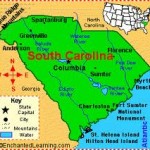
South Carolina: State House passes major expansion of school choice, including tax credit scholarships for low-income students and students with disabilities. (Associated Press)
New Hampshire: State House passes tax credit scholarship bill, but Gov. John Lynch has "real concerns." (Nashua Telegraph)
Oregon: Op-ed: Expanding school choice will promote student responsibility. (News and Herald) (more…)
Critics of Florida's tax credit scholarship program often say it's a "drain" on public school funding. But yet another credible report underscores how much that's not the case.
The little-known “impact” report, issued last week by Florida’s Revenue Estimating Conference, brings genuine financial context to the scholarship program, which helps low-income K-12 students. It says, with a degree of professional precision, that the Florida Tax Credit scholarship will save taxpayers $57.9 million next year (line 55, page 36).
That number is at odds with the financial lament of some opponents, such as Rep. Dwight Bullard, a Democrat from Miami-Dade. In his passionate opposition to HB 859, a bill that that expands the program and now sits on Gov. Rick Scott’s desk, Bullard told his colleagues the scholarship “has cost all of your respective school districts million and millions of dollars in lost revenue” and tried to pit scholarship schools against district schools.
“We're talking about funding a program that, yes, we can all agree is successful,” Bullard said. “We can always point to the fact that it helps low-income and minority students get out of a bad situation and get into a better one. … But here's the question: When are we going to stop adding to the bad situation that they're trying to run from?”
Bullard’s plea to increase funding for public schools is sincere and commendable, but his attempt to use scholarships as a foil is neither. (more…)

