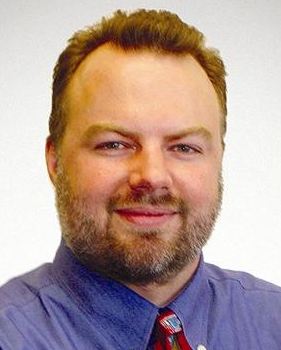
Ladner
Call them Vouchers 2.0. In the age of customization, researcher Matthew Ladner sees education savings accounts as the tool for the times. Unlike vouchers or tax credit scholarships, ESAs would allow parents to use state funds to pay for a blend of K-12 educational options – schools, tutors, online programs, etc., in whatever combo works - and perhaps squirrel away some of those funds for college.
“We we like to say that ESAs are sort of school choice and parental control over education down to the last penny,” Ladner said in a podcast interview with redefinED. “What we really want to do is allow parents to customize the education for their child. Education shouldn’t be necessarily an all or nothing proposition - you’re either attending this school or that school. In fact, the whole definition of what a school is is being fairly rapidly changed by technology.”
Ladner is senior advisor of policy and research at the Foundation for Excellence in Education. He’s one of the creators of the ESA concept and its most diligent Johnny Appleseed. In October, the Friedman Foundation for Educational Choice published a report he authored about ESAs called, “The Way of the Future.” Ladner also was instrumental in creating the ESA program in Arizona, which to date is the only one in the country but was recently expanded.
A key feature of ESAs, Ladner said, is that it requires parents to make choices based on quality and price. That in turn will spur innovation and, at the same time, reign in costs that have risen steeply for decades with little improvement in academic outcomes. “If you want to reverse that, you have to do something that’s going to seem a little radical at first,” Ladner said. “But by giving parents complete control over the money and requiring them to consider possible alternative uses for that money, it really sets them up to be discriminating consumers.“
Florida lawmakers flirted with ESAs in 2011, with critics panning the idea as “universal vouchers” and “vouchers for all.” But Ladner said even if a state went “whole hog” with the idea, the vast majority of kids would remain in public schools, as the Florida experience has shown with McKay vouchers and tax credit scholarships. In his view, ESAs should also be designed for equity - with greater funding for students with greater needs.
Are people ready for ESAs? Maybe not just yet, Ladner said. But it took a while for people to catch on to Palm Pilots, too. “As a movement we always need to be taking a strong interest in the development of our product. And our product in this case is our methods to increasing the freedom and the effectiveness of parents the parents within the schooling system,” Ladner said. “I think there is work to be done. But I do think that when this work is done we will have a product that is clearly superior to the ones we have today.”
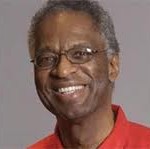 When Indiana's celebrated state superintendent of instruction, Tony Bennett, spoke in support of universal vouchers at last week's American Federation For Children summit, the panel's moderator did not sit quietly. After all, just last year, Howard Fuller (pictured here) fought legislative attempts to include high-income families in a Milwaukee voucher program he helped create for poor children. Of the prospect of universal vouchers in Wisconsin, Fuller proclaimed, "That's when I get off the train."
So Fuller, a legend in the school choice movement, politely invoked "the moderator's privilege" after Bennett spoke. And he was characteristically blunt.
“The thing that I most worry about is that people will forget the importance of protecting poor people in this,” Fuller said, before adding a few sentences later, “I just want people to know … when folks move towards universal (vouchers), just know that some of us are going to fight it.”
The world of school choice is more textured and dynamic than it’s portrayed. It’s not a monolith. It’s many camps, with overlapping but not always consistent visions. For the most part, those differences were glossed over at the AFC summit, and for good reason. The summit was a fitting celebration of recent victories. It was rightly punctuated by moving speeches from New Jersey Gov. Chris Christie, Louisiana Gov. Bobby Jindal and Newark Mayor Cory Booker.
But the differences are there. And beneath the surface, some tensions too. Fuller has drawn a line in the sand before, including in this podcast interview last year with former redefinED editor Adam Emerson. Here are his latest remarks in full, as best as I could hear and transcribe them: (more…)

