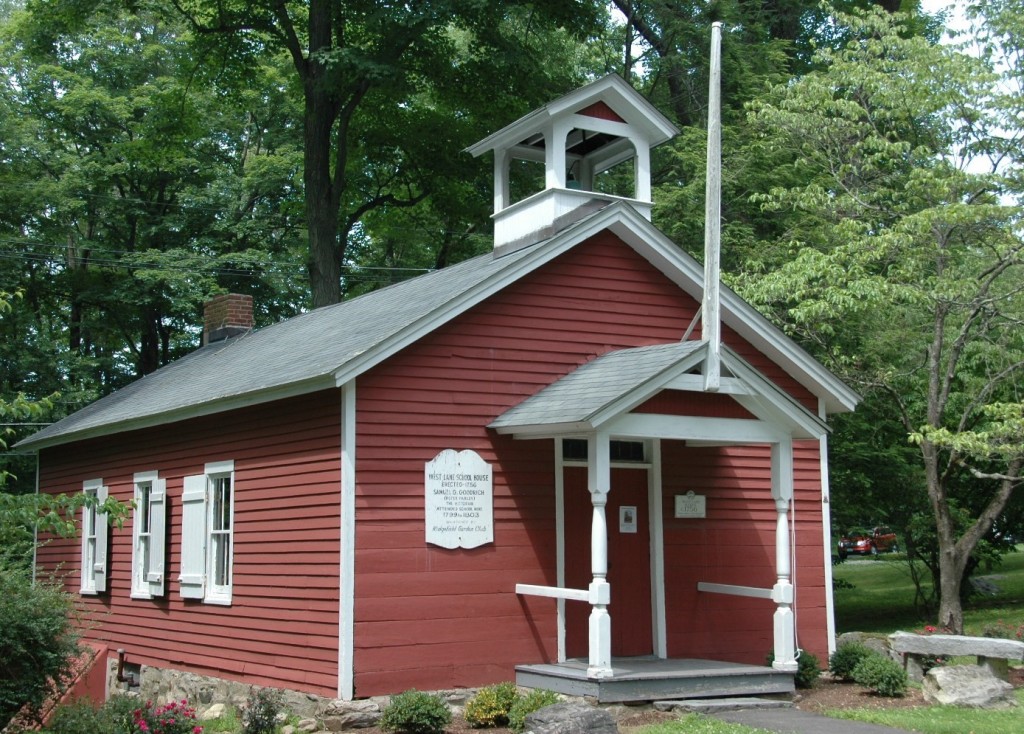
A common school
Relying on a 19th century concept of public education and a legal precedent from the early 20th century, the Washington State Supreme Court on Friday struck down one of the country's newest charter school laws.
The League of Women Voters v. State ruling clouds the futures of nearly 1,200 students in nine charter schools, and could cast doubt on other educational programs. But it also raises a question that should resonate beyond the Evergreen State: Can archaic legal concepts stymie a 21st-century education system?
The court's 6-3 majority relied on three-step reasoning. First, Washington's state constitution restricts some state funding to the support of "common schools" only. Second, charter schools are not common schools, a definition drawn from a 106-year-old legal precedent. Third, the state's funding system risks giving charter schools some of the "common schools" money they're barred from receiving, since the state hasn't segregated the common school fund from the general fund since 1967.
When the Washington Supreme Court decided District No. 20 v. Bryan in 1909, the state was home to more than 2,800 public schools (132 of them in log cabins) spread across 2,710 school districts. At the time the court held common schools were "subject to and under the control of the qualified voters of the school district." All nine justices agreed last week that charters authorized by the state — a concept voters approved in 2012 — were not common schools.
The idea of common schools traces to the 1830s, when Horace Mann envisioned a form of free primary schools that would be tasked with teaching students reading, writing and arithmetic.
The term appears in Article IX, Section 2 of Washington's state constitution:
The public school system shall include common schools, and such high schools, normal schools, and technical schools as may hereafter be established. But the entire revenue derived from the common school fund and the state tax for common schools shall be exclusively applied to the support of the common schools.
Washington officials have long struggled to reconcile a modern public education system with a concept that may have been envisioned under the dim light of a whale-oil lamp. The Washington State Attorney's General Office warned antiquated definitions of the "common school" did not include high schools (along with vocational education and teacher training colleges), as these schools were referred to as separate from the "common school" in Article IX, Section 2.
 Alabama: The Southern Poverty Law Center is suing to block the new school choice law under equal protections grounds (AL.com, NPR, Times Daily, US News and World Report). Essentially, they're arguing that if you can't help every child, you shouldn't help any child (HT to Jason Bedrick).
Florida: Step Up for Students, which administers Florida's education tax-credit scholarship program, received a $1 million donation from WellCare Health Plans, Inc. The contribution will fund 198 scholarships this school year (PRWeb).
Kentucky: U.S. Rand Paul (R-Kentucky) appeared at an event with the Black Alliance for Education Options and Democrats for Education Reform to promote school choice and charter schools (Huffington Post, Education Week).
Louisiana: Education leaders in Baton Rouge are reviewing applications from charter schools to see who might be eligible to use some of the $16 million available for capital and start-up costs (The Advocate). The U.S. Justice Department is trying to stop vouchers from being offered in any school district still under court ordered desegregation (Associated Press, Times-Picayune, The Advocate).
Massachusetts: School choice students in the Berlin-Boylston area won't be getting bus rides to school anymore (The Telegram).
Minnesota: Charter schools are feeling more pressure to participate in accountability rating systems (Hechinger Report). (more…)

