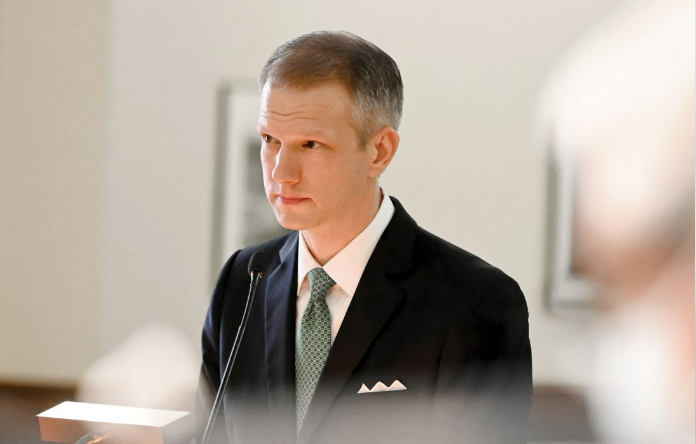
 Editor’s note: Riley Moore made these comments to the West Virginia Daily News. You can read more about the injunction here.
State Treasurer Riley Moore, who serves as chairman of the Hope Scholarship Board, issued the following statement after Kanawha County Circuit Court Judge Joanna Tabit permanently enjoined the state’s Hope Scholarship Program.
“I am deeply disappointed that a judge has decided to halt this program which would help so many families in West Virginia. More than 3,100 West Virginia students were relying on having this funding in the fall, and now – at the last minute – they may not be able to get the educational services they want and need.
“I certainly plan to appeal this decision to the Supreme Court of Appeals of West Virginia. This program was authorized by the Legislature, and we firmly believe it is constitutional. We will vigorously defend our implementation of this program, which the people of West Virginia have clearly demonstrated they want, so that West Virginia families can choose the educational opportunities best suited for their children.”
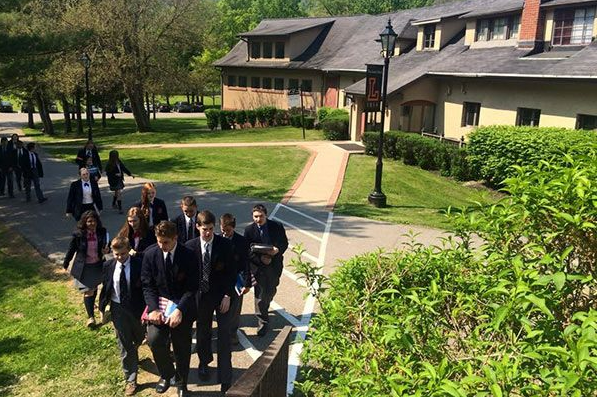
The Linsey School in Wheeling, West Virginia, is a private, independent school for students in grades 5-12. One of 118 private schools serving nearly 14,000 students in the state, Linsey combines traditional values of hard work, respect, honor, honesty and self-discipline with an challenging academic program.
Editor’s note: This article appeared earlier today on wvmetronews.com.
Kanawha Circuit Judge Joanna Tabit has concluded that a scholarship program that provides state funds for students leaving the public school system is runs afoul of the state Constitution.
That conclusion at the end of a hearing that lasted a little more than an hour led Tabit to conclude the Hope Scholarship program is null and void.
“I’m granting preliminary and permanent injunctive relief, enjoining the state from implementing that statute,” Tabit said at the end of the hearing.
There’s a strong likelihood the issue will next go to the state Supreme Court. “We will be appealing,” said Conor Beck, communications project manager for the Institute for Justice, which is supporting parents who want to use the scholarship.
More than 3,000 students have been awarded the scholarship, which could be used for education expenses this fall. But the program has been challenged on grounds that it violates the state Constitution by diverting funding away from the public education system.
The Legislature passed and the governor then signed a bill establishing the Hope Scholarships in 2021, providing money for students leaving the public school system to use for a variety of financial costs. West Virginia’s program also allows students old enough to enter the school system for the first time to be eligible immediately.
The conservative publication the Federalist concluded “West Virginia just passed the nation’s broadest school choice law.” That’s because eligibility in other states with similar programs is more narrowly defined.
The plaintiffs, parents of students in the public school system, argued that Hope Scholarship violates the state Constitution’s Article XII, Section 1 duty to provide for “for a thorough and efficient system of free schools.” They contend that means the Legislature can’t “exceed this mandate by publicly funding private education outside the system of free schools.”
To continue reading, click here.
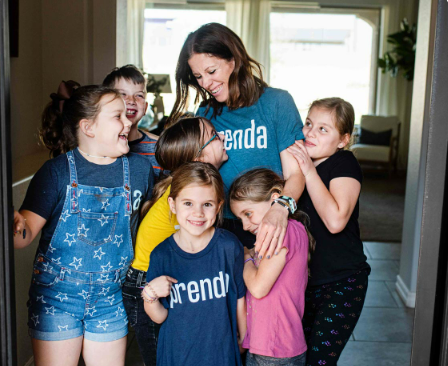
Prenda now operates in six states, partnering with state-accredited institutions to provide a tuition-free education option. Meeting in homes and other flexible locations, small groups of K-8 students engage in project-based learning and progress at their own pace under the direction of guides who come from the ranks of parents, teachers, and other community members.
With rising inflation and a stock market on the rocks, any big investment is worth watching. And with researchers reporting poor returns on student achievement in assigned schools during the pandemic, this makes any investment in education even more notable.
So with venture capitalists betting big on Prenda last week, committing $20 million to advance the company’s activities, parents and families around the country should take notice.
Prenda forms “microschools,” which are what they sound like: small learning communities of 10 students or fewer. The company caught parents’ and lawmakers’ attention during the pandemic as traditional schools were closed for in-person learning. Families looked for alternatives, and the learning pod and microschool models offered hope.
With a learning pod, parents led small groups of their own children, along with the children of their friends and neighbors, in learning groups that resembled homeschool co-ops. Microschools are similar, though organizations such as Prenda and Acton Academy Affiliate Network help create these small schools that are similar to reduced-size private schools.
Not all the attention from lawmakers was good. In fact, policymakers around the country tried to impose rules and regulations that treated microschools and learning pods like at-home daycare operations. Daycare regulations can be overly bureaucratic and apply to children who are younger than school age, making the rules a poor fit for microschools and pods.
The collision of heavy-handed regulation and increasing learning pod enrollment risked crushing these viable civil-society responses to school closures during COVID.
Some state officials recognized the mismatch between daycare rules and the new learning innovations, though. In West Virginia, lawmakers adopted a proposal earlier this year that allows for the creation of learning pods and microschools. State officials defined learning pods as “voluntary” associations of parents that may or may not involve tuition payments, allowing parents to educate their children at home and the children of friends and neighbors who are not satisfied with the options at an assigned public school.
Parents will measure student progress with nationally norm-referenced tests or other assessments, providing transparency for families and taxpayers. West Virginia’s proposal also protects the creation of microschools, in the form of small, private schools.
Nationally, public school enrollment has dropped by 1.2 million children since 2020. In West Virginia, public school numbers have fallen by 21,000 children since 2017. Whether this signals widespread parent dissatisfaction with assigned schools or that students are falling through the cracks – or both—parents and children need options outside the assigned system.
Which brings us back to learning pods and Prenda.
The company has expanded well beyond Arizona today and serves some 3,000 students in six states across 300 microschools. The company has announced that it will be expanding into other states. For West Virginia families, the new learning pod and microschool law will not jeopardize families who choose to homeschool. But families can also create their own learning pod, and parents can apply for the state’s new Hope Scholarship, an education savings account option that also originated in Arizona. Families should even be able to use the Hope Scholarship to create a microschool, which makes Prenda’s expansion so notable.
Federal officials have sent some $200 billion in taxpayer resources to schools during the pandemic, and, as of last fall, some $150 billion remained unspent—all while achievement scores and enrollment are falling.
Meanwhile, savvy parents are now making more choices about how and where their children learn, in West Virginia and elsewhere. The savvy investors are watching.
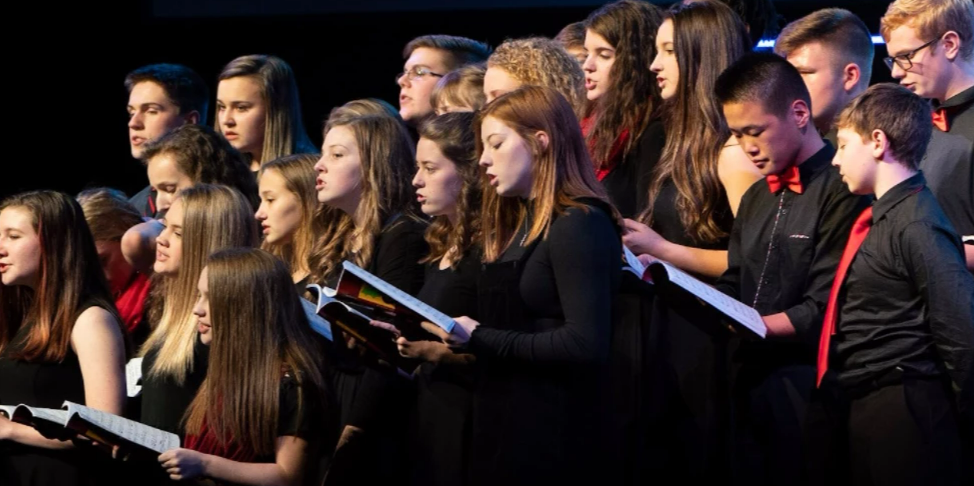
Teays Valley Christian School in Scott Depot, West Virginia, is one of 118 private schools in the state serving nearly 14,000 students. Teays Valley is dedicated to the belief that the Bible is foundation to all truth and should be integrated into all subject areas.
Editor’s note: This article appeared Tuesday on Independent Women’s Forum.
West Virginia has recently become the newest of only ten states to offer K-12 students the option of an Education Savings Account, a major step in furthering the education freedom movement in the state.
According to its website, the Hope Scholarship is “an education savings account (ESA) program that will allow parents and families to utilize the state portion of their education funding to tailor an individualized learning experience that works best for them.”
The ESA acts as a scholarship, allowing students to receive a sum of money to be used for educational expenses outside the public school system. Families who are accepted into the program may use the scholarship for private school tuition and fees, homeschooling materials, tutoring services, after school and summer school programs, educational services and therapies, and other state-approved educational endeavors.
The scholarship amount awarded to accepted families for the 2022-23 year will be $4,298.60 per pupil.
EdChoice, a non-profit committed to expanding education freedom for children, calls West Virginia’s Hope Scholarship the “most expansive education savings account program in the nation.” It is also the first school choice initiative in the state of West Virginia, marking a historic achievement for parents and students.
The program’s expansive eligibility criteria creates a model for other states, with all students in grades 1-12 eligible after attending public schools for 45 days. Students entering kindergarten do not have to attend public schools to be eligible for a Hope Scholarship. So far, over 3,000 West Virginia students have been accepted into the program. Nearly 500 additional applicants are under review.
To continue reading, click here.
Grace Christian School in Huntington, West Virginia, acknowledging children as gifts from God to parents, partners with Bible-believing parents and church through quality spiritual and academic programs, equipping students to live successful, Christ-centered lives. The American Association of Christian Schools has named Grace Christian a School of Distinction.
Imagination is a curious thing, something inborn, but sadly, for most adults, it fades over time. The ability for one to conceive of a different, better world becomes more difficult for adults as the reality of life, with all its setbacks and disappointments, settles in.
This is especially true in geographic areas like my own – Appalachia – where historical narrative and reality leave little reason for buoyant imagination. And yet, there are certain things that can begin to turn the fatalistic tide from pessimism and despair to hope – things like new opportunities to provide a better education for one’s child.
West Virginia’s new education landscape, one with charter schools, open enrollment, and the nation’s most expansive education savings account – the aptly-named Hope Scholarship – is exploding with new opportunities for families who desire something different than a traditional public school. The early results indicate that families are eager for alternative education opportunities.
For example, West Virginia’s first four charter schools are projecting a combined enrollment of over 2,000 students, and the Hope Scholarship is approaching 2,000 approved students for the $4,298 Hope education savings account.
For reference, West Virginia’s largest public high school has an enrollment of roughly 1,850 students; Hope-plus-charter school students would comprise the equivalent of the 22nd-largest district (out of 55) in the state. Between charter schools and the Hope Scholarship program, over 4,000 students will have access to an education of their choosing.
It would be difficult to overstate how fast and how far the Mountain State has come. Prior to charter school legislation passing in 2019, West Virginia was one of a sad handful of states that denied students any substantive form of education choice, private or public. However, in the period between 2019-2021, West Virginia experienced a surge of student-centered legislation whose benefits are manifesting right before our very eyes.
Thousands of West Virginians are imagining a brighter future through the power of education choice and personal agency. The enthusiasm is even more encouraging when one considers frivolous lawsuits challenging the constitutionality of charter schools. The Hope Scholarship is a Damoclean sword hanging over the new education programs.
Add in the historical fact that up until three years ago, the concept of choice in education in West Virginia was quite alien, and 4,000 students is very telling, indeed, about parental desires in education.
Imagine how many families across the country might choose another path if given the same opportunities that children in West Virginia now have.
It still feels odd to write such a statement given West Virginia’s history.
It is too easy to get bogged down debating culture wars – masking, critical race theory and the other educational controversies du jour – when what lies at the heart of education and education reform is the ability to envision a story with pages written by one’s own pen.
Despite all its history and baggage, West Virginia provided families with a pen, and thousands have looked at the education system and decided they should write a different story for their children. West Virginia did not become an education backwater overnight, but families are able to change their futures now.
Through education choice, West Virginians no longer must only imagine.
.
The mission and vision of Heritage Christian School in Bridgeport, West Virginia, is to provide a God-permeated, Christ-centered, high-quality education to prepare students spiritually, scholastically and relationally for a life of biblical moral standards, responsible leadership, and service to others. Heritage Christian is one of 119 private schools in the state serving nearly 14,000 students.
Editor’s note: This article appeared last week on West Virginia’s dailytorch.com
One of the broadest educational savings accounts in the nation is set to go into effect Aug. 15 in West Virginia. The program stipulates $4,600 to West Virginia students that leave the public school system for either private schools or homeschooling. Any unused funds in the account can be rolled over to the next school year or used for postsecondary expenses.
But to qualify for the scholarship, a student must first have been enrolled in a West Virginia public school. Regarding a student currently in a private school and being homeschooled the “student could become eligible by enrolling full time and attending a public elementary or secondary school program in this state for at least 45 calendar days at the time of application.”
Meaning, unless they immediately enroll in public school, the roughly 14,000 West Virginia students who are enrolled in private school or the more than 30,000 who are homeschooling will be ineligible for the scholarships. The exact number is not quite clear as the reporting requirements for homeschooling in West Virginia has recently changed.
That said, all students would become eligible for the Hope Scholarship in 2026 if less than 5% of students statewide are enrolled in the program in 2024.
While the West Virginia Hope Scholarship is a major step in the right direction, and an excellent initiative for parents skeptical of their current student’s public school, excluding the families who have already chosen alternative education is not an ideal launch for a program. It also is unfortunate for parents of older children who will have little time ahead to use the money as opposed to a new kindergartner.
The state should open the program to all students immediately, but with its expected cost, there may be a lack of funding and an unwillingness to reallocate other funding. This is unfortunate.
To continue reading, click here.
Faith Christian Academy in Martinsburg, West Virginia, is one of 119 private schools in the state serving nearly 14,000 students. The school’s mission is to provide the highest quality academic and biblical world-view training in an environment that encourages spiritual, academic, social, and physical growth.
Editor’s note: This article appeared Monday on West Virginia’s wvmetronews.com.
More than 1,800 students have been ruled eligible already for the new Hope Scholarship program to pay for educational costs of students leaving the public school system.
By the end of this past Friday, 1,830 students were approved for the program, said Amy Willard, West Virginia’s deputy treasurer for savings programs. The application period began March 1.
“Just a kudos point here,” said state Treasurer Riley Moore, speaking at a Hope Scholarship board meeting Monday. “The statute required us to approve an application within 45 days, and Amy and her team have worked through thousands of these already since we’ve gotten off the ground, which I think has been a monumental lift on her part.
“So obviously there’s a very clear appetite for the program out there.”
The Legislature passed and the governor then signed a bill establishing the Hope Scholarships in 2021, providing money for students leaving the public school system to use for a variety of financial costs. West Virginia’s program also allows students old enough to enter the school system for the first time to be eligible immediately.
The Hope Scholarship amount will vary annually depending on the amount of state aid funding per pupil provided to county boards of education for public school students. The scholarship amount for the 2022-23 year will be $4,298.60.
To continue reading, click here.
The MU Early Education STEAM Center, located on the campus of Marshall University in West Virginia, offers a “natural pod” learning environment to promote a child-initiated, teacher-supported curriculum in which children’s curiosities about the environment are supported.
Editor’s note: This article appeared Saturday on West Virginia’s herald-dispatch.com.
Gov. Jim Justice on Wednesday signed into law allowing “microschools” and “learning pods” of unlimited size to operate in West Virginia.
The new law, Senate Bill 268, says these would be sparsely regulated schools or groups of students that could combine concepts from homeschooling, private schooling and online schooling.
A learning pod is defined in the law as “a voluntary association of parents choosing to group the children together” for a prekindergarten-12th grade school as an alternative to other schooling.
A microschool is defined as “a school initiated by one or more teachers or an entity created to operate a school that charges tuition.”
Public dollars will be able to go toward these pods and microschools if the 2021 non-public school vouchers law survives a current legal challenge.
The voucher program, called the Hope Scholarship, provides families public money for every child they remove from pubic schools.
Families can then use this money on a nearly unlimited range of public school alternatives, including traditional private schooling, traditional homeschooling, online schooling and these pods or microschools.
To continue reading, click here.
 Editor’s note: This article appeared Tuesday on wdtv.com.
State Treasurer Riley Moore announced on Tuesday his office has awarded more than 1,000 West Virginia students the Hope Scholarship education savings account for the upcoming 2022-2023 school year.
“Since launching this program on March 1, we have seen an overwhelming response from the public with more than 1,000 students approved within the first three weeks to receive these funds,” Moore said.
“We began working to implement this program immediately after the Legislature passed the Hope Scholarship Act last year, and I’m proud that we’ve been able to launch it seamlessly while meeting the strong public demand.”
The application period for the upcoming 2022-2023 school year opened March 1 and will remain open through May 15. As of Monday, March 21, Treasurer Moore’s Office had awarded the Hope Scholarship to 1,043 West Virginia students.
To continue reading, click here.
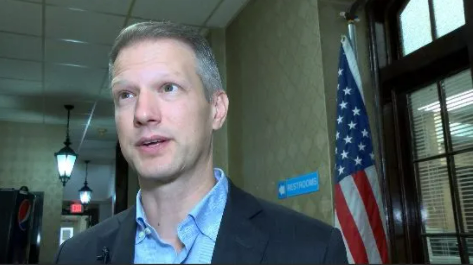
West Virginia State Treasurer Riley Moore, who is in favor of the scholarship program, says families should use their tax dollars as they see fit. The program received more than 100 applications on the first day the application period opened.
Editor’s note: This news story appeared Wednesday on West Virginia’s wchstv.com.
A good idea, or an unconstitutional overreach? That's the big debate on West Virginia's new Hope Scholarship program.
It provides families with public money to help pay for private or religious schools or to home-school their child.
“We tried public in the beginning,” Haley Hereford, a parent in Huntington, said. “He didn't do well it was a large class a difficult class.”
Zander recently went to a public pre-school, but it wasn't for him.
“He really struggled and didn't want to go. He'd get really upset. We switched to Discovery Tree when I got hired there and he's done amazing,” Hereford said.
Zander's mom works at a private school and wants him to start kindergarten there in the fall. She recently applied for the Hope Scholarship, an education savings account voucher program, that would give families public money to help offset the cost of private school tuition.
West Virginia State Treasurer Riley Moore said the school voucher law allows $4,600 to be given to eligible students.
“That's the state funding portion that will follow the student. The federal money does not follow that student,” Moore said. “And usually like a one-third, two-third split. For a student funding package, you're talking about two-thirds of that is federal, one-third is state. So that $4,600 is going to go follow the student. If the student were to return, the dollars still follow the student at the end of the day.”
However, a lawsuit filed on behalf of several West Virginia parents is seeking a judgement and an injunction against the Hope Scholarship program.
According to a lawsuit recently filed in Kanawha County Circuit Court, the Hope Scholarship program is unconstitutional. Under Article 7 in the suit, it states "The Legislature can only provide for a system of free public school. It cannot support a separate system of private schooling or homeschooling."
“It's their money, their tax dollars. They should use the money they see fit,” Moore said. “This is about educational funding. They’re using their dollars to educate their children.”
To continue reading, click here.

