 For the last month, the North Carolina legislature has been debating whether to create a scholarship program to help low-income families pay the tuition and fees at qualified K-12 private schools. Since this proposal closely parallels Florida’s tax credit scholarship program, I’ve traveled to Raleigh three times in recent weeks to discuss what we’ve learned in Florida about school choice over the last 10 years and how these lessons might apply to the North Carolina program.
Below are the lessons learned I’ve shared with supporters and opponents:

Sugarman
In 2002, in the Zelman case, the U.S. Supreme Court upheld the Cleveland school voucher program against a claim that the plan violates the “establishment clause” of the First Amendment to our national constitution. Simply put, the closely divided court concluded the Cleveland plan is part of a broader school choice scheme that in a number of ways gives families opportunities to select the schooling they believe is right for their children. That was understood to be the purpose and effect of the legislation and the fact that most of the vouchers were used at religious schools was beside the point. This decision shows a carefully constructed school voucher plan can survive a federal constitutional challenge.
Yet, voucher plans are still potentially illegal under state constitutional provisions that may be read by state courts to be more restrictive than the national constitution. States have very different provisions in their constitutions that voucher opponents cite in hopes of getting their state supreme courts to invalidate voucher plans. It is not possible to say what is the nationwide law on this issue because each state has its own separate constitution and because state supreme courts have in the past interpreted similar (or even identical) provisions of state constitutions in different ways.
This means that in every state where a school voucher plan is adopted there is likely to be a legal fight over its validity – as teachers’ unions, “separationists” who oppose anything they see as government aiding religion, and others who don’t like the voucher idea will go to court to try to win what they lost in the state legislature.
In March 2013, the Indiana Supreme Court, in the case of Meredith v. Pence, unanimously upheld the Indiana statewide school voucher plan against legal attacks in which opponents of the plan cited three different provisions of the Indiana state constitution. This was a big legal victory for supporters of the Indiana voucher plan, which at the time of the decision was serving about 9,000 students. (more…)
Editor's note: This op-ed ran in today's Orlando Sentinel.

This photo is from the St. Andrew Catholic School website.
Florida allocates five different scholarships from prekindergarten to college that allow students to attend faith-based schools. They don't violate the U.S. Constitution because students choose, and government doesn't coerce.
Both factors were why, in 2002, the U.S. Supreme Court ruled that a Cleveland school voucher did not violate the Establishment Clause, even as 96 percent of the students chose faith-based schools. To the court, in the landmark Zelman v. Simmons-Harris case, the program met three critical standards that also apply to Florida: The primary objective is education; students can choose among secular and sectarian schools; and parents exercise an independent choice that is not steered by government.
The article "Many church schools get tax cash" in Sunday's Orlando Sentinel did not mention the Zelman case or that the Florida Supreme Court specifically avoided religion in 2006, when it overturned the private-school portion of the Opportunity Scholarship program. Consequently, readers might have thought that these programs are constitutionally suspect, when they are not.
The tax-credit scholarship is one of Florida's five scholarships. It strives to give low-income students access to the same learning options now available to more affluent families, via a $4,335 scholarship. This program complements other choice programs, such as magnet and charter schools, and is built on the truism that students learn in different ways. Last year, parents placed more than 1.2 million public-education students in schools other than their assigned district school.
In this new world of customized learning, encouraging differentiated instruction while maintaining quality control is a challenge. The tax-credit scholarship does this, in part, by requiring nationally norm-referenced tests that show these students are achieving the same gains in reading and math as students of all income levels. (more…)
 Our preoccupation these days with a Florida amendment removing the state’s no-aid-to-religion clause may strike some redefinED readers as a touch obsessive, and we won’t argue the point. But the truth is that we agonize over whether to write at all, and we want to explain why.
At the end of the day, we are confident that Amendment 8, whether it passes or fails, will have no legal effect on school vouchers. And yet opponents so far have invested $1 million in a campaign that argues otherwise. They not only contend the amendment will open the door to new vouchers, but that those programs will be, to borrow the words of one elected Alachua County school board member, “the very death of public schools.”
So the quandary is obvious. We’re a blog built around the new definition of public education, run by an organization that administers private options to low-income students, and we think we can bring clarity to the issue. But how do we complain about a debate that we say is falsely about vouchers without being viewed as though we doth protest too much? How do we enter the volatile, polarizing world of political campaigns and not be viewed as an angry combatant?
This is shaping up as a most peculiar campaign. The pro- and anti-amendment forces are on two entirely different planets, one fighting against the scourge of vouchers and the other extolling the virtues of faith-based community services. And yet the legal landscape is unmistakable: The state Supreme Court overturned Opportunity Scholarship vouchers in 2006 through a public education uniformity clause that would be untouched by this amendment. In other words, the principle barrier to any new vouchers is not on the ballot. That’s one of the reasons, and this is important to note again, that no groups supporting parental choice are spending a penny on this campaign. They see it as legally irrelevant.
We admit taking offense at some of the liberties that have been taken so far with the legal truth. And we’re left only to speculate on why the opponents would spend so much on an amendment that means so little in the education world. (more…)
 Add Fund Education Now to the list of influential groups who are distorting what Amendment 8 is about. Like the Florida Education Association, the Florida School Boards Association and the Florida PTA, Fund Education Now claims the ballot initiative is really all about vouchers.
The amendment would remove the “no aid” to religion language in the Florida Constitution. That language, Fund Education Now says in its just-released 2012 legislative report card, “has prevented voucher proponents from enacting law to provide state vouchers directly to private religious schools.”
This is false. As we’ve noted before, Florida’s first voucher program wasn’t declared unconstitutional in 2006 because of the no-aid clause; the Florida Supreme Court shot it down because of another constitutional provision that mandates a “uniform” public school system. The court conspicuously avoided the no-aid language, even though a lower court used it, after the U.S. Supreme Court ruled in 2002, in Zelman v. Simmons-Harris, that parents could use public funds to pay for religious schools as long as they were making an independent decision.
On a related note, the Bradenton Herald weighed in today with, as far as we can tell, the first newspaper editorial on Amendment 8. It urges a no vote because “the real goal is future school voucher programs,” but provides no supporting evidence to show why that’s the case.
There’s a legitimate debate to be had over Amendment 8, but it’s not happening. Ironically, it’s educators, public school "defenders" and journalists who are clouding what should be a vigorous exercise in civics.
 Editor's note: This op-ed appeared in today's Tampa Bay Times.
Few public issues are as absorbing as the balance between religion and government, so a ballot initiative that aims to change the boundary is worthy of rigorous debate. Instead, Florida's Amendment 8 is being treated to a proxy campaign on school vouchers.
A new radio ad by the Florida Education Association: "Amendment 8 allows the government to give our tax dollars to any group claiming to be a religious organization, so any religious group or sect can use our money to fund their own religious schools."
FEA president Andy Ford: "This is designed to open the state treasury to voucher schools."
Alachua School Board member Eileen Roy: "It's the very death of public schools. That's not overstating it, in my opinion."
These are provocative arguments, to be sure, but they are basically irrelevant. The amendment was placed on the ballot by two legislators — Sen. Thad Altman, R-Viera, and Rep. Scott Plakon, R-Longwood — who have said repeatedly they want to protect religiously based social services. Their interest was piqued by a lawsuit, Council for Secular Humanism vs. McNeil, that challenges a prison ministries program, and by the fact that the New York-based council has called it "a springboard to mounting other challenges."
In turn, the pro-Amendment 8 campaign is being led by a coalition of community-service providers and religious leaders who have raised less than $100,000 to date. They believe that if the secular humanists will sue over prison ministries, they might one day challenge the Catholic Charities or Catholic hospitals or the YMCA. After all, the current constitutional language is explicit: "No revenue of the state or any political subdivision or agency thereof shall ever be taken from the public treasury directly or indirectly in aid of any church, sect, or religious denomination or in aid of any sectarian institution."
Now it is certainly true that voucher advocates have previously pushed to alter the no-aid clause. But it is just as clear that they played no role in getting this amendment on the ballot and, most telling, have raised not a penny for the campaign. Their reasons are pragmatic, not philosophical: Federal and state court decisions in recent years have rendered the no-aid clause all but moot as it relates to school choice. Read full editorial here.
Florida voters will be asked in November to remove the Blaine amendment from their state Constitution, but, despite some assertions to the contrary, this vote is not about private school vouchers.
The amendment was placed on the ballot by two legislators – Sen. Thad Altman, R-Viera, and Rep. Scott Plakon, R-Longwood – who have said repeatedly they want to protect religiously-based social services. Their interest was piqued by a lawsuit, Council for Secular Humanism v. McNeil, that challenges a prison ministries program, and by the fact that the director of this New York-based Council has called it “a springboard to mounting other challenges.”
In turn, the pro-Amendment 8 campaign is being led by a coalition of community-service providers and religious leaders who have raised less than $100,000 to date. They are honorable people who simply want to protect the broad assortment of services that is currently delivered without controversy by faith-based providers. Their position is understandable: If the secular humanists will sue over prison ministries, what’s to stop them from challenging government contracts with the Catholic Charities, Gulf Coast Jewish Family and Community Services or the YMCA? Are Catholic hospitals safe? After all, the constitutional language at issue is quite explicit: “No revenue of the state or any political subdivision or agency thereof shall ever be taken from the public treasury directly or indirectly in aid of any church, sect, or religious denomination or in aid of any sectarian institution.”
Though parental choice advocates have previously pushed for changes to the no-aid clause, they were not involved last year in the legislative effort to put this issue on the ballot and are not raising money for the campaign. This is not to suggest they oppose the amendment – most school choice advocates support the role of faith-based service providers – but it reflects the extent to which state and federal court decisions have minimized the relevance of this issue for school choice.
First, the no-aid clause is irrelevant to Florida’s current judicial precedent on school vouchers. The state Supreme Court, in its 2006 Bush v. Holmes ruling, found Opportunity Scholarships to be unconstitutional because they violated Article IX provisions requiring a “uniform” public school system. The court, in fact, steered clear of a lower court ruling that invalidated the scholarships based on the Blaine Amendment – a decision that may well have been influenced by the U.S. Supreme Court’s 2002 Zelman v. Simmons-Harris decision. In Zelman, the U.S. Supreme Court found parents could use public funds to pay for religious schools provided the parents were making a genuine and independent choice. In all of Florida’s private school choice programs, parents control which school receives the public funds. There is no government coercion.
Second, the largest private learning option in the state, tax credit scholarships that served 40,249 low-income students this past year, is constitutionally distinct from vouchers. (more…)
Editor's note: This is the second of two posts we're running this week to commemorate the landmark U.S. Supreme Court decision in Zelman v. Simmons-Harris.
 As we commemorate the 10th anniversary of the landmark Zelman Supreme Court case, its implications are widely visible in the expansion of voucher programs, such as those in Indiana and Louisiana, as well as the growth of tax credit scholarship programs from Florida to Arizona. But the primary Zelman principle - that parents can utilize scholarship funding to enroll in any qualified school that they believe will best educate their children - is also at the heart of an important court battle in Douglas County, Colorado.
Conceivably, Zelman could not only lead to the reinstatement of an innovative voucher approach that local school districts could adopt more broadly, but also provide a pillar for arguments to overturn Colorado’s discriminatory and prejudiced Blaine Amendments.
Beginning in June 2010, the Douglas County School District’s School Choice Task Force began a series of community discussions to align its programs with its overarching policy of “universal choice.” The purpose: to create “multiple pathways for educational success” and then to assist families in choosing the best educational program for their child. This led in March 2011 to the adoption of a pilot Choice Scholarship Program (CSP) whereby in the 2011-12 school year up to 500 families could receive either the lesser of a private school’s tuition or 75 percent of the per-pupil revenue the district received. This amounted to a scholarship of $4,575 for 2011-12.
Just before its implementation in fall 2011, the Denver District Court issued a permanent injunction against the program because it caused state funds to flow to religious schools, violating the Blaine Amendments in the Colorado constitution and the Public School Finance Act. The appeal to overturn this decision attracted high-powered support from the Colorado Attorney General, the Beckett Fund for Religious Liberty, the Institute for Justice on behalf of families that had received scholarships, and the school district itself. Zelman is at the heart of their legal briefs.
The Institute for Justice notes that neither the school district nor the state has any role in selecting the school in which the family enrolls, i.e., this is a private choice program that Zelman specifically endorsed as constitutional. Citing the Zelman decision, when a scholarship program “permits government aid to reach religious institutions only by way of the deliberate choices of numerous individual recipients, the circuit between government and religion is broken,” and any “incidental advancement of a religious mission…is reasonably attributable to the individual recipient, not to the government.” This principle of parental choice, which state supreme court decisions upholding voucher programs in Wisconsin and Ohio recognized even prior to Zelman, led an Indiana court this year to reject a challenge to the Indiana Choice Scholarship Program. Yet, for some reason, the Colorado trial court chose to ignore this precedent. (more…)
Editor's note: This is the first of two post we're running this week to commemorate the 10th anniversary of the monumental U.S. Supreme Court decision in Zelman v. Simmons-Harris, which upheld the constitutionality of the voucher program in Cleveland, Ohio and kicked open the doors for expanded school choice nationwide.
Zelman made clear that the federal constitution allows states to give money to parents that they can use for tuition at religious schools. So long as states don’t directly finance the school itself, no foul. Sadly, some states have constitutions with “Blaine Amendments” that do forbid helping parents this way. These are relics of bigotry; hopefully, the federal courts or sheer political shame will one day erase them.
Would a national commitment to parental choice be a good thing? Think about it. First, remember that the choice of a religious school by parents who pay is a long settled constitutional right. It is widely exercised by those who can afford it. Middle class people in fact have considerable control over where their children enroll and what they learn; they can move to a house in their favorite suburb or they can pay private school tuition.
Clearly, our society is committed to the proposition that parental choice is a social good—at least when made by those who can pay for it themselves. The real issue, then, is whether choice is a good for kid, kin, and country when exercised by families of ordinary means and by the poor.
More bluntly—do we or don’t we want inner-city citizens exercising their rights over their own children? Why have we made it so hard for them? And even where we do allow them to choose a bit (as with public charter schools), what do we, as a society, gain or lose by excluding religious private schools as one among many choices?
Long ago Plato gave arguments for having the state seize complete authority over the child at birth from all families—rich and poor. He thought he knew the one true way and simply did not trust any parent to do right. Maybe there are some platonic arguments for various goods that America achieves when it frustrates choice to the extent it does. Is it somehow productive to snatch the child the child from the authority of ordinary parents for the prime hours of the day for 13 years? What magic is worked by government monopoly over the core experience of the child outside the home?
Is it right that we assume that ordinary parents who cannot afford to pay tuition do not deserve that choice, even if they believe the choice would be best for their children? Crime is, to be sure, more common among lower income groups. But is it less common than it would be if the government were to allow choice? What is cause here and what is effect? Do kids (and all of us) really improve by having complete strangers decide what is worth learning? And do these unchosen strangers do a better job at transmitting the ideas that all of us think important? (more…)
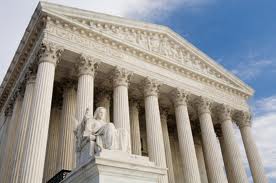 Next week marks the 10th anniversary of the monumental U.S. Supreme Court ruling in Zelman v. Simmons-Harris – the decision that upheld the constitutionality of the voucher program in Cleveland, Ohio and accelerated school choice nationwide by describing the conditions under which parents could use public funds to pay tuition and fees at religious schools. To honor the occasion, redefinED will bring you special posts from our partners at the American Center for School Choice.
On Monday, you’ll hear from John E. Coons, a member of the ACSC board of directors and a professor of law, emeritus, at the University of California, Berkeley. “Do we or don’t we want inner-city citizens exercising their rights over their own children?” he writes. “Why have we made it so hard for them? And even where we do allow them to choose a bit (as with public charter schools), what do we, as a society, gain or lose by excluding religious private schools as one among many choices?”
On Tuesday, ACSC executive director Peter Hanley will weigh in. He takes a closer look at the ongoing court battle over vouchers in Douglas County, Colo., and writes this about some of the legal briefs filed in the case: “Drawing on the historical work of my American Center for School Choice colleagues … the briefs provide a lurid and extensive history of the anti-Catholic bigotry that led to a wave of state constitutional amendments banning funds to support “sectarian” (19th century code for “Catholic”) organizations. They make a compelling case that the trial court not only erred in finding the amendments were violated, but incorrectly ignored this shameful history that means they should be struck down.”
Enjoy.

