**SPOILER ALERT! DO NOT READ IF YOU ARE UNDER THE AGE OF 8**
Western cultures, for some strange reason, involve rituals where we pretend that various “fairy creatures” exist, particularly with children: the Tooth Fairy, a jolly old elf with flying reindeer who brought me an awesome Big Wheel in 1973, egg and goody hiding rabbits, etc. When I became a parent, I played along with these rituals, but then at some point questioned why I was doing it. On the one hand, I didn’t want my children to be those killjoy types who went around bursting the bubbles of other kids. On the other hand, I did not want to train my children not to trust me. I decided to allow the “fun” to go on until they each reached a certain age, then to explain to them that these things are traditions and that it would be best to allow their friends to figure it out on their own.
So, dear reader, I assume that you have reached a certain age and that you are prepared to know the truth about the last fairy creature. Belief in this one tends to persist much longer than the others and is alas, more detrimental. Sorry to be a killjoy, but here goes:
Philosopher kings are not real.
This was my main thought upon reading Mike McShane’s recent entry in a debate about school choice regulation. Go read it. I’ll wait here.
Go on…
Okay, good. My favorite part involved the Gilded Age meat baron, but McShane made several crucial points. Local school boards, state governments and the federal government all regulate public schools in a very active fashion. I could produce multiple graphs from NAEP, PISA, etc., showing what a pig’s breakfast American academic achievement has become, but you have already seen them, so I will spare you. Why are American schools so wretched despite so much regulation? Oh well, that is simple: regulation is not made by philosopher-kings but rather by politics. Politics has an amazingly consistent record of fouling things up.
The philosopher-king fairies, invented by Plato, are a specially trained and educated aesthetic elite who, disinterested in fame or wealth, love only wisdom and justice. Having thus earned the right to rule over us lesser mortals, we proles should feel deferential and deeply grateful for their sacrifice. Again, sorry to burst your bubble, but these people do not exist in the real world. Out here in the real world, mere humans with all kinds of motivations (political and otherwise), limits to their knowledge, greed, stupidity and other normal human failings create regulations. Those of us fortunate enough to live in a democracy get the chance to throw the bums out when we’ve had enough. Just in case you haven’t noticed, a major subtext of politics these days involves bums that voters can’t throw out.
Politics, not philosopher-kings, runs regulation, and politics runs on self-interest far more than on benevolent technocratic wisdom. Choice programs must cope with powerful organized interests that yearn to use regulation as a tool to domesticate choice opportunities and find it in their self-interest to do so. The default position of choice supporters should therefore be to view the calls for regulation with a deep skepticism; it is not paranoia when people really are out to get you.
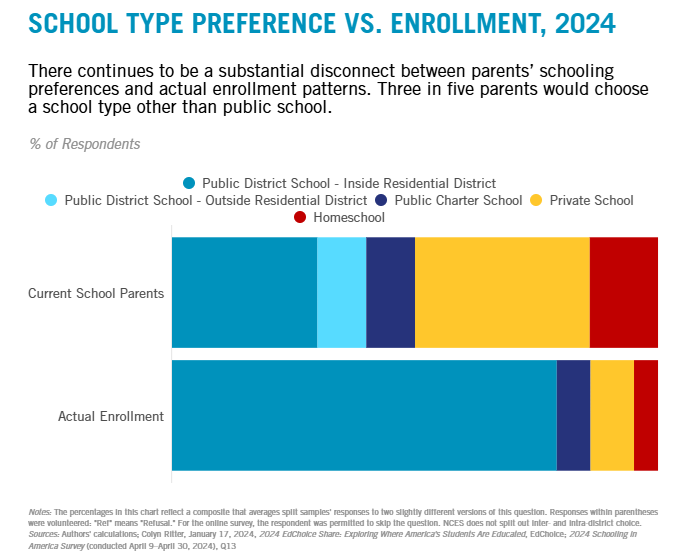
None of this is to say that it is possible to pass choice legislation without regulation; it is not. I am not aware of any program anywhere that operates without some degree of regulation. American parents, however, want a radically different K-12 system than the one government forces them to pay for (see above). The way forward is to allow families to partner with educators to sort through new schools and education methods. Heavily regulated choice systems might get to something close to the K-12 system parents want and deserve before the heat-death of the universe, but then again, they might not.
America’s founders fought a grueling war against the most powerful country in the world based upon what was then a radical idea, that people could live better without royalty to boss them around. The divine right of kings was another myth humanity needed to grow up and discard, and that should include philosopher-kings.

