A small arts-focused private school serving about 35 students, many with autism or ADHD, is at the center of a zoning dispute that could shape policies for microschools across Arizona and beyond.

Karli Kemper, founder of State 48 Arts and Academics, says Pinal County is putting up barriers that district and charter schools would not face.
Kemper checked the county zoning codes before she opened her school in 2024. According to the rules, the area where she wanted to operate listed schools as an allowed use, along with museums, libraries, and houses of worship. A charter school with 1,700 students operates nearby in the same zone.
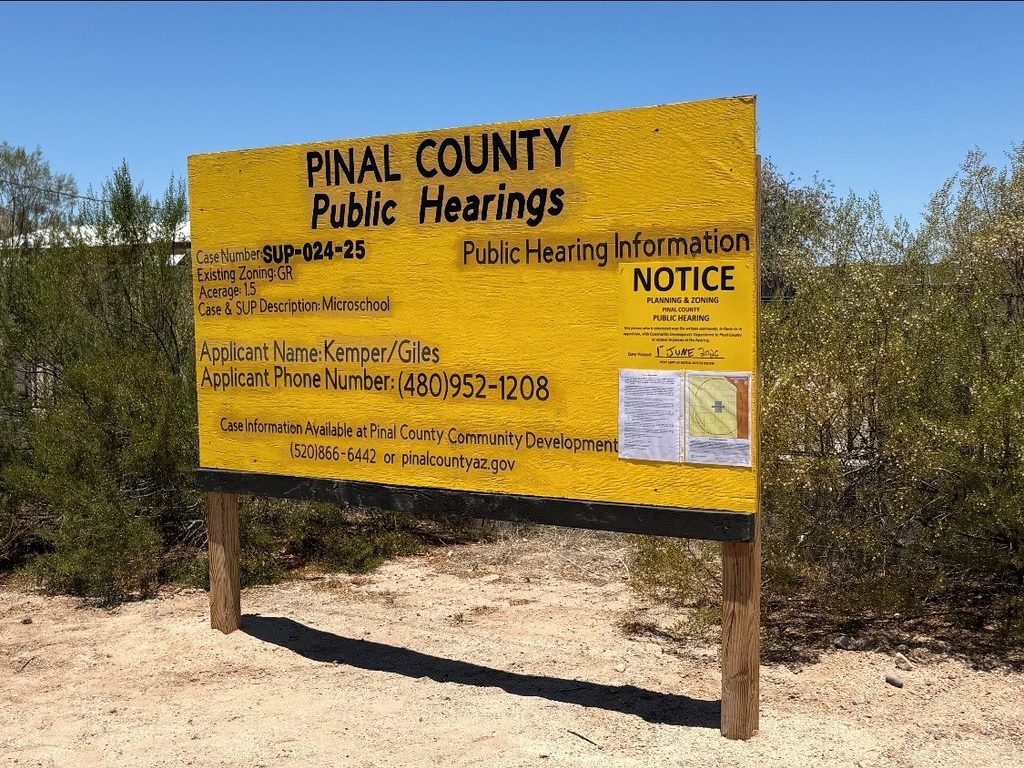
But shortly after she began teaching classes on the 1.5-acre site, which also includes her family’s home, a neighbor complained. That’s when county officials told her the code, despite it not specifying what types of schools were legal, permitted only public schools in that area.
“The county decided that ‘schools’ only meant ‘public or charter schools,’” said Kemper, who spent 25 years teaching at private and public schools before starting her own school. “One person at the county said that if it had been a public or charter school, no one would have questioned you.”
Now Kemper is facing a costly year-long process to prove her school is in the public interest and entitled to a special use permit that would let her remain open.
Attorneys from the public interest legal firm, Institute for Justice, represent Kemper. They have asked the Pinal County Adjustments and Appeals Board to determine the definition of a school under the zoning code. If the board decides that the code includes other types of schools, including private schools like Kemper’s, then the special use permit becomes unnecessary. However, if the board sides with the staff’s interpretation that the code defines a school as only district or charter schools, Kemper would have to get the special use permit or shut down. The county is allowing State 48 to stay open until officials resolve the issue.
IJ attorney Paul Avelar said these types of issues have been at the forefront since demand for microschools surged during the pandemic.
"If you don't fit squarely into a bucket, it's like, 'You're not legal because we don't know how to regulate you,'" he said. “All of these jurisdictions are trying to force square pegs into round holes."
Don Soifer, co-founder and CEO of the National Microschooling Center, continues to see these challenges in communities across the United States even as states pass laws that have made it easier for entrepreneurs to start and run microschools and other non-traditional forms of education.
Florida, for example, has relaxed some land-use rules for microschools that are registered with the state as private schools. While Soifer says the law doesn’t address homeschool hybrids and other small schools that are not state-registered, it represents progress.
“The microschool and learning pod sector looks and feels a lot more like the economy we’re training our kids to succeed in than the factory-based model of traditional schools that was built for the educational needs of the economy of the mid-20th century,” he said. While that still works well for many students, “our educational needs have broadly changed, and our system needs to modernize to keep up with it.”
This also is not the first time that education choice entrepreneurs have hit a wall in Pinal County.
Three years ago, Tia Howard had to abandon an effort to start a microschool on property she wanted to buy in a rural area after Pinal County planners told her that the word “school” in the code did not include a private school.
IJ attorneys say that not only is this inconsistent with other parts of the code, but it would be unconstitutional to treat schools differently based solely on the source of their funding.
They hope Kemper’s case will clear up the issue and inspire county leaders to update their rules.
"Those outdated assumptions are now prohibiting entrepreneurial opportunities and new models and new ideas to come in and flourish,” Avelar said.
Such discrimination also runs afoul of U.S. Supreme Court decisions in education choice cases.
"At its highest level, this case also implicates parents' rights to direct the upbringing of their own children educationally,” he said, referencing Pierce v. Society of Sisters, the 1925 landmark ruling that struck down an Oregon law limiting all students’ education to public schools.
Kemper said her school provides a quiet environment with more personalized attention, which is critical to students who have certain unique abilities. (Although State 48 is open to any student, about 60% have special needs.) During her career in traditional schools, she was a magnet for the kids who didn’t feel like they fit in. Each day, they would stream in to seek refuge from the crowds, noise, and in some cases, bullying.
“My classroom became a hub for kids who would get overwhelmed in their regular classroom, and they would come to my room, especially in the afternoons. I would get kids coming in, saying, ‘Can I eat my lunch in here?’ Can I be with you, Mrs. Kemper?’ That kind of thing.
“It got really hard to watch after a while, how many kids were struggling,” she said.
Things reached a tipping point when her sons started showing up.
“I started to realize this environment is just really not great for certain kinds of kids, my own included, and feeling like I wanted to seek out something different.”
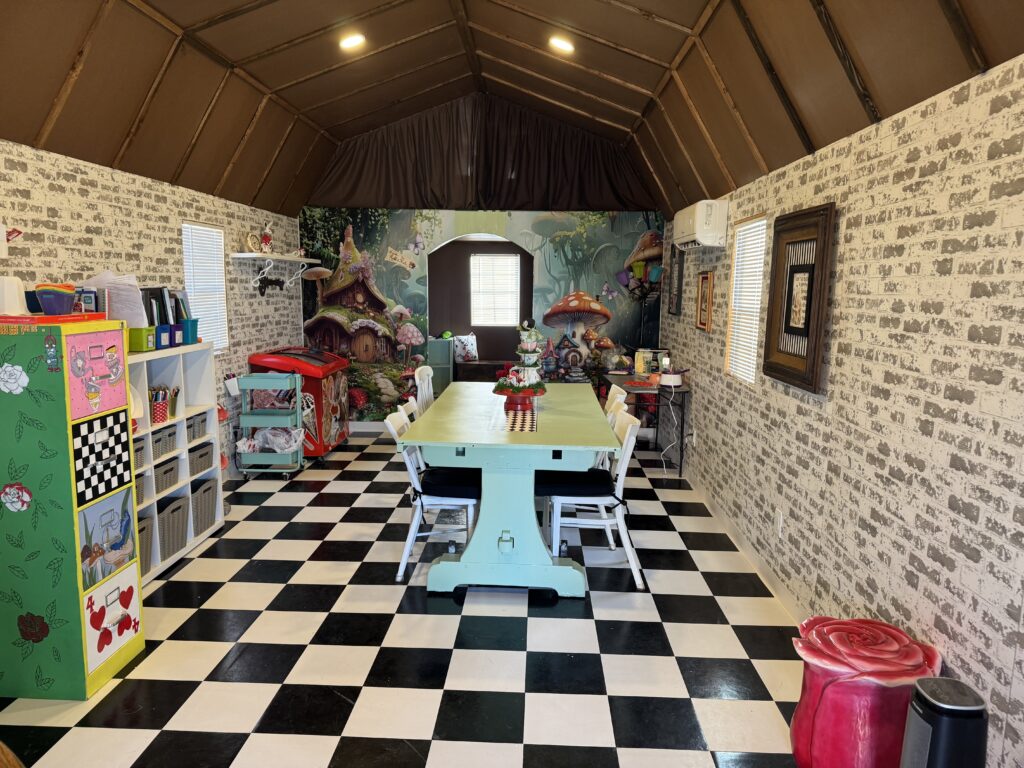
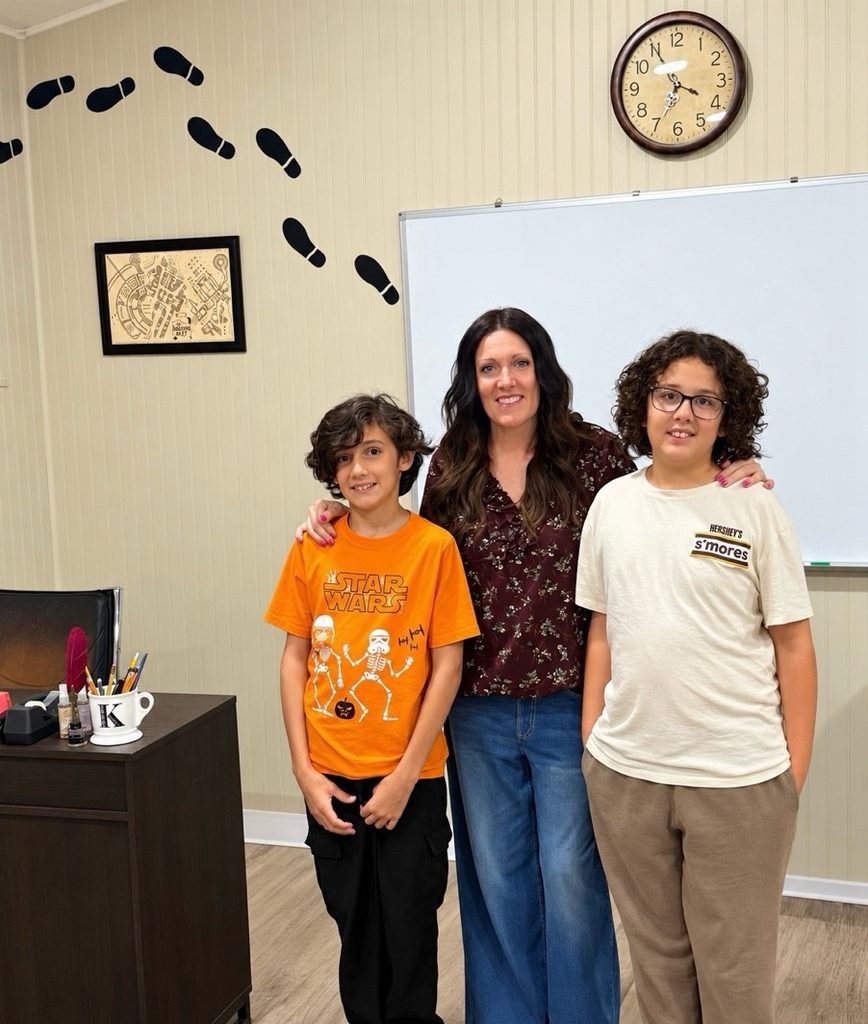
She decided to give up her career to homeschool her sons, Ashton, 10, and Jaxson, 11, who each have autism and ADHD. But she worried about the other students who looked to her for answers, for comfort, for a safe space.
In 2024, she and several like-minded teachers opened State 48 on the same property where her family’s home sits. The school combines core academics with dance, music, theater, and visual arts and serves students in grades two through 12. The students are on Arizona’s Empowerment Scholarship Account. Some are homeschoolers who attend a couple of days per week, while others show up just for either just the core academics or arts programs. On Fridays, the campus is closed as students do activities off site.
Kemper said the school creates far less disruption than the nearby charter school, where hundreds of vehicles sit in the pickup line daily. Because many of her students don’t attend full time, only about 20 are there at any given time. Some even walk or ride their bicycles. She has arranged for pickup and dropoff to take place on her land to avoid clogging the road.
“We've built classrooms specific to what we wanted,” she said. “And we've got a big playground here and a lot of yard, and a big area for kids to stretch their legs and go outside and get fresh air and do walks together and enjoy nature together,” she said. “And we feel like it's really been such a blessing.”