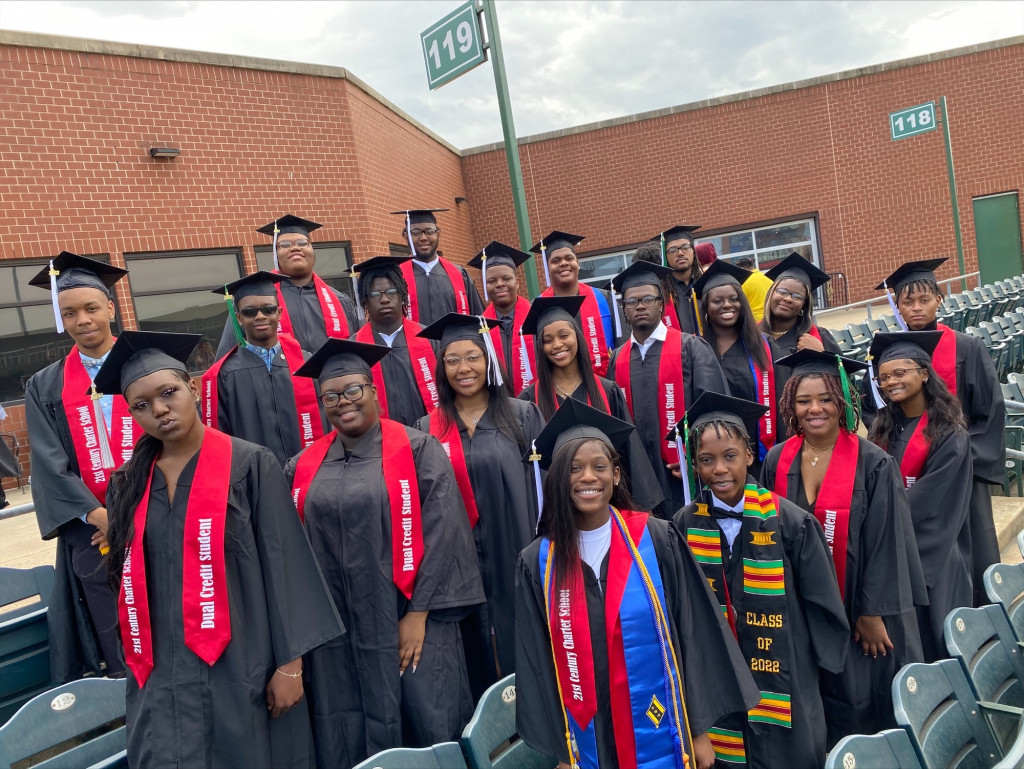
For the past dozen years, the GEO Foundation nonprofit has offered students enrolled at its high schools access to higher education through its college campus immersion program. A state grant for $8.3 million has allowed it to expand the program statewide.
A new study shows that the lines between K-12 and higher education are getting blurrier.
State of play: The Community College Research Center found enrollment declined after the pandemic among all age groups except one: Those younger than 18. A growing share of high school students are participating in dual enrollment programs that allow them to earn college credit. Today, one in five community college students are high school students.
Why it matters: The cost of a college degree continues to rise. So do feelings of boredom among high school students. Getting an early start on a degree can make college less costly and offer high school students more relevant learning opportunities. Some students end up earning associate degrees when they receive their high school diplomas.
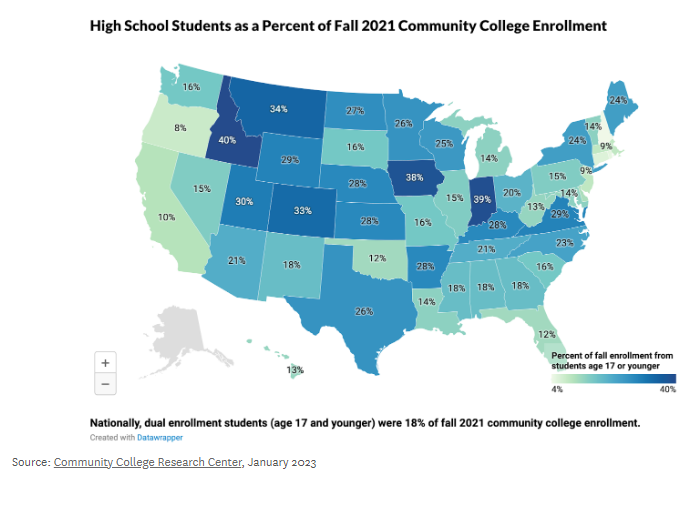
Yes, but: Despite the increase in popularity of dual enrollment across the nation, participation remains uneven among states. Idaho, which reported 40% of its high schoolers enrolled in dual enrollment, took the No. 1 spot, followed by Indiana, with 39%. Oregon had the lowest participation, with 8%. Florida reported 12%, which was below the national average of 18% during the fall of 2021.
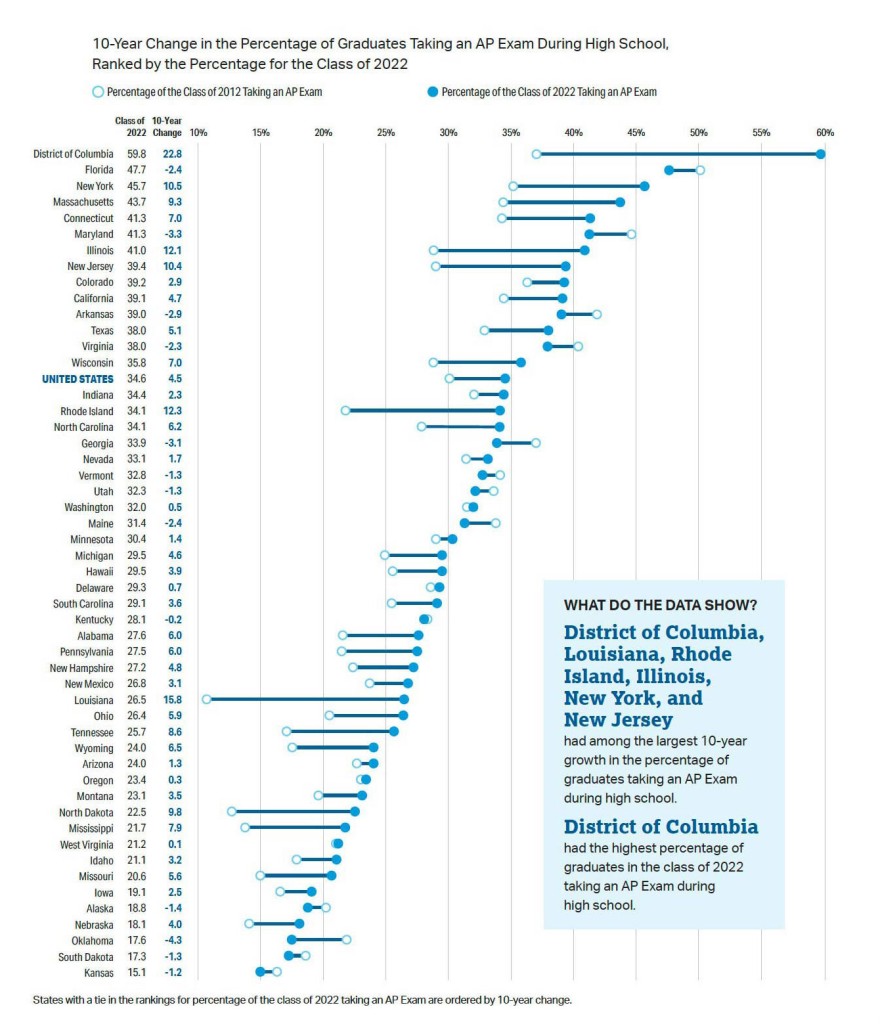
Another way to play: Some states with lower dual enrollment participation rates reported higher participation in Advanced Placement courses, according to the College Board, which administers the AP program. Florida ranked second among the states, with nearly half of the class of 2022 taking an AP exam, another common path to earning college credit during high school.
Everyone wins: Regardless of what that looks like — AP, International Baccalaureate, Cambridge, dual enrollment, or career apprenticeship programs — students are finding new ways to gain affordable access to postsecondary education. Some schools, like the Indiana-based charter network GEO Academies or Florida's collegiate high schools, have designed their models around giving students access to higher education institutions or postsecondary career training.

